Interventions into embattled eThekwini metro are on track, says new Cogta minister Hlabisa:
The minister of cooperative governance and traditional affairs (Cogta) and Inkatha Freedom Party leader, Velenkosini Hlabisa, said on Tuesday efforts by two teams tasked with the turnaround of the embattled eThekwini metro were on the right track.
He said that after viewing presentations of the teams’ “credible reports”, the first generated since the Presidential eThekwini Working Group and the section 154 intervention team had started — and a presentation by the eThekwini metro — he was “satisfied” with the direction of the work being undertaken.
“We are going to interrogate these reports … and in a month or two, we will come back to engage deeply on issues [in the reports] as well as the turnaround plans,” he told journalists in Durban.
The new ANC mayor of Durban, Cyril Xaba, was also in the closed meeting, but did not attend the media briefing.
President Cyril Ramaphosa established the eThekwini Working Group in February after myriad complaints from members of the Durban Chamber of Commerce and Industry — which represents well over 3 000 formal businesses and 54 000 informal traders — as well as ratepayers associations, civil society and organised labour.
The team is led by former MEC and former deputy ANC KwaZulu-Natal chairperson Mike Mabuyakhulu, and is expected to assist the municipality for two years.
The other group that presented on Tuesday was the section 154 intervention team.
Talk about a serious intervention in the metro municipality has been ongoing for years, but was consistently scuppered by the then dominant ANC in the metro and province, which also rejected those tentatively chosen to lead the intervention — former city manager Mike Sutcliffe, former director general in the presidency Cassius Lubisi and the Moses Kotane Institute’s Thandeka Ellinson.
Opposition parties were at the same time calling for a section 139 intervention, which would effectively have branded the metro as dysfunctional and in need of administration for failing its constitutional and executive obligations.
A compromise was finally reached when the opposition settled on the less debilitating section 154 intervention, proposed by the ANC, but again, there was little to no movement.
In June, following a power-sharing agreement being finalised in the province after the ANC lost its majority in the May elections, KZN’s new IFP Cogta MEC, Thulasizwe Buthelezi, said the section 154 intervention would go ahead. He said Sutcliffe and Lubisi had been appointed as the governance experts to lead the process.
Asked on Tuesday about possible duplication of work by the two teams, Hlabisa said the presidential working group and the section 154 team should work in an “integrated” manner.
“Both the teams want to turn things around in eThekwini and make the environment conducive for business to thrive and for the municipality to provide services. From Cogta’s point of view, we will fully support the integration, the working together of all who are intervening to turn things around in eThekwini,” he said.
How this integration would specifically work was still to be considered, he said, adding that both reports addressed “core needs” such as revitalising tourism and economy in the city. That revitalisation was dependent on an “effective government”, he said, one that maintained infrastructure, could supply potable water, and keep its residents safe.
“Without addressing those key issues, business will run away.”
He said it was “a very good sign” that the latest Durban Business Confidence Index had risen to 55.49 (out of 100). The national index for the same period was 35. The Durban business confidence for the preceding quarter measured 38.42.
The improvement was attributed to the May elections and no political party gaining an outright majority, forcing parties into coalitions.
“The ease and speed with which the government was established in KZN also signalled a political commitment to servicing the province,” the business confidence report said, adding however that more than 75% of those surveyed still said that complaints about service delivery were not dealt with in a reasonable time.
The eThekwini metro has been in an escalating state of disrepair for years, with incidents of fraud, corruption, water and electricity cuts, beaches riddled with E coli and poor or non-existent service delivery making regular headlines.
The city loses 45% of its water to leaks and waste, according to the department of water and sanitation, and neglect of infrastructure continues to hamper businesses, residents and potential investors.
According to the auditor general’s consolidated reports on municipalities, eThekwini incurred R4.8 billion in irregular expenditure and another R48.3 million in fruitless and wasteful expenditure for the 2021-22 financial year.
In 2018-19, the metro racked up R2.9 billion in unauthorised, irregular, fruitless and wasteful expenditure.
In late February leading into March this year, waste collection in the city came to a standstill, the result of a protracted strike by municipal employees after salary disputes that left refuse piled up in the streets and resulted in an outcry from residents and the business sector.
Prior to this, refuse collection in the city had been erratic for years, grass verges remained uncut, weed spraying was not done and thousands of streetlights were and are still not working. Crime in the city and its suburbs has been described as “out of control” by opposition parties, residents and community policing forums.
Public trust in eThekwini interventions
Asked by the Mail & Guardian why residents and investors should trust that the recommendations made by the presidential intervention team and the section 154 team would be implemented, given the city’s treatment of the Manase report that was commissioned by KZN Cogta in 2011 and released in 2013, Hlabisa said he gained the impression on Tuesday that both teams knew the city and what they were doing.
He said he also knew the city and what was needed, because it was part of his constituency, and he would be “scrutinising the reports myself”.
“Where there is a need for consequence management, it will have to take place,” he said.
The recommendations of the section 154 report, when finalised, would be “considered” by the cooperative governance department at a provincial level, by the KwaZulu-Natal government, and the national department would also support any consequence management that needed to take place, he said.
Any other questions about the Manase report should be directed to eThekwini mayor Cyril Xaba, Hlabisa said.
Tabled in 2013, the 7050-page Manase report investigated the two terms of former ANC eThekwini mayor Obed Mlaba. Although he was singled out in the report and prima facie evidence of wrongdoing was found, Mlaba never faced any consequences, and was instead appointed South Africa’s high commissioner to the United Kingdom.
The report, which cost R15 million to compile, also found evidence of fraud within the metro police, numerous supply chain irregularities, non-disclosure of business interests for councillors and the use of by-laws to push through emergency tenders.
In 2020, then standing committee on public accounts member Mervyn Dirks, who was chairing a meeting at which the KwaZulu-Natal cooperative governance department was presenting, asked the team why it had not yet tackled “the rot” in the Manase report. The team replied that the report had been “dealt with”, but it was not sure if “consequence management” had taken place.
Beyond Africa’s permanent membership of the UN Security Council:
A bold Pact for the Future will be adopted at the the Summit of the Future and the 79th Session of the United Nations General Assembly, scheduled to take place from 10 to 23 September. The pact envisions the corrective measures required to preserve the planet and enhance the quality of life for the youth and future generations.
Sierra Leone, which assumed the presidency of the UN Security Council in August, has called for permanent representation for Africa at the Security Council.
During his first engagement with the Security Council last week, Sierra Leone’s President Julius Maada Bio underscored the need to ensure Africa rightfully holds its place in the council. He said: “The time for half-measures and incremental progress is over … Africa’s voice must be heard, and its demands for justice and equity must be met.” Likewise, he noted that “Despite being home to over 1.3 billion people, and the 54 African countries making up 28% of the total membership of the UN, with significant contributions to peacekeeping and conflict resolution, Africa remains grossly underrepresented in this vital organ of the UN.”
Bio has strengthened collaboration and coordination with the members of the African Union Committee of Ten heads of state to ensure that Africa’s position on reforming the UN Security Council is consistent. The Committee of Ten has called for Africa to have two permanent seats with veto rights and five non-permanent seats.
UN Secretary General António Guterres commended Sierra Leone’s request for permanent representation of Africa at the Security Council, stating that “the Security Council was established by the victors of World War II, and we cannot tolerate the absence of permanent representation for a continent with a population exceeding one billion”. He emphasised that “a strengthened role for African countries in addressing global security and development challenges is paramount — as the council’s presidential statement, adopted unanimously in May, makes clear.”
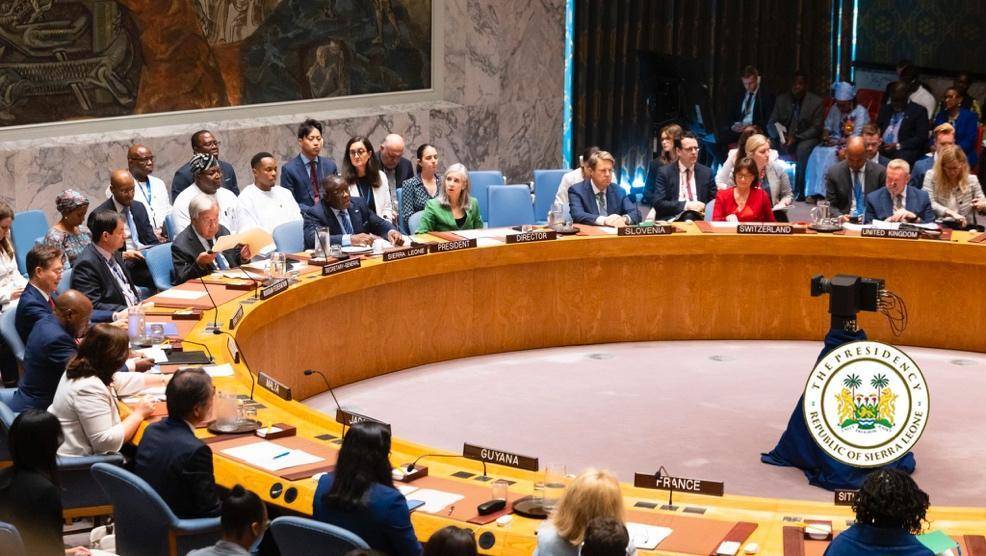
Earlier this month, the Security Council’s Signatories, including Sierra Leone, France, Switzerland and the Republic of Korea, expressed concerns about the negative effect on women’s and girls’ rights caused by the termination of UN peacekeeping operations in some countries. The signatories alluded to the necessity of developing comprehensive gender-responsive conflict analysis and technical gender support to guide the political transition and ensure the sustainability of women, peace and security (WPS) commitments. They also called for incorporating gender equality benchmarks during the political transition’s phases and better integration of WPS into the Security Council to enhance delivery on the UN mission transitions.
The African group stressed in recent deliberations the need for further fair international tax systems for sustainable development. Accordingly, the Pact of the Future ,which has been already proposed, will be revised to ensure inclusivity and effective international tax cooperation and debt reforms led by the UN.
While acknowledging the increasing demand for a permanent representation for Africa at the Security Council to amplify multilateralism, pressing issues related to the New Agenda for Peace include the call for further support to enhance continental and national governance structures and institutions in Africa — as stipulated in sustainable development goal 16 and Moonshot 3 of Agenda 2063 to empower the peace agenda on the continent shall be encouraged by African leaders.
Connecting to this, the fourth edition of Aswan Forum for Peace and Development concluded in Cairo last July under the theme “Re-envisioning Global Governance for Peace and Development” called for a holistic approach to strengthen the peace/ security and development/governance nexus in Africa through key recommendations. These include:
A plan of action for the future to concretise the implementation of the Pact for the Future, which includes mobilising the resources to translate them into reality on the ground, with monitoring and follow-up mechanisms;
Amplifying and unifying African voices on re-envisioning global governance, including through advancing a common African position on key issues that have direct bearing on the continent’s peace and development;
Support of African regional and national development frameworks and priorities. International financial institutions and multilateral development banks should also ensure that their strategies in conflict areas are attuned to national development strategies; and
Advance the common African position on climate change, peace and security and strengthen Africa’s voice in global negotiations on climate issues.
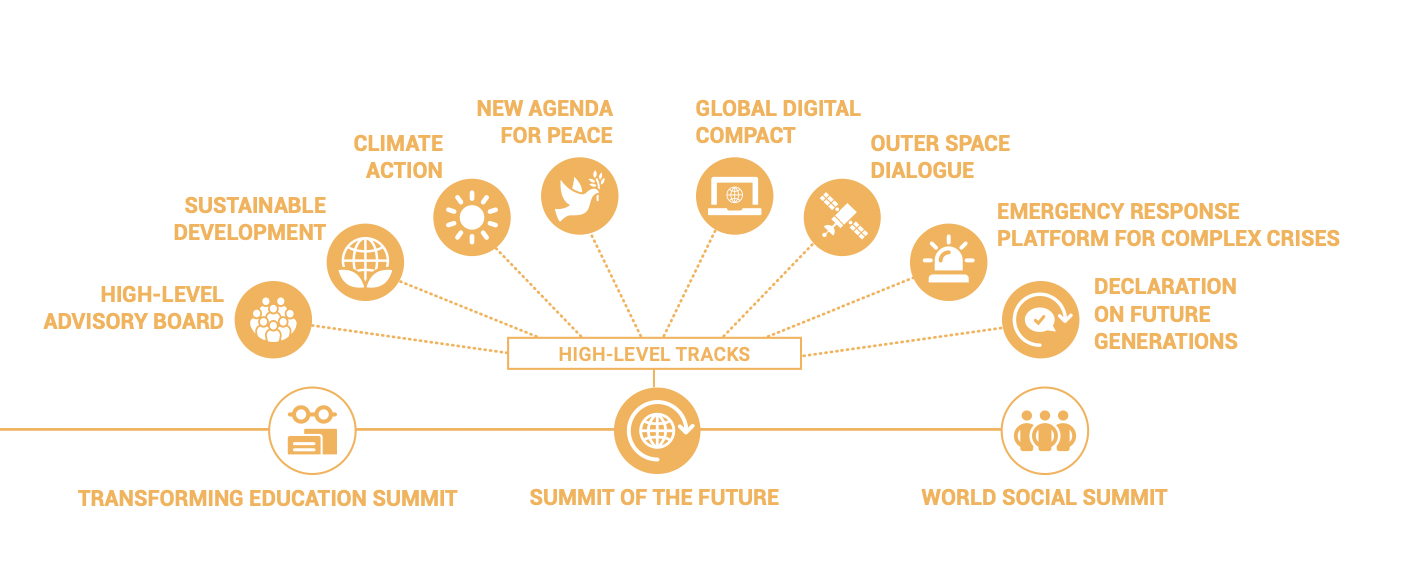
The Summit of the Future will address key proposals across 12 commitments, including leaving no one behind; protection of the planet; abiding by international law and ensure justice; promoting peace and preventing conflicts; placing women girls at the centre; building trust and action to tackle corruption; improve digital cooperation; upgrade the UN; ensure equitable finance; boost partnerships; work with youth; and enhance preparedness for the future through strengthening strategic foresight and global health security.
Figure 1 Key proposals for the Summit of the Future (Source: UNSG Report on the Summit of the Future)
Sara Hamouda is officer in charge of the sustainable development goals and Agenda 2063 Continental Governance Programme at the African Peer Review Mechanism continental secretariat in Johannesburg. She is also a member of the MO Ibrahim governance panel.
ANC sets its eyes on Tshwane as ActionSA targets speaker positions:
ActionSA has fielded Nobuhle Mthembu as the new speaker of Johannesburg after Margaret Arnolds relinquished the position during a special council sitting last Friday, which elected Dada Morero as executive mayor.
Morero’s election followed weeks of negotiations among political parties in the often fractious council. He was previously briefly mayor in 2022 but stepped down after the high court declared his appointment unlawful following a legal challenge from the Democratic Alliance (DA).
Dada’s election was supported by ActionSA, which agreed to work together with the ANC in Johannesburg and Ekurhuleni and said it would reconsider its relationship with the DA in Tshwane.
In a statement on Tuesday, ActionSA said Mthembu was an ardent advocate of accountability and transparency and was suitable for the job.
“Councillor Mthembu has been at the forefront of championing the interests of Johannesburg residents during her term in council, qualities that we believe make her an ideal candidate for the role of speaker,” it said.
The party added that administrative inefficiencies by the previous executive council was the reason behind the numerous crises in Johannesburg, including Usindiso fire last year in which 77 people died.
“As ActionSA’s caucus leader, councillor Mthembu has not only highlighted the numerous issues affecting the city’s ability to govern effectively but has also consistently made a deliberate effort to propose necessary solutions to get the city back on track,” the party said.
ActionSA committed to voting with the ANC in council — giving it its 44 votes — if the ANC voted in favour of removing mayor Kabelo Gwamanda and helping ActionSA get the speaker positions in both Johannesburg and Tshwane
This deal would enable the ANC to take back control in Tshwane, where ActionSA is in a coalition with the DA.
On Tuesday the ANC in Johannesburg said it had begun negotiations with other parties in Tshwane to form a coalition that will unseat the DA.
“There are no contradictions, no fear among parties. We’re speaking to each party. After we’ve agreed on what is to happen, we’ll move forward. We’re looking at Tshwane, and believe there’ll be change, but we’ve not concluded anything,” Gauteng ANC provincial secretary Thembinkosi “TK” Nciza told journalists.
The DA has managed Tshwane for more than a year with support from ActionSA, the African Christian Democratic Party and the Inkatha Freedom Party.
On Monday, ANC provincial chairperson Panyaza Lesufi said several parties had expressed interest in collaborating with the ANC to remove the DA.
“There has been a huge surge from various political parties in Tshwane who want the ANC to come back to rescue Tshwane. Obviously, it’s an opportunity that we are willing to work around,” Lesufi said.
This coalition shake-up is a reconfiguration of the previous deal clinched between the ANC and Economic Freedom Fighters in Gauteng last year, which saw minority parties taking up the mayoral chain while the two bigger parties shared the mayoral committee positions.
“In 2021, during the local government elections, the ANC lost all three metros, and we politely took our stance on the opposition benches. It’s only when those established governments had to collapse and the ANC was requested to step in,” Lesufi said.
“From that period, to date, two of the metros we lost are now back under the ANC’s control. There’s a huge chance of entering Tshwane, but we’re careful to enter some of these coalition governments.”
Submit and get free exposure here: Showcase Your Business | Advertise Your Special Offers.