
Iran Expo 2025 is breaking records:
The 7th edition of the Iran Expo 2025 in Tehran was attended by 3?100 traders from 111 countries, presenting a different image of Iran to the world. This event went beyond being just a trade exhibition; it symbolised real synergy between the government and the private sector for the development of non-oil exports.
Last year, 2?400 traders and merchants from 94 countries participated in the exhibition, and domestic companies had the opportunity to secure their spots in the lead-up to the event.
For the 2025 Expo, which ran from 27??April to 2??May, because of unprecedented interest from domestic companies starting in late last year, more than 1??200 top export-oriented firms registered to participate across six product categories. But space constraints meant only about 800 companies were accommodated, leaving roughly 400 export companies unable to attend.
On the other hand, more than 4??300 traders and merchants confirmed their registration to attend the exhibition. Given the limited hotel capacity in Tehran, invitations were sent to more than 3??000 traders and merchants, the majority of whom arrived in Tehran, making traders from 111 countries guests of this exhibition.
The confirmed participation of 36 ministers — including those of trade, commerce and industry — alongside 24 deputy ministers, 30 presidents of chambers of commerce, and 98 heads of specialised trade associations, all leading high-ranking delegations to Tehran, is itself a testament to the significance and credibility of this exhibition.
Many of these delegations arrived with the goal of signing contracts. The nature and scale of this year’s reception, compared to the previous year, and the keen interest shown in collaborating with Iran, indicates a growing demand for Iranian goods in the global trade arena.
Despite the international threats and negative propaganda aimed at portraying the Islamic Republic as insecure and instilling fear of Iran, they are witnessing an overwhelming response from international traders — traders who have come specifically to sign commercial agreements with Iran. This clearly demonstrates that Iranian products are not only competitive but also in demand on a global scale.
The volume of export contracts signed during the Iran Expo has increased significantly, highlighting the pivotal role this event plays in facilitating export processes and creating new avenues for cooperation. Additionally, the presence of international traders has provided a platform for attracting foreign investment and transferring technology to the country.
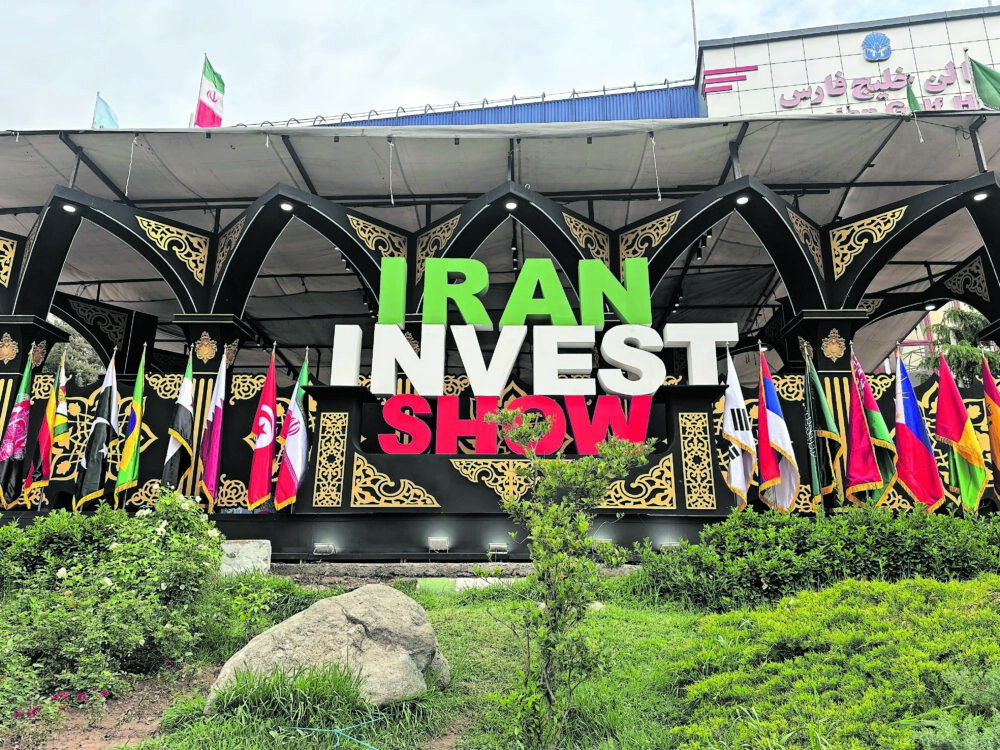
For example, a few months ago, the chief executive of Zamzam Company announced the opening of its factory in Oman — an outcome of a contract signed with an Omani trader during Iran Expo 2023. This project was completed and launched in less than 20 months, showing what sustainable export truly means: not merely shipping a container of goods, but establishing a continuous commercial flow.
Furthermore, in various sectors such as food products and machinery, mining, steel, pharmaceuticals, medical equipment and knowledge-based products, numerous promising contracts have been signed. Many of these agreements have already moved beyond the memorandum of understanding stage and entered into execution
Two years ago, there were 10 product categories, but following assessments by experts from the Trade Promotion Organisation, the Expo organising committee and domestic trade specialists — as well as customs data and export infrastructure — the number of categories was reduced to six last year. This decision was based on factors such as market reception, export quality, export volume and financial turnover. All these elements were closely monitored to arrive at this new structure.
As in the previous edition, international traders were given the opportunity to visit production facilities. In addition, more than 300 commercial interpreters were recruited in six international languages — English, Arabic, Chinese, Russian, Spanish and French — to ensure smooth communication between parties.
The reduction in the number of product categories was solely because of space limitations at the Tehran International Exhibition Centre. Although it remains the country’s largest exhibition venue, even this facility is facing capacity constraints.
This year’s Iran Expo was more organised than the previous edition — both in terms of the opening ceremony and the execution of various sessions including B2B (business-to-business), G2G (government-to-government), and B2G (business-to-government) meetings. These sessions were conducted with greater order and efficiency.

The improved organisation of this year’s Iran Expo was evident from the moment a visitor entered the exhibition. While the energy and hustle of the crowd was palpable, everything appeared structured and well coordinated.
Planning for this year’s Iran Expo was more precise and goal-oriented compared with previous editions. Participant registration began in the middle of last year, and the selection of foreign traders was carried out with greater care. The main objective was to enhance the quality of attendees and focus on attracting genuine buyers who are truly interested in Iranian products — ultimately aiming to strengthen the country’s non-oil exports.
The first vice-president, who chairs the event’s policymaking council, has emphasised the need for comprehensive government support for the exhibition. Without a doubt, Iran Expo 2025 stands out as one of the most prominent examples of effective collaboration between the government and the private sector.
Iran Expo is not merely a trade-focused exhibition, it is a comprehensive platform for cultural, economic and industrial exchange between Iran and other countries. By showcasing Iran’s latest capabilities and technologies, this event provides domestic companies with an exceptional opportunity to introduce their brands on a global scale and enhance their position in international markets. At the same time, foreign businesses attending Iran Expo gained access to new trade opportunities, potential Iranian partners, contract signings and even investment in economic projects.
Under the 13th administration, the Iran Expo received full support, and now with the first vice-president chairing its policymaking council, all state institutions have aligned with this national project. Every entity was mobilised to transform Iran Expo 2025 into a symbol of synergy between the government and the private sector.
The Iran Expo has played a pivotal role in advancing the country’s non-oil exports. By fostering healthy competition among domestic producers, it has driven them to elevate the quality of their products and services. The exhibition has not only diversified Iran’s export commodities but also significantly boosted the nation’s foreign currency earnings.
Beyond its economic impact, the Iran Expo carries profound cultural significance. The participation of artists, artisans and cultural figures creates an ideal platform to introduce foreign visitors to Iran’s rich heritage and authentic civilisation. The Iran Expo presents the world with a compelling and realistic image of Iran — a secure, beautiful, progressive and hospitable nation.
Moreover, the concurrent hosting of the Africa Summit alongside the Iran Expo 2025 offered a golden opportunity to expand Iran’s economic ties with the African continent. African business leaders could directly engage with Iranian products and capabilities, while Iranian companies gained a strategic gateway to African markets.
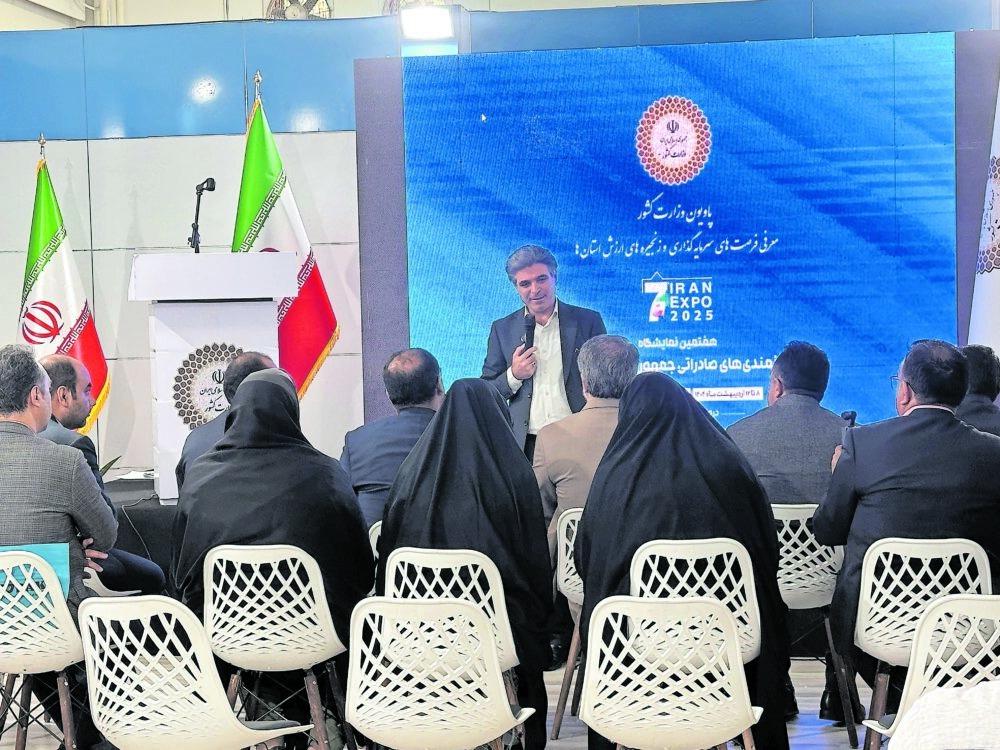
A delegation of 81 business leaders from various parts of South Africa including Gauteng, KwaZulu-Natal, Western Cape and Mpumalanga participated in the expo, with many returning after successful interactions in previous years. There were 132 businesses that registered initially, a sharp increase from 2024 where only 25 South African business leaders and the president of the South African Chamber of Commerce participated. The areas of particular interest for South Africa included mining, petrochemicals and petroleum, food industries, tourism, agriculture, energy and construction. South Africa is also looking to enhance its relationship with Iran in the area of pharmaceutical and medical equipment as well as exploring the collaboration in medical education and research to improve the quality of healthcare services.
With the slogan “Safe and beautiful Iran”, Iran Expo 2025 presented a fresh image of the country’s economic potential with the hope of strengthening Iran’s foreign trade.
Vaccines: The US is endangering children while Africa leads the way:
Every year, Immunisation Week arrives as a gentle global reminder of the power of prevention — of the syringe over the scalpel, the clinic over the emergency room, the vaccine card over the death certificate. And yet this year, it comes cloaked in a darker tone.
For decades, the US led the world in public health innovation. But now, in a bitter twist of irony, it is becoming an empire of denial and disinformation, where political cynicism is putting infants and children in preventable danger.
In Washington, public health policy has been hijacked by political operatives who view science as a matter of partisan alignment rather than national survival. The Centers for Disease Control and Prevention (CDC) is underfunded, demoralised and treated with suspicion by segments of its own government.
Vaccine uptake, especially for routine childhood immunisations, has begun to slip — not just among fringe groups, but in suburban districts and heartland counties. Measles outbreaks, thought to be relics of the pre-modern age, are now surfacing in schools and churches across the country.
This decline is not happening in a vacuum. The global stage is watching. And what it sees is a superpower whose inability to manage its own public health messaging is exporting confusion and complacency across borders.
Crisis of credibility
Let us be clear, this is not merely a crisis of policy — it is a crisis of credibility. When US leaders equivocate on vaccines, when governors veto mandates in the name of “parental rights” and when presidential hopefuls court anti-vaccine extremists for political gain, the ripple effects go far beyond American shores.
For decades, US influence shaped global immunisation norms — from the smallpox eradication campaign to its governance and financial support for Gavi, the Vaccine Alliance. But now, that same influence is breeding scepticism. The US army admitted to spreading anti-vaccine sentiment in the Philippines. But even in the absence of a co-ordinated operation, public health officials around the world, from Nairobi to São Paulo, report an uptick in vaccine hesitancy that can be traced directly to the US-originated narratives.
This export of misinformation is especially insidious because it comes packaged in the language of freedom. The argument goes: “I have the right to refuse,” even when that refusal endangers others. This rhetoric, born from a misunderstanding of liberty, ignores a foundational truth of public health — that freedom without responsibility is chaos. And chaos, when it comes to disease, is deadly.
This American exceptionalism — this notion that US citizens can defy global health consensus while still claiming to lead the world — is not only intellectually dishonest. It is morally bankrupt. And the world is starting to look elsewhere.
African counter-narrative
While the US stumbles in its own backyard, Africa is charting a bold new course — one rooted in pragmatism, sovereignty and deep community engagement. Consider Rwanda, where the ministry of health, in collaboration with community health workers and local leaders, has achieved near-universal childhood vaccination coverage, including the human papillomavirus (HPV) vaccine, which remains politically contested in parts of the US.
Rwanda’s success is not accidental. It is a product of a number of strategic choices. Yes, outside support from private donors and the US government helped to bolster the country’s health system after the 1994 genocide, but the government also made a commitment to community-based health systems, where trained local workers deliver vaccines house to house.
Second, a political culture that frames health as a national security priority rather than a political wedge issue. Rwandan civil servants sign a binding contract in which they pledge imhigo (to deliver). Third, an investment in health education that treats citizens as partners, not problems.
The result? While American parents debate whether measles is “really that bad”, Rwandan health workers are eradicating vaccine-preventable diseases in remote villages, using solar-powered cold chains, digital tracking and decades of trust built through consistent delivery. While many African governments have condemned Rwanda’s human rights record, the country’s vaccination model remains a beacon for other nations — and an indictment of the dysfunction playing out in Washington.
When politics infect public health
To understand the collapse of vaccine leadership in the US, we must examine the rot within. Over the past decade, American public health has been steadily politicised — not by scientists or epidemiologists, but by opportunistic politicians who found that peddling doubt pays dividends at the ballot box.
The Covid-19 pandemic laid bare the extent of this decay. Public health guidance was not just questioned — it was mocked, subverted and, in some cases, criminalised. Governors in states such as Florida and Texas actively undermined vaccine campaigns, banned school mask mandates and defunded public health outreach programmes. Congressional hearings became platforms not for scientific debate but for conspiracy theatre, where virologists were forced to defend the germ theory of disease as if it were a political opinion.
The government’s response, while more restrained under the Biden administration, still failed to rise to the moment. Messaging around boosters was confused and inconsistent. The CDC’s credibility was further eroded by bureaucratic missteps and internal strife. And now, in the shadow of the 2024 elections, the spectre of anti-science governance looms large once again.
The numbers are stark: CDC data shows that routine childhood vaccination rates in the US are slipping for the first time in decades and this year’s case count (800) is the second highest recorded in 25 years.
Polio — once eradicated in the Americas — was detected in New York wastewater, which suggests the virus is circulating among the unvaccinated. This is not the profile of a global leader. It is the symptom of a state in retreat.
And yet, despite this unravelling, American leaders continue to see themselves as the stewards of global health. They issue statements. They attend summits. They pledge support for international vaccine efforts. But what credibility do those pledges carry when the home front is so compromised?
The silent reckoning
There is a silent reckoning under way — especially across the Global South. Quietly, thoughtfully and with increasing confidence, countries that were once dependent on the Global North for vaccines are building their own futures. Africa’s vaccine manufacturing movement is gaining ground, led by institutions such as the Pasteur Institute of Dakar in Senegal and Biovac in South Africa. In the wake of Covid-19, the AU has doubled down on its vision to manufacture 60% of its vaccines domestically by 2040.
This is not just about independence — it is about leadership. African nations are no longer waiting for the West to save them. They are investing in surveillance systems, regional manufacturing hubs, cross-border procurement strategies and robust public education campaigns. In Kenya, for example, the National Vaccines and Immunisation Programme has created school-based vaccination drives coupled with youth-targeted digital media outreach — strategies that many American states, paralysed by culture wars, can barely contemplate.
Even more importantly, these efforts are grounded in community trust. In many African countries, vaccine programmes succeed because they are not handed down from detached bureaucracies but co-created with traditional leaders, midwives and grassroots organisers. This model of participatory health governance is both more resilient and more just.
It is no coincidence that during the Covid-19 pandemic, African countries such as Senegal, Ghana and Nigeria outperformed many wealthier nations in components of their vaccine roll-out efficiency, despite structural inequalities, political will and supply chain barriers. What they lacked in cold storage, they made up for in coordination where they could. What they lacked in government funding, they delivered through clarity of purpose and proximity to their people.
A dangerous gap, a global threat
So where does this leave us? The most powerful country in the world is actively undermining its own public health infrastructure — through political negligence, strategic ignorance and deliberate sabotage. Meanwhile, some of the most promising immunisation programmes are emerging from regions that US policymakers have long dismissed as “recipients” rather than “leaders”.
This gap is not just morally troubling — it is geopolitically dangerous. When the US abdicates responsibility, misinformation fills the vacuum. Russian and Chinese state media have already begun amplifying vaccine scepticism in African countries, portraying Western science as unreliable and arrogant. The same forces that sowed chaos in American elections are now undermining global health from the inside out.
If we are not careful, we will enter an era of health fragmentation — where vaccine access, trust and innovation are dictated not by evidence, but by ideology. And that fragmentation will cost lives — millions of them.
The irony is that the tools to prevent this future are already in our hands. But the will to use them is not evenly distributed.
The case for a new immunisation vanguard
We are witnessing a pivotal shift in the architecture of global health leadership. And while much of the Western world is still obsessed with reclaiming lost influence, African nations are quietly building the scaffolding for a new public health order — one that is community-led, politically astute, technologically innovative and proudly sovereign.
It is time we stop calling this a “miracle”. It is not. African immunisation success is not a matter of luck; it is the result of deliberate policy, hard-won partnerships and the wisdom of communities long ignored by the global health elite. This is not a story of catching up. It is a story of leading forward.
For years, the world has defaulted to the US as the moral compass of science and medicine. But a compass that spins in confusion is no longer a guide — it is a liability. The global immunisation movement must now decentre US institutions as its north star and instead look toward the bold experimentation and grounded excellence emerging from the African continent.
Let us imagine a new kind of global leadership — one that does not rely on GDP but on collective dignity; one that does not measure progress by pharmaceutical exports but by lives saved in slums and villages; one where a health worker in Rwanda wields more influence over the future of humanity than a senator in Washington grandstanding about “parental rights” while children suffer.
History’s verdict
There will be a reckoning. Perhaps not next year. Perhaps not even in the next decade. But history will have its say. And when it does, it will not be kind to the rich nations that chose politics over protection, that used their platforms to stoke fear instead of building trust, that allowed preventable diseases to return, not because they could not stop them — but because they would not.
Children will die because of the choices being made today in American state legislatures, cable newsrooms and campaign war rooms. That is not hyperbole — it is epidemiological certainty. And yet those same children, in communities across Africa, might survive because a nurse on a motorbike reached them in time, because a village elder gave her blessing, because a government prioritised health over headlines.
This is the tragic, beautiful paradox of our era: as one empire declines, another rises — not in bombs or ballots, but in syringes and solidarity.
So as we mark this Immunisation Week, let us dispense with platitudes. The time for polite applause is over. We need to name the failure of US vaccine politics for what it is — a threat to global public health. And we must elevate and fund the systems that are working — many of them African, many of them ignored — to lead us into a safer, more dignified future.
Because vaccines are not just medicine. They are mirrors. They show us who we are, what we value and whose lives we’re willing to protect.
And, right now, the reflection coming out of the US is as dangerous as it is damning. But in Africa, we see something else. We see vision. We see courage. We see leadership.
The world should follow.
Tian Johnson is founder of the Pan-African nonprofit, the African Alliance.
Johannesburg mayor Morero warns contenders for ANC regional posts not to sabotage his government:
ANC Greater Johannesburg regional chairperson and Johannesburg mayor Dada Morero has warned those contesting for positions in an upcoming elective conference not to sabotage the work of the local government to further their ambitions.
Morero said a recent meeting of the provincial task team (PTT) running the ANC in Gauteng had made it clear that undisciplined jostling for positions was not helpful given the party’s waning support.
“The ANC took the view that fighting for positions in conferences, while the ANC is in decline electorally, is not helpful. The lekgotla reiterated this, and we expect that even if we are contesting, the work that must be done in government should continue,” he said.
“The mayor has to do his work, and the mayor should be given space; otherwise, if he fails, it’s the ANC that fails — not me. Should I fail, the people would be saying, ‘Who is Dada Morero?’ Then they’ll say, ‘Oh, it’s the ANC,’ and conclude that the ANC has failed.
“The ANC is alive to that fact, and that is why the ANC will give me all the necessary support to ensure that I succeed as the face of the ANC in Johannesburg.”
At the two-day meeting in Johannesburg three weeks ago, the provincial task team told regional officials, members of the provincial legislature caucus, municipal representatives and national executive committee (NEC) members to craft a recovery plan for the embattled party, after support plummeted to 40% in last year’s general elections, resulting in President Cyril Ramaphosa forming a national government of national unity.
The task team warned it would not tolerate acts that further divide the party in the lead-up to the regional conferences. Allegations have surfaced that some of those contesting in the Johannesburg regional conference are buying votes, reportedly paying branch members R500 to R1??000 to secure their support.
In February, Morero’s office acknowledged an audio recording cited in an article in The Star, which was allegedly made during a meeting involving two Johannesburg members of the mayoral committee (MMC), two ANC officials and a Rand Water official.
In the clip, the group is said to have discussed plans to destabilise the mayor’s leadership by “shutting down water flow in Johannesburg for as long as possible”, suggesting the city’s ongoing water woes may have been orchestrated to portray him as unfit for his post.
Johannesburg has also been grappling with a proliferation of potholes on roads after recent heavy rains, illegal electricity connections, land invasions and illegal dumping, among other ills.
Some ANC members have also allegedly motivated members of the South African Municipal Workers Union (Samwu) to protest against the city executive’s leadership.
But these claims were denied by Samwu’s regional secretary, Thabani Nkosi.
In a media briefing after the provincial task team lekgotla, ANC provincial coordinator Hope Papo said conferences were vital for the party’s renewal, but unity would not be sacrificed.
“We should not tolerate that kind of behaviour, whether by any branch leader, any member, regional leader, PTT member or any other member of the organisation. No weak organisation can serve diligently and fairly,” he said.
Morero said he would stand for the chairperson position at the upcoming conference on 27??July. He narrowly won at the 2022 conference, defeating Eunice Mgcina by 10 votes. Deputy regional secretary Loyiso Masuku is also standing for the chairperson position, while Mgcina will contest for deputy chair.
Regional secretary Sasabona Manganyi is expected to seek a second term, and mayoral spokesperson Chris Vondo will seek the same post.
Thuthukile Zuma, the daughter of former president Jacob Zuma and NEC member Nkosazana Dlamini Zuma, and Johannesburg’s MMC for economic development Nomoya Mnisi will vie for the deputy regional secretary position.
“I am standing for chairperson of the ANC … for another mandate to continue leading Johannesburg,” Morero said.
“I still believe I have a lot to offer the ANC. I served as regional secretary for 11 years — more than three terms — and that was because branches kept bringing me back. I believe I have the capacity to build the organisation.”
Asked whether he would be relieved of his duties as mayor if he fails to win the chairperson position, Morero said his term as mayor ends in 2026 and the conference outcome would not affect that.
In line with ANC’s renewal efforts, it is now customary for its top seven officials to interview three candidates for premier and mayoral posts. This means winning a conference does not guarantee the position of premier if the ANC receives more than 50% in local or provincial elections.
This policy was evident in the Free State, where provincial chair Mxolisi Dukwana was not made premier after failing his interview at Luthuli House. The same applied in KwaZulu-Natal, where former chair Siboniso Duma did not become premier despite the party still holding a majority at the time. Similarly, in the North West, provincial chair Nono Maloyi is not the premier.
The new guidelines also require that individuals appointed to mayoral and premier positions possess a post-matric qualification.
The ANC Veterans’ League has backed former president Thabo Mbeki’s call for vetting party members, especially those intended for government positions. This would bar anyone with a criminal record and, if the league has its way, members will need to meet certain criteria before being allowed to stand for leadership positions.
“Whoever is the mayor now remains the mayor unless recalled — regardless of whether they are the chairperson or not. A new process will begin again in 2026, a month before the elections, where interviews will be conducted,” Morero said.
“The new selection guidelines may also bring certain changes, as we have seen in the national government, where qualifications and other factors were introduced.
“So whether I’m elected chair or not means nothing unless I am recalled by the party from the position I currently hold.”
Morero was also part of the leadership that saw support for the ANC in the region fall below 50% in 2016, relegating the party to opposition benches for the first time, with the Democratic Alliance taking control. It has continued steadily declining ever since.
“Yes, there were challenges in 2016. We lost the elections, and we didn’t see it coming. We dropped from around 52% to 45%, and that decline has continued — we’re now at 33% as of 2021,” Morero said.
“In 2024, due to the national elections, we gained one percentage point, bringing us to 34%. Our goal is to work toward another 4% increase in 2026. We are putting plans in place to reach 38% and, if we’re lucky, 40% would be a bonus.
“Of course, the goal is to start at 50% and above, but realistically, we need to put systems in place for gradual growth back to where we were. We believe we can achieve that based on the strategies we’re implementing.”
Submit and get free exposure here: Showcase Your Business | Advertise Your Special Offers.
