Iran is winning the social media war:
The first signal is not a statement or a briefing. It is a post. An Iranian embassy account responds within minutes. A line, sharp enough to travel. A clip that reframes the moment before it settles. By the time officials speak, the narrative is moving.
In one Lego-style animated video, a caricature of Donald Trump holds up a sign reading “Victory” before the frame flips and the message changes to “I am a loser”. The clip has crossed more than 700 000 views as it moves across platforms. It does not explain the conflict. It replaces it.
As a fragile ceasefire between Iran and the US holds into its third day, Israeli bombardment continues in Lebanon and Tehran has warned it will resume hostilities if attacks persist. Both sides are claiming victory, even as negotiations are set to begin in Islamabad.
On the ground, the war remains unresolved. Online, the contest is being decided at speed.
Across X, Instagram, TikTok and YouTube, Iranian embassy accounts are posting into the moment, often within minutes, using a tone that departs from diplomatic convention. The language is direct, sometimes sarcastic. Humour is strategic.
Posts read less like statements and more like interventions, appearing alongside memes, commentary and reaction in the same stream. The distinction between diplomacy and content begins to collapse.
The pattern is visible across multiple accounts, including in southern Africa. The posts follow a recognisable pattern. Some use humour to undercut Western political figures, recasting escalation as spectacle. Others draw on historical imagery and resistance narratives, placing current events within a longer arc of confrontation.
A third set is localised, referencing regional politics, popular culture or public sentiment in the countries where the embassies are based.

The Lego-style clip is part of a broader pattern. It reduces a complex geopolitical confrontation to a single, legible reversal. There is no argument to parse and no timeline to follow. Meaning is immediate, designed to land before it can be questioned.
Matt Hussey, a journalist and therapist who writes on the psychology of modern digital life, argues that the humour is not incidental but functional. “This isn’t just trolling. This is a weapon system,” he says.
He suggests that humiliation has long been part of warfare but traditionally required proximity. Digital platforms remove that constraint. A short video can now reach global audiences within hours.
The content is built for speed, recognition and replication.
Hamidreza Oraee, the spokesperson for the Iranian embassy, describes a deliberate shift in how Iran communicates during the war.
Western media, he argues, has framed events through a distorted lens, prompting Iranian institutions to speak directly to global audiences.
“We stepped beyond traditional diplomatic frameworks and assumed the responsibility of conveying an accurate narrative,” he says.
Oraee frames the approach as a response to misinformation and generational change.
“Interactive media primarily communicates with younger audiences. These audiences are increasingly exposed to misinformation, making it essential for nations to communicate their perspectives directly.”
The emphasis on “stepping beyond” formal diplomacy is revealing. It suggests that visibility, not just messaging, has become the objective. The audience is no longer limited to governments or traditional media but extends to platform users.
Western governments communicate through formal briefings, official statements and traditional media channels. Their messaging is often slower, more cautious and less adaptable to platform dynamics.
By contrast, the content circulating from Iranian-linked accounts is built for visibility. It is responsive, adaptive and embedded within the same flows as entertainment and commentary. It competes for attention.
The architecture of the platforms rewards engagement, not accuracy. Content that is immediate, visual and emotionally legible travels further, regardless of its factual grounding.
That is the terrain on which this war is being fought.
Iran’s advantage lies in its ability to produce content that aligns with how platforms operate, at speed and scale.
The war continues on the ground, where a ceasefire holds unevenly and negotiations remain uncertain. But it is increasingly encountered elsewhere, across platforms where content moves faster than context.
Control of narrative no longer rests on credibility alone. It rests on circulation.
For now, that terrain favours Iran.
“You don’t get what you deserve; you get what you negotiate”:
At this year’s global edition of the African Public Square open session, we debated the urgent question of how Africa can effectively negotiate and resource its agency in an evolving global order.
In international politics, moral claims rarely determine outcomes, especially at this moment in time amid multiple crises and the deterioration of governance norms. States may argue that justice, representation or historical fairness should shape global governance but the distribution of influence in the international system rarely reflects what actors believe they deserve.
Instead, it reflects what they can negotiate. The phrase “you don’t get what you deserve, you get what you negotiate” therefore captures a central reality of global politics: states do not gain influence simply because it is their right, they must earn it through deliberate action, credibility and results. Put differently, it is secured through bargaining power, institutional positioning and strategic coordination.
For Africa, this insight carries weight given the current disorder and its implications. The continent represents over a quarter of the membership of the international system and plays an increasingly central role in global debates surrounding development finance, climate governance, migration and international peace and security.
Yet Africa’s influence within the institutions that structure global decision-making remains limited. Despite its demographic weight and growing economic significance, the continent continues to occupy a marginal position within many of the formal structures that govern the international system.
This apparent paradox of numerical presence without proportional institutional influence cannot be explained solely by material constraints. Rather, it reflects the interaction of historical institutional design, asymmetries in negotiating power and fragmentation in diplomatic strategy across the continent.
Examples are replete, from threats threats against Nigeria and undue pressure on South Africa without a regional response, to the inability of African countries to enforce the Africa Mining Vision to maximise the benefits of mineral resources on the continent.
As the global system gradually moves towards greater multipolarity, however, new opportunities are emerging for African actors to exercise more strategic and collective agency.
Realising this potential will depend less on asserting claims of entitlement than on strengthening negotiation capacity, coalition-building and agenda-setting within the global governance architecture.
A significant strand of the discourse on Africa’s position in global governance focuses on the normative case for institutional reform. From this perspective, Africa’s limited role in shaping decisions within key international institutions appears increasingly worrisome. For instance, African states contribute significantly to international peacekeeping missions and participate actively in multilateral diplomacy, yet face some of the most intractable violent conflicts, acute challenges associated with climate change and global economic inequality.
However, the international system is not structured to distribute influence according to principles of fairness. Unlike domestic political systems, where constitutional frameworks and legal institutions may enforce representation or address historical injustices, the global system operates through negotiation among sovereign states rather than adjudication based on normative claims.
This structural reality, especially in this moment in time, places limits on what moral arguments alone can achieve. Normative claims may establish legitimacy and strengthen diplomatic narratives but they rarely generate institutional change unless accompanied by political leverage and sustained coalition-building.
In other words, deserving influence and securing influence are fundamentally different processes. The former rests on normative justification; the latter depends on purposive negotiation.
The institutions that structure contemporary global governance were created through historical negotiations shaped by the distribution of power at specific moments in time.
These institutions were not designed as neutral frameworks for international cooperation; they reflected the strategic interests of the states that possessed the greatest influence during their formation.
For instance, one of the most significant moments in the construction of the modern international economic order was the Bretton Woods Conference of 1944.
This conference produced institutions such as the International Monetary Fund and the World Bank, which continue to shape global financial governance today. Hence, current geopolitical reconfigurations present Africa with the opportunity to bargain for a purposive position among the comity of nations.
The political context of these negotiations remains critical, especially at a time when most African countries were under colonial rule and therefore had little or no representation in shaping the institutions that would govern the global economy.
The governance structures that emerged, including voting arrangements and leadership conventions, reflected the interests of the powers that dominated the negotiations.
These institutional arrangements illustrate a broader pattern within international politics: governance structures tend to persist long after the historical power configurations that produced them have changed. Reforming them therefore requires more than appeals to fairness; it requires sustained negotiation capable of altering entrenched distributions of influence.
Negotiation in international politics rarely takes place among equal actors. States enter diplomatic engagements with varying levels of economic strength, military capability, technological capacity and diplomatic reach. These asymmetries shape both the process of negotiation and the outcomes that emerge from it.
Importantly, power in diplomacy is not limited to material capabilities. It also includes the ability to set agendas, shape norms, mobilise coalitions and influence institutional design. As Robert Keohane has argued, international institutions often reflect the preferences of those actors with the capacity to construct and sustain them.
For African states, this reality underscores the importance of strategic negotiation. Effective diplomacy therefore requires coordinated negotiating positions, technical expertise and sustained engagement within multilateral processes.
The international system is currently undergoing a gradual but significant transformation. The post-Cold War period, characterised by the overwhelming dominance of a single global power, is increasingly giving way to a more complex distribution of power.
Emerging powers such as Turkey, the Gulf states, Russia, Brazil, China and India are expanding their economic and diplomatic influence, while established actors such as the United States and regional blocs such as the European Union continue to shape the global system.
This evolving geopolitical landscape creates new strategic space for African diplomacy. As global powers compete for markets, resources, diplomatic partnerships and geopolitical alignment, African states may gain greater leverage in negotiations over trade agreements, infrastructure investment and development financing.
Competition among external actors can expand the bargaining options available to African governments.
Yet multipolarity does not automatically translate into greater agency. Without strategic coordination among African states, external competition can also produce fragmented agreements that weaken collective bargaining power. The opportunities created by a shifting global order therefore depend heavily on Africa’s ability to organise its negotiating strategies more effectively.
One of the most persistent constraints on Africa’s negotiating influence is fragmentation. Despite shared interests across many areas of global governance, African states frequently pursue national diplomatic strategies rather than acting as a coordinated negotiating bloc.
Institutions such as the African Union (AU) were established partly to address this challenge by providing mechanisms for continental coordination. Through the AU, African governments have attempted to articulate common positions on issues ranging from trade negotiations to institutional reform.
A notable example is the Ezulwini Consensus, which outlines Africa’s collective position on reforming the United Nations Security Council and calls for permanent African representation within the body.
Not forgetting the Africa Mining Vision, which provides a continental framework for governing mineral exploration. However, articulating common positions is only the first step.
Translating these positions into effective negotiating strategies requires sustained coordination among states with diverse political and economic interests. When external powers negotiate separately with individual African countries rather than with coordinated regional blocs, the continent’s collective bargaining power can diminish significantly.
Addressing this legacy therefore requires more than emphasising historical injustice. It requires building the institutional and diplomatic capacity necessary to negotiate effectively within an evolving international system.
As the global order becomes more multipolar, opportunities for African agency are expanding. Yet these opportunities will only translate into meaningful influence if African states strengthen their coordination, develop sophisticated negotiating strategies and engage proactively in shaping the rules of global governance.
In international politics, influence is rarely granted simply because it is deserved. It is secured through strategy, organisation and sustained negotiation.
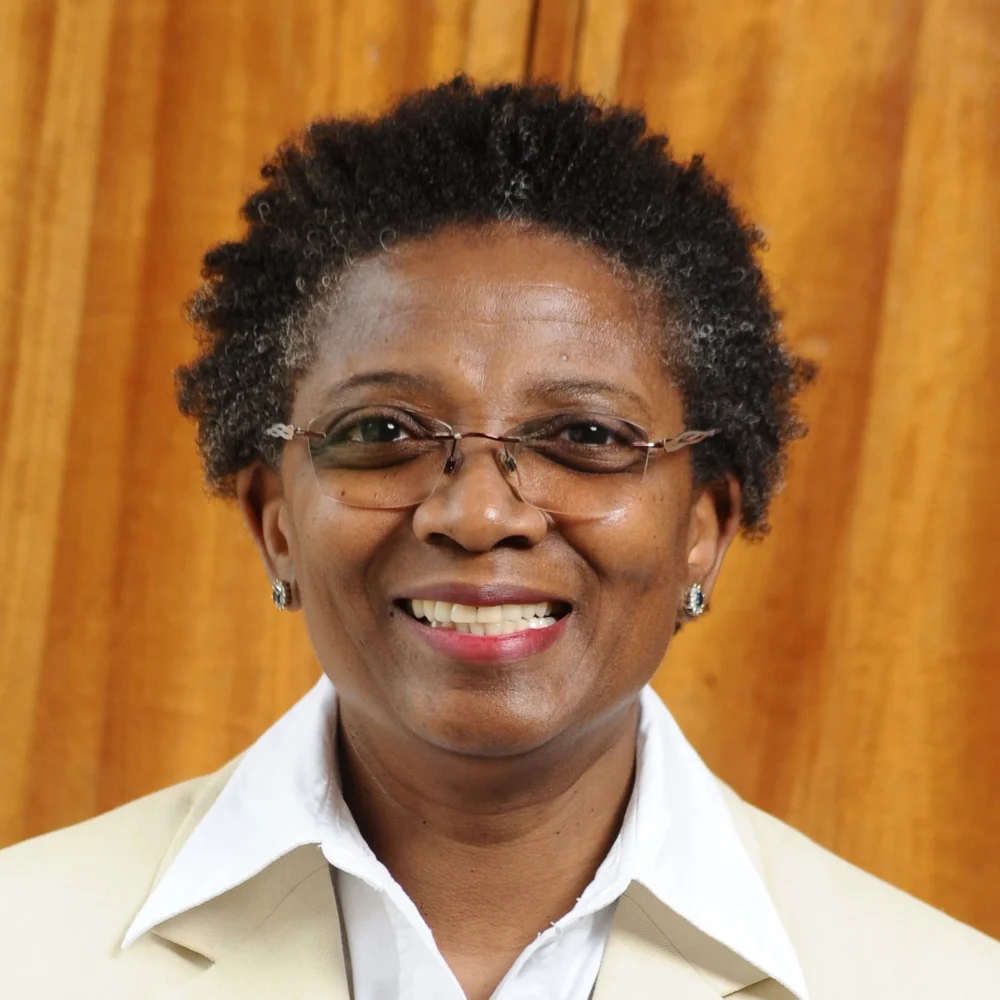
Professor Funmi Olonisakin is vice president of International, Engagement and Service (IES) at King’s College London and the founder of the African Leadership Centre in Nairobi, Kenya.
Designing with soul: How Bulelwa Jordan-Tati shapes spaces that Feel:
For an ordinary person like me, household furniture is purely functional — used for sitting, eating and storage. Details such as colour schemes, décor or curtains don’t hold much importance; the priority is simply having a place to live.
For interior designer Bulelwa Jordan-Tati, however, it is something deeper. Her work orchestrates the relationship between a “physical space and the people who inhabit it, balancing aesthetic appeal with structural functionality”.
Jordan-Tati is the founder of Urban Blend Interiors, a Cape Town studio, offering bespoke turnkey interior design services transforming interiors into personal retreats for their clients.
With more than a decade of experience in the property industry and a property studies honours degree from the University of Cape Town, Jordan-Tati combines technical expertise with a natural creative flair. She creates spaces that balance function, beauty and emotional resonance in pursuit of timeless aesthetics.
In-between her demanding schedule, Jordan-Tati shared with me more about her work and her views on the trends for the year such as maximalism and biophilic design.
You are known for transforming spaces from gloomy to sophisticated. Where did your love for interior design start?
My love for interior design started from a young age from watching Top Billing on SABC 3. I was drawn to the beautifully curated spaces and over time I developed a keen eye for sophisticated, modern and timeless interiors.
This passion grew over the years and led me to formally pursue and complete a diploma in interior design as well as a business in interior design course at the Interior Design Institute. This further led me to creating my own business, Urban Blend Interiors.
What does your work as an interior designer entail?
Beyond choosing colour palettes and furniture, interior designers analyse spatial requirements, draft technical plans and oversee the selection of sustainable materials and lighting to enhance a room’s atmosphere.
By managing everything from floor plans to sensory details like acoustics and texture, they transform empty or inefficient shells into cohesive, purposeful spaces that reflect a specific identity or lifestyle.
How significant is the role of interior designers in the South African creative industry?
It is significant because designers bridge the gap between raw creative talent and functional infrastructure, ensuring that spaces are not only efficient but also deeply rooted in identity and sustainability.
You mentioned that your work must have an emotional resonance with a client. Tell us more.
For an interior to be truly impactful and long lasting, it must extend beyond the visual and anchor itself in the personal narrative of those who move through it.
While modern aesthetics provide the framework and functionality ensures ease of use, emotional resonance is what transforms a structured environment into a sanctuary.



By layering tactile materials, light and thoughtful spatial flow, a designer can evoke specific feelings, such as tranquillity, belonging or inspiration, that align with a client’s identity. When a space reflects a person’s values and history rather than just a passing trend, it gains a soul, ensuring that the design remains relevant and cherished long after the initial reveal.
You also argue that interior design can be a viable employment opportunity, particularly for aspiring female creatives.
Despite the challenges of youth unemployment, interior design remains a potent and viable career path for aspiring female creatives in South Africa, specifically due to its low barrier to entry for service-based entrepreneurship. The rise of the “aesthetic renter”, especially in hubs like Cape Town and Sandton, have created a consistent demand for designers who can deliver high-impact, non-structural transformations.
By mastering digital personal branding and sustainable sourcing, young women can bypass traditional corporate gatekeepers, turning a creative skill set into a scalable business that contributes directly to the national creative economy.
Could someone be an interior designer without formal education in the specific field but leverage their skills from another field of study?
Yes, they can absolutely transition into interior design from another field by leveraging transferable skills. Many successful South African designers began in fields like business, marketing or project management, using those skills to handle the high-stakes logistical side of design, such as budget oversight and contractor management, while refining their creative eye through short courses or hands-on experience.
Your interior design forecast for this year focuses on the continued rise of maximalism and biophilic design. Tell us more about the emerging trends.
In 2026, the convergence of maximalism and biophilic design marks a decisive shift from cold, sterile minimalism toward spaces that are deeply personal and restorative. Maximalism in this era isn’t about clutter; it’s a curated eclecticism that uses rich tones, layered textures and heritage craftsmanship to tell a story of individuality and comfort.
This pairs seamlessly with the evolution of biophilic design, which has moved beyond simple indoor plants into acoustic biophilia and the use of organic, curved forms that mimic nature’s patterns.
Together, the trends prioritise sensory experience and emotional depth, creating living environments that improve mental well-being while celebrating a bold, unapologetic aesthetic richness.

Submit and get free exposure here: Showcase Your Business | Advertise Your Special Offers.