Iran stands firm at Hormuz while Washington drives the world economy to its knees:
Iran’s Supreme Leader Mojtaba Khamenei has refused to bow before Western aggression, duplicity and maritime coercion, and he has placed the Strait of Hormuz at the centre of the battle over sovereignty and imperial power. He has made it clear that Iran will defend its strategic position against a US-led order that wages war, imposes sieges and seizes ships while presenting aggression in the language of international law. Washington and Tel Aviv opened this conflict. The United States then kept the pressure in place through blockade and ship seizure, even under ceasefire conditions. Europe has chosen to reinforce that pressure through sanctions. Iran is not the force dragging the region towards destruction. The Atlantic powers attacking it are.
Khamenei’s own language has carried both resolve and strategy. Press TV reported that on 9 April he declared, “We will definitely take the management of the Strait of Hormuz to a new phase.” That same reporting presented Hormuz as sovereign Iranian ground, a strategic asset rooted in geography, military leverage and the permanent fact that global energy routes still run past Iran’s coast. Persian Gulf Day then deepened the message by linking the present struggle to a longer anti-colonial history in which Iran expelled Portuguese domination from Hormuz and asserted control over its southern waters. Tehran has shown how the present crisis belongs to that same continuum of resistance against foreign command over Iranian territory and trade.
On 1 May, President Masoud Pezeshkian described the US naval siege of Iranian ports as “an extension of military operations” and called it “intolerable”, while Donald Trump said Washington might restart the war. The ceasefire that began in early April has remained on paper, yet Washington has kept siege conditions in place while holding open the option of renewed attack. Tehran has answered with warnings of a long and painful response if the US returns to open war. A ceasefire under siege keeps the violence alive by other means.
The seizure of the Iranian-flagged cargo ship Touska exposed the character of that ceasefire. Iranian reporting and regional coverage both stated that US forces attacked and captured the vessel near Hormuz while mediation efforts were still active. Tehran called the operation piracy, accused Washington of violating the ceasefire and withdrew from the Islamabad track under those conditions.
Iran’s ambassador to the United Nations demanded the ship’s release and drew urgent attention to what he called continued American violations against Iranian commercial vessels. Press TV also reported that Iran’s High Council for Human Rights condemned the blockade of Iranian ports and the seizure of the Touska as collective punishment against millions of civilians. Washington kept talking about diplomacy while holding an Iranian commercial vessel in custody and choking Iranian ports. Empire has always negotiated with one hand on the throttle of war.
Europe has now entered the same formation. Western reporting on 20 April said the European Union planned to widen its Iran sanctions criteria to target those accused of obstructing navigation through Hormuz. Brussels took that step after US-Israeli strikes on Iran, after Washington imposed its naval siege, and after US forces seized the Touska. Europe has not challenged American escalation. Instead, it has added another Atlantic layer to the pressure campaign. Washington uses warships and blockade. Brussels follows with sanctions discipline. Israel supplies the military aggression that ignited the confrontation. The three powers now want the world to treat Iranian resistance as the cause of the crisis they created.
Western governments and their media systems are trying to cast Iran as the force strangling the world economy, yet their own reporting exposes a very different story. Roughly one-fifth of global oil and liquefied natural gas shipments move through Hormuz, and the blockade has already driven major energy shocks. Al Jazeera reported oil at four-year highs amid the standoff, while other coverage described vessel traffic collapsing and the United States seeking help from other countries to reopen the strait on American terms. The destabilising force here is Washington’s siege strategy, backed by Israeli war and European sanctions. It is Washington, not Tehran, bringing the global economy to its knees.
Iran holds leverage at Hormuz that sanctions cannot dissolve. Press TV described that leverage through three hard facts: geography, asymmetric capability and structural global dependence. Iran commands the northern shore of the strait, sits astride the main shipping lanes, and retains the power to alter the rules of engagement in one of the world’s decisive chokepoints. That reality explains the fury now directed at Tehran. Washington can pressure banks, insurers, shippers and suppliers. But it cannot relocate Iran from Hormuz. Israel can bomb. Europe can sanction, but neither can erase the map.
The wider world will carry the costs of this imperial aggression. A prolonged siege at Hormuz drives up fuel, freight, fertiliser and food prices across import-dependent economies. Africa and the Global South will pay through diesel, transport, electricity and bread while Washington, Tel Aviv and Brussels continue to speak the language of stability. Yet these powers do not contain the chaos. They manufacture it and export the cost.
Iran has drawn the line at Hormuz through sovereignty, anti-colonial memory and strategic endurance. Washington, Israel and Europe continue to answer with war, siege and sanctions. The struggle now extends far beyond one vessel and one fraying ceasefire. The West wants control of trade, control of sea lanes and control of the political terms under which sovereign states may live. Empire has turned the arteries of the world economy into instruments of punishment, and it now wants the world to blame the country under attack for refusing to submit.
Remember, Remember the 4th of November:
For the first time in democratic South Africa, local government elections have attracted as much attention as the national polls. The elections announced for 4 November will have a consequential impact on our body politic as municipal polls often project how national elections will turn out.
Three campaign platforms have so far risen to the top which any party seeking to maximise its voter share will have to emulate: Water, Illegal Immigration and RDP houses. This is indicative of mayoral candidates swimming in overstretched potholes, widespread protests in metro centres across the country and government handing out of title deeds.
Of course, education, gender-based violence (GBV) and child nutrition remain important issues. However, the inconsistent water supply, crime and unfair labour competition from undocumented immigrants and the unfulfilled promise of decent housing, have crystallised local demands and given parties a framework to work with in their attempts to garner votes.
While there is growing criticism over the increasing number of new political parties, 32 years into the post-apartheid South Africa, the country is still experimenting with the democratic system. New parties often result in new ideas and new entrants into politics although the result is fragmentation of talent.
However, these upcoming local elections set for 4 November have experienced presidential level candidates contesting for mayoral positions. The Democratic Alliance’s Helen Zille and ActionSA’s Herman Mashaba have emerged as front runners in the battle for the most sought after top seat in the city of Johannesburg.
Service delivery or the lack thereof has significantly impacted households, the cost of living and the running business. It is at the local municipal level where national policy faces hurdles in implementation. Politicians have realised that while it may take over five years to pass a bill in parliament, local issues can be fixed through the deployment of by-laws, metro officers and efficient procurement systems.
So far the most progressive entrants into the political system have been Political Analyst Prince Mashele’s recently announced formation, gunning for the 2029 national elections and Floyd Shivambu’s Mayibuye Afrika Movement. Mashele’s mobilising tactic has been an emphasis infusing government with new entrants with technical skills that have never been part of any political party before to revive public service. Shibambu on the other hand has mobilized politically defected members highlighting radical economic transformation as a founding ideology.
Regardless of campaign manifestos, the viability of any political party seeking to replace the African National Congress as a dominant party will have to rival the rapport they had built with voters. Decreasing voter turnout indicates that it might not be enough for new parties or candidates to create a vibrant election campaign when they have not engaged communities and walked the journey for service delivery with them over a lengthy period of time.
Just as much as politicians understand that to get votes they have to repeat the topical issues of water, illegal immigration and housing, voters also understand that it’s election season — which is one of those few periods when they will have the undivided attention of their public representatives.
As unpredictable as elections may be, the best outcome for voters in the 4 November local elections would be an electoral system which incentivises and rewards candidates for consistent engagement with communities rather than media engagement for their political party.
Locked into coal: South Africa’s broken transition:

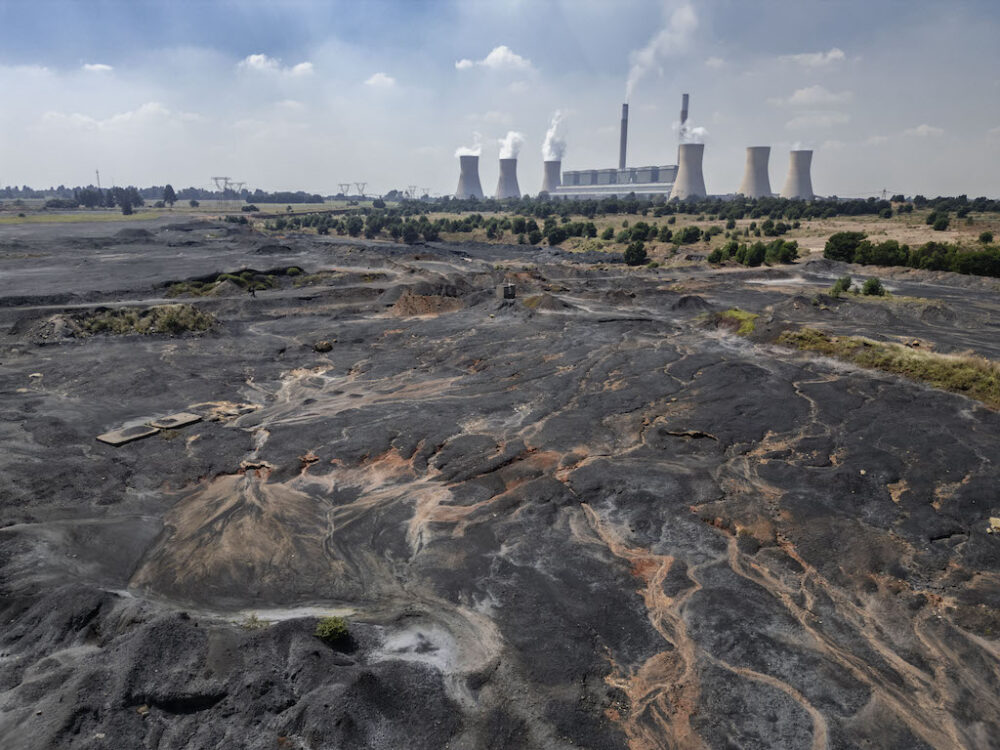
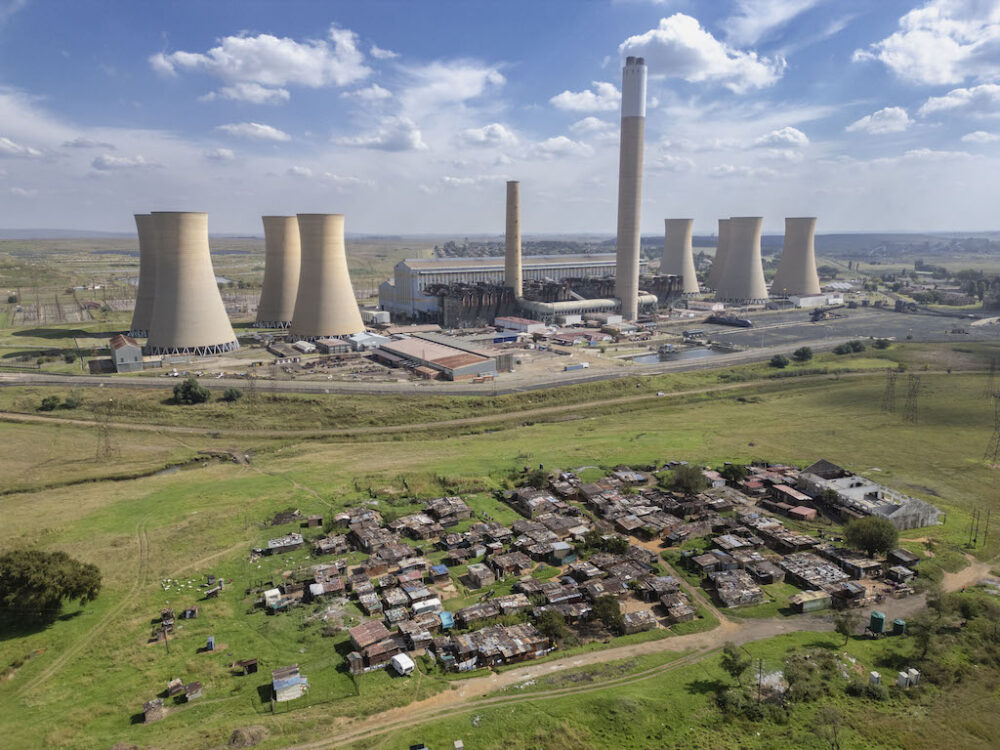
South Africa’s latest coal-fired power station, Kusile, took decades to finish building, cost hundreds of billions of rand and became one of the most controversial infrastructure projects in the country’s energy history.
Now finally fully operational, it is being celebrated as a solution to a power crisis — even as the country has committed to ending its dependence on coal, the fossil fuel that powers it.
The completion of Kusile’s sixth and final unit in 2025 marked the end of a construction programme that began in 2008, ballooned from an initial budget of about R80 billion to an estimated R161bn and became a byword for state capture, contractor corruption and engineering failure.
For years, partially built units sat idle and completion dates were repeatedly missed. When it entered commercial operation in September 2025, national utility Eskom declared the end of its multi-decade build programme.
Load-shedding, the rolling blackouts that blighted homes and businesses for more than a decade, had eased significantly and Kusile was held up as proof that the country had turned a corner.
During an April visit to the power station, near Witbank/Emalahleni in the
Nkangala District of Mpumalanga, President Cyril Ramaphosa described it as “the backbone of South Africa’s electricity supply”, together with Medupi Power Station in Limpopo.
Both stations are designed for an operational lifespan of 50 years. This means that Kusile will retire in 2060, three decades beyond government commitments to phase down coal by 2030 to contribute to international efforts to reduce harmful greenhouse gas emissions.


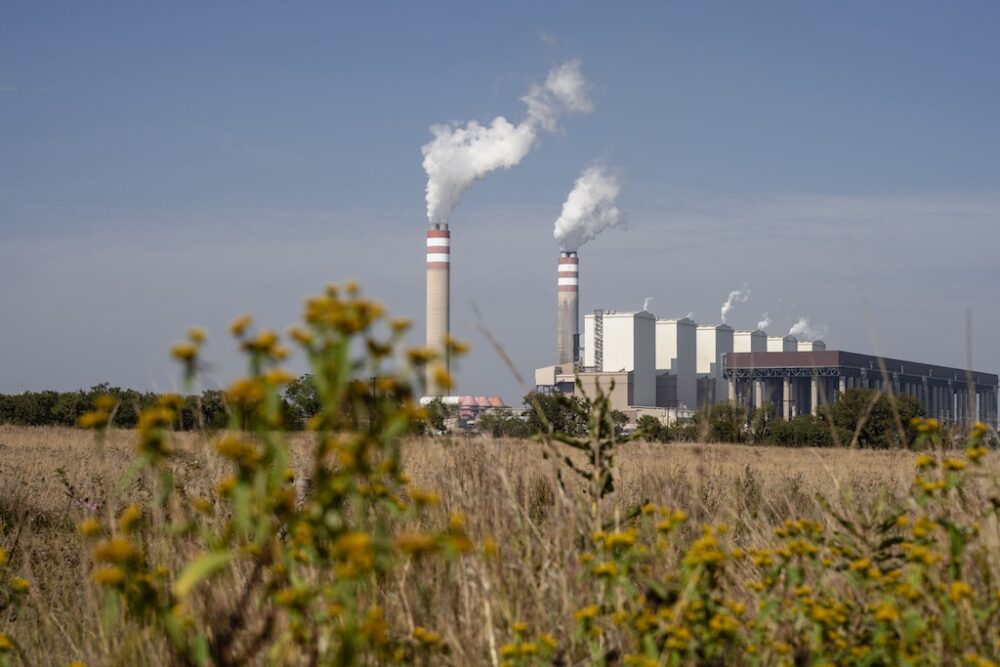
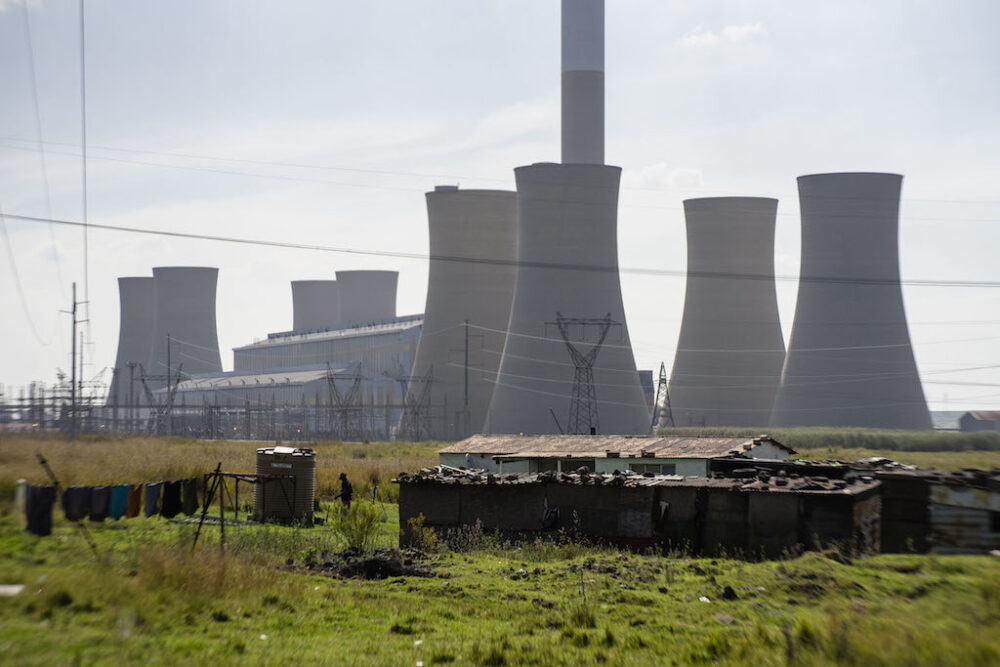
Ramaphosa’s visit to Kusile signalled that the country’s ambitions to wind down coal are slipping. The latest data collated and shared by the Oxpeckers #PowerTracker mapping tool shows that 14 coal-fired power stations in Mpumalanga and Limpopo anchor the national grid, with nearly 38 000MW of installed capacity.
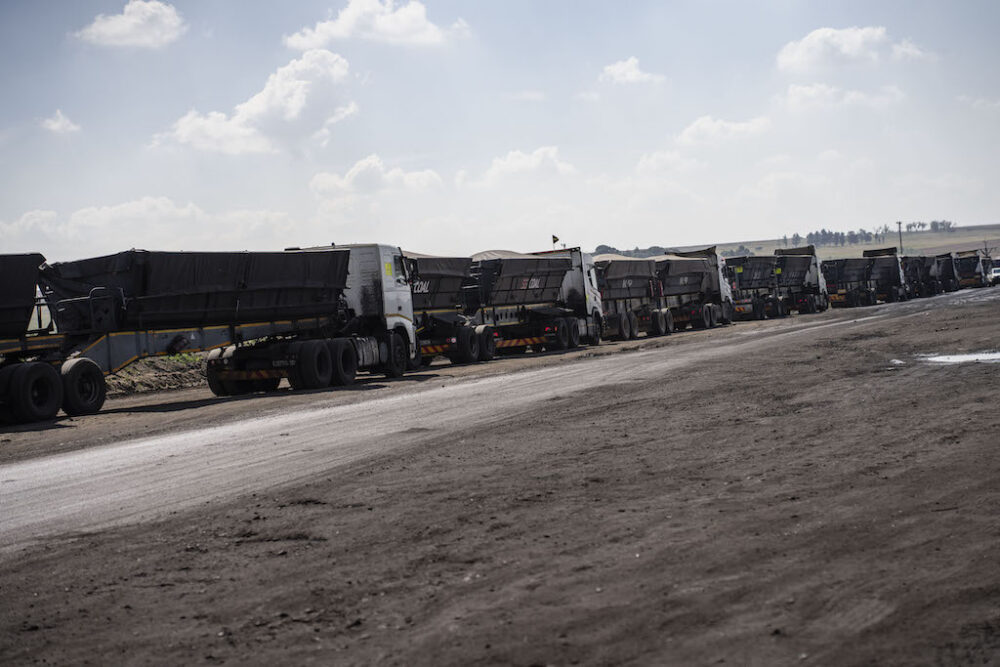
The tool also identifies 16 coal mines in both provinces, producing about 125 million tonnes of coal annually.
According to the Integrated Resource Plan of 2019, which set out the country’s energy mix and the procurement of generation capacity, more than 11 000MW of coal capacity was expected to be retired by 2030.
However, Eskom has delayed the shutdown of several ageing stations due to electricity supply risks. Only one power station has been closed. As of April this year, only Komati near Bethal had been retired, ending its generating capacity of 1 14MW.
#PowerTracker says: “Eskom envisions that the Komati site will eventually provide 370MW of solar, wind and battery storage power to the grid.”
Other power stations, including Hendrina, Camden and Grootvlei, are expected to operate beyond previously determined timelines, with some units likely to remain online beyond 2030.
Duvha, Kendal, Kriel and Matimba power stations will be decommissioned between 2035 and 2040.
Politics, policy and mistrust
Researchers say the slowdown is not only technical, it is also political.
Julia Taylor, a researcher at the Southern Centre for Inequality Studies at the University of the Witwatersrand, said the just energy transition (JET) introduced new tension into the country’s policy environment.
“In a paradoxical way, the JET agreement with Global North countries created suspicion locally,” she said. “It shifted priorities and reduced buy-in from some domestic actors.”
Taylor said consultation failures had deepened mistrust: “People were informed, not engaged. Eskom should be going to communities and asking what the transition means for them.”
She also raised concerns about whether the transition to renewables was delivering on its core promise. “I am concerned that the transition is proceeding in an unjust way,” Taylor said. “We should be tracking electricity prices, energy poverty, unemployment and inequality to understand whether it is working.”
International debt
Debt tied to fossil fuel infrastructure kept coal plants alive to repay loans, said Alia Kajee of civil society grouping Fair Finance Coalition: “This locks South Africa into the mineral-energy complex.”
Kajee explained that public finance institutions acted as guarantors, “ensuring profits are realised by private actors while vulnerable communities carry the lived reality of extraction”.
She said the lack of transparency around JET processes left workers and households least likely to know how funds were realised.
“Without radical transparency, we risk a transition of murky deals where a few benefit at the expense of those most vulnerable.”
She called for independent monitoring, community?led oversight and non?debt creating finance such as grants.
“Accountability must be ensured through practical, justice?centred mechanisms,” she said, warning that without them, funds pledged under the JET would bypass workers and households.
Climate targets under pressure
South Africa’s international climate commitments are tied, in part, to the coal phase-down.
The country’s nationally determined contributions (NDCs)— commitments made under the Paris Agreement to cut greenhouse gas emissions — set limits on how much the country could emit by 2025 and 2030.
The targets were developed alongside the Integrated Resource Plan 2019, which assumed that a significant share of coal-fired power would be phased out.
Energy-sector emissions accounted for about 78% of national greenhouse gas emissions in 2022, making electricity generation the central lever for reducing emissions.
There is also a timing risk. South Africa’s emissions trajectory assumes a shift from a plateau into a decline in the 2030s. Delayed coal closures compress the transition window, increasing the likelihood of a more abrupt and potentially disruptive transition in later years.
Cynthia Moyo, a climate and energy campaigner at activist group Greenpeace Africa, said the trajectory raised serious concerns about whether South Africa could meet its NDCs without significant policy reversal.
“South Africa’s NDC targets were designed around a planned decline in coal use,” she said. “Every extension of a coal plant moves the country further away from that pathway and increases the scale of cuts required later. What we are seeing is not just delay, it is a structural widening of the gap between policy commitments and implementation.”
She added that the gap was reshaping the country’s emissions outlook. “If coal remains online longer than planned, the 2030 targets become significantly harder to achieve and the transition after that point becomes far more abrupt and economically disruptive.”
Pollution and public health
The consequences are not only global — they are local. South Africa’s minimum emission standards regulate pollutants such as sulphur dioxide and particulate matter. Many older coal plants cannot meet the standards without costly retrofits.
In 2025, the government granted time-limited exemptions that allowed several plants to continue operating beyond compliance deadlines.
Environmental organisations argue that this prolongs exposure to harmful air pollution. A report released on April 22 by Greenpeace Africa, the Centre for Research on Energy
and Clean Air and non-profit organisation groundWork estimates that delaying the phase-out of coal could result in 32 000 additional premature deaths between 2026 and 2050.
“Our analysis shows that the health impacts of coal pollution are severe, widespread and
entirely preventable,” said Daniel Nesan, an analyst at the Centre for Research on Energy and Clean Air.

Communities left behind
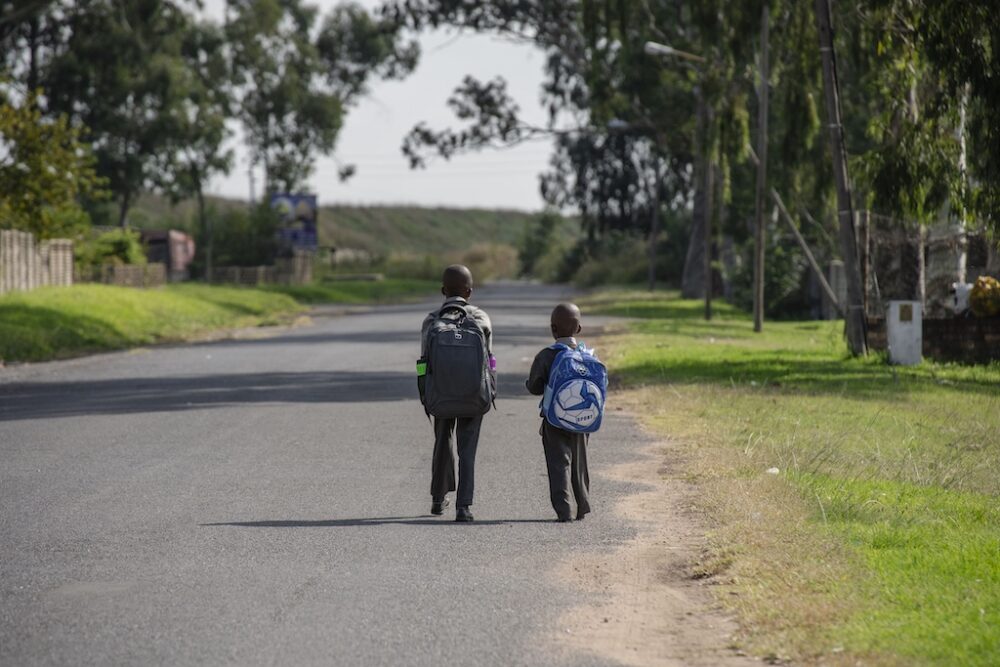
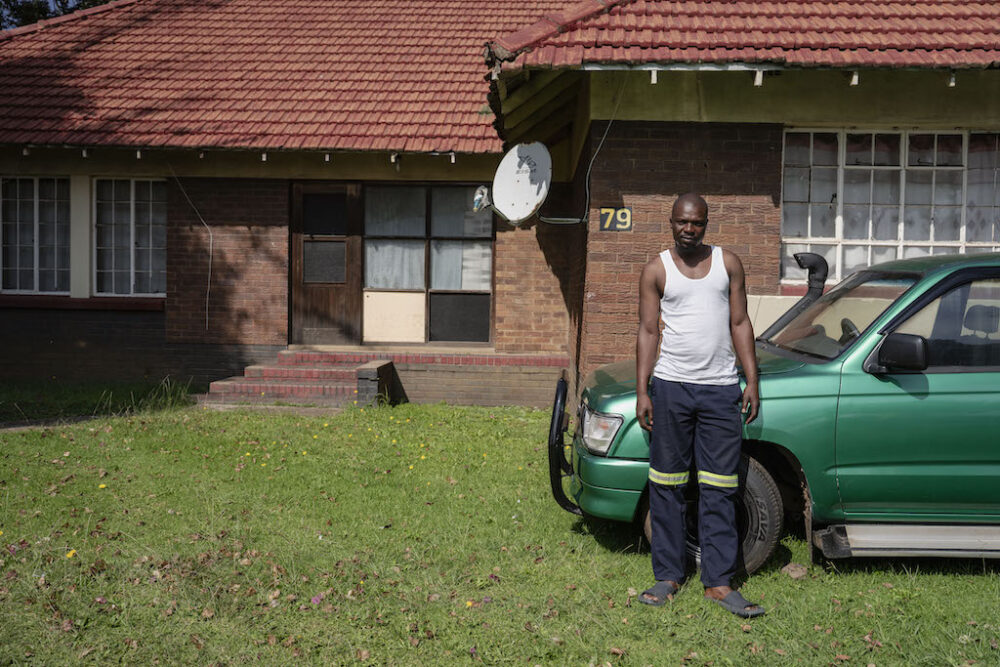
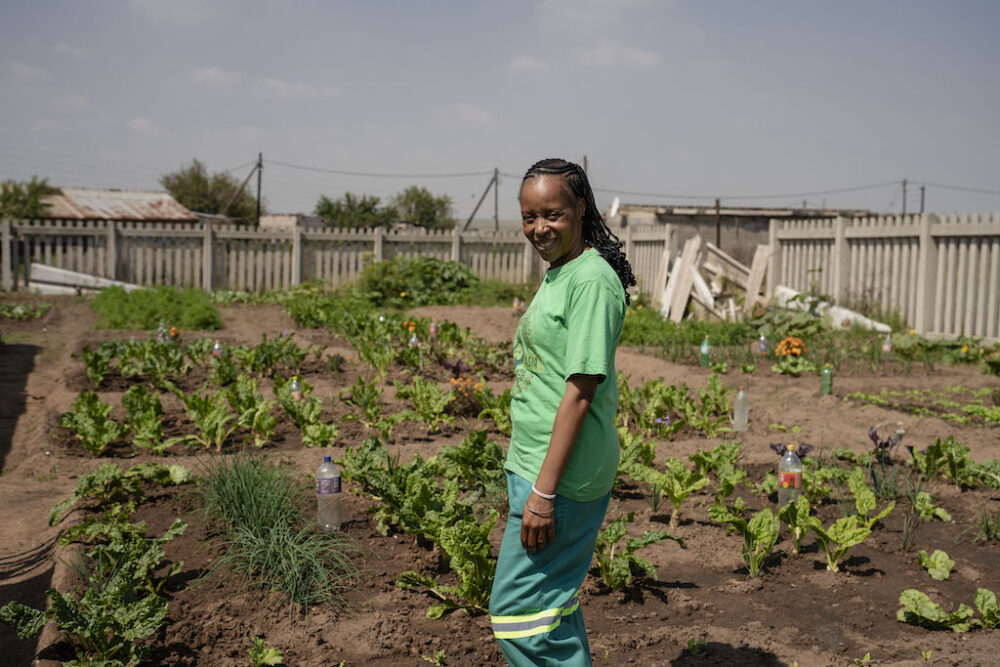
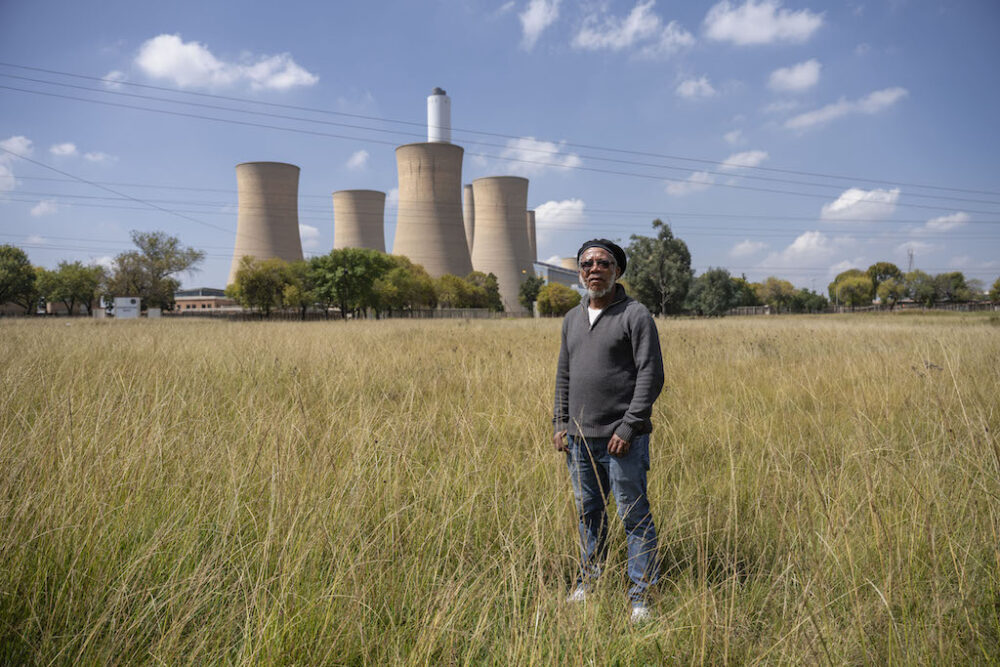
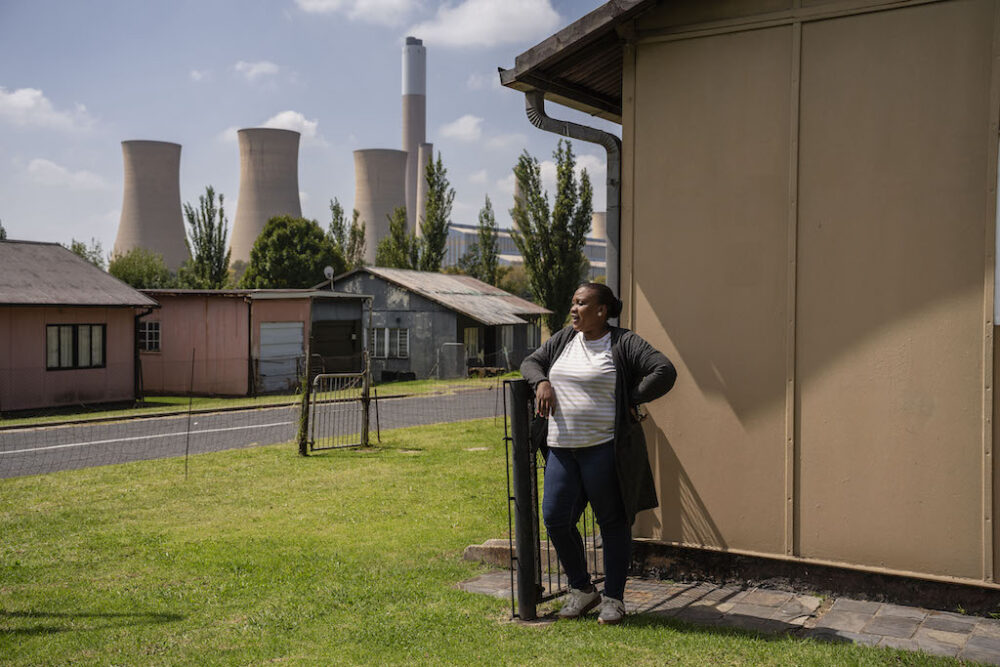
In Komati and surrounding areas, residents describe a transition that has happened but without support.
“There’s a massive information gap between the community and stakeholders,” said Martin Sefawa, a community leader from the Mining Affected Communities United in Action. “The closure of Komati happened without proper consultation. Massive job losses followed.”
Residents say the economic effects have been immediate. “It’s a coal area. When you shut down the power, you shut down the people,” said Buti Rakgetse, a former coal miner. “Komati was alive. Now it’s dead.”
For others, the issue is exclusion. “We were never properly informed,” said Gloria Modise, a resident. “I don’t know what the just transition is. People come, take names and leave.”
In Emalahleni, similar concerns persist. “We are not included in any planning,” said Elizabeth Motloung, a resident from Masakhane informal settlement. “You just hear that opportunities exist — and they’re already taken.”
Environmental activist Zanele Msibi said the burden of the transition was falling unevenly. “When Komati closed, it brought a lot of burden to women,” she said. “There is no trust. For many years there have only been empty promises.”
With 32 000 additional premature deaths projected if coal phase-out is further delayed and international climate finance tied to a transition that is stalling, the gap between South Africa’s stated commitments and the reality on the ground continues to widen.
Find the data collated for this investigation under the Oxpeckers. Get the Data section here. You can also track the closure of coal stations and coal-based energy sources on our #PowerTracker tool here
This investigation by the Oxpeckers #PowerTracker project was supported by the New Economy Hub and Ford Foundation.
Submit and get free exposure here: Showcase Your Business | Advertise Your Special Offers.