Is the BMW i5 M60 an electrified M5?:
BMW remains a focused company. Before you roll your eyes, wait, let me clarify. When the Bavarian car maker decided to offer electric vehicles under its “i” division, there was more than method to their madness.
The genesis of this is the i3, which was launched in South Africa in 2015. Since then, a slew of models have followed this trajectory, not least of which are the i4 and i7, based on the 4 Series Gran Coupe and 7?Series, respectively, the caveat being that they are fully electric.
Now the i5 has joined the line-up and, yes, you guessed it, an electrified 5 Series.
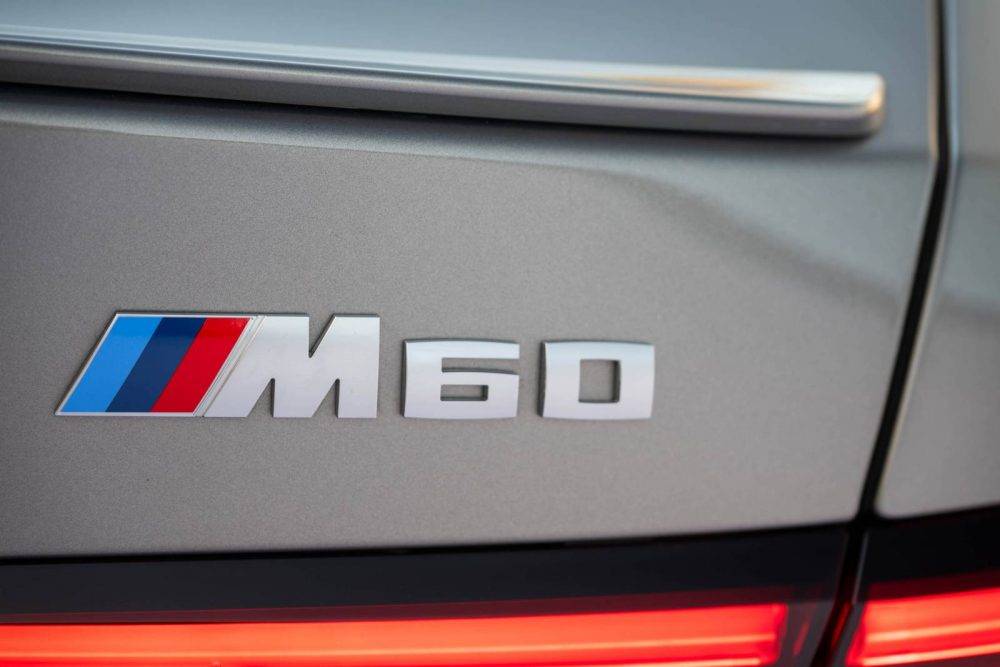
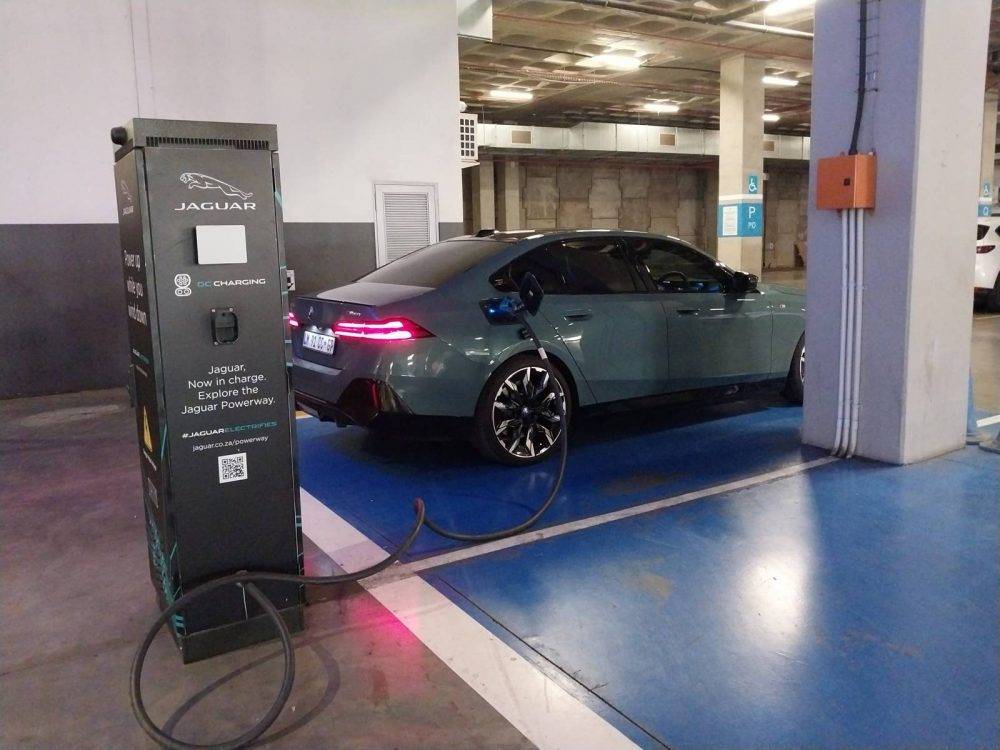


On test here is the flagship variant of the i5, the M60 — you also get an eDrive40 derivative — and it has a lot of the fundamental executive sedan bases licked.
Upper-executive sedan proportions, check! Well-appointed cabin, check! Practical cabin and boot space, check! And, in the case of the M60, searing performance, check! All these conspire to make a very competent saloon that should still appease fans of the 5 Series.
While the design is somewhat contentious when viewed in pictures, in the metal, it all comes together quite eloquently. The long, sloping bonnet, roomy passenger cell and stubby boot lend the model that classic three-box design we have come to appreciate in sedans.
The i5 is, at worst, interesting to behold, especially the standard M Performance specification that sees 21-inch wheels at each corner, tailored side skirts, a rear diffuser and a liberal sprinkling of M badges.
Granted, the sedan segment is on the decline in Mzansi but the premium marques remain more buoyant than those outside of this realm, so cars like the i5 need to be a cut above to make absolute sense.
So, let us deep-dive into the intricacies and leave the exterior aspects for you to pore over.
Enter the executive lounge-like cabin, and it is here that the Bavarian marque has moved the goalposts, compared to the outgoing fiver.
Tactility has moved more than a few rungs up the premium ladder.
The cabin appointments are top-drawer, top-tier levels of loftiness, and one cannot help but sense that the designers got the upper hand during the boardroom negotiations, and all the better for the vehicle.
Everything has a tactility befitting an executive saloon of this calibre, and even beyond, such is the quality compared to the outgoing model.
This spills over into the sumptuous seats, which have heating and cooling functions and offer great scope for adjustment.
The infotainment screen is at the heart of the interior’s functions and you need a fair bit of acquaintance to be able to navigate the labyrinth of apps which, thankfully, once licked, are intuitive enough.
Powering the i5 M60 is an 81.2kWh battery pack, enough to give you a 512km range on the WLTP (worldwide harmonised light vehicle test procedure) cycle.
Of course, this depends on various parameters, including driving style and ambient temperature.
It powers an electric motor on each axle for a combined output of 442kW and 795Nm, enough to hurtle it from 0 to 100km/h in 3.8 seconds, to a top speed of 230km/h.
As you can see from the numbers, this top-dog i5 is seriously brisk and gets on swiftly with moving the hefty 2.3 tonne sedan.
Four-wheel traction means immediate and surefooted purchase off the line and on varying surfaces. That inherent immediate acceleration of EVs is truly something to behold, especially in this performance-bent derivative. It feels like a proper kick-in-the-gut acceleration.
It is devastatingly quick in a straight line but what of corner-tugging duties? Well, let’s just say this is where EVs are still wanting, thanks to those heavy lithium-ion batteries.
Braking, in particular, is where one feels the penalties. The car overshot a braking point more than once as the pedal, once depressed, simply could not slow down the vehicle enough, due to inertia.
On the flip side of the coin, it is an executive sedan that imparts a feeling of calmness that needs to be experienced to be appreciated.
The i5 proved an easy car to live with and, during the test tenure, we used the public DC fast-charging network, which worked a treat, thanks to the recent respite from load-shedding.
Charging the vehicle from almost empty takes just over two hours on a DC charger and would be around eight hours on a home wall-box at 11kW — essentially overnight.
As battery technology improves, reducing weight and charging duration, EVs are great when the infrastructure is in place and working optimally.
The only thing left now is to make EVs more viable to purchase. The department of trade and industry needs to execute the next phase of the white paper agreement on EVs, changing the status quo where an ad valorem 11% tax, essentially a luxury tax, is slapped on over and above the 25% VAT on imported cars.
The BMW i5 M60 is a precursor to what a full-fat EV M5 could do, should the marque move that way. At R2?190?000, the i5 M60 commands a hefty price but it offers handsomely for that princely sum in both the luxury and performance quotas.
People starve as Zimbabwe drought deepens:
Mother of four Laiwa Musenza is already reliant on aid from a local NGO to feed her family and Zimbabwe’s drought is only getting deeper.
At a farm on the outskirts of the capital Harare, a queue of children, some as young as three, and a small group of older people gather near two large cooking pans. A volunteer calls out names from a register and, plate in hand, the hungry take turns to step forward and receive small portions of macaroni and a soybean stew. For most, it is their main, and perhaps only, meal of the day.
The makeshift feeding station was the idea of Samantha Muzoroki and is the newest of five similar centres run by the immigration lawyer’s Kuchengetana Trust. It was started four months ago after parents at the Karibone Farm compound said children were going to bed hungry as a result of crop failure in most parts of Zimbabwe. Residents at Karibone earn a living from working part-time at neighbouring farms, but this year the farms had no jobs to offer because of the drought.
“We could only manage one meal a day. For those of us with young children it was particularly tough,” said Musenza.
Kuchengetana, which means “looking after each other”, provides two meals to about 1??500 children a day at its five kitchens. But Muzoroki fears that her organisation may be overwhelmed as the drought continues.
“Our movement is donor driven. We have had a huge dip in donations. We are receiving $ 400 every three months, down from $ 600, which is way below half of our budget. We try to make sure that every day everyone we cater for is able to get at least a meal a day. The drought is going to affect us in many ways and I hope and pray that it doesn’t lead us to closing any of our centres,” she said.
Zimbabwe is one of a band of countries in Southern Africa experiencing food shortages caused by the drought, which has been exacerbated by the El Niño climate phenomenon. Last month, President Emmerson Mnangagwa declared a state of disaster, saying the country needed at least $ 2 billion to respond to the drought. At least 7.6 million people, almost half of the population, are in need of aid.
The UN has appealed for $ 429.3 million in aid. The UN Children’s Fund (Unicef) also launched an urgent $ 84.9 million appeal last month “to provide lifesaving interventions … amid a complex humanitarian crisis exacerbated by water and food shortages”.
“Zimbabwe has been experiencing drought conditions now for a few months with failing harvests in key areas of agricultural production,” Unicef’s Nicholas Alipui said. — AFP
Doctors launch digital solution to boost health literacy in South Africa:
Three doctors have launched a digital solution to help bridge the gap between health literacy and better healthcare.
Safe Patient, a WhatsApp bot platform, provides the patient with step-by-step information about pre-surgery medical processes.
Dr Pradeep Mistry, a consultant vascular surgeon, president of Vascular Society of Southern Africa (Vassa) and vice-president of the World Federation of Vascular Surgical Societies, has been working alongside Dr Dirk Le Roux, vascular surgeon and immediate past president of Vassa, and Professor Jay Pillai, academic head at the Wits Vascular Unit and Wits Donald Gordon Medical Centre, to develop the solution.
They said Safe Patient is the first of its kind in the world and is a result of more than two years of research in peer-reviewed publications and the state of health literacy in South Africa.
“We’re going to educate people that there is a problem first, and then it empowers people to do something about it. You have to identify the problem for people first before you even give them a solution. It’s promoting wellness and well-being in our society, our patients and doctors,” Mistry said.
Safe Patient provides the patient with information on the advantages, indications, eligibility, care, success, complications, risks and recovery of the operation they will undergo. The patient must read each prompt, and confirm that they understand the information, which will lead them to a consent form.
If the patient does not interact with the platform or does not agree and understand the medical prompts, their doctor is alerted and they can book a face-to-face consultation to get clarity.
The information used on the bot is not generated by artificial intelligence, the doctors said, but is instead research that comes from several credible, peer-reviewed articles that they broke down and simplified for people without a medical background. This, they said, eliminates the chances of misinformation and disinformation.
“So the first thing is your proof of clinical outcome. In other words, whichever way you look at it, we take masses of people and educate them properly. They don’t just get better from the operation, they get better from the education. And therefore that educational format has to be formalised, by peer-reviewed publication,” Pillai said.
Safe Patient has audio prompts in English and Zulu for now.
“The concept in terms of educating patients in the peri procedural period will result in empowering them down the line to take better care of themselves, decrease hospitalisation, be compliant with medication and spread the message of wellness after to improve community health as opposed to just help to the individual,” Mistry said.
The concept was also born out of the legal issues medical doctors have encountered with informed consent.
“It protects the doctor for practising good medicine, benefits the patient because of education transfer and decreases the legal costs downstream from litigation,” he added.
According to Statistics South Africa, non-communicable diseases such as cardiovascular diseases, cancer, diabetes and chronic lower respiratory diseases increased by 58.7% from 1997 to 2018 in South Africa. The median age at death in years was 65 for males and 69 for females.
Pillai said surgery is a big risk and health literacy is crucial not just for the patient but also for ethical, legal and medical considerations for doctors. He said the issue of informed consent is very rarely, unknowingly, practised by surgeons, and this can have major legal repercussions for them.
“You must tell the patient about the disease process, you must tell them about the operation that you’re going to do, you must tell them about the other operations that may be similar that you’re not going to do, and then you need to tell them if [the surgery is not done] what’s going to happen to them, and they must understand all of that.
“Then you need to tell them about the cost of the procedure, who else is involved in the procedure. Then you are going to include diagrams, the family, the cultural issue and then make an assessment whether they understand,” he said.
The patient can then make an autonomous decision about whether they would like to go ahead with the surgery.
“So the law indicates it must be autonomous, you must make decisions for yourself, you must discuss it with your family, and you must be educated about it. In other words, I must transfer the information to you, and that information needs to become knowledge, not just not just reading but to ensure that you have understood it, and then be able to apply it now, so it’s not easy.”
It’s an onerous process, he added, because it takes time to explain everything to patients in great detail and ensure that they understand what the doctor is saying before they can proceed.
But, Mistry said, Safe Patient does not replace the doctor, it empowers the patient and guides them in the right direction.
The Economist published a report on health literacy around the world in 2021 and found that South Africa ranked poorly when it comes to creating policies that improve health literacy, and instead relies on health promotion programmes to educate the public.
The report states that aside from the absence of a strategy or policy to improve health literacy levels, no evidence suggests South Africa has a body that champions health literacy, nor a population-based survey available for health literacy.
It also highlights that there’s no evidence of an engaging health system portal, training for health professionals and organisational health literacy initiatives.
When health literacy levels are low, people are at higher risk of death, especially those who suffer from cardiovascular disease, diabetes and mental illness. But people with high literacy levels make better health decisions, the report states.
Professor Mathildah Mokgatle, the head of department of public health at Sefako Makgatho Health Sciences University, said when people are literate in health and medicine, they know when to seek help.
“People will screen or monitor themselves, and they will report early when cases are still manageable for primary health care, but when communities are not informed, they stay till their [conditions] are advanced and they are complicated, then you find a higher proportion of people who need advanced interventions that are more costly.”
Raising the HIV/Aids misinformation issue in the early 2000s, Mistry said, “If we had an educated population, then, there would be a bigger awareness on the importance of anti-retrovirals. Today, we still a country with the biggest burden of HIV positive people percentage wise in the world, you know, so it’s a legacy of bad decision making, poor information and misinformation”
Although The Economist determined that South Africa’s health literacy levels are relatively low, it noted that digital technologies in the area are emerging.
For instance, South Africa also has MomConnect. A cellphone-based platform designed to facilitate pregnant women’s interaction with healthcare providers. It allows pregnant women to register themselves in the health system, it sends health promotion messages and allows women to feedback on the service received.
Another example is Ros Dowse, an emeritus associate professor at Rhodes University, who used pictograms, simple two-dimensional visuals, to convey health information for HIV and tuberculosis patients on how to take their medication.
Mokgatle said these interventions show there is progress in health education, and understanding the difference between literacy, education and health promotion.
“So health literacy is being underplayed by health education and health promotion is also an extensive exercise of empowering people by you know, giving them responsibility by you know, in showing them how to take care of their life for them to develop their patient and community centre project that protects their well-being but health literacy is a big chunk of this aspect.”
With South Africa’s health landscape taking a turn towards the recently signed National Health Insurance Bill, the deputy minister in the presidency, Pinky Kekana, said public and private healthcare will join hands to promote health literacy.
“This element of health education, and understanding the basics has to go on. And if the private sector and public sector come together to say, guys, can we all be patriotic South Africans and start to educate our people about what is in it for them on National Health Insurance, it’s a step in the right direction,” she said.
It also raises the basic issues that doctors or nurses or professionals will require, so there’s “synergy in that kind of engagement”, she said.
“If we see some of these gaps, we have to come in and look at some of these gaps and start to say, how do we join hands, and start to help our people to understand their basic rights as patients and some of these things.”
Submit and get free exposure here: Showcase Your Business | Advertise Your Special Offers.