
Is the idea of rehabilitation redundant in South Africa?:
Dedicated to Amanda, since she inspired me to rethink the issue of crime – and especially cyber crime – critically.
When I was awarded my PhD in December 2018, I was firmly under the belief that rehabilitation was not only feasible in the South African corrections landscape, but that stigma against ex-offenders was the major stumbling block prohibiting their sustainable reintegration and eventual possible rehabilitation.
Since then, more recent data has convinced me that the idea of any meaningful rehabilitation in South Africa is redundant, and that clinging to this outdated way of thinking is an obstacle to making any further progress, assuming that progress is still possible. By rehabilitation, of course, we mean desistance from committing further crime.
Terrifying as the idea might be that rehabilitation could be redundant, the German philosopher Martin Heidegger’s notion of the “radical thrownness” of our historicity implies that we have to face this fact to find realistic solutions, assuming that there are any.
For years, criminologists were aware that rehabilitation in this country had been severely compromised. Reasons include the existence of the prison-industrial complex (PIC) and the harsh stigmatising shaming culture in South Africa. The PIC is the idea that ex-offenders could be recycled for profit — beautifully exemplified by the Bosasa/DCS tender-and-service-provider scandal — rather than sustainably reintegrated into the community to forestall further criminal behaviour. Accordingly, it has been suggested that,
This racket [the presence in this country of the PIC] significantly skews the picture of crime patterns and statistics from the perspective of so-called “objective” crime, in that it has been demonstrated that the confluence of a number of divergent forces other than the commission of crime per se (such as the presence of a PIC) arguably propels people into incarceration.
Add to this the notion that South Africa has one of the harshest prison stigmatising shaming cultures (perhaps on a par with that of the US) in the world, and we have the makings of a perfect storm regarding an avalanche of crime. While all cultures use shame to manage crime, stigma, unlike reintegrative shaming, drives ex-offenders away from the idea of reintegration into the arms of accepting criminal subcultures. John Braithwaite, the well-known Australian comparative criminologist, describes the stigmatising shaming model in his book Crime, Shame and Reintegration (1989) as being “criminogenic and counter-productive.” Stigma, argues Braithwaite, is “cold and punitive” while reintegrative shaming is “warm but firm.”
In her very readable book, The New Jim Crow: Mass Incarceration in the Age of Colorblindness (2012), Michelle Alexander explores the idea of stigma as embedded in incarceration as our dominant sentencing regime (which it need not be).
The disturbing phenomenon of people cycling in and out of prison, trapped by their second-class status, has been described by Loic Wacquant as a “closed circuit of perpetual marginality.” Hundreds of thousands of people are released from prison every year, only to find themselves locked out of the mainstream society and economy. Most ultimately return to prison, sometimes for the rest of their lives. Others are released again, only to find themselves in precisely the same circumstances they occupied before, unable to cope with the stigma of the prison label and their permanent pariah status.
Stigma and the PIC, as Alexander’s quote demonstrates, work hand- in-hand to crush the notion of rehabilitation. These features which obscure the debate on meaningful rehabilitation in South Africa, represent a phenomenon which the German philosopher Jürgen Habermas, a contemporary of Heidegger’s, calls, albeit in another context, “systematically distorted communication.”
Despite these two tremendous hurdles to the achievement of the ideal of rehabilitation — the PIC and the stigmatising shaming culture — most mainstream criminologists in South Africa still subscribe to the notion of achievable or sustainable rehabilitation, if only in principle.
I will outline the three instances which led to my conversion from the belief that rehabilitation is feasible to my new line of thinking that it is redundant, before briefly sketching the philosophical implications of this paradigm shift — since that is what it is.
Firstly, since South Africa is anything but a post-conflict society, it is worth noting the value of a human needs-approach within the context of a conflict management perspective. John Burton, certainly one of the giants in the field of conflict resolution or management, contends that the use of force, which is what stigma essentially is, is not an effective source of control. He suggests that [d]eterrence does not deter sane behaviours, and the power political frame was unrealistic because no account was taken of relevant human factors: here are ontological, inherent human needs that cannot be suppressed, (needs of identity and recognition that are the bases of relatedness), which make deterrence sometimes irrelevant at all societal levels.
By marginalising ex-offenders economically and socially, as a stigmatising shaming culture does, they are denied basic human needs satisfaction, which becomes a major source of contention/resentment, and is ultimately bound to lead to conflict (read: re-offending or recidivism).
Secondly, recidivism or re-offending is clearly a powerful one in South African correctional institutions. Although no accurate figures appear to be available, indications are that as many as nine out of every 10 ex-offenders return to a life of crime. With a recidivism rate of as high as 90%, South Africa certainly has one of the highest re-offending rates in the world. Stigma, the PIC and the dismissal of basic human needs satisfaction have contributed to this lamentable state of affairs.
Finally, Pat Carlen, former editor-in-chief of the British Journal of Criminology, argues that in a society where ex-offenders have nothing to rehabilitate to, the idea of rehabilitation is nothing if not “penal imaginary”. A state of affairs compounded, undoubtedly, by stigma, marginalisation, the PIC and unmet human needs satisfaction.
This is so because “[t]he majority of criminal prisoners worldwide have, prior to their imprisonment, usually been so economically and/or socially disadvantaged that they have nothing to which they can be advantageously rehabilitated. They are returned to their place in society, but from that disadvantaged place they are repeatedly returned to prison.”
Without the political incentive for fundamental economic change, a state of affairs exacerbated, for example, by increasing and deepening levels of inequality, the fortunes and possibilities for rehabilitation in South Africa will not and cannot change.
Indeed, as Burton suggests: “The only option, in politically realistic terms, was to resolve the social and behavioural problems that led to specific conflicts, and not try merely to suppress them or to settle them by coercion.”
What, then, would be the implications of the redundancy of the ideal of rehabilitation in South Africa, a country already awash with crime and re-offending? In my view, we are in the midst of a paradigm shift.
According to Thomas Kuhn, arguably the 20th century’s most influential philosopher of science, a paradigm shift occurs when the central idea around which a paradigm is arranged — the issue of rehabilitation, for the sake of illustration — runs up against many anomalies (the PIC, stigma, the infeasibility of rehabilitation on the whole, etc.) until the paradigm becomes untenable. At this point, it is rejected and replaced by another, certainly incomprehensible new paradigm.
In The Structure of Scientific Revolutions (1970), Kuhn develops the argument that paradigms often overlap and therefore scholars attached to the former central idea (rehabilitation) work on a notion incomprehensible to the new thinking.
To my mind, this new paradigm in criminology is almost certainly a reflective, philosophical dimension embracing a critical edge, as opposed to the empirically-obsessed activities of mainstream criminologists in their attempts to add to and/or aid government-aligned agendas insisting on rehabilitative programming.
Criminologists critical of so-called “correctional” criminology have called for criminology to reassess its values as well as their commitment to fair play and justice.
Critical criminology comprises many disciplines that scrutinise a government’s collusion with big business, such as green criminology (which criticises government’s complicity in environmental crimes and global warming), peacemaking criminology (searching for peaceful means through which to resolve conflict), abolitionist criminology, feminist criminology (which examines the contradictions that underlie crime control under conditions of patriarchal oppressions), and critical race criminology.
Likewise, Pat Carlen argues that “a critical criminology must try not only to think the unthinkable about crime, but also to speak the unspeakable about the conditions in which, and by which, it is known”.
Indeed, in the perceptive words of Eugene McLaughlin, professor of criminology based at the School of Policy and Global Affairs in the University of London, mainstream criminologists tend to uncritically legitimise the state’s unjustified and unlawful “criminalisation and marginalisation practices”. One such marginalisation practice is the recycling of ex-offenders for profit (and/or other nefarious purpose[s]) rather than public safety.
If “nothing works” in terms of sustainable rehabilitation and reintegration, as indeed the literature on rehabilitation efforts shows evidence of despair, we should ask ourselves why this is so and draw the obvious conclusions. Nothing works because criminologists are asking the wrong questions underpinned by the misguided assumptions advanced by (an) agenda(s) with vested interests — the PIC being a case in point.
A new, philosophically guided, critically minded paradigm is sorely needed and, in my estimation, already upon us. Even if the rehabilitation paradigm is redundant, fresh, reflective and critical thinking could open valuable, new paths for addressing the problem, as Heidegger would be the first to admit.
Dr Casper L?tter is a conflict criminologist affiliated with North-West University’s School of Philosophy (Potchefstroom).
The views expressed are those of the author and do not necessarily reflect the official policy or position of the Mail & Guardian.
Restless Prejudice: Is higher education a right or privilege?:
There are about 503 institutions of higher education in South Africa. Of this number, 26 are universities. Since 1994, universities have experienced an increase in enrolments. Many factors, such as societal pressure, the dawn of democracy and access institutions previously reserved for whites, led to this increase.
A deliberate government policy made higher education accessible and available, in line with the Constitution and the Universal Declaration of Human Rights. In 2019, about 1.2 million students enrolled for both private and public higher education in SA. Of these, 90% ended up in public higher education institutions or universities. With this said, 65% of these students enrol through contact mode, leading to lack of space and capacity.
The Education White Paper painted higher education as a broker of “life chances” and conduit for “achieving equity in the distribution of opportunity and achievement among South African citizens”. Parents and students view a university degree as a vehicle to escape the structural inequalities and poverty and a ladder of ascendency to the corporate and public sector strata.
With limited resources available to address the capacity challenges in our universities, we ask ourselves one question: “Is higher education a right or privilege?”
Not everyone deserves/requires a university qualification
The basic education and adult basic education rights enshrined in the Constitution state that the state must provide education for all children and adults who reside in South Africa. This right is rooted to section 9(3) of the Constitution which gives right to equality and prohibits unfair prejudice. However, unlike basic education, higher education is a privilege and the state must make a concerted effort to make it available and accessible to citizens.
Availability of higher education is dependent on the availability of resources, such as infrastructure and funding. As a result, we argue that education, especially higher education, must discriminate. Higher education institutions must have fair and functional discrimination to operate effectively and efficiently.
Fair discrimination
That there are 503 higher education institutions in the country shows the variety of choices which students have post-matric. However, the majority of students choose to enrol at universities and ignore the other higher education institutions available, which can offer relevant education.
Higher education offers various types of education. For instance, universities are theory based, they create and introduce frameworks to solve societal or business problems. Technical colleges and TVETs (technical and vocational education and training) are there to offer practical experience to learners. Then there are Sector Education and Training Authorities (Seta) and the like, which are other means of post-school education.
Depending on their matric marks and the abilities of the learner, they need to either go to universities or TVETs.
Article 26 of the Universal Declaration of Human Rights qualifies that while technical and professional education should be available and accessible to all, this must be based on merit. Merit is a fair discriminatory qualifier based on unlisted grounds. It is a spectrometric tool that acts to identify a socially constructed, objective quality into and from a higher education institution.
It is a tool that is used to allocate scarce educational resources and determine access to optimise the return on investment from the tiered higher education system. Merit gives the state flexibility to allocate resources in line with politically constructed developmental aspirations.
Section 37 (1) of the Higher Education Act sets the basis for fair discrimination in higher education through an admission policy by the council of a public higher education institution.
However, the basic education system could be a solution to the overcapacity in higher education.
Learners with a pass of 30% to 40% qualify for university enrolment. This is where we argue that education must discriminate. Only students passing with an overall mark of 80% to 100% should go to universities. Others must be enrolled for TVETs and other higher education institutions, depending on the criteria set.
Fair discrimination gives the state flexibility to allocate resources and students to institutions that will unleash their potential and optimise return on investment while allowing students to gain skills required to actively participate in the economy.
The Department of Higher Education and Training recognises four conduits for post-secondary education: universities, vocational education, community education and Setas. These channels should actively allocate learners through a merit system. For example, learners with 30% to 40% and less should automatically be routed to community and vocational colleges. These institutions have the required skills, capacity and programmes to unlock potential in these learners.
It is critical to point out at this juncture that these learners can still enrol in private universities in South Africa at their own cost. While there are arguments that these learners have a right to public university education, this right is not being denied nor delayed. The learners can still achieve their degree and degree-equivalent certificates from these multiple pathways.
Lack of fair discrimination in higher education could be the main course of the increase in protests at universities calling for free education, and so forth.
The massification of higher education is leading to larger, and not necessarily wider, access to education opportunities due to structural issues in our overall education system. Primary and secondary education and other pathways to higher education have policy and programming inconsistencies that create entry barriers for pupils in school in rural and poor areas across South Africa.
While the government has attempted to mitigate financial hurdles to access, most learners in rural and poor communities might still not be able to access these opportunities.
The progressive nature of the right to higher education does not absolve the government and allow it to slack in its constitutional obligation to deliver access to higher education but rather recognise the economic and time constraints that arbitrate the provision of the right and the need for flexibility in pursuit of this right.
Progressive rights require the government to set clear goals and timeframes to achieve universal access. Access to higher education does not only mean mass admission but also talks to a wider range of learners from different socio-economic backgrounds in line with section 9 (3) of the Constitution. This means a rural learner living with disabilities should have equal and unencumbered access to higher education like any other learner.
Functional discrimination
The increasing incidents in the public domain of individuals using fake qualifications to access higher education and work opportunities reflects not only the perceived value of degree certificates but also the desperation to acquire the key to unlock the way to opportunities as envisaged in the Education White Paper. These individuals recognise that an educational qualification creates an elite citizen with a world of opportunities and that education is in itself a cold-blooded discriminator that sieves degreed candidates from the mass of the unemployed.
Recommendations
The right to higher education is a secondary entitlement that can be realised when there is equitable access to quality primary and secondary education. This means it is not a right, but a privilege. As a result, the government should prioritise putting policy in place to address the current massification of access. There has to be a clear understanding that higher education has to be fairly and functionally discriminate.
Not every learner has to acquire a university qualification. Fair discrimination requires all South Africans, regardless of background, to have an equal chance to meet the minimum standard to access institutions of higher education.
However, this access, seen as a tool to realise equality in society, is in itself a tool that propagates inequalities between graduates and non-graduates of higher education — a restless pursuit of discrimination.
Dr Motshedisi Mathibe is a senior lecturer at Gordon Institute of Business Sciences. Hamandawana Zhou is a managing consultant at Skill Share Africa Institute.
The views expressed are those of the author and do not necessarily reflect the official policy or position of the Mail & Guardian.
Celeb crossovers: So last year?:
There are dozens of high-profile lifestyle collaborations where celebrities meet big brands to sound the call to impressionable consumers. But what does it mean for the collaboration business model when these celebrity collections start to slump, both in sales and in the eye of the consumer?
Luxury houses use crossovers strategically to create quirky collectables. There are even posthumous collaborations between retailers and artists such as Keith Haring and Jean-Michel Basquiat, whose signature motifs are plastered on anything from hoodies to mugs.
South African celebrities with major collaborations under their belts include Thebe Magugu’s crossover with Dior and Bonang Mathebe’s shoe line for Steve Madden last year and, this month, artist Lulama Wolf is collaborating with H&M on a global homeware collection.
These collaborations tend to leverage the romance of individual genius and perceived affluence.
Consumers might turn to celebrities for inspiration but probably use them to compensate for their own lacklustre lives. The heights these collaborations have reached might simply be down to successful commercialised personalisation.
While celebrities and influencers are photographed wearing designer gear in luxury homes and fancy cars, they collaborate with brands that we all know and can own a piece of. But when they do not appear to wear these products in their everyday life, the essence can be lost. If these influencers are not using the products they are supposed have collaborated on, why should consumers?
Ivy Park drops the ball

Among the dozens of collaborations are Adidas’s projects with Beyoncé to produce Ivy Park and Kanye West with his now discontinued Yeezy line. This year, Puma and Rihanna announced they had again teamed up for a Fenty collaboration, the first of which was in 2014.
What these three lines have in common is they sit under the “athleisure” umbrella, where casual style meets high-performance materials and silhouettes.
The luxury of this category (besides the perceived luxury of billionaire celebrity endorsement) is the fluid style that appeals to many sartorial tribes, fans’ affinities with celebrities, and scalability of the product in terms of size, materials and longevity, as long as consumers demand comfortable clothing and sneakers.
But Ivy Park and Yeezy have bee major financial losses for the sportswear giant recently. While Beyoncé fans claim wins by securing tickets to her tour this year, Adidas reported a $ 200 million loss on Ivy Park, according to The Wall Street Journal.
Last year, it reported that Ivy Park sales had fallen 50% to $ 40 million, far below the intended $ 250 million, despite Beyoncé’s annual $ 20 million pay cheque from the collaboration. The report also says the partnership could end this year.
Fans have noted the outfits styled in Ivy Park’s latest collections are a few years behind. Colour palettes, silhouettes and choice of accessories speak more to 2018 and 2019 trends.
Today, flashy logos are leaving the collections of high-profile brands, while Ivy Park has splashed “IV” across this year’s Park Trail collection. Its bright oranges — called “safety orange” by Pantone — were more common in 2018.
Beyoncé is rarely photographed wearing Ivy Park, apart from the occasional editorial shoot or promotional Instagram post, while West and Rihanna’s street styles more often include items from their lines.
Although Ivy Park sales figures have slumped, it is unlikely that the line will disappear from South African Adidas stores anytime soon.
Yeezy dilemma


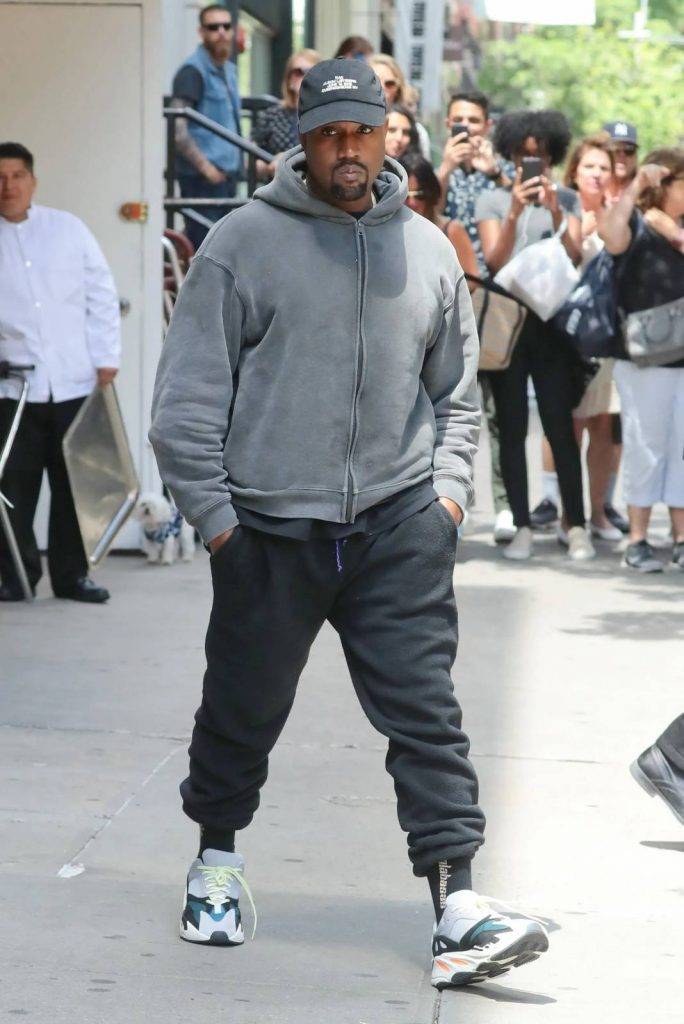


At the same time, Adidas hints at discarding excess Yeezy inventory, which it initially said it would sell without the label. It might opt to destroy merchandise, says Adidas’s new chief executive, Bjorn Gulden.
Gulden recently spoke about the brand’s tricky position of sitting on $ 1.3 billion of unsold Yeezy products after terminating its partnership with West in October because of his anti-Semitic rhetoric. Adidas said the severance would cost it €250 million.
“The value of the product is not the physical value of the ingredient. It’s the brand and merchandise that is sold at a high price,” Gulden said.
Defining Adidas’s collaboration strategy is part of refurbishing its stalling lifestyle range, which leans heavily on collaborations, he said. Focusing on big names and long-term collaborations is said to continue after working with brands like Gucci, Balenciaga and Prada, which didn’t fully resonate with consumers.
“Should we irrevocably decide not to repurpose any of the existing Yeezy products, this would result in the write-off of the existing Yeezy inventory and would lower operating profit by an additional €500 million [in 2023],” Adidas says in its 2022 annual report.
The Yeezy dilemma speaks to how much social capital is tied to these collaborations. The celebrity’s actions are as important as what wearing a pair of Yeezys means, if not more. Collaborations no longer have an ephemeral, one-off feel — they flood retail and resale markets.
But if the collaborations are only as valuable as the artist’s reputation, then is the collaboration’s downfall caused by the ongoing partnerships instead of ephemeral qualities?
Collaboration calamities
By wearing the products with their names on them celebrities push their collaborations into the democratic luxury space too. Like athleisure, democratic luxury is broad-reaching, and it sells more expensive products that might not change the consumer’s life but are status markers.
Some collaborations project an affinity with artistic sensibilities but others don’t hold the same social capital. Yeezy Boosts were highly coveted, with a price tag to match, before Adidas flooded the market with a million pairs in 2018. If you were seen wearing a pair of Yeezy Boosts in 2016, it meant you understood avant-garde design and had a lot of money to throw at sneakers. Today, consumers and Yeezy’s manufacturer want nothing to do with them.
As American economist Thorstein Veblen said in his 1899 treatise The Theory of the Leisure Class, spending has become the way people establish their position in an affluent society.
Luxury as we know it today has changed. Luxury lifestyles are rooted in old European royal courts, (think Louis XIV), which set the standards for lavish living. Today’s version of royalty are celebrities whose well-documented sumptuous lifestyles are aspirational and set the tone for what consumers deem desirable enough to buy.
If celebrities are collaborating with brands the everyday consumer can afford, it gives the illusion they can own a piece of an affluent lifestyle.
Obvious metrics to measure the success of collaborations are sales and media impressions but what is at the intersection of the consumer’s personal indulgence and conspicuous consumption? At the crux of luxury collaborations is the convergence of the collaborators’ individual histories with their realities.
Fenty failures


Although fans rejoiced at the announcement of another Puma- Fenty collaboration this year, Rihanna, like some of her billionaire peers, is not immune to a failed collaborative project. Remember when LVMH collaborated with her on a Fenty fashion label in 2019?
“The new maison, named Fenty, is centred on Rihanna, developed by her, and takes shape with her vision in terms of ready-to-wear, shoes and accessories, including commerciality and communication of the brand,” said LVMH, announcing the partnership.
However, it said in Women’s Wear Daily in 2021: “Rihanna and LVMH have jointly made the decision to put on hold the ready-to-wear activity, based in Europe, pending better conditions.”
The pause was credited to factors such as the Covid-19 pandemic and a shift in focus on Rihanna’s main cash cows, Fenty Beauty, also owned by LVMH, and the Savage x Fenty lingerie lines. But these projects speak more to the demographics of Rihanna’s fan base conditioned to expect Rihanna-adjacent products on the basis of inclusivity, accessibility and democratic luxury.
It is not surprising LVMH would bank on a fashion label boasting Rihanna, who is known for her style, ties with other LVMH designers and helped revive Puma’s lifestyle offering. But, if there is one thing that has changed in luxury fashion in the last 30 years, it is the single-minded focus on profitability, thanks to LVMH chief executive Bernard Arnault.
Luxury tycoons such as Arnault have shifted the focus from what the product is to what it represents: wealth, status and power.
“The result of all this hype is [that] a product line, Arnault says, fulfils a fantasy. It is so new and unique you want to buy it. You feel as if you must buy it, in fact, or else you won’t be in the moment, you will be left behind,” writes Dana Thomas in Deluxe: How Luxury Lost its Lustre.
But Rihanna’s previous projects and collaborations contrast the exclusionary nature of luxury, which calls to consumers to buy into this fantasy. Instead Fenty Beauty, Savage x Fenty and Puma x Fenty spoke to the reality that not all consumers can buy $ 940 Fenty denim jackets, unwearable Victoria’s Secret lingerie or $ 1 000 Yeezy sneakers.
The failed luxury fashion house shows Rihanna might have good style and a bankable image but she is a business figure, not a designer. Collaboration campaigns may put stars in consumers’ eyes, but Beyoncé is not sitting at a bench sewing Ivy Park clothing. Neither West nor Rihanna are sitting with shoemakers producing their latest sneakers.
What does this say about power of influence, if not the fantasy that you too, for a moment in your day, can live as if your life is endorsed by your favourite billionaire?
Submit and get free exposure here: Showcase Your Business | Advertise Your Special Offers.
