Israel has angry football fans to blame:
It is a confusing and bewildering time for supporters of Israel. It must be asking itself, “How did we lose control of the dominant narrative?”
It holds such influence over the Western media and the overwhelming majority of politicians in the US, Great Britain and mainland Europe.
Supporters of Israel have for decades become accustomed to entrenching the narrative that those who oppose Israel are anti-Semitic, intent on dissolving Israel and, more importantly, the Jewish people.
Although it was symbolic that scores of diplomats at the UN General Assembly chose to walk out last Friday rather than listen to Israeli Prime Minister Benjamin Netanyahu, it was not something new.
Israel and its friends have become accustomed to the majority of UN member states passing resolutions against it and its occupation of Palestine and Lebanon. It regards the general assembly as an adversarial gathering.
But there was something different about this time — you could hear it in Netanyahu’s voice as it almost cracked when he seemed to lament: “Terror seeks to destroy our way of life so there should be no confusion about this but unfortunately there is a lot of it in many countries and in this very hall as I’ve just heard good is portrayed as evil and evil is portrayed as good” (my emphasis).
Israel has had the monopoly on victimhood but today it is different — it finds itself needing to convince many that it is not the perpetrator and oppressor.
It is trying to finger Iran as the new Hitler and openly exploit the enmity between Iran and Saudi Arabia, as well as the centuries-old Islamophobia that exists in the West.
But Iran has no control of the Western media and no propaganda machine that can compete with Israel and the US!
Well, if Israel wants to blame anyone, it should start with Arsenal and Manchester United football fans — they are the root cause of Israel losing the battle of ideas.
It all began back in 2012, when former BBC reggae radio host Robbie Lyle decided that he had had enough of the mainstream media ignoring fans’ voices in their coverage of his beloved Arsenal football club.
Therefore, he established YouTube channel ArsenalFanTV (AFTV), primarily as a platform for fans’ opinions and feelings.
The channel grew rapidly and fans rallied around AFTV as they pushed for a change in ownership, as well as the dismissal of long-time manager Arsene Wenger, which became known as the Wenger Out campaign.
The campaign went viral globally. There was even a Wenger Out placard spotted at the Save SA, Zuma Must Go campaign in South Africa.
Lyle opened the door for fans walking away from the mainstream media, both television and news, and establishing their own platforms where they can speak without society’s elites controlling or censoring their views.
The television stations thought of it as just a passing fad that would most probably die off once Wenger was removed. How wrong they were!
When the fans of the largest club in Britain, Manchester United, followed suit and established a plethora of YouTube fan sites, which drew in thousands of followers in next to no time, the writing was on the wall.
For instance, the United Stand fan site in Britain has close to two million subscribers, and it is not even based in Manchester, and there are many other Manchester United YouTube fan sites in Britain and across the globe — such as in the US, Kenya and South Africa.
The mainstream media initially reacted by ridiculing and undermining the YouTubers but that just made them look like fuddy-duddies who had not kept up with the times.
Today, a number of the British television stations, as well as the premier radio sports station TalkSport, have tried to woo these fan-journalists in the hope of co-opting them and their millions of subscribers.
But the YouTube channels have remained and grown. Mainstream television stations have attempted to lure fans by clipping their own football shows and putting them on YouTube but that has not been able to shift support for the fan sites.
You might be saying, “Fascinating story, but what has that got to do with Israel and the US losing the battle of ideas?” My response would be, “Everything.”
The success of the sports fan sites revealed that YouTube was an effective platform to counter the dominant narrative that was being peddled by the mainstream media and establishment elites.
And it was only a matter of time before political analysis sites began on YouTube. Initially, they were not that entertaining — generally footage of academic lectures such as those of Slovenian philosopher Slavoj Zizek.
Young political analysts and activists, who had grown disenchanted with the conservative nature of politics in the media, as well as their local political parties, began venturing onto YouTube.
Many of them were the young activists who campaigned for Bernie Sanders’ tilt at being the Democratic presidential nominee, as well as for UK Labour leader Jeremy Corbyn.
Thus when Sanders and Corbyn were sold out by their respective party elites, these activists lacked the patience and party loyalty to remain.
Donald Trump’s election team, especially Brad Parscale, the senior digital operations head, cottoned on to the power of the internet, if not necessarily YouTube, and used Facebook effectively, with Cambridge Analytica, to guide the populace in particular demographic categories to support Trump’s campaign and defeat Hillary Clinton.
Today, there are so many openly left-wing, socialist, fiercely human-rights-based, anti-elitist, anti-political party platforms on YouTube. These sites have been effective in countering Israeli and American propaganda.
So even when Israel tried to shut the media out of Gaza, and powerful newspapers such as The New York Times ran with stories that Israelis had been raped on 7 October, there was a counter-narrative on YouTube, put together by seasoned journalists such as The Grayzone’s Max Blumenthal and Aaron Maté, that effectively debunked this story.
Another is Glenn Greenwald who also has his own channel. Greenwald famously opposed the Iraqi invasion by George W Bush, and is the journalist American spy Edward Snowden chose to be interviewed by when he revealed that American intelligence agencies had been illegally conducting global surveillance of various countries and leaders.
There’s Pulitzer Prize winner Chris Hedges, a respected expert on the Middle East, as well as Scott Ritter, a former UN arms inspector, and many others with YouTube channels, who have shown no loyalty to any political party but are practising journalism without the trappings of commercial considerations or needing to pacify editors who value their relationships with the political and business elite.
To understand how strong this independent media movement is, consider that even some journalists associated with Fox News, and therefore Donald Trump, have left Fox and established YouTube channels that have openly challenged the Israeli narrative. Among them is former US judge Andrew Napolitano.
Tucker Carlson, who was both celebrated and ridiculed while at Fox, has also established his own site and has shown a remarkable ability to be non-partisan.
It is these sites, mainly based in the West, that have effectively broken the monopoly Israel and the US have had on the narrative. In the past few months, there have been attempts to shut down some of them, with harassment and allegations of being spies for foreign governments. Ritter has had his passport taken away and his home raided by the FBI.
But, alas, the dam wall has broken, and there is no way to reverse the flow of alternative opinion.
Many have labelled social media a “weapon of mass distraction”, comparing it to the final days of the Roman Empire and the use of gory spectacles in the Colosseum of gladiator killing gladiator or Christians battling lions and wolves.
But recall that, in the Monty Python cult movie The Life of Brian, the leaders of the resistance against the Romans sit in the self-same Colosseum and plot the downfall of the Roman Empire.
Today, social media might not be the distraction many thought it would be, but it could very well be the primary vehicle to create a new order.
Donovan E Williams is a social commentator.
James Baldwin’s 1963 collection of non-fiction essays The Fire Next Time takes its title from a couplet from the old African-American spiritual Mary Don’t You Weep.
This song, which originates from the time before the American Civil War, is said to be a coded message of hope, resilience and resistance.
In his invocation of the song, Baldwin used the following couplet to foreground and title his own work: “God gave Noah the rainbow sign/ No more water, the fire next time.”
Soweto-born percussionist Gontse Makhene marvels as I share this anecdote with him.
His voice softens from its animated fervour when he tells me that he has bought a new notebook.
“On the title of the notebook, there is a sticker with the title Recovering from the Fire. On the subject line, I have written down ‘life’ and where it says class, I have written ‘2.0’.”
For most South African jazz revellers, Gontse Makhene is a well-known name.
His percussive mastery sounds the grooves, rhythms and beats of some of the most important and prolific post-apartheid music in this country.
Having worked with Nduduzo Makhathini, Madala Kunene, Malcolm Jiyane, Kwani Experience and an incredibly long list of other widely known names, Makhene is a celebrated sonic and cultural figure.
This past week, however, personal tragedy and devastation echoed above his celebrated rhythms.
On the evening of 22 September, Makhene lost his home and possessions to a fire he suspects was started by a surge when the power returned after one of Eskom’s increasingly frequent load-reductions where he lives in Molapo, Soweto.
He recalls coming home from a gig in Norwood, which he had played with Luyanda Madope, Sakhile Nkosi and Lungile Kunene.
“I remember that I had some urgency in wanting to come back home; something in me just said, ‘Eh gents, let’s go, let’s go.”
When Makhene’s friend dropped him off, he recalls him alerting him to the fact that there was smoke near his house.
He shrugged it off but, as he got closer, he saw that this was actually coming from his room, the home he had built for himself in his family’s backyard.
“I rushed to go open up — unbeknown to me I found out that, just by opening the door, the oxygen would feed the fire inside,” Makhene recounts.
“There we were, in a frenzy, trying to put out the flames but it was just too much of a blaze to put out …
“My friend had to actually pull me out. I remember him saying, ‘Yho dude, we won’t be able to handle this one.’”
After Makhene’s friend had got him away from the flames, he remembers them looking for sand and water to try to contain or douse the ravenous flames.
“I hit one of my windows with one of my hands, hence the stitches,” recalls Makhene as he shows me a deep lesion on his wrist.
The injury will cost him five weeks’ worth of work as he will be unable to play until it heals.
What Makhene lost in the fire is unquantifiable — clothes, music equipment, vinyl, record players and the many souvenirs he had collected on his musical travels across the world.
He also lost sentimental treasures he had inherited from his father, Ramoloa Makhene, whom many South Africans loved and revered for his remarkable work as both a stage and screen actor.
He lost the last of the possessions he shared with his long-term girlfriend who died from cancer.
Makhene recalls how the community helped him contain the fire.
“We called the firefighters but the closest fire station that we thought was working, in Jabulani, was closed.
“The fire brigade eventually came from somewhere else. I think they came from Meadowlands, which is quite a distance from us.”
By the time they arrived, the fire had died down.
“There were still some embers on the rooftop, and they were able to put that out, but already the community had been hard at work.”
Makhene draws a deep breath as he narrates how moved he was by his community’s involvement.
“If they weren’t there, the fire would have probably spread further,” he says.
There hasn’t been an investigation into what caused the fire.
“I was just told that I can’t really go to the police because nothing of mine is insured and so no insurance company would need an affidavit from me,” he explains.
In spite of the extraordinary financial — and emotional — blow, Makhene is still fielding calls from artists as we talk outside the Sorcery coffee shop in Melville.
Makhene is the co-founder of the collaborative art movement Peanut Butter and Jam sessions in Soweto.
“We developed this platform with my friends Lungile Kunene and Barman Larry,” he starts.
“It’s a jam session, in essence, but we split it into two halves.
“The first half is given to a [semi-professional or professional] act, which can be soloists, duets, bands or DJs, and the second half is a jam session, which allows for collaboration between all the musicians that are there and the people attending the event.”
The jam sessions have been rebranded as Breaking News, and Peanut Butter and Jam has been reconfigured as an events company and the beginnings of a record label. It is Makhene’s pride and joy.
He tells me he is heading to Native Rebels in Soweto to check on things for the week’s event.
Having played with international acts such as Shabaka Hutchings, Salif Keita, the Sun Ra Arkestra, Baaba Maal, as well as Lauryn Hill when she performed at the TicketPro Dome in Johannesburg in 2019, Makhene feels it is important to nurture world-class music within his own context.
Music, for Makhene, is a generative and expansive space. This has been manifested in the last few days as his artistic community galvanised around him to clothe and feed him and to donate equipment and money to his efforts to rebuild his life.
A notable contribution came from the jazz musician and songwriter Don Laka, who gave him some conga drums.
Fellow drummers Leagan Breda and Bafana Nhlapo are digging deep into the coffers of various sponsorships and brands to help him rebuild his musical artillery.
As we start to wind down our conversation, Siyabonga Mthembu of the band The Brother Moves On reminds Makhene that a number of musicians who know and love him will be playing at an event in his honour, called Tuesday Funk, this week at Untitled Basement.
All the proceeds of that evening will go towards helping him recover from the fire.
“This morning, I was shaking in disbelief,” he tells me. “Everyone has been so generous — but I guess when you are good to people, they will be good to you.”
Fortunately, Makhene’s upcoming debut project was unaffected by the fire as it was locked away in his producer’s home.
“I have been writing about everything that has happened since the fire in my notebook,” he reflects, “perhaps the fire will find its way into the music when I have healed from this.”
The next GGA milestone will hopefully be marked by wins against corruption
The proposed establishment of an International Anti-Corruption Court as a means of creating better governance in Africa was among the many topics discussed at Good Governance Africa’s 10-year celebration held at Melrose Arch in Johannesburg. CEO Patrick Kulati opened proceedings, noting that “celebrations are far and few between these days”.
He welcomed the dignitaries attending, including municipal representatives from all over the country, and indicated that GGA is present in four African countries: South Africa, Ghana, Nigeria and Ethiopia. A video then outlined the purpose and functions of GGA, in which it was noted that Africa is characterised by poor governance, poverty and a burgeoning population.
GGA founder Robert Rose said the organisation has been on a learning path since its inception; learning what the real needs of Africa are, and how to address them. “Poor governance and corruption are the two issues that stand in the way of Africa becoming the continent of the future,” said Rose. Corruption was far more serious and widespread than was originally thought, draining up to 25% of Africa’s GDP, and there is a lack of political will to remedy this. “The simple truth is that it is time for change — and there will be change.”
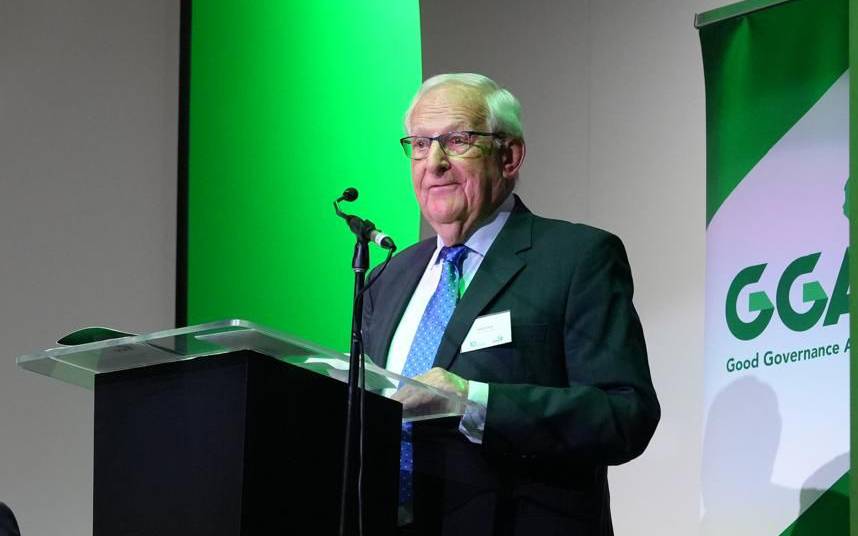
We know the problems, but the solutions have evaded us until recently; now an International Anti-Corruption Court (IACC) is being established and an underlying treaty ratified to turn the tide. The IACC is a proposed court of last resort to bring kleptocrats and their co-conspirators to book when national governments are unable or unwilling to do so. A growing coalition of governments, civil society organisations and individuals are working together to make the IACC a reality, and experts in international law are busy developing the treaty to establish it, with input from civil society organisations like the GGA advocating for the idea.
Rose said that the GGA is growing and is busy forming partnerships with many other organisations; it will soon have nine centres across Africa, and it will be around for decades. GGA will save billions for those who donate to Africa, and the continent will “soon have a few of its own Singapores”.
Keynote speaker Ambassador Salah Hammad from the African Union Commission asked if Africa is on the right path; wars, poverty and corruption have hampered progress since the colonial yoke was thrown off. “The roots of good governance must be established at both country and continent level; Africa struggles with governance deficits.”
The African Governance Architecture (AGA) was formed to bring the AU closer to the African people and engage with the youth, who are the majority of Africa’s citizens. “Africa needs to collectively believe that it can create its own destiny, and it can only do so by empowering its youth and its women,” said Hammad.
Kulati picked up on the theme of the youth, mentioning the GGA’s Young Advocates for Good Governance Programme, which aims to mobilise a million young people to enhance democracy.
Human rights advocate Judge Richard Goldstone joined the celebration event online, speaking at length about the treaty for the establishment of the IACC, formed to redress the absence of accountability among African and global leaders. Perhaps the worst example of corruption is Angola’s Isobel dos Santos; many attempts have been made to freeze her assets but these have failed to come to fruition, and she continues to live in luxury. If corruption was halted, the world’s poor could easily be fed; it also contributes to climate change, as much of the funds intended to alleviate those affected by it are diverted or syphoned off through corruption. “Grand corruption is a global problem that requires a global solution,” said Goldstone.
The IACC will be effective in many circumstances where the existing International Criminal Court (ICC) is not and will be able to seize and return stolen funds to the people they belong to. Its formation is supported by many African countries, which is vital, so it is not seen as a Western institution (or imposition), concluded Goldstone.
Panel discussion
Dr Ross Harvey, GGA Director of Research and Programmes, conducted a panel discussion following the keynote addresses. Sara Hamouda of the AU Secretariat for Peer Review Mechanism spoke of Agenda 2063, which identifies Africa’s aspirations and, among others, key flagship programmes to boost Africa’s economic growth. The AU is focusing on SDG 16, which promotes access to justice and building robust institutions. It is also clear in this respect that GBV is eliminated in the process of building peaceful and inclusive societies for sustainable development.
Zukiswa Mqolombo of South Africa’s Public Service Commission spoke on the importance of professionalising the public service, a tool that can help to prevent or reduce corruption. She said corruption in the public service is part of a wider public collapse of morale and morality; people are often scared to report it for fear of losing their jobs; and low salaries can contribute towards it.
Gareth Morgan, Executive Director, Future Planning & Resilience, City of Cape Town, said that his organisation is working well because the administration and political leadership know and maintain their roles, which run on two parallel tracks. The conflict resolution is excellent, consequence management is strong, and procurement is protected from corruption. Hiring capable people is essential and this, along with good governance, enables the City to obtain large loans for massive infrastructure projects, which in turn creates further investment.
Morgan pointed out that all of South Africa’s cities must be successful for South Africa’s economy to advance. It’s vital that cities learn from past lessons, such as Day Zero, which stimulated new ways to obtain water in Cape Town. Investment in skills is vital, as is transparency on processes, and planning for future scenarios.
Dr Ola Bello, Executive Director, GGA Nigeria, said the role of the private sector in good governance should be highlighted; for instance, when it comes to mining, the profits must come back to the communities involved, and the environment should be protected. Benchmark standards must be set on ethical conduct for large and multinational companies; how business conducts its ESG practices is integral to good governance in Africa.
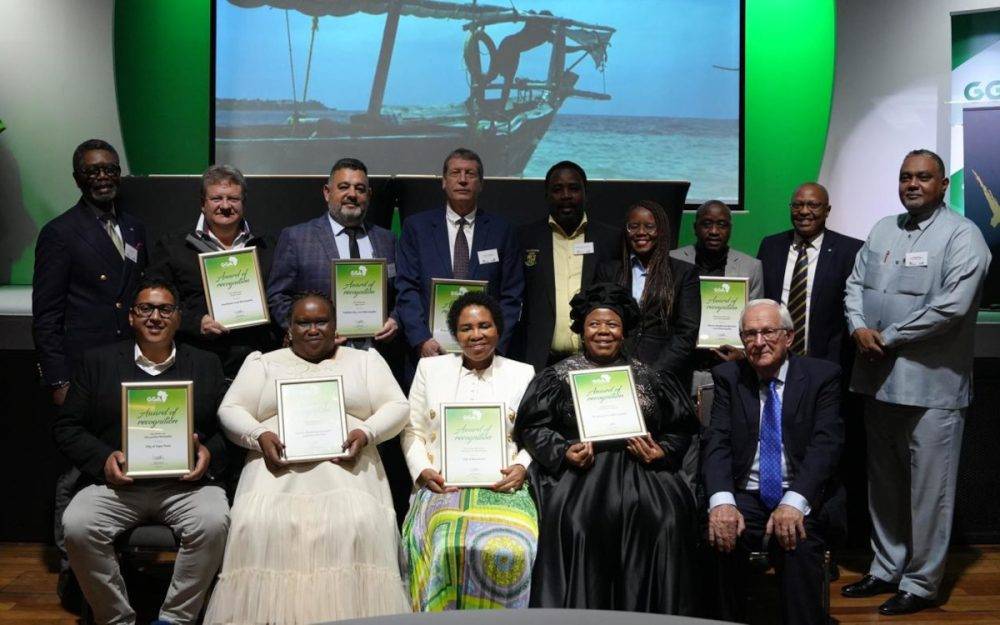
Top, left to right: GGA-SARO Deji Haastrop; Joggie Scholtz from Swartland municipality; Councillor Andre Truter from Saldanha Bay municipality; Dr Johan Leibbrandt from Drakenstein Municipality; Refilwe Jonas Ramothwala from Blouberg municipality; Sibongile Lubambo from the Auditor General’s office; Luvuyo Mahlaka from Winnie Mandela municipality; GGA Executive Director Patrick Kulati; AU Commission head Ambassador Salah S Hammad from the African Union Commission.
Ruth Kolevsohn, Executive Director, GGA Global Programmes, said that the IACC will align itself with other international anti-corruption efforts, such as the United Nations Convention against Corruption (UNCAC), and learn from their past efforts. It will require a clear mandate, clear enforcement tools — such as extradition — and it should strengthen local governance and prosecution capabilities.
The panel then fielded a number of questions from the floor. Kolevsohn pointed out in wrapping up that corruption threatens global stability, and that an active citizenry is vital for good governance; for example, citizens must help to protect public infrastructure. Bello pointed out that we must remember that fighting corruption and instituting better governance is a marathon, not a sprint. All panellists emphasised that we should not lose hope.
Congratulations and awards
In the afternoon session, a number of speakers from partner civil society organisations like Afrobarometer congratulated the GGA on its 10th anniversary. Luke Feltham, Editor-in-Chief of the Mail & Guardian, said: “The political games presented in the media are merely a soap opera, or at best a popularity contest; the real work of boots-on-the-ground governance is difficult, unglamorous work that is rarely acknowledged. This is something that the GGA knows, and it’s why occasions such as the 10-year celebration are so important.”
The congratulatory speeches were followed by award presentations.
Submit and get free exposure here: Showcase Your Business | Advertise Your Special Offers.