It’s time to draw the line on waste:

How separation at source will protect our environment and support the economy
According to available statistics, South Africans generate roughly 122 million tonnes of waste a year, with a mere 10% recycled or recovered for other uses. Ninety percent is landfilled, dumped illegally or lost to the environment.
“That’s nearly two tonnes of waste per person per year that goes into the ground or is lost to the environment,” says Edith Leeuta, CEO of Fibre Circle, the producer responsibility organisation for the South African paper and paper packaging sector. “Imagine the difference every single person could make to our planet and our economy by separating recyclables for reuse in new products, and composting organic and food waste?”
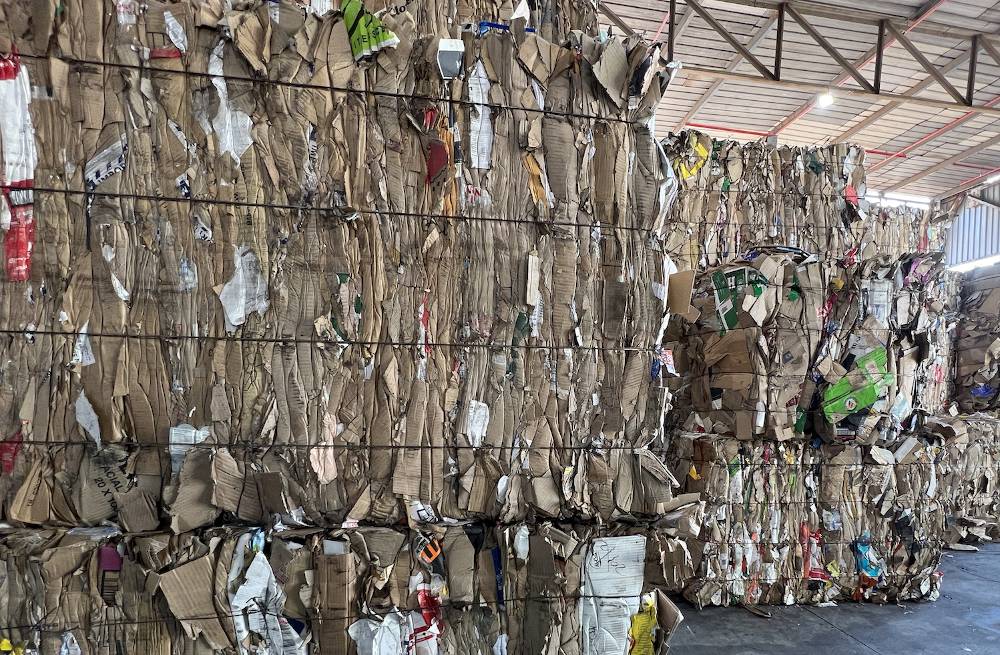
While more than 1.2 million tonnes of paper and paper packaging is diverted from landfill every year, a significant amount of useful paper gets contaminated by food, liquids and other waste in refuse bins, thereby reducing its suitability for recycling.
Think before you throw
“With a little bit of thought and a few extra bins or containers around the home, each and every South African can change their rubbish to recycling ratio,” she notes. Ideally your recycling bins should be bigger than your landfill waste bins too.
Start with a quick waste audit in your home or office:
- How many rubbish bins do you have in your home?
- How many recycling bins do you have?
- How much refuse goes out with the weekly municipal collection?
- How much could you be keeping away from landfill by recycling?
- Do the people in your home understand the concept of recycling and separating waste?
“Separating waste — and keeping it separate — is a big win for the recycling industry,” adds Leeuta.
Separation-at-source — The first step in the greater recycling process doesn’t have to start and stop in the kitchen. A variety of household paper products, especially packaging commonly found in the bathroom, home office, or right at your front door, can be recycled into new paper products.
Leeuta suggests placing small paper recycling bins in various areas of your home: at the front door, in your home office, bathrooms and the kitchen are all great places. This makes it easier and more convenient to get into the recycling habit.
Always ensure that a recyclable paper-based item is dry, clean and free of food residue.
Know the difference between ‘recyclable’ and ‘locally recycled’
Recyclable means that a product can be recycled into a new or similar product either via a standard or specialised recycling process.
There are many paper products that are recyclable using standard recycling processes. There are also some products that are conditionally compatible with the standard recycling process, meaning that those materials can affect the efficiency of the process and the output quality of the recycled material (also known as recyclate).
However, even if something is recyclable in theory, it does not mean that it can be collected efficiently or recycled locally, or recycled in practice. Things like little sugar sachets and straw paper coverings are fully recyclable, but are difficult or uneconomical to collect due to their size.
Locally recycled means that a product is processed in South Africa using available technology. “Recycling is about value in volumes. Whether paper, plastic, glass or tin, recycling is a volumes-driven exercise,” explains Leeuta.
For a product to be recycled, it needs to be commercially viable to do so using standard recycling or specialised processes. This means large volumes of the same paper grade or type need to be processed at the same time to ensure economies of scale.
In some cases, special pulping and processing technology is required to extract the paper fibres before they can enter the paper machine, which can increase the cost of recycling.
Something might be recyclable, but is not easy to recycle or not recycled widely. For example, some products require special technology to extract the raw material, such as paper fibre, for reuse. Examples include used milk and juice cartons, also known as liquid board packaging, and paper cups. There are only two mills in South Africa that have the capacity to recycle cups and cartons, and they are both based in Gauteng.
Furthermore, waste reclaimers and traders may not take certain items as they are deemed low value for them, considering the distances they need to travel and the volumes they are carrying.
Know your reasons
Finding a reason to recycle is vital in changing one’s attitude and behaviour, says Leeuta.
Landfills are taking strain
Recycling reduces the amount of waste going to landfills, which are already stressed. For every tonne of paper that is collected, three cubic metres of landfill space is saved.
Today’s grocery delivery, tomorrow’s cardboard box
Paper is a raw material and used to make new products such as cardboard boxes, paper bags, toilet paper and facial tissue. By keeping used paper and paper packaging clean and dry, and away from wet waste, you help to keep it in good condition for its next life. A recent study found that the paper fibres in cardboard boxes could be recycled up to 25 times before the fibres become too unusable.
Your “trash” is someone’s treasure
Recycling is a source of income for an estimated 60 000 to 90 000 men and women countrywide, and some recyclables are like gold for waste collectors.
You can make a collector’s work cleaner, quicker and easier by keeping certain recyclables out of your bin and in a separate bag or box.
Recyclable paper items include used office paper, brown cardboard boxes, clean packaging such as cereal, toothpaste, pizza and takeaway boxes, grocery delivery bags and take-away bags, paper cups and milk and juice cartons.
You can also put aside plastic milk bottles, PET soft drink bottles, fabric softener bottles, aluminium soft drink cans and tin cans.
It is, however, a good idea to find out what your neighbourhood collectors take; they may only take certain items, and this may differ from area to area.
Get it sorted – from the bathroom to the kitchen sink
You might be throwing away paper products or packaging that you didn’t know are recyclable. You may be astounded by the number of common household materials that can be recycled.
Bathroom:
- Cardboard tubing from the toilet paper roll
- Paper packaging used for toiletries like toothpaste, cosmetics or tissues
- Boxes and inserts used for over the counter medicine
Office:
- Paper cups (these are recyclable but there is limited recycling capacity)
- Office/printing paper, notebooks (minus wire binding and laminated covers)
- Magazines and reports
- Paperback books – you could donate old books to a library or community centre but for those that are too worn and torn, a new life awaits through recycling
The front door:
- Post – if you still get any, including envelopes and advertising mail
- Magazines
- Newspapers
- Cardboard boxes from your online shopping
Kitchen:
- Boxes from cereal, biscuits, tea, pasta, doggy treats and other dry goods
- Milk or juice cartons (these are recyclable but there is limited recycling capacity)
- Pizza boxes and other clean takeaway packaging (always remove food residue)
- Egg cartons and take-away cup holders
- Grocery delivery bags and paper shopping bags from retail stores or restaurants
- Tubing from kitchen towel rolls
Various types of plastics, tins and cans, and glass bottles and jars are also recyclable, so don’t forget to recycle those too.
What’s the end goal?
“It is important to know where your recyclables will go,” advises Leeuta. “If your area does not have a recycling programme, put your recyclables out for a waste collector, or look into a paid collection service. You can also drop off at a community centre or school that earns money from recycling.”
Paper recycling is not about saving trees!
Leeuta cautions, “We need to bust the myth that recycling paper saves trees because in South Africa, paper is produced from sustainably managed forests, which are farmed for the purpose of making wood and paper products.”
This “farming” entails planting, growing, harvesting, and importantly, replanting with a lot of science and environmental management in between. According to the Paper Manufacturers Association of South Africa, less than 10% of the total plantation area (676 000 hectares) is harvested annually — and it is replanted in the same year.
Also, while these trees are growing, they take up carbon dioxide, make carbohydrates using energy from the sun and release oxygen.
Trees store carbon in their wood. Even when wood is chipped, pulped and made into paper, the carbon stays locked up.
By recycling our paper, we ensure that this carbon remains locked up for longer.
When is the right time in your career to do your MBA?:

The MBA remains the ultimate degree in the world of business
An MBA remains the ultimate degree in the world of business. As far as academic qualifications in management go, this is the pinnacle, and you will need to know you are in the right space to start your academic pursuit. Here we give you 5 reasons why it may be a good time in your career to begin your MBA journey.
The MBA specialisations align with your current career goals
As your career progresses, you create opportunities to achieve new goals and explore new ventures. You may discover that an MBA will be the best way to reach your current career aspirations – whether it is as a generalist, specialist or a position in finance. If you are at this stage, it is time to start seriously considering the highly-acclaimed degree as a next step.
General Management – This is likely the most popular MBA specialisation, and is great for developing an all-round effective business arsenal.
International Business – This area is beneficial if you want to work abroad, or work in a global company with offices in different locations.
Strategic Management – This discipline will prepare you for long-term business planning and back-up planning.
Finance – This specialisation is of course invaluable for bankers, financial controllers, chief financial officers, and finance managers. The courses will focus on Statistics, Data Analysis, Accounting, and more.
Marketing – This area focuses on businesses that rely on promoting products and services.
Entrepreneurship – This specialist area is best if you have an original business idea and think about launching a start-up.
Human Resources – This area delves into conflict resolution, team development, motivation, defining job responsibilities and more.
[Source: MastersPortal: “10 Very Good Reasons to Do an MBA Degree”]
The University of Stellenbosch Business School (Stellenbosch Business School) has three specialist streams that are conducted in the 2nd year of your MBA programme. They are designed to help you tailor your MBA to your existing career, so that you may continue on your path to success.
Lead professionally in the health care industry through the MBA in Health Care Leadership stream (MBA HCL). Or opt for the stream in Managing International Organisations (MBA MIO), which will help you thrive in complex global institutions such as the UN and WHO. Our new MBA stream in Project Management (MBA PM) will enable you to become proficient in both business leadership and the scarce skill of project management.

You’re ready to accelerate your career path
Your career journey is, by definition, an element of your life where you need to progress over time. Your current role may be fulfilling and even an achievement within itself. However, you will inevitably reach a stage where it is imperative to move on and advance your career. Florida International University provides three scenarios in which an MBA can help you move forward in your career.
You feel stuck in your position
If you’re finding it hard to get promoted to a higher-level position, you may want to consider earning an MBA degree. Feeling stagnant in your career can cause unhappiness and is one of the main reasons professionals further pursue their education. Taking some time to go back to school and enhancing your skillset and knowledge could be just the boost you need to pursue the roles you want.
You’d like an increase in your salary
What if you are satisfied with your current position, but are interested instead in a pay bump? According to an article published by the Wall Street Journal in late 2018, MBA graduates saw a salary that was, on average, double what they were earning before beginning their programme.
You’ve been promoted to a managerial role
Already being promoted could be another reason as to why you decide to pursue a business administration degree. An MBA curriculum will help you understand the language of business and give you the skills needed to rise to the occasion. You’ll gain confidence in your decision making, feel prepared to participate in important meetings, and strategically lead a team.
You’re starting a business
Your own enterprise can only thrive when you give it your all in terms of dedication and hard work. A PGDip in Business Management and Administration that culminates in an MBA could be the perfect theoretical backing you need to ensure that your efforts are focused in the correct areas for success. In fact, starting a business has become one of the top five motivations to study your MBA degree, according to Tomorrow’s MBA study by Carrington Crisp, supported by EFMD. Entrepreneurship was rated as the fifth most valuable piece of content in an MBA, up from 10th in the previous year’s study.
MastersPortal highlights three ways that an MBA supports the success of starting your own business.
- MBA professors with real-life experience in starting a business can tell you the major traps you need to avoid and what you should do to make sure your company grows and remains stable over time.
- You can find MBA colleagues who have similar interests. Share your ideas with them and see if you can form a common vision. It’s easier to succeed with your start-up if you have a reliable partner who has your back and vice versa.
- You’ll learn how to communicate effectively and why it is essential for the success of any organisation. Whether you’re negotiating a contract with the suppliers or explaining your vision to prospective investors, knowing how to express your ideas clearly can make the difference between winning or losing the support and attention of your audience.
You can afford it without question
While the MBA is an elite business qualification that can boost your career tremendously, you need to be sure that there is no question the journey will be the best route to take in your career right now. It is a massive investment in more ways than one – you need to factor in the significant risks that come with the fees and time commitments.
Decide whether your personal life can “afford” this leap as well. Is your family or partner willing to take on the challenge of moving to a new city, state or even country? Are they willing to put their careers and lives on hold for this important step towards your future? It is advisable to have conversations with the important people in your life to determine whether this choice is feasible for everyone.
[Source: UNC Kenan-Flagler – “When is the right time for me to get an MBA?”]
You are sure that you are doing it for the right reasons
In addition to being sufficiently equipped to take on the fees and time investment, you will also need to consider whether an MBA is one hundred percent essential, and that there isn’t a more suitable alternative for you. In the opinion of the Harvard Business Review, if you’re in it for the wrong reasons, you might not get the outcomes you want. However, you know you’re on the right track if you are pursuing an MBA to:
Future-ready your career
Students looking to develop skills around influence often have unique opportunities to do so during the MBA experience. An MBA could be key in acquiring the experience you need to have a competitive advantage in the job market — and this is not a bad reason to pursue one.
Explore new industries or functions
Business school is a great time to gain exposure to peers, faculty, and a network of alumni from many professional backgrounds — as well as class projects and case studies that dive deeply into different industries and sectors. Once you’re in it, you want to choose the classes, opportunities, and events that satisfy your ambitions and makes the best use of your time.
Accelerate your career path
Graduates from top MBA programs often land positions that put them on an accelerated path into leadership. The reason is simple: Employers expect graduates of these programmes to have the academic, interpersonal, and leadership skills to solve complex business problems.
Expand and diversify your network
Most MBA programmes offer access to networking events hosted by clubs and employers, as well as affinity networks and student-led conferences — all opportunities that could expand your reach, and therefore, your chances of success in the business world.
Stellenbosch Business School’s triple-accredited MBA programme is designed to give you the best opportunities in your business career, in whichever industry in the world you find yourself in. Find out more on our website if you would like us to help you pursue the most recognised degree in business. If you are not entirely convinced that you are ready to take on the MBA, find the perfect academic programme for you with Stellenbosch Business School’s programme finder.
For more details click here
M&G’s 200 Young South Africans warm this old geezer’s heart:

This week, the names of the Mail & Guardian’s 200 Young South Africans for 2023 were announced at what our excitable events team likes to describe as a “gala event”. Having been press-ganged into working on the 64-page print version of this prestigious project — free in this week’s paper — I can say that all these young innovators deserve their places on the list.
In fact, what they have all achieved before reaching the tender age of 35 is so impressive that it has prompted a painful bout of introspection about my long, but unremarkable, journey through the South African media landscape. There has been no sign of any awards or mention on a list of achievers along the way.
In a last-ditch attempt to rectify this, I have proposed to management that the M&G’s next awards list be titled “50 Tired Old White Men”. Undoubtedly there will be an outcry over the harsh and narrow criteria for this list but it is a desperate ploy to improve the odds of my name being on the list.
And, who knows, this might be a surprising commercial success. Jameson whiskey becoming a sponsor would be first prize. A barter deal would be ideal, although our miserly accounts department might not approve. Far better would be a generous offer from the Shady Pines Rest Home to become what our ambitious commercial department proudly calls a “platinum sponsor”. Given enough space, Shady Pines could highlight the comfortable chairs in their TV lounge and the loving care provided by the nurses/bouncers.
In a worst-case scenario, an adult nappy company could be given a cut-price deal. As long as the 50 tired old geezers aren’t required to pose in the company’s latest product line.
M&G podcaster Charles Leonard, who despite his advancing years is a DJ of note, might be persuaded to play some suitably retro tunes at the “gala event”. The chosen theme tune, the Bee Gees’ Stayin’ Alive, will have the elderly gents using their walkers to clear a path to the dance floor.
But, of course, none of this can compete with the inspiration and warm glow provided by reading the profiles of the 200 young South Africans. If only it was just them in charge of the future of our country.
Submit and get free exposure here: Showcase Your Business | Advertise Your Special Offers.