Jack Daniel’s® and Coca-Cola ARTD spirit cooler launches in South Africa:
The ready-to-drink blend is a classic bar cocktail that brings iconic taste to Mzansi
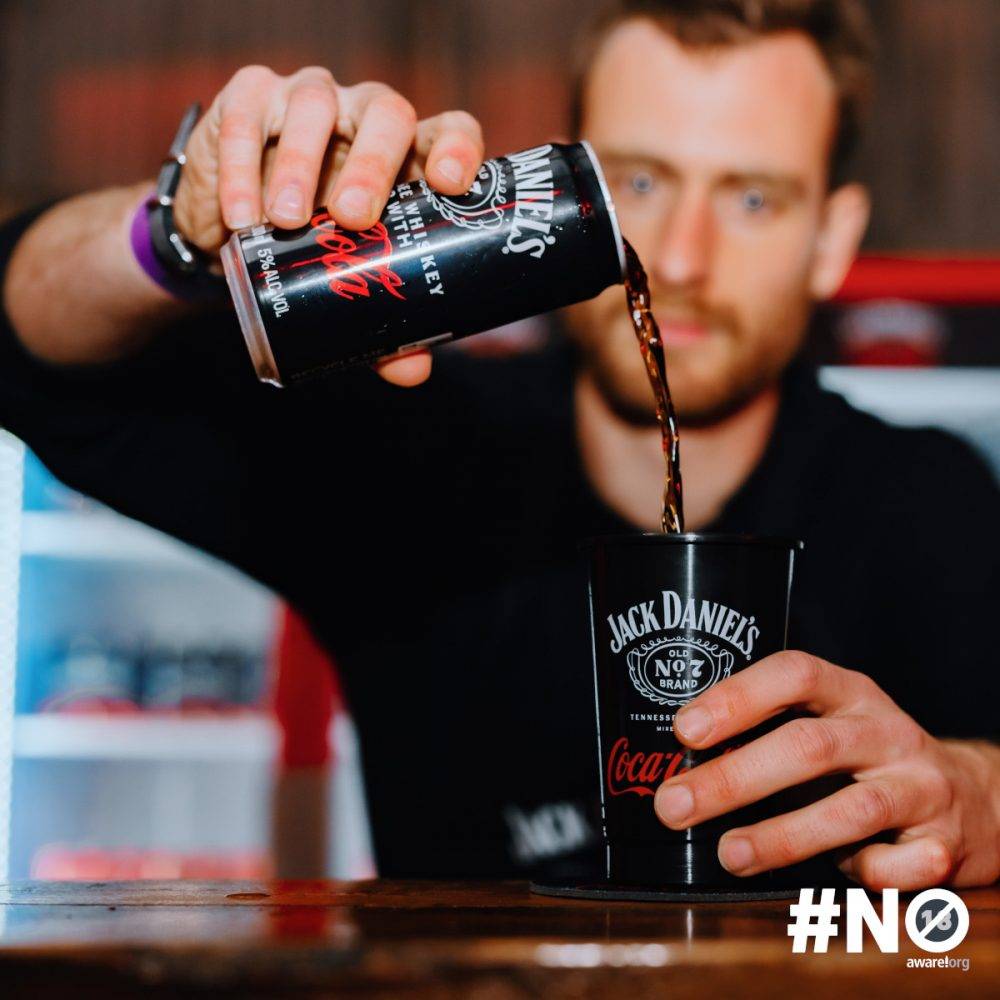
Brown-Forman Corporation and The Coca-Cola Company are excited to announce the launch of the iconic Jack Daniel’s and Coca-Cola Alcoholic Ready-To-Drink (ARTD) spirit cooler in South Africa.
The spirit cooler, a ready-to-drink blend of Jack Daniel’s and Coca-Cola, is the perfect hangout essential for celebrating real moments. The launch of this spirit cooler reflects Coca-Cola Company’s commitment to keeping consumers at the heart of their innovation. As the company expands its portfolio, Coca-Cola aims to cater to evolving consumer preferences by introducing new and exciting products under its iconic brand.
Following its successful introduction in over 25 markets globally, including the United States, Mexico and Japan, the Jack Daniel’s and Coca-Cola ARTD spirit cooler is now making its debut in South Africa.

As a consumer-first company, this new innovation will offer South African adult consumers the opportunity to enjoy the iconic taste of this classic bar cocktail in a convenient, ready-to-drink format. This launch includes two variants: the original Jack Daniel’s and Coca-Cola, and a Coca-Cola Zero Sugar version, catering to different consumer preferences.
“We are delighted to bring the Jack Daniel’s and Coca-Cola ARTD to the South African market, providing consumers with a new and exciting way to enjoy the timeless combination of our two iconic brands,” said Peter Orfanidis, Area Manager, Southern Africa, Brown-Forman.
“As we continue to listen to consumers through our innovative product offering and expand the availability of Jack Daniel’s and Coca-Cola across the globe, we are thrilled to introduce this spirit cooler inspired by one of the world’s most beloved bar cocktails. This new offering represents our commitment to bringing exceptional taste experiences to consumers in a convenient ready-to-drink format,” added Natasha Chetty, Emerging Categories Senior Director at Coca-Cola Africa.
The packaging boldly integrates iconic qualities of both brands — the red Coca-Cola logo written in its classic Spencerian script coupled with the bold, black Jack Daniel’s Old No. 7 design — emphasising the premium quality and heritage of the product.
The Coca-Cola Company understands its important role in promoting responsible drinking among those above the legal drinking age, and will adhere to its industry leading Responsible Alcohol Marketing Policy. Consumers can expect clear responsibility symbols on the can and packaging, reinforcing the message that the beverage is to be enjoyed responsibly and only by individuals of legal drinking age and above.
Jack Daniel’s and Coca-Cola will implement a phased approach and the ARTD spirit cooler will be available for sale at select liquor stores and locations in the first rollout phase. It will be available in 300ml slim cans containing an Alcohol By Volume (ABV) of 5%.
About Jack Daniel’s
Officially registered by the US Government in 1866 and based in Lynchburg, Tenn., the Jack Daniel Distillery is the first registered distillery in the United States and is on the National Register of Historic Places. Jack Daniel’s is the maker of the world-famous Jack Daniel’s Old No. 7 Tennessee Whiskey, Gentleman Jack Double Mellowed Tennessee Whiskey, Jack Daniel’s Single Barrel Tennessee Whiskey, Jack Daniel’s Tennessee Honey, Jack Daniel’s Tennessee Fire, Jack Daniel’s Tennessee Apple, Jack Daniel’s Tennessee Rye, Jack Daniel’s Sinatra Select and Jack Daniel’s RTDs. Today, Jack Daniel’s is a true global icon found in more than 170 countries around the world and is the most valuable spirits brand in the world as recognised by Interbrand.
About Brown-Forman
For more than 150 years, Brown-Forman Corporation has enriched the experience of life by responsibly building fine quality beverage alcohol brands, including Jack Daniel’s Tennessee Whiskey, Jack Daniel’s Ready-to-Drinks, Jack Daniel’s Tennessee Honey, Jack Daniel’s Tennessee Fire, Jack Daniel’s Tennessee Apple, Gentleman Jack, Jack Daniel’s Single Barrel, Woodford Reserve, Old Forester, Coopers’ Craft, The Glendronach, Benriach, Glenglassaugh, Slane, Herradura, el Jimador, New Mix, Korbel, Chambord, Fords Gin, Gin Mare and Diplomático Rum. Brown-Forman’s brands are supported by approximately 5 700 employees globally and sold in more than 170 countries worldwide. For more information about the company, please visit brown-forman.com. Follow us on LinkedIn, Instagram, and X, formerly Twitter.
About The Coca-Cola Company
The Coca-Cola Company (NYSE: KO) is a total beverage company with products sold in more than 200 countries and territories. Our company’s purpose is to refresh the world and make a difference. We sell multiple billion-dollar brands across several beverage categories worldwide. Our portfolio of sparkling soft drink brands includes Coca-Cola, Sprite and Fanta. Our water, sports, coffee and tea brands include Dasani, smartwater, vitaminwater, Topo Chico, BODYARMOR, Powerade, Costa, Georgia, Gold Peak and Ayataka. Our juice, value-added dairy and plant-based beverage brands include Minute Maid, Simply, innocent, Del Valle, fairlife and AdeS. We’re constantly transforming our portfolio, from reducing sugar in our drinks to bringing innovative new products to market. We seek to positively impact people’s lives, communities and the planet through water replenishment, packaging recycling, sustainable sourcing practices and carbon emissions reductions across our value chain. Together with our bottling partners, we employ more than 700 000 people, helping bring economic opportunity to local communities worldwide. Learn more at www.coca-colacompany.com and follow us on Instagram, Facebook and LinkedIn.
Korner Talk | EFF must bench Dali Mpofu on VBS:

Bumbling like he was battling a bad babalaas, Dali Mpofu, the Economic Freedom Fighters (EFF) former chairperson, continued his party’s time-honoured flip-flopping tendency — this time on the VBS bank heist.
Mpofu, as an advocate, was dispatched by the party to do media rounds after Tshifhiwa Matodzi, the former chairperson of the now defunct VBS Mutual Bank, wrote an affidavit directly implicating the EFF’s top leadership as the beneficiaries of some of the more than R2.5 billion of savings and pensioners’ money that was looted in 2016 and 2017.
During an interview with Newzroom Afrika over the weekend, Mpofu flipped like a failed attempt at flapjacks from the EFF’s initial story that the party had not received any of the looted funds.
For background, Matodzi — in an affidavit before the Johannesburg specialised commercial crimes court sitting in Palm Ridge — stated that he paid the EFF R16 million after meeting leader Julius Malema, deputy Floyd Shivambu and secretary general Marshall Dlamini in April or May 2017 allegedly to stop the party’s criticism of the bank on public platforms.
The criticism followed VBS granting former president Jacob Zuma a R7.5 million loan for his Nkandla residence in KwaZulu-Natal, with Matodzi saying the EFF’s “negative commentary” related to the loan was “damaging [VBS’s] reputation”, adding that he was asked to make a “donation” to the EFF so that its public lashings of the bank would stop.
“Myself, Julius and Floyd understood the concept of donation to mean gratification, hence Floyd and Julius did not provide me with the EFF’s own banking details for these ‘donations’,” Matodzi stated.
The former bank chairperson was sentenced to an effective 15 years imprisonment after confessing to the grand scheme and agreeing to become a state witness.
Realising that Matodzi’s affidavit had flung the EFF face-deep in faecal matter, Mpofu was deployed to spin the story like a ballerina in Swan Lake on opening night in Moscow.
Stuttering like a stuck Celine Dion record, Mpofu denied any fraud or corruption, saying the VBS money given to the EFF was “a loan”. He added that the party received “a donation” from the bank because “there is no political party that doesn’t receive donations”.
But, during an October 2018 EFF media briefing, Mpofu, in his capacity as chairperson, rejected claims that the party received money from VBS, saying its “only source of funding” was the R10 membership fee paid upon joining the organisation, as well as what he called “donations in kind”.
“Our members make donations all the time … but we have not found such a donation [from VBS] in this case. If it was there, we wouldn’t hide it because it happens all the time,” the lawyer confidently contended.
No party makes about-turns like the EFF.
The difference between Malema and Mpofu, however, is that the former contradicts his positions with the confidence of WWE founder Vince McMahon walking towards the ring.
Mpofu, on the other hand, is known as the counsel who capitulates quicker than the cartoon character Courage, the Cowardly Dog when the heat is turned on him.
You don’t believe me?
Who can forget a flustered Mpofu at the Marikana commission of inquiry getting “hot under the collar” — as described by news channel eNCA — in August 2014 when Cyril Ramaphosa, who was deputy president at the time, exposed the advocate for asking him to put in a word with then president Zuma for him to be conferred with senior counsel status, in line with guidelines of the Legal Practice Act?
As is his default setting when the heat is turned up, Mpofu flailed his arms as he tried to stop the cupcake-in-chief from detailing their private talks.
This is why I believe the EFF needs to bench Mpofu for any future spinning contests (not the car spinning Sports, Arts and Culture Minister Gayton McKenzie wants to popularise) when needing to “clarify” the party’s involvement in the VBS saga.
Home Affairs Minister Schreiber to revive Immigration Advisory Board:
New Home Affairs Minister Leon Schreiber on Monday said he would revive the Immigration Advisory Board, which has not been constituted for more than a decade, despite being mandatory in law.
“I am happy to announce today that, in terms of section 4(2) of the Immigration Act of 2002, home affairs will reactivate the Immigration Advisory Board as a matter of urgency,” Schreiber said in his budget vote speech in parliament.
He said the step was aimed at repairing the breakdown of trust in the department, which had spawned unnecessary and costly litigation.
“Importantly, the advisory board can provide the minister with evidence-based advice on tackling critical matters such as the court-ordered process of consultation on the future of the Zimbabwean Exemption Permit.
“Going forward, the advisory board will serve as a vital forum where problems can be ironed out before they escalate to the courts,” he said.
“The reinstatement of the Immigration Advisory Board serves as a powerful signal of our commitment to rebuilding trust in home affairs, respecting expert advice, and addressing policy questions in a consultative, scientific and legally-compliant manner.”
The Pretoria high court last year ruled the decision by Schreiber’s predecessor, Aaron Motsoaledi, to terminate the ZEP programme unconstitutional and procedurally unfair.
The court remitted the decision to Motsoaledi, and ordered that pending his decision all existing ZEPs remain valid for another year.
The applicants in the case —the Helen Suzman Foundation and the Consortium for Refugees and Migrants in South Africa — refuted the minister’s claim that he had consulted and considered the effect on some 178 000 Zimbabwean who hold exemption permits before announcing the termination.
Motsoaledi has asked the constitutional court for leave to appeal the ruling, which he described as “dangerous”.
He encountered criticism for not constituting the advisory board on the basis that home affairs was reviewing immigration policy.
The Cape Chamber of Commerce and Industry warned earlier this year that Motosaledi was flouting the Immigration Act, which stipulates in section 4 that the minister must appoint a board grouping representatives of government departments and civil society, plus up to four experts in immigration law or administration.
Schreiber, the Democratic Alliance’s former spokesperson on public service and administration, said he believed the home affairs department had a central role to play in achieving the new coalition government’s goal of sustainable economic growth to alleviate unemployment.
He referenced a finding in Operation Vulindlela’s 2022 report on the country’s work visa process that skilled, legal immigration helped to create jobs for South Africans.
“The national treasury has also found that increasing the availability of scarce skills in the labour market is the second most powerful step we can take to grow the economy and create jobs for South Africans — just behind the eradication of load-shedding.
“It is in fulfilment of this mandate of the GNU [government of national unity], that home affairs will enhance our role as an economic enabler by accelerating the implementation of Operation Vulindlela’s reforms,” Schreiber said.
He said he would prioritise finalising a points-based system for work visas, rolling out remote working and start-up visas and updating the government’s critical skills list more regularly.
Last week, in his first act as a minister, Schreiber extended a temporary concession for foreign nationals awaiting the outcome of visa and waiver applications and appeals because of processing delays, till the end of December.
Submit and get free exposure here: Showcase Your Business | Advertise Your Special Offers.