
John Kani: Still questions about the truth after 21 years:

‘I want to be remembered as a good father, good husband, great grandfather and a human being who prayed and worked hard for the betterment of his society’
John Kani
‘When we got towards the end of the play, those kids were sobbing openly. I stood there, took that curtain call, and my tears just went down. I couldn’t control myself, I just wept.
“Now that my story, the story of my brother uXolilie Kani has been told, I am ready to forgive and get on with my life,” says world-renowned actor and playwright Dr John Kani.
Forgiveness — whether you are asking for it or extending it to another person — is one of the toughest things to do. Almost every religion or spiritual practice touches on the act of pardoning others when you’ve been wronged or humbling yourself to admit that you have offended another.
The Qur’an (42:43) says, “And whoever is patient and forgives —indeed, that is of the matters [worthy] of resolve.” In Christianity, Jesus earnestly tells Peter, one of his disciples, that he should forgive 70 times seven times. If you do the maths, that’s a hell of a lot of times. The Book of John, chapter 8:32, reads, “And ye shall know the truth and the truth shall make you free.”
It is that scripture that became the bedrock on which the Truth And Reconciliation Commission (TRC) was established by the late Archbishop Desmond Tutu in 1996.
Its intention was to heal the wounds of the atrocities committed during apartheid by providing amnesty to offenders as an incentive to be honest about how many black South Africans’ lives were horrifically cut short at the hands of the apartheid regime.
So, you never needed to be sorry for the crimes you had committed, you just had to tell the “truth” and, as evidenced by the commission, that rarely happened because those who pulled the triggers never revealed who had instructed them to.
Forgiveness and its intersection with the truth was also Kani’s dilemma, as he struggled with the violent loss of his brother. Xolile Kani was a poet at a funeral in New Brighton, Port Elizabeth, in 1985. What started out as a calm service quickly turned into a storm, with a shootout between the police and the people attending the service.
When the dust had settled there were four bodies lying on the ground. One of them was that of Xolile Kani.
For Kani, attending the commission wasn’t the path he needed to undertake for his journey to forgiveness. He was enraged, seeking someone to take accountability for the life that had been stolen from him and his family — which would never happen.
“You would have these people swear to tell the truth, the whole truth and nothing but the truth, and they get up there and lie!” Kani passionately exclaims.
Kani himself was a target for the National Party during the apartheid regime because of his work as a social activist through theatre.
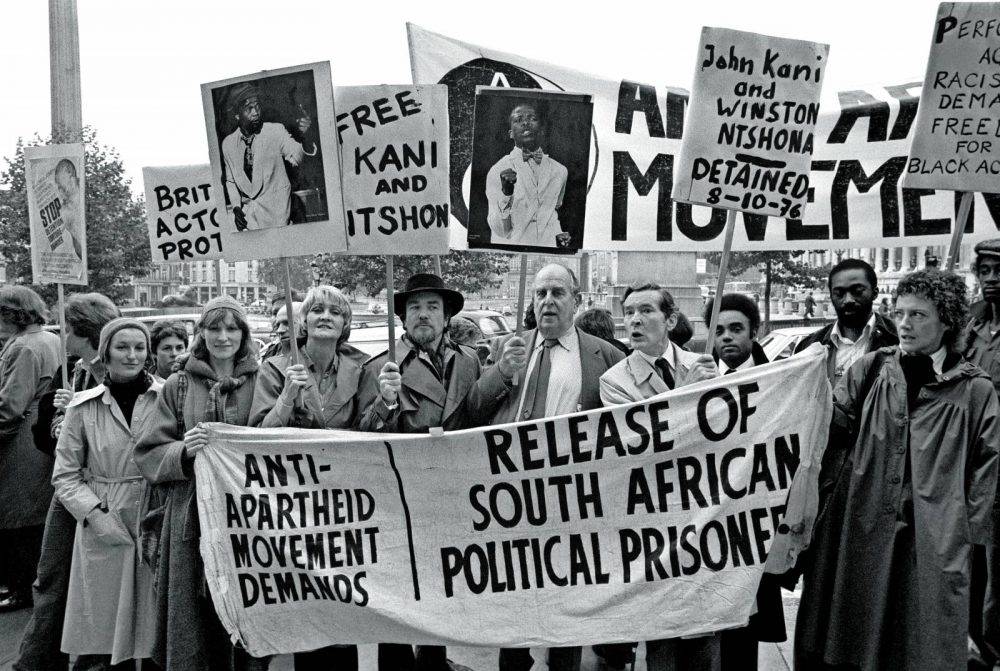
With productions such as The Island and Sizwe Banzi is Dead, he was part of the creative agitators of the time, alongside Winston Ntshona and Athol Fugard.
It was through that anguish that he would start writing down his emotions in 2001, to honour the life and the memory of his beloved brother through a play which he titled My Brother and Me.
As with much great art, the play took its own shape, its own direction and, after consulting with highly acclaimed South African novelist Zakes Mda, evolved into the masterpiece Nothing but the Truth.
“So, I wrote this play and when I finished this story, I titled it Nothing but the Truth, sent it to Zakes Mda and he sent me my feedback like a high school English teacher with red marks. I was so furious with him; I’m older than him!” jokes the actor.
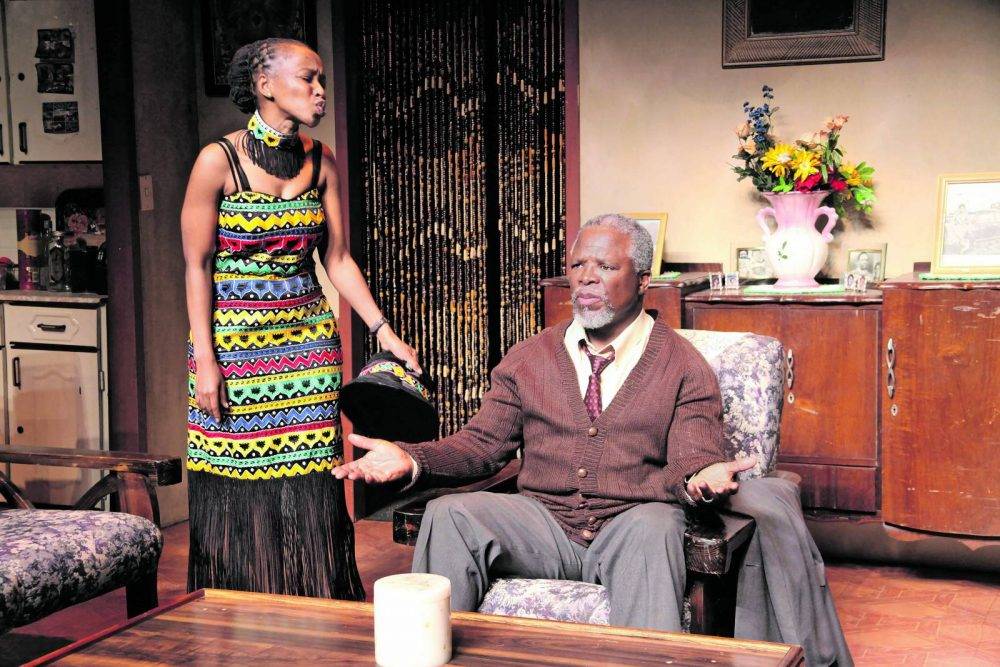
The one-man show, which premiered in 2002, tells the tale of two brothers who are rivals — Sipho, a librarian, and his brother Themba, a struggle hero who has gone into exile.
The play became a film in 2008, premiering at the Durban International Film Festival.
Although the play shines a light on issues such as faith, the complexities of family relations, customs and tradition, what is graciously encapsulated is what it means to seek forgiveness, not for the oppressor but for the oppressed.
“I didn’t know what I had written, I just knew it worked.
“And I also didn’t want to involve the Market Theatre, so I used my own money. I didn’t want to waste the theatre’s money, so I funded it myself and used my own savings,” explains the 79-year-old.
A tale of two brothers
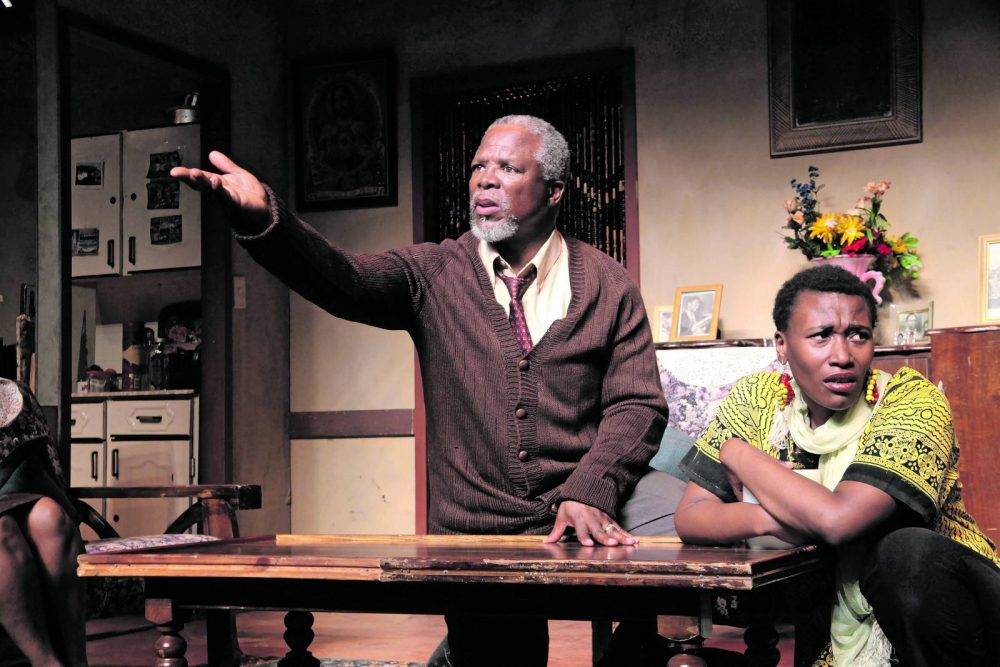
Sipho always resented his brother Themba, who was younger and favoured by their parents. As they grow older, Sipho’s son, Luvuyo, admires his uncle, following in his footsteps as a struggle hero, which results in his death.
For Sipho, Luvuyo’s blood was on Themba’s hands. He blamed him for his son’s death and the affair that Themba had with his late wife, Thando’s mother.
Later in the play, it is revealed that the daughter Sipho thought was his is actually Themba’s child.
Throughout the production, Sipho accuses Themba of taking from him repeatedly throughout his life. As little boys and as they got older, Themba took the shine, was glorified and celebrated, yet he never took responsibility for the pain he caused his own brother.
“So you win again, Themba. I’m still dull and I’m still at the library and I’m not even the chief librarian and will never be. ‘If this country was free,’ I used to say to myself, ‘I would be the chief librarian.’
“I watched the release of Nelson Mandela on television and I said to myself, ‘Yes now this is my time.’
“I was 57 years old when I voted for the first time in my life. I am in government. I made Nelson Mandela the first democratic president of this country. I was 62 years old when I voted again in 1999.
“How come no one told me I was too old to vote and suddenly now I’m too old to be empowered?
“This government owes me. I’ve been loyal to them.
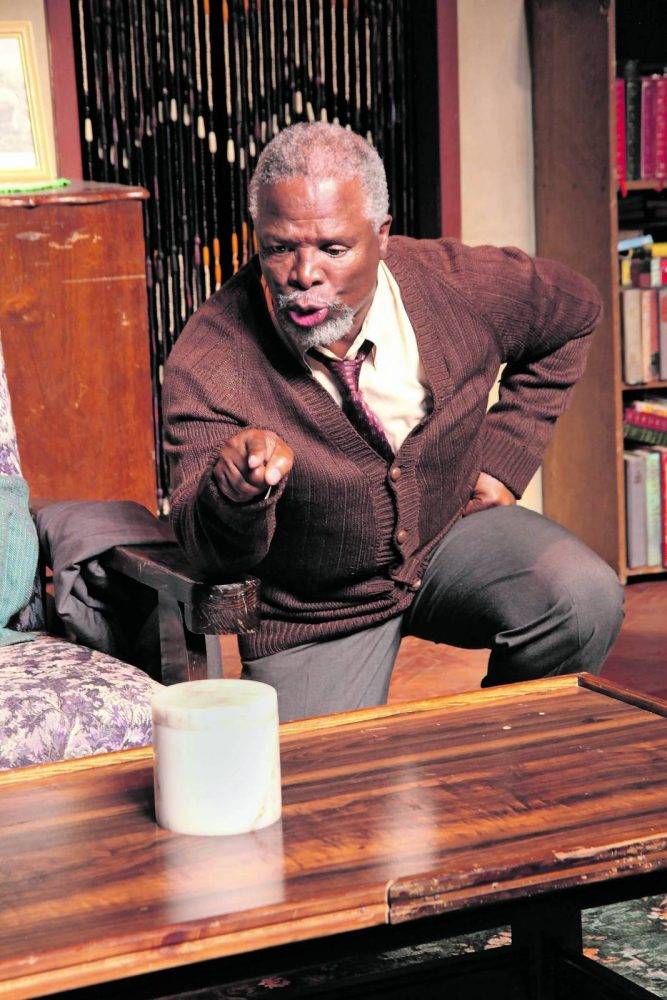
“Why couldn’t they make me chief librarian … just two years. That’s not too much to ask, is it?” laments Sipho during a monologue in Nothing but the Truth.
It’s not the story about sibling rivalry that makes this phenomenal play so meaningful, even after 21 years. It’s the symbolising of those who silently struggled, lost their lives in the struggle but remain unnamed. The mothers who cried, families who prayed and friends who pleaded with God for freedom.
All Sipho wanted was to be chief librarian but that dream would never materialise, much like the aspirations of millions of black people who experienced justice being stolen from them when the commission convened and set the offenders free without even an apology.
The first iteration of the play was shown at the National Arts Festival in Grahamstown in 2002 in front of an audience of schoolchildren, something activists such as Kani once could only dreamed of.
“We opened with Janice Honeyman as the director, Dambisa Kente as Thando and Pamela Nomvete as Mandisa.
“The first audience we had was about a hundred students in uniform, both black and white.”
True forgiveness has still not been accomplished in South Africa, and although much has changed since the demise of apartheid regime, the question is, “But at what cost, when unemployment still affects the youth, education is still not free and institutionalised racism hasn’t been dealt with?” the award-winning playwright asks.
“In my latest play, there’s a line where I say to a white character, Jack Morris, when he talks about [former president FW] De Klerk selling white people out because he went to negotiate with a former terrorist on Robben Island and walked out with nothing and Mandela walked out as president of the country.
“It shows that there is still that unwillingness to accept the changes that have happened in this country of being a nonracial governance.”
We millennials know Kani as King T’Chaka in Marvel’s blockbuster The Black Panther and as the voice of Rafiki in 2019’s The Lion King. As astounding as those roles were, nothing compares with the fight for social justice to which he’s dedicated his life and career and continues to as he gets closer to his 80th birthday.
“The challenge sometimes with younger writers is that they try to write a hit. A play that’s going to be famous or that’s going to draw huge audiences.
“That’s not a play, it’s your own thoughts and imagination and you’re being very extravagant with yourself. You write the play and tell the story,” he says.
“We were driven by the passion for freedom,” he continues. “We sacrificed fame and money in order to tell the truth to pursue the liberty of our people.
“Whenever I see lies, confusion, a narrative that derails our focus away from servicing and serving our people moving away from our own humanity… Just look at gender-based violence and the attitudes of isolation towards those that are apart of the LDGTQI+ community, the massive unemployment of young people, the girl child unable to cross the street because, even in the community where she grew up, she’s still unsafe at the hands of the people who know her,” says the theatre legend.
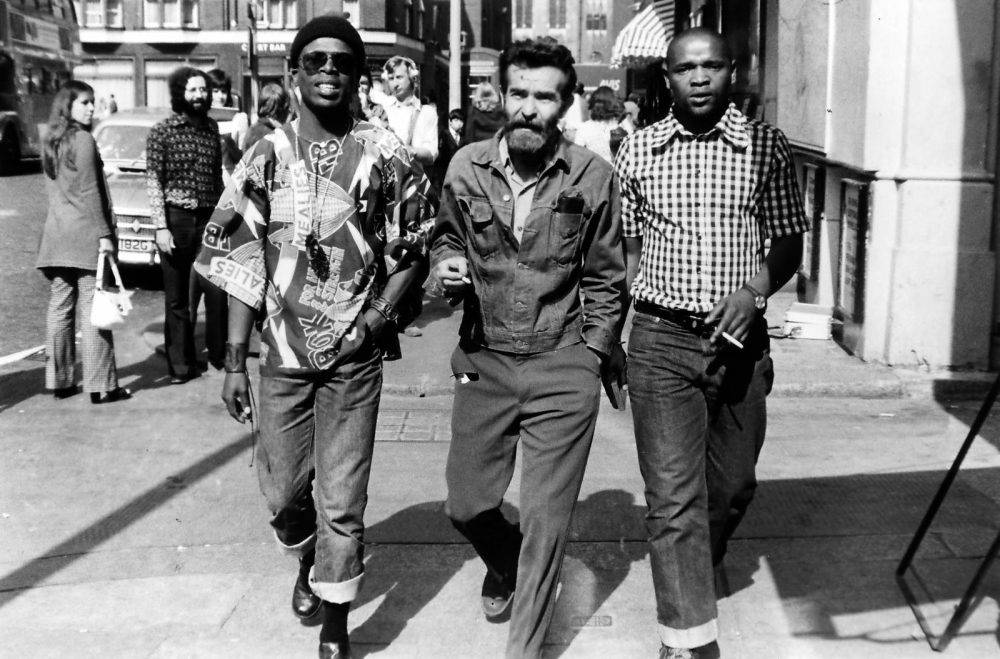
If there’s one profound lesson that one can take away from Nothing but the Truth it’s that true forgiveness doesn’t come from the perpetrator but the choice of the victimised, not for any other reason other than to release themselves from the burden of carrying resentment.
Kani, who has received honorary doctorates from several institutions including Wits University, the University of Cape Town and Nelson Mandela University, won a Tony Award for Best Actor in 1975, received The Order of Ikhamanga in Silver for his contribution to the arts and the liberation of the country, as well as being awarded the Voices of Freedom, in New York, along with former recipients Mandela and Albertina Sisulu.
Fighting for the rights and existence of the arts is still at the core of his career and the work he does as a playwright.
It was not easy for Kani, who was born in New Brighton, to be a playwright.
“All these do not match the one moment with my father. He never understood what I was doing, never accepted that, with all the education he had given me, I hadn’t got a proper job that was strong enough to look after the entire family.
“But, in 1985, when I came back home from New York, he was sitting with his friends and then looked at me. I said, ‘Hi, Dad,’ and to his friends he said, ‘Wait. Listen, guys, this is my son John Kani, the actor.’
“Three months later he died. After 20 years — 1965 to 1985 — finally, he accepted that there was dignity in the work that I do and accepted that this is my choice,” Kani explains.
At the centre of the work he continues to do is the notion of the consequences of forcing a nation into healing without uncovering the damage of a racially driven and oppressive regime.
“Looking at the deep disintegration of the family structure … The absence of parents during the day and only coming in the evening only to be ready to go back the next day.
“The absence of the grandparents in the family structure, who would hand down, orally, the history of this particular family …
“All of this absence has created a society that’s driven by, ‘What’s in it for me? What am I getting out of it?’
“The greed, corruption, the ostentatious flaunting of overnight richness. These things bother me as an artist, they bother me as a writer. That then comes out in the stories I tell as a playwright and the choices of movies I do.
“They must always meet my criteria of uplifting humanity.”
Kani’s work, as an activist through art, has always, and continues to be, rooted in the need to leave society better than how he found it.
“My mother used to say I see too much,” he says.
Kani’s son Atandwa is also an actor. “I want to be remembered as a good father, good husband, great grandfather and a human being who prayed and worked hard for the betterment of his society,” he says.
Ramaphosa on verge of losing investor confidence after US claims – Standard Bank:
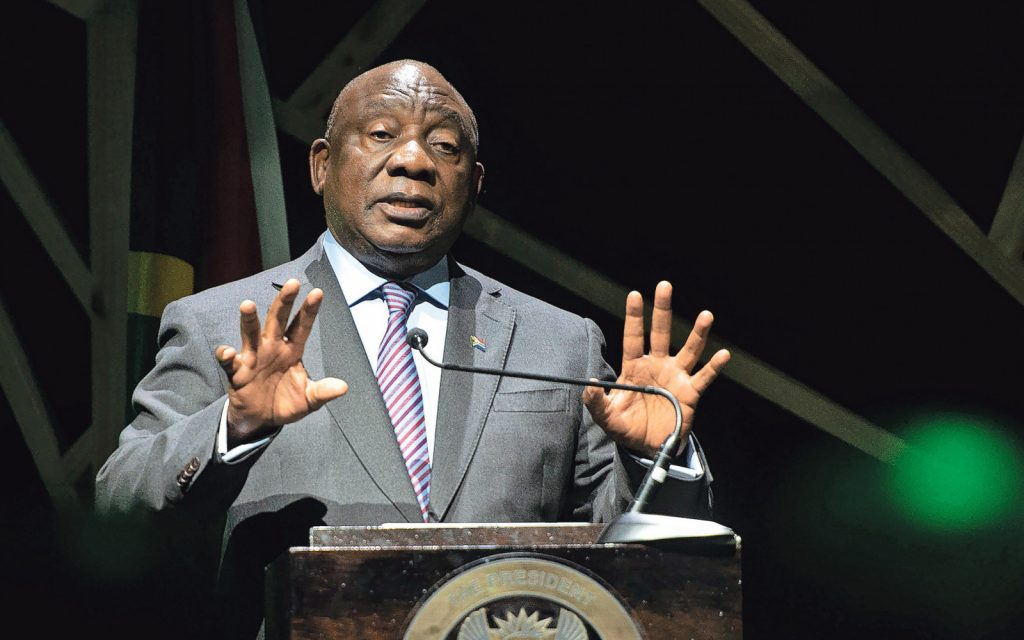
Cooperate South Africa has entered the debate on the US-South Africa relations with Standard Bank saying frustrations around President Cyril Ramaphosa’s perceived pro-Russia approach may reduce private sector willingness to back his reform initiatives.
The bank’s analysts also said there were deepening frustrations in the business and investor community around the president’s indecisiveness in response to the country’s various unfolding crises.
“These criticisms will almost certainly elevate now, particularly in the context of ongoing and severe load-shedding, and the president’s predictable call for an inquiry, led by a retired judge, to interrogate the ambassador’s claims,” they said.
Ramaphosa has established an inquiry into claims by the US ambassador to South Africa, Reuben Brigety, that the country is supplying arms and ammunition to Russia.
Brigety said Washington was “confident” that weapons and ammunition were loaded onto the US sanctioned Russian cargo vessel known as Lady R, when docked at the Simon’s Town naval base between 6 and 8 December last year.
He said that arming the Russians was “extremely serious”, that the issue was not resolved, and that South Africa should put into practice its stated non-aligned position.
Brigety said the US recognised South Africa’s right to diplomatic relations, but Washington’s concern was with regard to actions that deviated from non-alignment, particularly in areas of conflict.
Standard Bank told its investors in its Weekly Talking Points report that it expected the tenor of high-level South Africa-US diplomatic engagements to be actively moderated by both sides in the coming days and weeks.
This would also be encouraged by international relations and cooperation minister Naledi Pandor’s engagement with US secretary of state Anthony Blinken on Friday afternoon.
“However, the ANC will almost certainly be more assertive in its criticism of the approach taken by the ambassador, which could deepen concerns in the US around SA’s capacity to temper its Russia stance,” the bank said.
“Looking longer-term, the outcome of next year’s US elections will be important. If the Republicans, who are known to be less tolerant of SA’s clumsy ‘neutrality’, win the presidency, and particularly if led by Donald Trump, there are undeniably risks of tensions — and US-imposed economic consequences — intensifying.”
Standard Bank’s analysis on the ANC and Ramaphosa came as the governing party’s treasurer general Gwen Ramokgopa told the Mail & Guardian that Brigety was fueling mistrust and straining diplomatic relations.
But Brigety said he could not foresee “under any circumstances the United States downgrading or decreasing its political engagement” with the government of South Africa.
He said Washington was clear in expressing the seriousness of its concerns to Pretoria.
The tensions are playing out as South Africa grapples with Russian President Vladimir Putin’s pending attendance at the Brics summit in Durban in August, despite a warrant for his arrest being issued by the International Criminal Court. South Africa is a full member of the court and is obliged to arrest Putin for alleged war crimes.
Brigety said Washington could not understand why the government would not “publicly commit” to the obligation it has under the Rome Statute.
Standard Bank said the US government would likely look to use other economic or developmental pressure points to pull South Africa back towards the kind of neutrality expressed by other influential countries such as fellow Brics members Brazil and India.
Last year, around $ 3 billion worth of South African exports benefitted from the country’s preferential access to the US under the African Growth and Opportunities Act (Agoa).
“We believe that the ambassador’s public comments are designed principally to provide the US with leverage in ongoing negotiations with SA around its stance on the Russia-Ukraine war, and specifically to emphasise that Pretoria is not, as it regularly claims, acting in a way that aligns with its claimed ‘neutrality’,” Standard Bank said.
“Seen in this way, the US is looking to use the public and market pressure elicited by the ambassador’s statements to try to impel the South African government to pull back to a genuinely neutral stance, which would imply a reduction in the regularity and openness of its recent engagements with Moscow.”
Powerships for South Africa’s energy future:

Electricity minister Kgosientso Ramokgopa believes that powerships — special purpose ships on which a power plant is installed to serve as a energy generation resource — will be the solution to alleviate the energy shortage in the country.
Ramokgopa was addressing the media on the energy action plan update on Friday where he announced that the utility was looking at powerships to alleviate load-shedding.
Eskom has not been able to keep the lights on, with a constant stage six load-shedding schedule. To keep the grid from collapsing, it has been burning more diesel which Ramokgopa acknowledged was costly.
Ramokgopa said although the country was looking at emergency procurement, they were not looking at options that could add much-needed energy to the grid quickly.
He added that they were looking at affordable options and would take anything that costs less than diesel.
“Anything cheaper than diesel is the best option for Eskom. Emergency procurement should be three to five years,” he said.
Karpowership
Ramokgopa was affirming President Cyril Ramaphosa’s recent sentiments in parliament, signalling his support for the Karpowership emergency power deal, saying that was “the way to go right now to add those megawatts”.
Karpowership is a Turkish company seeking to supply 1 220 megawatts of electricity to South Africa. However, its environmental application to moor a ship-mounted power plant at the port of Saldanha Bay was suspended after allegations that the views of small-scale fisheries were misrepresented.
Ramaphosa first touted getting emergency power from powerships in the government’s energy crisis plan last July.
He said that while the plan was welcomed “by all”, the government did not anticipate that the performance of Eskom’s coal fleet power stations would continue to drop.
The Turkish company, which runs powerships off Ivory Coast, Sierra Leone, Senegal, Ghana and elsewhere, clinched a 20-year deal following the department of mineral resources and energy’s December 2019 call for 2 000 megawatts of emergency power.
“What South Africa needs right now is emergency energy… Other countries have done so. And I have been to a few countries on our continent that have brought in ships that are able to generate energy and immediately solved their energy problems and challenges.
I believe that that is the way to go right now, to add those megawatts that we don’t have,” Ramaphosa said.
In April 2022, lobby group Outa took legal action against the National Energy Regulator of South Africa (Nersa) for granting three licences it argued were not in South Africa’s interest.
Failed environmental authorisation
Karpowership’s environmental authorisation for the project was first denied in June, with the rejection of the latest appeal being made public on 1 August.
Minister of forestry fisheries and the environment Barabara Creecy said that the powerships, which fall under the Karadeniz Energy Group, could not override constitutional and environmental laws, which state that each person has a right to clean and healthy air and water, and to the protection of the other natural resources of the nation.
But, last week, the company received a lifeline after Creecy gave it another chance to resubmit its environmental assessment.
This was welcomed by Ramokgopa on Friday who labelled the action as the way forward.
Ramokgopa, says the improvement of the energy availability factor (EAF) is crucial to the resolution of the electricity crisis facing the country.
Eskom’s low EAF at power stations has dogged the power utility’s ability to generate enough capacity to provide for usage during peak hours in the country, and improving the EAF is one of the key pillars of the energy plan.
The Minister said the government, working with Eskom, has already put several plans in place and is working towards increasing the EAF including opening the market to powerships.
Mandisa Nyathi is a climate reporting fellow, funded by the Open Society Foundation for South Africa
Submit and get free exposure here: Showcase Your Business | Advertise Your Special Offers.
