Keir Starmer announces major UK investment push in South Africa ahead of G20:
British Prime Minister Keir Starmer arrived in Johannesburg on Friday with a slate of new initiatives aimed at unlocking private capital, boosting trade and accelerating job creation in South Africa, ahead of the G20 leaders’ summit.
Positioning the United Kingdom as a long-term partner in South Africa’s economic recovery, Starmer announced partnerships spanning small business development, technology, rail reform, insurance and defence — collectively signalling a deepening of economic ties between the two countries.
“The UK remains committed to supporting South Africa’s efforts to reduce inequality and reach its economic growth ambitions,” the British High Commission in Pretoria said in a statement. “Working alongside South African businesses to advance shared priorities is central to this.”
The most significant move is a new start-up support programme launched with Anglo American, backed by more than R100 million in UK funding.
The scheme will offer South African small and medium enterprises tailored business development support and match them with investors, to unlock about R500 million in private finance and create more than 4 800 jobs.
In another push to accelerate the country’s tech ecosystem, the UK has partnered with the Johannesburg Stock Exchange to help local start-ups become investor-ready.
Over the next year, selected ventures will receive training, capital-matching opportunities and access to listings through the JSE’s Private Placements Platform and Alternative Exchange. A separate partnership with Telkom will focus on AI enablement to help start-ups build scalable, tech-driven businesses.
A first-of-its-kind Lloyd’s of London syndicate will also be established in Johannesburg – a global first – enabling local underwriting capability and expanding insurance options for South African firms.
Starmer is expected to meet SME founders and innovators at a business engagement later on Friday to discuss the impact of these new partnerships.
“Working with international partners to deliver jobs and opportunity at home is a one-way ticket to growth… together we can drive growth, create highly skilled jobs to drive down the cost of living, and deliver opportunity,” he said.
Starmer will further announce a new agreement with Crossrail International to provide British technical expertise for South Africa’s rail reform, opening the way for private investment and new infrastructure development.
With annual trade between the two countries already exceeding R250 billion, the UK and South Africa have also finalised a new Authorised Economic Operator Mutual Recognition Arrangement.
The deal is expected to cut red tape, reduce costs, and simplify border processes for accredited businesses, benefiting 99 South African exporters to the UK, including Harntech, Chebo-Pele, and Biggi Brands.
In defence, UK firm Babcock has secured its first South African contract and will upgrade the country’s fleet of Type 209 submarines, a move expected to support job creation and enhance maritime security.
“These announcements underscore the UK’s commitment to deepening economic ties with South Africa and advancing shared priorities at the G20 Leaders’ Summit,” the British High Commission in Pretoria added.
As South Africa marks Fraud Awareness Week, the National Lotteries Commission (NLC) is highlighting the significant progress it has made in strengthening governance, tightening controls, and rebuilding public trust. Through enhanced oversight, digital innovation and a renewed focus on ethics, the NLC is steadily transforming how it safeguards public funds.
At the centre of this effort are two critical functions: Internal Audit, led by Chief Audit Executive, Vincent Jones, and Enterprise Risk Management, overseen by Chief Risk Officer, Molemo Mogolane. Together, their work reflects a clear message: integrity is now embedded in the way the NLC operates.
A Stronger Governance Environment Internal Audit has become a key driver of accountability at the NLC. Operating independently and reporting directly to the Board, the division provides assurance on governance processes, and internal controls. Jones emphasises that this independence is essential for transparency and objective reporting – and it is beginning to show results.
This year, the NLC achieved an unqualified audit opinion, signalling improving financial controls and credible governance. Stronger systems, better risk assessments and more consistent oversight are contributing to a healthier organisational environment.
Forensic Improvements and Reduced Irregularities
One of the biggest shifts has been the adoption of a strengthened Forensic Framework. The framework outlines how allegations of fraud and misconduct are handled, from detection to investigation and resolution. It aligns with legislation and ensures clear escalation paths, consistent processes, and better reporting.
Importantly, forensic insights are now feeding directly into Internal Audit plans and risk assessments. This integration has led to earlier identification of weaknesses and fewer irregularities compared to previous.
Digital Tools Reinforcing Transparency
A major part of the NLC’s transformation is technology, particularly the Thuthuka Online Grant Management System. The platform digitises the entire grant lifecycle, creating automated compliance checks, digital audit trails, and real-time monitoring of milestones.
Thuthuka strengthens transparency by reducing manual handling and ensuring decisions are traceable. Combined with data analytics, it enables the NLC to detect risks earlier and improve oversight over every funded project.
Ethics and Fraud Prevention at the Centre
Complementing these systems is the NLC’s Fraud Prevention Plan, led by Enterprise Risk Management. The plan sets out how fraud risks are identified, assessed and mitigated, and is aligned with PFMA requirements, National Treasury regulations and King IV principles.
To build an ethical culture, the NLC conducts regular ethics training in all provinces, runs lifestyle audits, maintains whistleblower channels, and embeds conflict-of-interest management into daily processes.
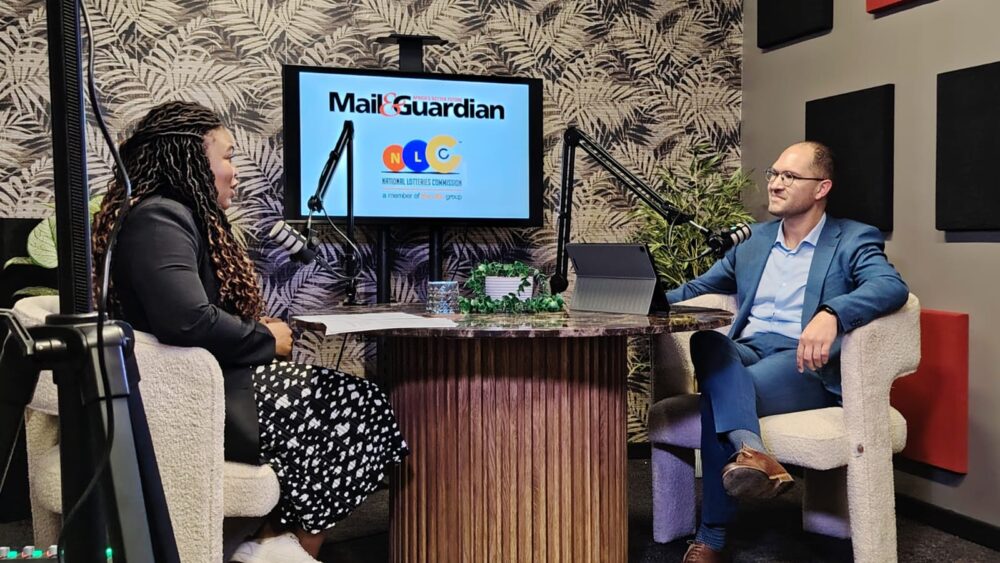
Mogolane emphasises that ethics is not only a governance requirement, it is a daily practice. “Fraud prevention starts with behaviour. Technology and policies matter, but integrity begins with people,” he notes.
“Fraud prevention starts with behaviour. Technology and policies matter, but integrity begins with people,”
Strengthening Anti-Bribery Efforts The NLC has further reinforced its commitment to clean governance through its Anti-Bribery and Corruption Policy, which emphasises transparency, supplier vetting, and ethical leadership. This includes clear guidelines on declarations, potential conflicts, and decision-making processes.
Collaboration with external bodies, particularly the SIU and the Hawks (DPCI) – ensures that serious cases are escalated appropriately, and that consequence management extends beyond internal processes.
A Culture of Accountability
Across the organisation, a culture of integrity is being strengthened through awareness campaigns, training, leadership messaging, and consistent controls. Internal reforms such as Standard Operating Procedures (SOP) improvements; pre-funding verification and the revisiting of older projects all contribute to a more accountable environment.
A Message for Fraud Awareness Week
As Fraud Awareness Week is observed, the NLC’s message is clear: fraud prevention is a shared responsibility. Through stronger governance, digital tools like Thuthuka, independent oversight, and a culture of ethical leadership, the NLC is committed to protecting public funds and strengthening trust with South Africans.
The organisation recognises that fraud risks evolve, and so must its systems, people and culture. Continuous improvement, ethical vigilance and transparent processes will remain central to its work in the years ahead.
This is an emergency: The G20 women’s shutdown and the crisis SA can’t ignore:
The colour purple usually conjures up the image of Jacaranda trees flowering, particularly at this time of year. But this year, things are different.
The purple adorning many profile pictures on social media platforms signals a resounding call – for Gender-Based Violence and Femicide (GBVF) – to be declared a National Disaster.
Women and members of the LGBTQI+ community are being raped, abused, and killed at rates higher than almost anywhere else in the world. In just one year, 5 578 women were murdered – a 33.8% increase from the previous year. South Africa’s femicide is six times higher than the global average.
Yet this violence is not treated as a global or national emergency according to Women for Change (WFC), the organisation behind the G20 Women’s Shutdown taking place on the 21st November.
On this day all women and members of the LGBTQI+ community across South Africa are encouraged to refrain from all paid and unpaid work in workplaces, universities, and homes, and to spend no money for the entire day to demonstrate the economic and social impact of their absence.
The emphasis is that this is not a rally but a shutdown. Instead of marching, the day entails nationwide symbolic actions such as wearing black; changing your profile picture to purple and a 15-minute silent standstill at 12pm.
The campaign is strategically positioned at a time when world leaders arrive in the country for the G20 summit from 22 to 23 November 2025 in Johannesburg. The G20 Women’s Shutdown is a direct message to the world that the government cannot speak of progress while a woman is murdered every 2.5 hours in South Africa.
The meeting will be the first G20 summit held in South Africa and on the African continent, thus making the campaign even more significant for all women including those in the arts sector.
Poet and healer, vangile gantsho, says the G20 Women’s National Shutdown campaign is essential due to the lack of safety of women in South Africa. “We need to acknowledge the fact that we have reached a state of national disaster. This is an emergency. We are not safe,” says gantsho.
The recently appointed editor of the poetry journal, New Coin said further: “Our lives are always in danger at home, on the streets, anywhere and everywhere. We are in a constant state of perpetual trauma and fear. We cannot exhale and that is not living.”
Multidisciplinary artist Thembeka Heidi Sincuba says GBVF has long been a disaster hence this moment calls for a reckoning with how we do activism.
Sincuba cites a recent article she wrote called A Right to Pride. In it Sincuba explores the growing fatigue in many activists’ spaces including the LGBTQI+ community, despite the incredible energy and commitment put in.
“There is burnout, fracturing, judgment, and even toxicity. We often fight the right battles, but in ways that replicate harm. So, the opportunity to do activist work in ways that feel safe is welcome. This shutdown feels like an invitation to reimagine solidarity, not just in public-facing resistance, but in how we hold ourselves and each other as communities of care,” says Sincuba.
When the South African government designates an event as a disaster, it unlocks emergency funding, speeds up the rollout of critical resources, and supports widespread public awareness efforts.
Yet the petition submitted in April 2025 calling for GBVF to be declared a National Disaster was ignored by both the Presidency and the Department of Women. With genuine political will, surely the government could address this crisis with the same urgency it applied to the COVID-19 response and recent flood interventions.
This lack of urgency from the government, gantsho says, is due to a general lack of care among men in positions of power.
“Our President doesn’t care. We live in a country where men can get away with raping women and continue their lives as if it’s business as usual. A man can beat up his partner and can continue to join the ministry, become a high-ranking politician or an executive with no repercussions,” gantsho says fretfully.
“So, to call for change in the carrying out of legislation, for example, is to admit that these men have to suffer the consequences of their actions because the men who are making the laws are also the ones who are killing, raping, and violating us,” gantsho argues.

Sincuba agrees with gantsho’s view on the government needing more proactive laws but stresses that society must significantly intensify its collective efforts.
“While the government must be held accountable, we also have to hold ourselves accountable. The government responds to issues that South Africans will not let them ignore. Whatever egregious injustices are happening will continue until people collectively put their foot down,” says Sincuba.
The Kwa-Zulu Natal-born artist also alludes to the genocide of Palestinians by Israel, arguing that it was South Africans who collectively ensured that our government took action at the International Criminal Court (ICC).
“So, when it comes to GBVF, ask yourself why there is no urgency. The truth is, it is because of us. Because society at large has not yet made it impossible for the government to ignore,” adds Sincuba.
I asked both artists what suggestions they would share if given a moment with the President or the G20 leaders.
Sincuba admits there is no simple fix and that a holistic transformation that includes the arts and all sectors of society is needed.
“It means creating opportunities for survivors and marginalised communities to speak for themselves; training police to respond effectively and sensitively to incidents; and ensuring young girls are empowered with education, self-esteem programs, and knowledge of what safety looks like,” Sincuba suggests.
Sincuba also suggests moving away from enforcing a heteronormative nuclear family model, which can often be a site of abuse. “We need to reconnect with a “it takes a village” mentality, where accountability is shared and children are not left at the mercy of one or two people who are themselves dealing with trauma.”
As part of the immediate practical solutions, gantsho affirms that stricter laws for violent acts and abusers are needed along with advocating for higher conviction rates so that women can feel safe reporting incidents.
“I want to think about this question very carefully, but I am also exhausted. I feel like our leaders already know what we want. We just want to feel safe. We want laws that protect us. We want perpetrators to face the consequences of their actions. We want to feel safe in our bodies, in our skins, in our countries, in our homes.
What would a moment do if we don’t have the political will and the political desire to keep vulnerable or endangered members of society safe? I mean it’s exhausting. Why should we have to march? Why should we have to shut down the country?” gantsho says dejectedly.
What makes this campaign different from #MeToo, #MenAreTrash and #16daysofactivism campaigns, is its potential to hit hard at the core of the economy. It is an unyielding wake up call to the slumbering country and global leaders.
Imagine, for instance, if all female and queer CEOs, ministers, presidents, cleaners, stay-at-home mothers, and all the gogos selling on sidewalks, didn’t go to work for a week; how would our economy be affected? Then again imagine if all women were paid suitably, shown healthy love in their homes balanced with modern legal frameworks. Better yet imagine progressive men in power who actually listen and act promptly on this burning issue, surely the world could be a better place. But sadly, the vision is held hostage by a persistent patriarchy and misogyny.
G20 National Shutdown’s call aligns with feminist writer and activist Caroline Criado Perez’s view on the invisibility of women’ s needs in a world biased towards men.
In her book Invisible Women, Perez argues male bias has made women forgettable, dispensable and invisible from history, culture, data, product design, laws and in basically everyday life.
No matter the outcome, the G20 National Shutdown certainly demonstrates the power of collective effort to put an even bigger spotlight on the visible truth many choose to ignore. It’s an amplified call for accountability, empathy and a proactive legal system to curb abuse of women and the LGBTQI+ community.
Submit and get free exposure here: Showcase Your Business | Advertise Your Special Offers.