Kia Carnival: A sumptuous travel companion:

Kia’s people-mover MPV, the Carnival, commemorates 25 years this year. We recently took one on a road trip to Mpumalanga to remind ourselves, once again, why it makes for a consummate travel chariot.
Launched early last year, the Carnival decidedly replaced the Sedona with an all-new model that elevates both comfort and refinement levels.
However, before we delve into our recent jaunt to the province of the rising sun, let us recap on the Carnival and what it offers.
Dual sliding doors and seven seats in the instance of the entry-level EX and the flagship SXL.
Power comes in the form of a 2.2?litre turbo diesel engine (148kW and 440Nm) that is allied with an eight-speed automatic gearbox.
It offers 1?138 litres of luggage space with all the seats in place, which is ideal for a family road trip.
Slotting between the EX and SXL is the EX+ that comes standard with eight seats, making it the most versatile of the three trim levels.
It is this latter model that we used for our sojourn and it is probably the one that will net most sales by virtue of better practicality without compromising on the slew of conveniences and comfort features befitting Kia’s flagship model.
Setting off on a wintery Friday afternoon, we nosed the eight-seater MPV onto the N12 East from Gauteng towards Mpumalanga.

The vehicle quickly settled into its stride, the turbo diesel thrumming in the background, all the while delivering a huge seam of torque ensuring that keeping up with traffic or the occasional overtaking was a cinch.
Perching in the pound seat, the view of your surroundings and the road ahead is excellent, while wind insulation was mostly good, save for the driver’s side window seal that exhibited some wind noise.
However, the rest of the vehicle never skipped a beat, while acres of leg room ensured all passengers lounged in comfort.
On the smooth surface of the N12 and N4, the Carnival was unsurprisingly competent but it was when we left the national road for the R36 towards Sabie that the vehicle’s suspension was put through its paces.
The damping is supple at worst, while overall body control is impeccable for what is essentially an MPV, making it easy to thread the vehicle through the snaky roads dotted by pines, making for spectacular vistas.
The Panorama Route, in particular, is hands-down one of the most beautiful pieces of road in South Africa. If only the municipality gave the surface the attention and maintenance it deserves, it would make for great road trip excursions for tourists and locals alike.
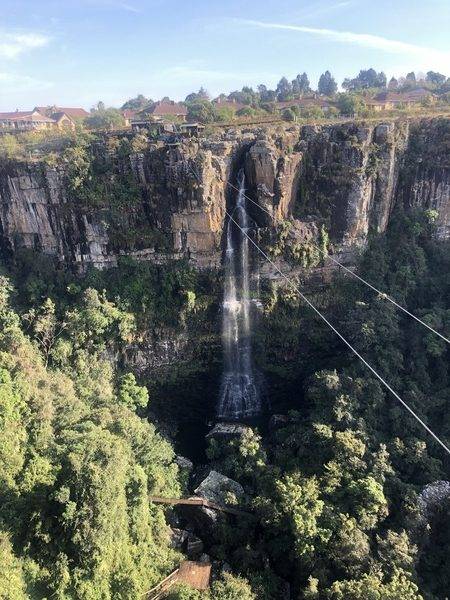
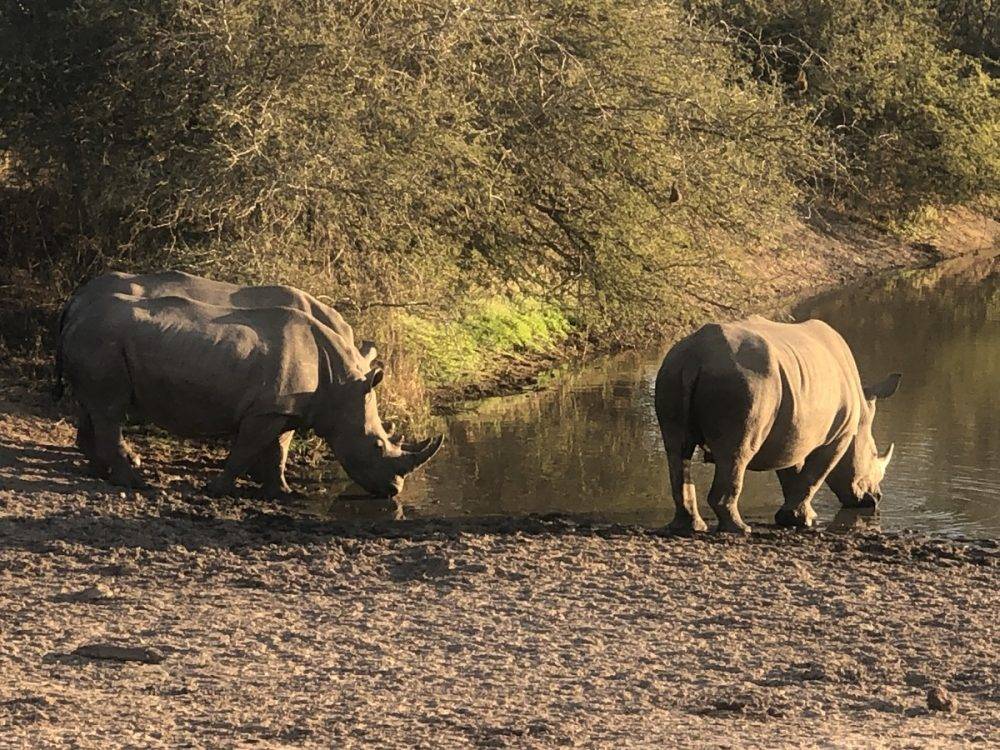
The Carnival’s comfort levels continued to impress as we spent time in its sanctuary, ensconced in those sumptuous chairs and drinking up the beautiful scenery, which made us appreciate that we do, indeed, live in a beautiful country.
On Saturday morning, we left Graskop Gorge Adventures, headed to Hoedspruit via Tzaneen on the R532, which has fewer potholes, but was still not great. The Carnival took it all in its stride, making its way between the mini craters with the alacrity of a much nimbler vehicle.
The two-hour journey was dispensed with ease and we arrived at Kapama River Lodge relatively refreshed, thanks to the effective climate control that kept the cabin cool as we cruised along, averaging around 7.4 litres/100km of diesel, exemplary for a vehicle of this size.
Our return leg to Jozi on Sunday morning took us via Nelspruit and down the N4 once again, making the four-hour sojourn one of absolute comfort and great memories spent with friends.
For me, that is the main purpose of such vehicles and the Kia Carnival is unequivocally one of the models in the segment worth a second glance.
It is spacious and comfortable, as well as offering a host of convenience features to ensure an enjoyable driving experience.
At a starting price of R869?995 and topping out at R1?094?995, it offers exceptional value in this segment and you would be hard-pressed to find a package as well-appointed and as keenly priced.
So, when all is said and done, should you buy one, then? The answer, at least in my small book, is a resounding, “Yes!”
Economic growth in G7 versus Brics: A reality check:

In the UK, the BBC prepared and published data from the International Monetary Fund (IMF) in January about various nations’ growth forecasts for 2023 and 2024.
The BBC foregrounded some bad news for the UK. Of nine major industrial economies — the G7 (the UK, US, Canada, Japan, Germany, France and Canada), plus Russia and China — the UK would be the only one to suffer real economic decline, a contraction in its 2023 GDP (its total annual, national output of goods and services).
This dubious distinction for the UK followed the long political night of rule by the Conservative Party. That night’s darker moments included austerity after the severe 2008-2009 global capitalist crash, scapegoating Europe for the UK’s economic troubles and Brexit taking place during the peak of that scapegoating. Then there was the enjoyment of Covid cocktail parties by former prime minister Boris Johnson’s government, which it had prohibited for the British public, and endless, transparent and cringeworthy lying to the public when caught and exposed.
But the BBC’s report on the new IMF data was shocking about far more than the poor performance of the UK economy.
For the rest of 2023, the IMF says China’s GDP will grow more than 5% — more than twice Japan’s growth rate. All other G7 countries will grow their GDPs more slowly than Japan. China’s growth rate will be more than triple that of the US in 2023.
Finally, the IMF’s projected GDP growth for 2024 shows both Russia and China growing much faster than any G7 country.
These comparative forecasts comprise a reality check that clashes with most politicians’ statements, mass media accounts and propaganda barrages (worsened by the Ukraine war) emerging from the G7’s old capitalist establishment. The BBC report was thus both rare and arresting.
For 30 years, scepticism and disparagements confronted China’s claims about its economic growth. When these attempts to debunk Beijing’s claims were subsequently proved wrong by the country’s stunning record of superior growth, the intensity of these efforts nonetheless mounted.
Disbelief in China’s economic achievements grew even as in-person visits to China confirmed high rates of industrialisation, internal migration and urbanisation, and fast-rising mass consumption levels.
The need to disregard China’s economic transition from extreme poverty to economic superpower status rivalling the US reminds us of the Cold War-driven nonrecognition of Soviet economic achievements after 1945. A parallel non-recognition figures again in the G7 sanctions strategy against Russia over the Ukraine war.
For anyone seriously interested in understanding the momentous changes now sweeping across the world economy, one question looms. How do we account for the gap between what the old capitalist establishment says (and might even believe) and what is real?
The answer is that we are confronted with a combination of denials and pretences that are caused by the conjoined decline of US capitalism and its global empire (or hegemony). Those declines have occasionally become clear enough, at least fleetingly, to observers within the old capitalist establishment.
For example, such key moments include the US military’s inability to “win” local wars even against poor countries such as Afghanistan and Iraq. Another example is the US medical-industrial complex’s subpar performance in managing the high number of Covid deaths and illnesses.
US capitalism’s crash in 2020 and into 2021 was severe and it was followed immediately by a bad inflation and then a fast, destabilising, tightening of credit — not exactly a stellar economic record.
Debt levels of the US government, corporations and households are at or near record levels. Inequalities of wealth and income, already extreme, keep rising. A public viewing such facts might reasonably wonder whether something bigger is at play beyond these events being seen in isolation. Might there be a systemic problem?
But, before such a line of thought can gel into a conscious question, let alone any serious pursuit of an answer, denial sets in. A systemic breakdown seems unbearable, so denial of systematicity is undertaken. Statements about specifics are carefully crafted to omit connecting them to their context of a declining capitalist system.
Evasion of the systemic dimension leads to undervaluing the dangers each particular problem or crisis presents. Like rose-coloured glasses, anti-systemic glasses make economic problems appear less dangerous, narrower and more limited in effect than they actually are. The anti-systemic bias is a form of denial.
Consider, for example, Treasury Secretary Janet Yellen and other officials when they bemoan deepening US economic inequality. They do not refute, or even seem able to imagine, that within a declining capitalism, the richest and most powerful will use their positions to shift the cost of its decline onto others.
For example, raising interest rates these days to counter inflation — instead of imposing wage-price freezes, as former president Richard Nixon did in 1971, or imposing a goods rationing system as former president Franklin Roosevelt did in the 1940s — is an anti-inflation policy choice.
The burden of this option falls more heavily on middle- and lower-income recipients than on the rich. Similar cost-shifting is entailed by a policy of huge federal budget deficits because they are financed by borrowing disproportionately from (and thus paying more interest to) the richest parts of society. Yet mainstream G7 discussions of those policy choices and deficits rarely link them to the decline of US capitalism and its global hegemony.
Complementing denial of systemic problems in G7 economies are loud pretences about their good health in contrast to problems elsewhere, such as the repeated affirmations about a “great” US economy contrasted with deep difficulties afflicting those of Russia and China.
Ironically, those difficulties are regularly rendered as systemic, flowing from the “nature” of an “authoritarian” or socialist economic system. For example, in recent years, mainstream US media reported that Russia’s ruble would soon “collapse”, that China’s building boom was collapsing, that China’s anti-Covid policies were wrecking its economy and so on.
Apropos Russia’s economy, the late US senator John McCain dismissed Russia as a “gas station masquerading as a country”. Around former president Donald Trump and President Joe Biden, the argument was often advanced that beyond all policy specifics (regarding tariffs, trade, sanctions, Hong Kong and Taiwan), economic system change in China was necessarily a goal on the horizon.
Reality undermines these denials and pretences. That is one reason why they struggle so hard to obscure reality. For example, China’s economic performance, as measured by its world-leading GDP growth over the last quarter century, undergirds its confidence in, and loyalty to, its particular economic system.
The BBC’s graphic further confirms that confidence. By the same logic, that graphic challenges the systemic self-confidence of the old G7 capitalist establishment. Denials and pretences are not likely to be sustainable responses to the widening differences between G7 performance and the emerging — and already larger in GDP terms — alternative gathered around the Brics (Brazil, Russia, India, China and South Africa) bloc.
Of course, both the G7 and Brics are heterogeneous assemblages including many significant differences among their members. Nor is there any guarantee that either bloc will retain its capitalist or socialist components or make transitions between them.
Relations between the G7 and Brics, like any transitions among various forms of capitalism and socialism, are crucial social issues and struggles. Social movements inside both blocs will shape those issues and those struggles. To do that, especially if wars are to be avoided, social movements will need to set aside denials and pretences and face realities.
This article was produced by Economy for All, a project of the Independent Media Institute.
Richard D Wolff is professor of economics emeritus at the University of Massachusetts, Amherst, and a visiting professor in the Graduate Program in International Affairs of the New School University, in New York.
Why we love the Springboks: The green and gold bring light relief in dark times:

I was born in 1964, and became aware of the Springboks at a young age. I couldn’t have been more than seven or eight when I saw a colour photograph of Frik du Preez for the first time. With the ball clamped to a Goliath hand, Frik was impressive. He looked both good-natured and menacing even in the photograph, but more impressive by far was his jersey. We hadn’t been introduced. This was the fabled green and gold.
We are rightfully suspicious of backward-looking sentiment and so we should be, for excessive sentiment is a kind of caricature of life. White South Africa is set fast in the aspic of nostalgia, addicted to the consolations of yesterday like there is no tomorrow, and so I realise in saying what I’m about to say that I expose myself to all kinds of objection.
Then again, the green of Frik’s jersey and the rich gold of the collar, the almost-white of the frost-bitten field, all these things made a profound impression upon me aged seven or eight. It was as though a shooting star had shot across the great black emptiness of my young mind.
The green and gold didn’t make so much of an impression on me that I became a Springbok zealot then and there. Being young is about growing, and I was growing towards other colours, other lights. My tenth birthday fell shortly before the Saturday on which Transvaal played against the 1974 British Lions at Ellis Park and my birthday party was held that Saturday afternoon.
Television hadn’t yet arrived in South Africa in 1974 — that came two years later — and when we weren’t stuffing our faces with cupcakes at my party, we were listening to commentary of the match on a little portable radio on a table in the garden.
There must have been about seven or eight boys at my party (as far as we were aware, girls hadn’t been invented) and it made sense to play a game of rugby because one of my friends had brought along a miniature rugby ball. The question was: who would be the Lions and who would be Transvaal?

A friend and I had no hesitation in choosing to be Lions. Both of our fathers had been born in England. Two Lions versus five or six Transvalers. It wasn’t a fair fight, either in the tight or the loose. Clue: the impromptu game played to the sound of the radio didn’t finish until all of us shook hands and trooped off to drink tea.
So there I was, aged 10. Was I a Springbok or a Lion? By the time the two played again, in 1980, I was faux-sophisticated enough to be jaded. I could be snide. Rugby was passé, a game for Cro-Magnons and those who were unable to string a coherent sentence together. My cynicism was a sham, a great emptiness conferred upon the world, but little did I know it then. With cynicism I was protected.
When I eventually grew up, there was only one team to support and they didn’t wear red. The love affair was gradual, almost too gradual to be termed an affair at all. As a result, I can’t pin-point exactly when I fell in love with the Springboks.
What I can say with absolute certainty is that my love for the national rugby team is slow and cumulative and is not separate from other people’s love and admiration. That we love something together, something uniquely South African, is important because, let’s not forget, crisis is never far away with the Boks and Springbok rugby in general.
We could lose to Japan. Or Italy. A Bok coach might speak a language entirely of his own invention. A Bok coach might be recalled from a European tour to explain himself to the mandarins in Crimplene whose only real worry is their honorariums. There could be a racial spat masquerading as something really important.
I like the fact that on the days before match days and that on the match day itself you see random strangers wearing replica Bok jerseys. A small charge of recognition passes between me and the person in a Springbok jersey, this year’s model or not.
Whether it’s in the mall or some folk on the back of a bakkie at an intersection, the jersey brings strangers together, if only for a fleeting instant. In our fraught, leaderless and often difficult-to-understand country, a fleeting recognition of that which binds us rather than that which tears us apart is not to be sniffed at. It is not an occasion for knowingness or world-weary cynicism but rather the opposite.
At times like these it can feel as if the Springboks are a lodestar in a frighteningly dark night.
If the definition of having power over people is to make them do things they wouldn’t ordinarily do, the Springboks have a strange power over many of us. It is a power out of all proportion to what winning an international rugby match really means in emotional or spiritual or even intellectual or economic terms.
Example: we set aside time in our busy weekends to watch them. Some of us, the real bittereinders, even watch the highlights repeatedly, watching a Willie le Roux skip pass and a Cheslin Kolbe dive in a doom loop of diminishing returns. The fact is that highlights become progressively lower the more you watch them. If you aren’t careful before long you’re underground, in a rabbit-hole where you’ve forgotten what it is that you’re watching and why it struck you as interesting to begin with.
Second example: I once sat with friends at a trestle table in a pub near the sea waiting for a home Test to start on the television above our heads. It was winter and the rain had worked through a little gap in the roofing and dripped down our noses and into our beer.
I didn’t know everyone in the pub and although I can only assume their demographic, I suspect that my fellow Springbok supporters on this occasion were well-heeled, educated folk with the leisure time and disposable income to spend a couple of weekend hours talking shit, watching television and drinking beer. These people weren’t strangers to irony or world-weariness or that suburban staple, served with every meal and braai — complaint.
But when it came time for the national anthems to be sung, everyone stopped talking and stood up. The waitrons stood in suspended animation. We all sang the anthems or, if we didn’t, we clenched a fist and passed our forearms across our chest and basked in the gusto-filled pleasure of singing a song we all knew. It was a moment that made you want to bang on the table and bellow.
Where else in today’s slick age would one find such abandon? Such basic, throat-emptying, reckless abandon? And all for young men called Kurt-Lee and Eben and Kitsy and — this one really kills me — Malcolm Marx and what they do over 80 crunching minutes on distant fields often far away from home.
One of the things I love about rugby — and the Springboks — is the game is still widely played across the length and breadth of the land. Cricket is dying in the provinces, most notably in the Border and Eastern Cape, while rugby is played pretty much everywhere, from the smallest pondok to the most sprawling private school.

Such reach means that when you stand up for the anthem with rain dripping into your beer, you understand intuitively that there are people everywhere in South Africa doing much the same thing. Specific details might change. But whether it’s in a tavern or a retirement home, a club, a shebeen or a sports bar, they are all there for the same thing.
We gather for the same thing so seldom. Maybe for a christening, a funeral, a wedding or for a family occasion. But gatherings between strangers — across space and age and class and race — are relatively unusual. The Boks encourage us to gather and pause and hope. We are momentarily better for it.
You can be cynical about this. You can offer a critique of the idea of the Springboks and an idea of the nation-state as being feigned reality, feigned meaning. But I prefer not to. I prefer to nurse my beer and wait until Cheslin dances like a fire-cracker down the touchline before making Owen Farrell or Marcus Smith look like a blind man groping for the security of the stairs.
Not only do Springbok fans come from far and wide, Springboks themselves come from far and wide. Frans Malherbe comes from Bredasdorp, near Cape Agulhas, the continent’s southern-most tip, while Faf de Klerk and Duane Vermeulen were born in Nelspruit in the far north. Like them Jasper Wiese is a northerner. He comes from Upington, up there on the Orange River, close to the border with Botswana.
Pieter-Steph du Toit comes from just outside of Malmesbury in the Swartland. Makazole Mapimpi comes from Mdantsane, the sprawling township outside of East London, RG Snyman comes from Potchefstroom, Franco Mostert from Brits, Kwagga Smith from Lydenburg at the foot of the Long Tom Pass in Mpumalanga.
Many towns you might ordinarily drive through (or ordinarily not give a second thought) have produced a Springbok or will produce one soon. For rugby-playing boys the dream remains. Their hearts pulse strong. This I can only equate with magic.
Lukhanyo Am was educated at secondary school level at Höerskool De Vos Malan in King William’s Town. Colloquially known as “Vossies”, the school motto is “Maintain and build”. I’ll say it again, to allow its significance to sink in: “Maintain and build.”
Am remembers that Vossies’ main rugby achievement in his final year at school was beating Winterberg, the agricultural high school in nearby Fort Beaufort which, in turn, is not far away from the University of Fort Hare, where some of the finest intellectuals this country has produced were nurtured to political maturity. He was proud to have played first team rugby, he has said in an interview, because at Vossies you were allowed to wear your first team scarf.
Am is full of straight-faced cheek. Who could forget the audacity of his behind-the-back pass to S’bu Nkosi in the Test away to the All Blacks a couple of seasons ago, before Nkosi himself dummied to Damian de Allende before actually passing to him as the burly centre dotted over?
It’s difficult to know what temporal universe Am operates in but you need oodles of time to pull off that kind of shit. Rugby is about nothing if not a code of honour and pulling off a behind-the-back pass at the All Blacks is rather like hitting Jimmy Anderson for six, or sneaking the ball between Thibaut Courtois’ legs.
And who can forget Am’s pass to Mapimpi in the World Cup final in Yokohama in 2019? Am’s pass off his left shoulder while he was looking in the opposite direction was sublime, rather like pulling a face at your teacher in primary school not behind her back but to her face.
We might enjoy Eben taking clean ball in the line-out or Malcom wedging himself into the back or a rolling maul; we might enjoy watching Handré Pollard take crash ball or Faf busy himself like a radioactive poodle bringing down opposition locks twice his size, but nothing can compare to Am’s dastardly trickery. There are places for everyone in the Springbok side, from the grunts to the high-wire artists like Kolbe, just like there is a place for everyone in the country we call home.

Much of international sport no longer feels feasible. It’s frequently played by overpaid prima donnas who only behave because bad behaviour might get in the way of their achievements and look bad on television. They’re cynical for the most part and the industry that has grown up around them is corrosively cynical too. Much international sport seems remote. To me the Springboks never seem remote. They’re on a human scale. They seem feasible. I like that.
An entire social media industry of Instagram posts and who the Boks married and what they’re worth has grown up around them but this is of no consequence to me. They aren’t so far out of reach that I feel it is wrong to use their first names. Hell, they’re virtually members of the family.
One of the consequences of this lack of feasibility is that international sport nowadays is watched and followed in a kind of penumbra of disbelief. The sports industry machine is too big to accommodate the fans, and only refers to them or cares for them as a marketing reflex or after-thought. The administration of sport and its periodic crises adds to this feeling of remoteness. How many of us understand how Fifa works? Who really knows how “fair play” legislation works? The aura of disbelief in which fans love their teams makes for cynicism and world-weariness.
The Springboks provide a welcome antidote to this kind of ennui and brazen knowingness because rugby, a game of raw physicality and gladiatorial combat, lends itself to the elemental rather than the cerebral. The Boks and the idea of the Boks seems largely untarnished by cynicism.
Perhaps this is because it’s difficult to be cynical about men who put their bodies on the line with such abandon? I remember Siya Kolisi once telling me about how painful it was to wake up on a Monday morning. His entire body throbbed.
I imagined that he unloosened his limbs, leg by leg, arm by arm, like a marionette. This is on a Monday morning, when we’ve forgotten about Saturday afternoon and are simply looking forward to the next one. When we’re looking forward, Siya’s still feeling the accumulated after-effects of back then.
So it is difficult to be cynical about such a relentlessly physical game. Some of the values projected by this physicality — like stoicism and raw courage and honour among men — are largely neglected by society. We no longer hear or read much about epic male feats in our politically correct and post-ironic societies. The Springboks give us an opportunity, if only for an hour or two on Saturday afternoons, to be physically impressed by physically impressive men.
Something else. In the last five or so years Springbok rugby and the administration thereof has remained relatively controversy-free. Politics, so often touched with doom when politics and sport intersect in this country, has for the most part receded.
There is little debate about a player’s worth in the team and whether they deserve to be there because the Boks have simply got on with the work of being World Champions. SA Rugby has cleverly, expediently perhaps, stayed out of the limelight and allowed the Boks to do their talking where it matters most.
Contrast this with Cricket South Africa (CSA), with their endless infighting and virtue signalling. Think of the taking-the-knee kerfuffle of a couple of years back; think of the Mark Boucher debacle. Think of CSA’s endless saga of targets and interventions and racial gerrymandering.
Think of Dumisa Ntsebeza’s badly written report after the Social Justice and Transformation hearings. The hearing shone a light on the human cost of racism in our cricket and therefore provided us with an opportunity to see to it that certain mistakes aren’t repeated, but you also have to wonder what the worth of Ntsebeza’s sinecure really was.
Are we closer to winning a World Cup? Is our cricket culture producing a broad mass of quality cricketers out of which a Ben Stokes or Pat Cummins springs. I think not.
Had this made the Proteas a better team, the fans might be prepared to forgive the heavy-handed administrative interventions, but the opposite appears to have happened. Greater politicisation of the game has made for a more riven game, with consensus and camaraderie an illusion in the happy hour of victory.
But back to the Boks. Let’s not be naïve. In a manner of speaking the administration of rugby, which is all in male white hands, is the biggest confidence trick in contemporary South Africa, a Ponzi scheme of quite incredible reach and effectiveness. Where are the black coaches of big teams other than the under-20 side? All the United Rugby Championship coaches, from John Dobson to Jake White, remain in white hands.
Rassie Erasmus and Jacques Nienaber are in control of the national team. As interim chief executive in Jurie Roux’s absence, Rian Oberholzer is the most important man in South African rugby, unlike Pholetsi Moseki, who is the most important man, operationally speaking, in South African cricket.
But the optics are good. We have a black skipper. And we are World Champions with a black skipper, at least until World Cup final day on Saturday October 28.
Such things buy you inestimable public goodwill. SA Rugby, the rugby establishment and SuperSport, with their cringe-worthy, sentimental documentaries, have been sure to max out this goodwill over the last couple of years to the, well, max.
This aside, it is also true that the Boks themselves play as if none of this matters, something the Proteas do too. They know what it means to play for each other and be a team. Which might — come to think of it — provide a lesson for all.
They get on with it. More than that, they get on with getting on with it. For us to get on, we might get on with getting on with it too. It’s the only way our fragile democracy is going to survive.
Finally, a story. During the last World Cup, sometime just after the Canada game, my wife and I were driving towards the southern Cedarberg north of Ceres. It was springtime, and there had been rain.
The blossoms on the fruit trees — fragile pink and white — were just beginning to burst forth. The green leaves on the trees were not an established green but frail, the kind of tender green you only witness once a year in springtime. We drove through soft rain.
We slowed down as we approached Prince Alfred Hamlet. The school in the hamlet had a field and at either end of the field were rugby poles, slightly and appropriately lopsided. The sight reminded me that rugby is rooted in this land. That means it is rooted in pain and dispossession and suffering. We are trying to get beyond that. To establish the basis of a more equitable, civilised and decent society. The Springboks can help us to do this, if only for an hour or two.
Luke Alfred is a seasoned South African sports journalist. This is an edited version of an episode of The Luke Alfred Show podcast.
Submit and get free exposure here: Showcase Your Business | Advertise Your Special Offers.