KZN faces R4bn budget deficit because of national public sector wage agreement:

KwaZulu-Natal faces a more than R4 billion budget deficit, with provincial departments struggling to find funds to meet the additional expense of the national government’s wage agreement for public sector workers.
This was the warning from outgoing Democratic Alliance (DA) provincial leader Francois Rodgers at a media briefing on Friday where he and uMngeni local municipality mayor Chris Pappas outlined the state of the province and the party’s election offering.
This was ahead of KwaZulu-Natal Premier Nomusa Dube-Ncube’s official state of the province address next week. Pappas is the DA’s candidate for premier in the province.
“If you look at the situation, at the closure of our budgets, we would be budgeting a deficit of R9 billion. That deficit comes about because the national government could not fund the negotiated wage agreement and has only funded a small portion of it. It funded R3.7 billion, which means our province still faces an over R4 billion deficit,” Rodgers said.
The majority of trade unions representing public sector workers agreed to a two-year wage agreement, which encompassed a 7.5% increase in 2023-24 and an inflation-linked increase in 2024-25, according to a statement issued by the treasury at the time of the settlement last year.
The cost of the agreement is estimated to be R37.4 billion in 2023-24, with carry-through effects applicable to subsequent financial years.
Nationally, the public sector wage bill will cost R421 billion or 34.9% of the total R1.206 trillion social wage bill allocated in the 2024-24 budget, a treasury spokesperson said on Friday. This is mostly for the salaries for educators and health professionals.
But, said Rodgers, the KwaZulu-Natal departments of health and education, which also make up the largest portion of the provincial wage bill, had received only 78% of the negotiated wage settlement.
“The other departments received nothing, they had to fund it entirely. Agriculture was affected to the tune of R80 million, Cogta [department of cooperative governance and traditional affairs] was affected to the tune of nearly R34.5 million,” he said.
“Health lost R2.89 billion because of the unfunded wage agreement and human settlements and public works, R26.4 million that they didn’t get, and the department of social development [DSD] lost R97.2 million,” he said.
“And now our entities, under the DSD, nonprofit organisations, have been told that there is no additional funding for them because of the budget cuts. I don’t need to tell you about the inequality that still exists in our province. And those entities played a critical role in dealing with those individuals. So all in all, we’re not in a great position.”
Rodgers said the province’s contingency reserve had dwindled from R500 million to just R158 million over the last few years. Service delivery had collapsed in the province and in eThekwini metro, which is struggling with water outages.
“We are lurching from one crisis to another,” Rodgers said.
He said KwaZulu-Natal’s expanded unemployment rate was at 43.4%, and it “remains the country’s murder and rape capital”, while the health department was facing medico-legal claims amounting to R31 billion and the education department had provided an internet connection, laptops, data projectors and other technology to only 110 schools.
Pappas said the DA was focused on dealing with crime and security, the controversial policy of cadre deployment, load-shedding and the water crisis, as well as creating jobs by working with the private sector, improving healthcare services and education and restoring respect for the Zulu monarchy in the province.
He said the performance management of officials as well as lifestyle and skills audits were essential to improving service delivery, noting that officials had resigned from his municipality after being implicated in lifestyle audits.
“We must measure service delivery. We must stop measuring the number of ribbons we cut. We have to have impact based programmes that have outcomes that see people’s lives tangibly improved,” Pappas said.

Thursday.
A lot has happened since the last time we met — a fair part of it over the past three days.
The Democratic Alliance (DA) leader has finally received the ANC’s deployment committee records; President Cyril Ramaphosa has named 29 May as election day; the budget has been passed and Judge John Hlophe has been given his don’t come Monday by the members of our parliament.
A lot also hasn’t happened — particularly when it comes to keeping the lights on, creating jobs and delivering running water.
No jobs, no water, no electricity — it was back to stage four within hours of parliament dropping the hammer on Hlope on Wednesday evening — but at least we have an election date.
The votes were hardly counted in the ballot to impeach the former Western Cape judge president and the result announced before Electricity Minister Kgosientsho Ramokgopa pulled the plug on our brief vacation from rolling blackouts.
Neither load-shedding nor a last-minute application for an interdict to stop the parliamentary vote from going ahead were going to save Hlophe from the dubious honour of being the first member of our judiciary to be impeached.
The 305-to-27 result must still have hurt though: a timely reminder to Hlophe and the rest of us of the shift in the balance of power in the governing party — and of the fact that in politics, no friendships are permanent.
Fikile Mbalula’s release of the ANC’s deployment records must have hurt too.
Not Mbalula though.
It’s not just the fact that Mbalula’s name is nowhere in the bundle of screenshots, redacted deployment committee minutes, emails and CVs that were handed over to the DA on Monday night by the governing party — beyond the form he signed when he became secretary general.
Mbalula’s fancy footwork also means that any plan the DA had to steal the ANC’s thunder on Friday by releasing the bundle ahead of the ruling party’s manifesto launch on Saturday went out the window the minute Fikile hit send.
South Africans have a notoriously short attention span.
Most of those who do read the documents aren’t likely to get beyond page 25 of the 1?117 pages of poorly copied material — I’m getting paid to and I battled.
Those who do have the patience to wade their way through them will realise they’re only telling us what we already know — and will have forgotten about it by the time Ramaphosa takes the stage at the weekend.
The deployment committee records may give the DA ammunition for legal action further down the road — but it won’t be before Saturday, or election day — which is what really matters at this point in time.
The announcement of 29 May as the date for the national and provincial elections won’t power a fridge, a laptop or even a cellphone, but it does put an end to the speculation — and moaning — over when the president would proclaim voting day.
The 22 May suggested by Deputy President Paul Mashatile over the weekend during the build-up activities ahead of the ANC’s manifesto launch in Durban this Saturday would have been better — once it’s done it’s done — but 29 May will do.
Parties have all been in full campaign mode since last year — we were already several manifestos in by the time Ramaphosa announced the election date on Tuesday night — so any further delay would have taken us into the realm of the farcical.
Ramaphosa couldn’t really deliver his party’s manifesto on Saturday without having a date on which to tell the comrades to vote for the ANC — or could he?
Naming a date for the election also means that the deluge of new parties that have been launched almost daily in the build-up to the biggest election since 1994 will soon come to an end.
I still don’t know who to vote for, having given up on the existing parties two elections ago.
The new options aren’t a lot better.
It’s hard to take seriously the horde of political wannabees, failed celebrities, big party discards, people’s offspring and other one-election wonders who have been queuing up to pay their registration fee to the Electoral Commission of South Africa.
We’re already knee-deep in self-proclaimed gap-fixers and would-be game-changers, newly invented congresses, conventions and movements, a plethora of new entrants more likely to waste votes than make use of them.
Being spoiled for choice is one thing, but it feels like the longer the ballot paper gets, the lower the likelihood of any of the heads on it being able to deliver on what they are promising.
Mpumalanga gas project aims to bridge just energy transition gap:
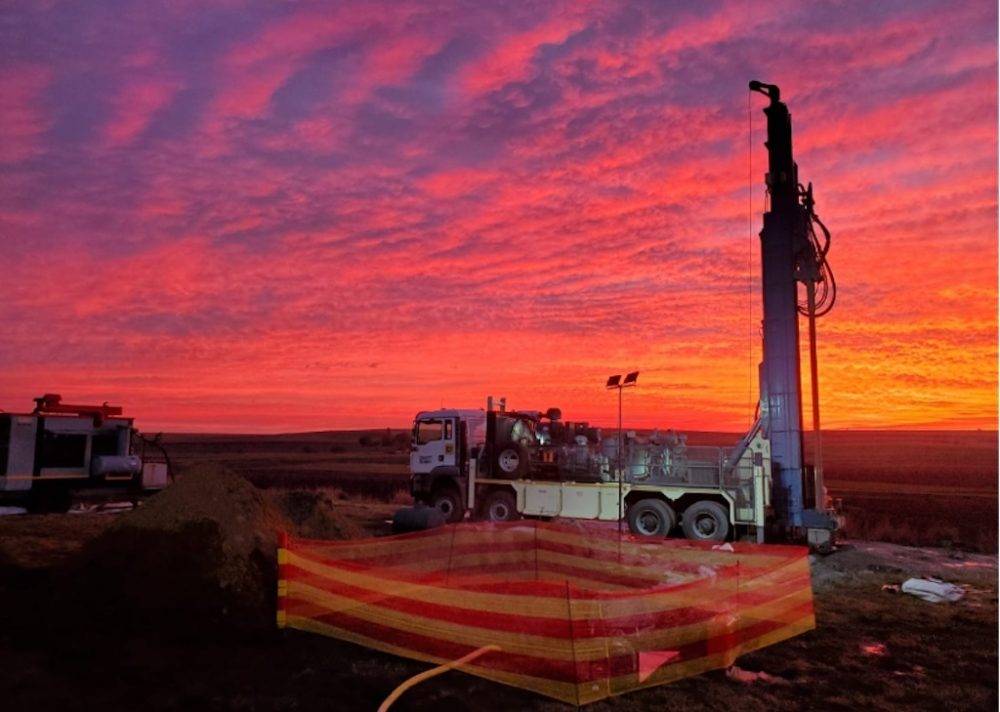
The development of natural gas reserves in Amersfoort, Mpumalanga, is being punted as having the potential to reshape South Africa’s energy dynamics and play a pivotal role in the nation’s journey towards a more diversified and sustainable energy future.
However, environmental organisations question whether gas is a green energy source and whether it will contribute to South Africa’s undertakings in the global fight against climate change.
In 2023, Kinetiko Energy, an Australian gas exploration company, and the Industrial Corporation of South Africa (IDC) jointly signed a liquefied natural gas (LNG) development project for Amersfoort. The town is near Volksrust in the Mpumalanga-KwaZulu-Natal provincial border area, the heart of the country’s energy centre.
Kinetiko describes the project, codenamed Korhaan after an endemic bird species, as South Africa’s largest onshore LNG project and aims to produce 50 megawatts of equivalent energy initially, with plans to expand to 500MW through the abstraction of more than two trillion cubic feet in gas reserves. LNG is natural gas that has been cooled to liquid form for ease and safety of non-pressurised storage and transport.
IDC funding
Tshepo Ramodibe, head of IDC corporate affairs, said the discovery of the Amersfoort gas reserves followed more than two decades of extensive exploration and drilling by various entities.
The Korhaan project is still in the development phase, he said, with confirmatory drilling work and the completion of the application for production rights under way.
“IDC will provide development funding for the project to complete a pilot phase that should confirm the availability of the gas reserves,” explained Ramodibe.
The budget for the pilot phase is R155 million, with IDC committing up to R70 million for this phase, while the balance is provided by Afro Energy, a subsidiary of Kinetiko Energy.
Asked what factors make Mpumalanga an attractive location for onshore LNG investment, Ramodibe identified the project’s proximity to local markets, especially Sasol, and the potential for power stations in the province to be converted to gas.
South Africa’s other onshore LNG project, the Renergen project, comprises exploration and production rights of 187 000 hectares of gas fields near Welkom, Virginia and Theunissen in the Free State. Full production is expected by 2027.
Transition fuel
Acknowledging that gas is not a renewable resource, Ramodibe said: “It is a resource that has the potential to alleviate the energy shortage in South Africa while the country transitions to renewable energy.”
Makhosonke Buthelezi, spokesperson for the department of mineral resources and energy, affirmed that natural gas forms part of South Africa’s energy mix, as outlined in the Integrated Resource Plan (IRP 2019). He said gas is a global transition fuel, providing the flexibility necessary for cost-effective electricity generation.
“In this regard, the department of mineral resources and energy promotes exploration and production of gas and supports the development of gas infrastructure to augment the country’s electricity generation capacity,” Buthelezi said, highlighting gas as a crucial resource for baseload energy, strengthening South Africa’s energy security and supporting sustainable industrialisation.
However, lawyers at the Centre for Environmental Rights cautioned against the development of large-scale gas-to-power infrastructure in South Africa, citing potential negative effects on decarbonisation efforts and climate risks.
“Every country’s profile in this regard will be different, depending on their resources and existing infrastructure. Every country, however, needs to move as quickly as possible towards clean, low-carbon energy provision and electricity generation,” the centre’s lawyers said in an interview.
“In South Africa, we need to move away from coal as quickly as possible as we build renewable energy capacity. Of course, this cannot be done immediately, and the existing functioning coal fleet should be retrofitted with pollution abatement as one mitigation measure. This existing fleet will provide the generation needed to supplement the renewables as they get built and come online,” they said.
According to the centre, as renewable energy can be intermittent — for example, when solar or wind resources are limited — there is sometimes a need for any shortfall to be made up by “peaking” generation sources, such as is currently provided by diesel turbines. The organisation said some models suggest that, from a technological point of view, this peaking could be gas-fired.
Renewables challenges
Nick de Blocq, chief executive of Kinetiko Energy, expressed doubt about whether renewables could replace coal in South Africa. He emphasised the need for the urgent pursuit of nuclear and gas power at scale and pointed to Europe’s challenges in transitioning directly to renewables.
“The cleanest energy solutions we have available today globally include geothermal, hydro, nuclear and gas. In South Africa, at scale, that means nuclear and gas should be pursued with urgency. We cannot pin our hopes for regional-level power on things we cannot have,” De Blocq said.
According to him, the global average output from weather-related energy sources is in the region of 25% of installed capacity, often dropping into single figures.
“The outcome in Europe from an attempt to transition directly to renewables has resulted in the least available and most expensive electrical power bills in the history of the continent,” he added. “They are reverting to coal and diesel to fill the gap so glaringly left by ‘renewables’, which are by no means clean and green energy.”
De Blocq acknowledged that gas is not renewable but agreed with the recent European Union classification of gas as “green”. Though not cheaper than coal, gas is substantially cleaner, greener and offers a more efficient burn, he said.
He highlighted Mpumalanga’s strategic location for gas and South Africa’s need to import gas because of limited LNG production in the country.
“South Africa needs to evolve from being a 100% gas importer to accommodate domestic supply from both offshore and onshore,” he said.
Affected communities
Asked whether people affected by the project had been consulted, De Blocq said: “We are obligated to communicate with stakeholders and landowners to share our plans with them at the various stages of applications for exploration rights and production rights.
“We went through that process some time ago … and we will meet once again with them as we evolve into producers in the future. Landowners and farmers need to understand clearly that we represent a net benefit to them.”
Unlike solar farms, which take inordinate land space as they provide intermittent power, he said, gas production would be from small boreholes in the ground every 400m or so, “and therefore of negligible disturbance to agriculture”.
“And although landowners are not the owners of the gas under their feet — it is owned 100% by the state — as the rights holder we believe that the landowner should benefit from what we do in the form of a cash consideration for our access, as well as in the provision of paid-for services like accommodation, plant hire, road-building and more,” De Blocq added.
Promising step
Njock Ayuk Eyong, chief executive of the African Energy Chamber, praised the Amersfoort project as “a promising step on the long road to Africa’s just energy transition” in a recent opinion editorial.
He emphasised the significance of gas as the way forward for African states and asked where the money would come from for building wind and solar farm infrastructure if the continent was unable to profit from its own natural resources, “natural gas being the most vital among them”.
“We are told to play this game of catch-up with our hands tied — to leave our natural resources in the ground while the developed nations of the world continue to exploit their natural non-renewable wealth.
“We are expected to jump straight to building wind farms, solar farms and hydroelectric dams while hundreds of millions of Africans are still living without access to electricity,” he wrote.
“Who will build the foundational infrastructure needed to support it? Developed nations are quick to promise, ‘We will,’ but are reticent to follow through on their promises. What’s more, their foreign ‘aid’ has frequently focused more on alleviating the symptoms of Africa’s economic and energy poverty rather than resolving the source.”
The African Energy Chamber was contacted for further comment on the LNG project in Amersfoort but it had not responded by the time of publishing.
Thabo Molelekwa is an associate journalist of Oxpeckers Investigative Environmental Journalism and a graduate of its #PowerTracker professional support and training programme. This investigation was supported by the African Climate Foundation’s New Economy Hub.
• You can track the development of energy projects across Mpumalanga province on the Oxpeckers #PowerTracker tool.
Submit and get free exposure here: Showcase Your Business | Advertise Your Special Offers.