
Madlanga: Witness A implicates senior Gauteng officials in drug cartels and syndicated hits:
The Madlanga commission heard further testimony of police corruption on Monday from an anonymous police investigator who alleged that senior Gauteng officials were linked to drug cartels and criminal syndicates implicated in contract killings.
Witness A, a serving officer in the organised crime unit, told the commission that in May 2024 after the murder of Armand Swart — an engineer believed to be a whistleblower — he was invited by a colleague, Vusi Ndlala, to a party at what he described as “the white house on the hill”.
The gathering was attended by several high-ranking officers, including the head of the national organised crime unit Richard Shibiri.
Witness A said he was surprised to find himself in a social setting with such senior officials, prompting him to phone a colleague, identified as Witness B, to ask whether the party might have been connected to his ongoing investigation into the murder of Swart.
“The only conclusions I could come to were that General Shibiri asked Ndlala to invite us. I now think it might have been part of the plan to test us — whether we were open to undue influence, especially since Witness B [had] posed a question [previously] to Shibiri about what he is doing about the corruption in the police,” Witness A said.
Witness A said, a week later, he was invited by Ndlala to another party, which he could not attend due to other commitments. He told the commission that a police colleague later informed him that two senior officers had joined Shibiri at that second event — Gauteng provincial commissioner Tommy Mthombeni and Mbangwa Khwashu, deputy commissioner in the Sedibeng district.
“I suspected that the second invitation was another attempt to see if this colleague of mine and I could be influenced. If I had been in Joburg, I likely would have gone to the party with this colleague of mine,” Witness A said.
Asked why he would attend the party, Witness A said: “At this stage, as a typical investigator, I wanted to know if my gut feeling was right that we were being pooled to be part of those people who could be controlled and influenced for the benefit of criminals.”
The testimony forms part of a growing body of evidence before the commission of inquiry, chaired by retired judge Mbuyiseli Madlanga, which has revealed deep-rooted collusion between elements of the police service and organised crime networks.
The commission seeks to test the claims of political interference and collusion with drug cartels made by KwaZulu-Natal police commissioner Nhlanhla Mkhwanazi in July which led to the suspension of Police Minister Senzo Mchunu.
Mkhwanazi has appeared before the commission as well as parliament’s police portfolio ad hoc committee investigating the same allegations as a parallel inquiry. He has accused deputy national commissioner Shadrack Sibiya of carrying out what he described as Mchunu’s “irrational and irregular” directive to disband a task team investigating political killings.
Mchunu has defended his directive, saying it was a temporary structure that had outlived its purpose. His order set off a feud between Mkhwanazi and Sibiya, who accused one another of corruption and abuse of power.
Sibiya told parliament that Mkhwanazi and crime intelligence head Dumisani Khumalo were running an “elite” policing operation that operated without oversight and diverted millions in state funds. He alleged the pair used intelligence structures to consolidate influence and protect select investigations.
Earlier on Monday, Witness A linked Swart’s murder to political and criminal syndicates operating in Gauteng, implicating police detective Michael Pule Tau and two alleged hitmen, Tiego Mabusela and Musa Kekana.
He described how the investigation uncovered burner phones used to coordinate the assassination and vehicles with cloned number plates, one which was linked to a relative of one of the accused.
The Madlanga commission also heard that Witness A and other members of the investigation team have lived in safe houses for extended periods due to credible threats against their lives.
Before advocate Lee Segeels-Ncube led Witness A’s evidence on Monday, fellow evidence leader Mahlape Sello told the commission that the witnesses’ anonymity was essential for their safety.
“They have lived in safe houses for an extended period and their safety in those houses is supported in part by their anonymity within the community they live in. If their faces are broadcast, that anonymity is lost,” Sello said.
Witness A told the commission that he discovered “tampering” of the ballistic report in the Swart murder. Senior police officials had said the initial ballistic report should be redone.
He said the guns used in Swart’s assassination were linked to other murder cases and the senior officials wanted to bury this evidence. He was concerned that the new report did not include the 15 bullet cartridges found at the murder scene that linked it to other cases.
The commission also heard how three of the five detectives in the Swart case recused themselves when Tau was granted bail.
Witness A, and the remaining member of the Swart murder case, Witness B, decided to keep the docket with them at all times. Witness B is expected to testify on Tuesday, providing further information regarding the Swart case.
The six-monthly anti-HIV jab could be in 360 clinics by February. Who should get the first doses?:
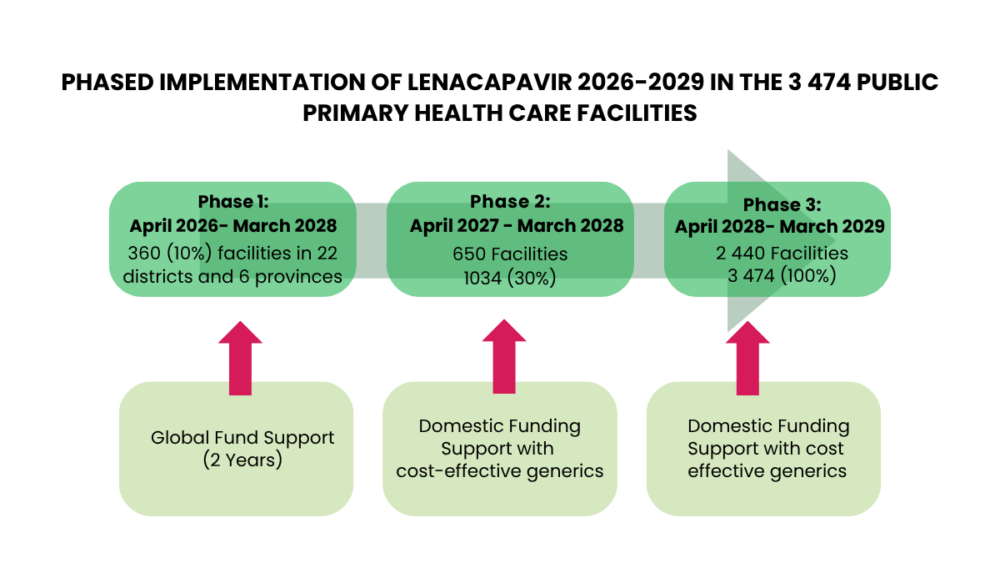
One in 10 clinics in South Africa — across 22 health districts in six provinces — could start to hand out a twice-a-year anti-HIV jab as early as February if the country’s medicines regulator approves the shot, called lenacapavir (LEN), soon enough, says the health department.
Boitumelo Semete-Makokotlela, the head of the South African Health Products Regulatory Authority, Sahpra, says the body is on track to announce its registration decision within the next 12 days, by the end of October.
LEN’s manufacturer, Gilead Sciences, submitted data for Sahpra’s approval in March.
Semete-Makokotlela was speaking on a panel at a two-day-long meeting last week organised by South Africa’s Aids Council, Sanac.
LEN WILL BE ROLLED OUT IN THREE PHASES
So far, LEN, which is injected into the fat under the skin of someone’s tummy once every six months, has been registered as an HIV prevention shot in the US and the EU. The World Health Organisation also “prequalified” the injection last week, a stamp of approval without which donors like the Global Fund for HIV, TB and Malaria can’t help to buy the medicine for countries like South Africa.
If between one and two million HIV-negative people in the country take LEN each year, the shot could stop enough new infections to end Aids in the country within 14 to 18 years, a modelling study presented at the meeting showed.
In 2024, South Africa had 178 000 new HIV infections.
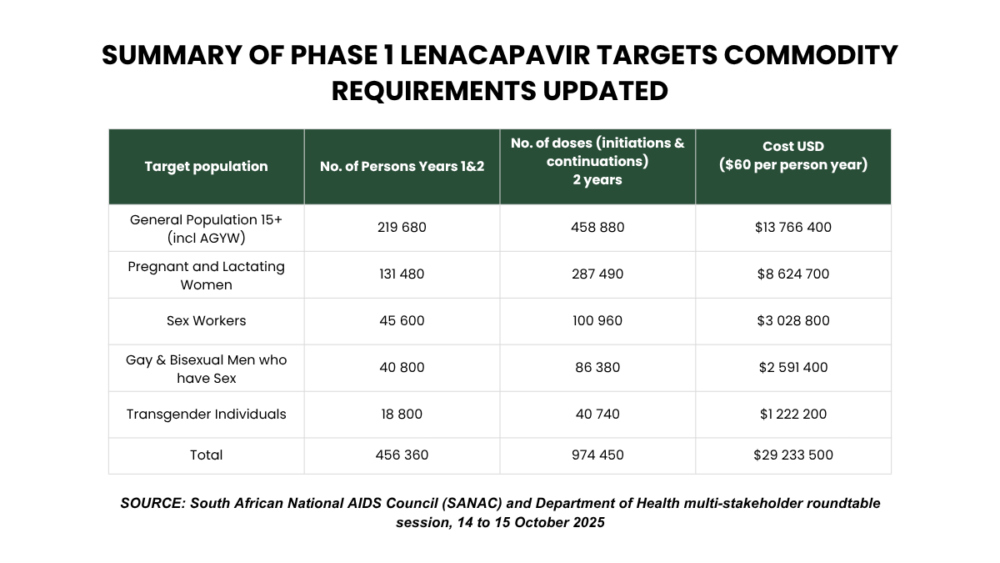
For the first phase of the country’s roll-out, from February/April 2026 to March 2028, South Africa, however, has way too few jabs to be on track to end Aids within the time frame that modelling studies suggest is possible. The country will only have enough doses to phase in 456 360 people on lenacapavir over two years, the health department’s chief director for HIV, Gugu Shabangu, said in a presentation.
GROUPS WHO WILL GET LEN FIRST
The jabs for the first phase — there will be three roll-out phases — will be donated by the Global Fund which is buying the medicine directly from Gilead at an undisclosed price. The health department placed its first order with the fund on September 30.
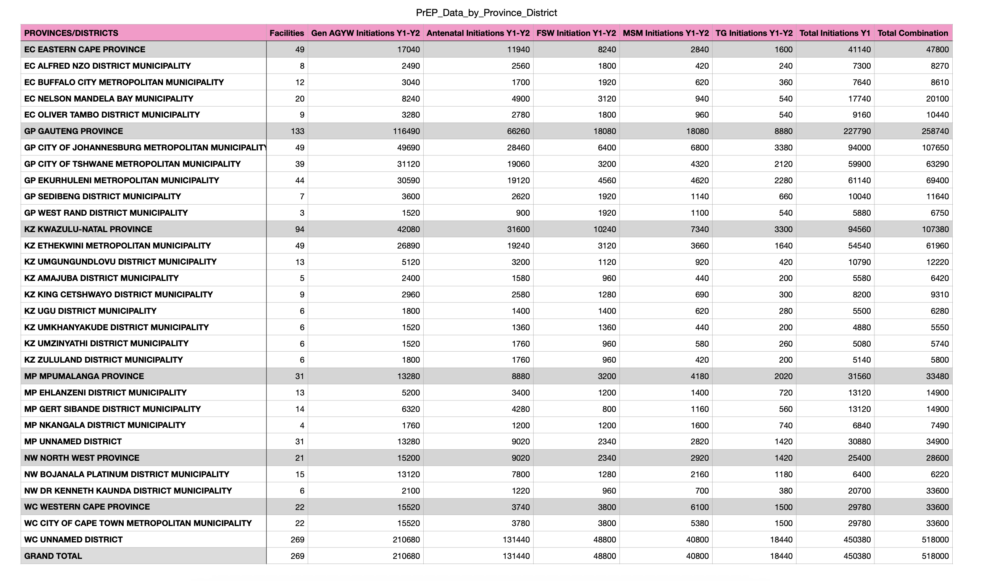
The shots will be stocked by 360 clinics in Gauteng (133), KwaZulu-Natal (94), Eastern Cape (49), Mpumalanga (31), North West (31) and Western Cape (22).
Each of the six provinces has between one and seven health districts with facilities that will hand out LEN. Mostly, those are districts with high rates of new HIV infections and facilities that have been doing well with managing prescriptions for a daily HIV prevention pill that state health facilities started to stock widely in 2020.
DISTRICTS THAT WILL GET LEN FIRST
The Northern Cape, Limpopo and the Free State will have to wait for jabs until phase two of the department’s roll-out, from April 2027 to March 2028, when 650 additional clinics will stock generic LEN bought with government money. Cheaper generics will become available through the course of 2027; at least two drug makers will then sell generic LEN for the same price as the daily pill at around R730 ($ 40) for a year’s treatment for one person.
During the third phase of its roll-out, between April 2028 and March 2029, all South Africa’s 3 849 primary healthcare clinics will stock the injection.
Should teen girls and young women get the first LEN doses?
For South Africa to get the biggest bang for its buck for the few doses it will have during phase one — so for jabs to stop as many new infections as possible in people who are HIV negative — the injections need to go to groups of people or areas where the chances of people getting infected with the virus are the highest.
Studies show the higher the rate of new HIV infections in a group of people or health district, the fewer the people who need to take LEN to prevent at least one infection. In easy speak, it costs less money to prevent infections in groups where HIV is common, than in populations where HIV is rare, because fewer people would need to take the medication to prevent at least one infection in groups with high rates of new infections.
AARON MOTSOALEDI’S SPEECH
For example, in places where the incidence rate — that is, the rate at which people are getting infected — is 3% or more (some areas in South Africa have high incidence rates like this), around six times fewer HIV-negative people need to take prevention medication to stop one new infection, a study shows, than in places where incidence is low.
“Our approach is firmly data-driven,” Health Minister Aaron Motsoaledi explained at last week’s meeting, “using modelling analysis by our local experts, the Health Economics and Epidemiology Office, HE2RO, [at Wits University]”.
But there’s more to calculating who needs to get South Africa’s first LEN doses for the best results than merely looking at which groups of people have the highest rates of new infections, experts say. How easy or difficult it is to reach those populations with information about LEN, and to get the medicine to them in a convenient way, is as important — because it affects how much a roll-out will cost.
In South Africa, for example, teen girls and young women between the ages of 15 and 24 years are contracting HIV much faster than their male peers and many others in the country — four out of every 10 new infections in the country are in this group, even though they make up only about 8% of the total population.
But teen girls and young women are a vast group who are hard to reach because they hang out in many different places, from high schools to TVET colleges to universities to night clubs, shopping centres and work. So, to reach them can be expensive and time-consuming — because health workers would need to travel to so many places to create demand for LEN and let them know how and where to collect the medicine.
When HE2RO’s mathematicians played around with 490 different scenarios of who to give LEN to first, for the biggest impact, they found that giving large numbers of South Africa’s initial stock only to teen girls and young women, would, indeed, not yield the best results.
Should our first doses go to pregnant and breastfeeding women?
Instead, there’s another, smaller group of people with high rates of new infections — pregnant and breastfeeding women — among which the country would be able to prevent more infections with a small number of doses than in teen girls and young women, and for considerably cheaper, HE2RO found.
That’s because almost all pregnant and breastfeeding women visit at least two of the same venues — pregnancy clinics and baby vaccination clinics. So they’re easy to find — and follow up with.
Pregnant women — 27.5% of pregnant women in SA who visit government pregnancy clinics are HIV positive — have a higher chance to contract HIV than the general population, says Dvora Joseph Davey, an associate epidemiology professor at the University of Cape Town, because they often don’t use condoms, as there’s no risk of falling pregnant when they have sex during their pregnancy.
There are also biological reasons why pregnant women are more likely to contract HIV. “When someone is pregnant, there are changes in the cells in the female reproductive system, and the body changes how much of certain proteins it makes, which can cause inflammation,” Joseph Davey says. “Inflamed tissue makes it easier for HIV to enter someone’s cells, because it increases the risk of tearing in the vagina during sex.”
HE2RO’s lead modeller, Lise Jamieson, says giving a large proportion of the country’s Global Fund LEN doses to pregnant and breastfeeding women, means South Africa would also save many babies from getting infected with HIV, the virus can be transmitted from a mother to her baby in the womb, during birth or during breastfeeding.
And, as Yogan Pillay, the head of HIV and TB delivery at the Gates Foundation, pointed out in his presentation, “there’s an overlap between pregnant and breastfeeding women, as many of them fall within the same age range of teen girls and young women”.
Jamieson and her team found if about 60% — 275 000 — of the initial 456 360 people the country can cover with the Global Fund-sponsored doses are pregnant and breastfeeding women, around 90 000 sex workers and 131 040 gay and bisexual men and transgender people, South Africa will probably stop the highest possible number of new HIV infections — 20 554 between 2026 and 2030. On the other hand, if between 75 and 100% of doses are given to teen girls and young women, only between 5 003 and 7 038 infections would be averted.
Who will the health department give our first LEN doses to?
But the health department’s strategy — at least at this stage — contradicts HE2RO’s findings: 219 680 (48%) of the people covered will be teen girls and young women, as well as the general population; only 131 480 (29%) will be pregnant and breastfeeding women, 45 600 (10%) sex workers and 59 600 (13%) gay and bisexual men and transgender people.
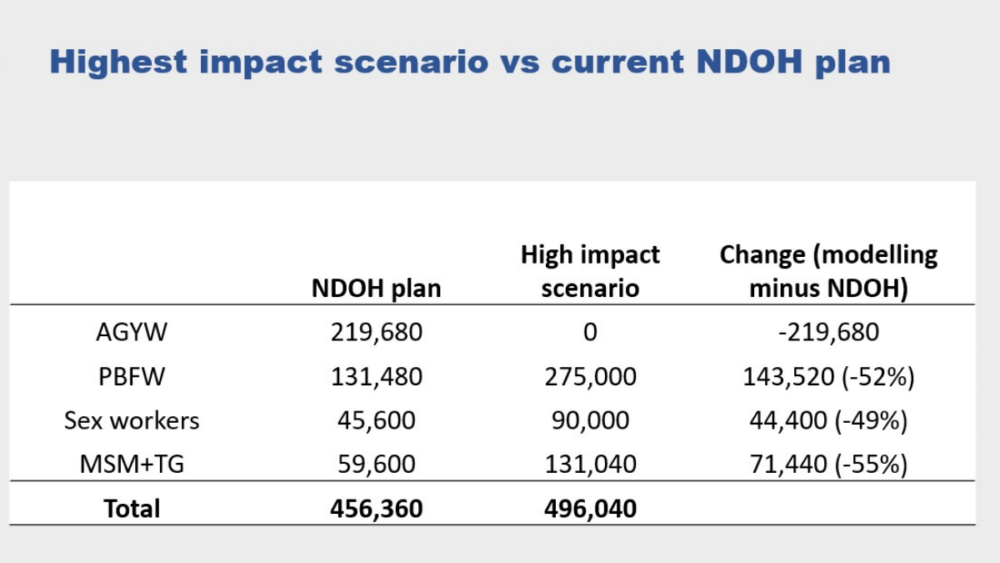
Jamieson says there is room for targeting teen girls and young women and “still have a moderate to high impact” on on curbing new infections, but even in such a scenario, modelling figures show 80% of doses will still need to go towards pregnant and breastfeeding women, gay and bisexual men, transgender people and sex workers.
That’s because, on average, teen girls and young women have lower rates of new infections than pregnant and breastfeeding women, sex workers and gay and bisexual men and transgender people. But Jamieson does point out that there are still subgroups of teen girls and young women — for instance, those who fall pregnant — who have a much higher chance than the group as a whole to get HIV, and those individuals, may benefit from getting LEN.
Bhekisisa contacted the health department 13 times in the past few days to request a copy of Shabangu’s presentation in an effort to get comment from her on the phase one roll-out. All 13 attempts were unsuccessful.
Conference delegates, however, told Bhekisisa the health department discussed the plan with various stakeholders for input, including HE2RO, at the meeting.
Pillay concludes: “Sprinkling LEN will not give us the impact we’re looking for; targeting LEN will do that.
“We need to ask ourselves, ‘Do we want to show early impact on population level by accelerating access to the highest risk and easiest group to reach? Or do we want to focus on equity of access, even for those with moderate risk and who are not easy to reach?’
“If we want to be that ambitious, we will need significantly more resources and we will have to find the resources to do it.”

This story was produced by the Bhekisisa Centre for Health Journalism. Sign up for the newsletter.
DA urges ANC and the rest of the GNU to support its bill aimed at scrapping BEE:
The Democratic Alliance (DA) will seek support from the ANC and its other government of national unity (GNU) partners when it tables its proposed Public Procurement Inclusive Bill in parliament to replace the broad-based black economic empowerment policy.
The Bill aims to replace what it called years of ineffective ANC empowerment policies that have left the majority of South Africans unemployed, impoverished and hopeless, the DA said on Monday.
The party also argued that the BEE policy had been created by white-owned big businesses to give shares to politically connected people in order to keep the status quo and benefit a few people.
The ANC says the BEE policy aims to facilitate broader participation in the economy by black people through affirmative action, to redress the inequalities created by apartheid.
The policy provides incentives — especially preferential treatment in government procurement processes — to businesses which contribute to black economic empowerment according to several measurable criteria, including through partial or majority black ownership, hiring black employees and contracting with black-owned suppliers.
On Monday, DA head of policy Mat Cuthbert said public opinion on BEE had changed and that it was in the interests of the ANC’s own electoral fortunes to support the Bill.
“We need reform in this space. If we are actively putting in place transformation policies that are not uplifting the people that they purport to uplift, we are strangling our economy from growing, then we’ve got to say to ourselves, ‘Well, we can’t keep on doing the same thing over and over again and expecting a different result,’” Cuthbert said.
“Most importantly, it’s about shifting the conversation within parliament, about shifting the conversation within the GNU. It is not a stationary thing for the GNU, it’s a constant site for political contestation, for policy contestation, and for us to make sure that we are able to influence the policy agenda within the country.”
The DA is the second largest party — after the ANC — in the national coalition government formed by President Cyril Ramaphosa after his party lost its parliamentary majority in last year’s general elections, the first time since the end of apartheid rule in 1994.
Cuthbert said some in the ANC believed the party still enjoyed a monopoly on power, on truth and on policy ideas in the unity government, but this was no longer the case.
“The DA is not going to stand back and simply lap up what the ANC gives us. We’re going to take the fight [to them], whether that be in cabinet, whether that be in parliament, in order for us to shift the needle, so we can get the economy to grow.”
DA federal chair Ivan Meyer described BEE as state-sponsored corruption, theft and fraud by “cadres”, designed to enrich only a few politically connected people.
“BEE makes people poorer and we have evidence of that. In the last 30 years, BEE has made ordinary South Africans poorer and we know it is a painful experience for people to get a job where it is possible to get the job with the right policies,” Meyer said.
It is, however, unlikely that the ANC will support the DA’s proposed Bill.
In his closing remarks at an ANC national executive committee meeting two weeks ago, which deliberated on how to grow the economy, Ramaphosa reiterated that his party supported BEE policies to address the injustices of the past.
But Cuthbert argued on Monday: “The BEE model has become a key driver of corruption within our society. We have witnessed this in the widescale looting of approximately R2 billion from Tembisa Hospital and the murder of Ekurhuleni metropolitan municipality’s chief auditor Mpho Mafole after submitting a scathing report relating to a R1.8 billion chemical toilets tender.”
“This clearly demonstrates how successive ANC administrations have failed to address the root causes of inequality by implementing crude race-based procurement policies to benefit themselves at the expense of the people.”
He said the DA’s Public Procurement Inclusive Bill aims to create a procurement system that encourages genuine economic empowerment by offering incentives for tangible developmental outcomes such as job creation, poverty reduction, skills enhancement and environmentally sustainable practices.
“Furthermore, the transitional measures in the Bill include the winding down of the BEE Commission over 12 months and the systematic removal of references to BEE across legislation.”
To give effect to this change, the Bill empowers the minister of trade, industry and competition to develop a simplified preference points system based on a supplier’s demonstrated contribution to inclusive development and social impact, Cuthbert said.
The DA’s alternative scorecard comprises three components: value for money, economic inclusion and disqualification criteria.
The value-for-money component assesses the cost-effectiveness, technical capacity and reliability of bidders, while the economic inclusion part assesses bidders’ demonstrable contribution towards human development, economic empowerment, environmental sustainability, inclusive communities and governance. The disqualification criteria excludes bidders if they have a proven record of fraud, corruption or misrepresentation.
The Bill, however, does not say how it would address the injustices of the past by empowering previously disadvantaged groups, which mostly include black South Africans.
Cuthbert said the DA’s approach to empowerment fundamentally differs from that of the ANC — while the latter’s policy is only for cadres, the DA’s demands no political connections.
“The DA may be in coalition with the ANC in government, but that doesn’t mean we need to agree with them all the time. We are in the GNU to represent the interests of all South Africans and we will not relent,” he said.
“It is now incumbent upon the ANC to recognise that its failed policies no longer enjoy the same public support as before. South Africans seek genuine empowerment rather than trickle-down redress. Therefore, we formally call on the ANC to do the right thing by prioritising the needs of the poor and vulnerable over their cadres.”
Submit and get free exposure here: Showcase Your Business | Advertise Your Special Offers.
