
Magashule vs Mbalula: Icons of South Africa’s leadership malaise:
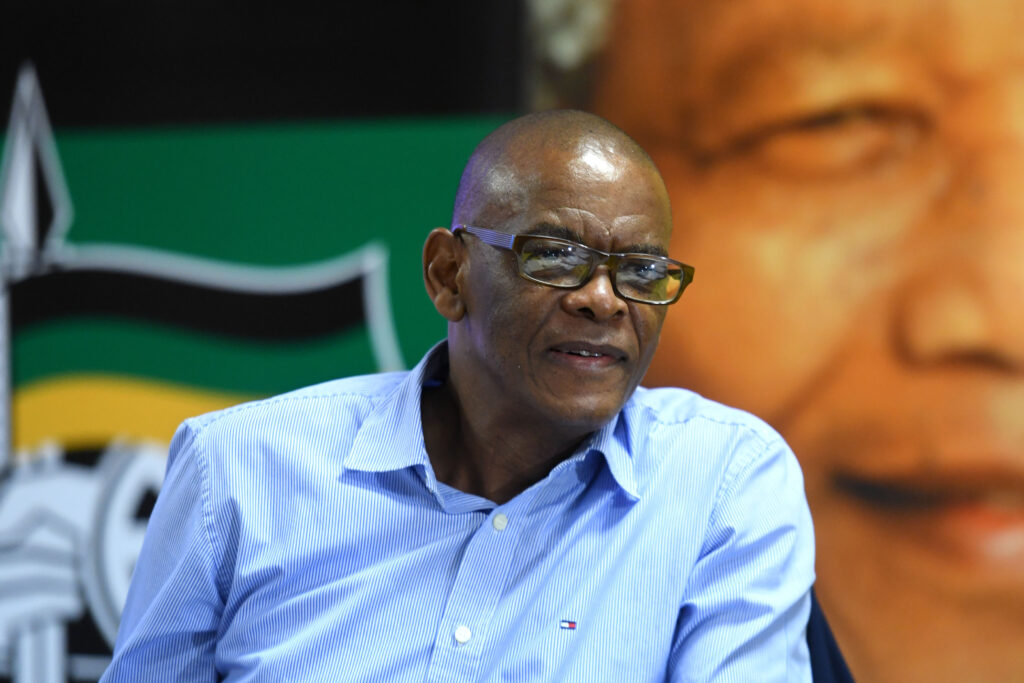
How much significance should we read into Ace Magashule’s expulsion from the ANC, and will it have ripple effects on coalition possibilities for the 2024 elections? A look at June’s news coverage of the ruling party raises these questions, and reminds us of the deep moral gutter South African politics has descended into.
Two men dominate coverage of the ANC in my database of June’s top online news stories from IOL, News24 and TimesLive: Magashule, the party’s former secretary-general, and his successor, Fikile Mbalula. The names of both men show a strong statistical association with the word “ANC” in these news articles. Thus although Mbalula and Magashule are bitterly at odds with each other, both are used to paint the picture of a party in desperate moral decline.
Magashule’s axing from the ANC made the word “expelled” another strong association with the ANC in June’s news. His expulsion has been a long time coming. He was arrested in November 2020 for his role in the Free State asbestos scandal, which cost taxpayers R225 million, and is currently out on bail. He refused to step aside from his party position and instead tried to suspend his own party leader, Cyril Ramaphosa.
To add to all this, it is alleged that during Magashule’s tenure as Free State premier, the provincial government dished out close to R1 million a year each for three of its officials and another private individual to study for an executive master’s in business administration at a university in Washington DC. A week after Magashule was kicked out of the ANC, Ramaphosa approved a Special Investigating Unit inquiry into these bursaries.
In response, Magashule has played an old Zuma-esque card, claiming a political conspiracy against him, saying that “all allegations against him are politically motivated, given his political beliefs, which were poles apart from that of the president and his allies who now dominate the ANC’s national executive committee, the party’s highest decision-making body”. His blaming of the Ramaphosa camp is one of the reasons the word “allies” is strongly associated with the ANC in June’s news.
As a recent Mail & Guardian editorial pointed out, Magashule is exactly the kind of corrupt leader the ANC should be giving the boot.
One of the first reactions of Magashule’s supporters to his expulsion was to burn ANC T-shirts, causing the word “shirts” to show a strong association with the ANC’s name in the news. In South Africa, political party T-shirts are frequently mentioned in the news as symbols of identity and loyalty, as I found out during my PhD research on the Daily Sun’s coverage of political parties in 2015. At the same time, Magashule’s supporters in his Free State heartland decorated a coffin with Mbalula’s name on it, saying that the expulsion of their leader would be the death of the ANC. Magashule himself did nothing to rein them in.

In a foul-mouthed tirade, Mbalula retorted, “There is no one who is going to kill the ANC, even those who wear party T-shirts saying they are ANC, only for them to go and burn the same T-shirts.” Ramaphosa had asked Mbalula to meet Magashule on Tuesday 27 June, but following these antics, Mbalula called off the meeting.
Mbalula himself is now under the spotlight for possible corrupt dealings. Affidavits have been produced claiming that he took a loan of R3 million from what was supposed to be National Lottery grant money to help him buy a luxury house in Bryanston, Johannesburg. As yet the details of whether the loan really existed and what happened to the house, which now has a preservation order on it from the Special Tribunal, are unclear. As an editorial comment from GroundUp, which broke the story, says, “In the best-case scenario Mbalula did not act corruptly in relation to the Bryanston house. But he unequivocally showed poor judgment in getting involved with the people who have now written affidavits implicating him.”
Meanwhile, Magashule says he has started talks with the Economic Freedom Fighters (EFF), United Democratic Movement (UDM) and Patriotic Alliance with a view to joining them. The possibility of starting his own party has also not been ruled out. He has claimed that he has already influenced voters in a small Free State town, probably Fateng Tse Ntsho near Paul Roux in the Free State’s Dihlabeng local municipality, to vote for the EFF in an April by-election, resulting in the party winning the ward.
News24 reported “that one of the conditions that Magashule has placed on the table, whether he joins the EFF or forms his own party, is that he wants like-minded parties, mainly those formed by former ANC members such as Cope and the UDM as well as those that have similar goals such as the ATM [African Transformation Movement] and the Patriotic Alliance to form a coalition that would challenge the ANC”. Such discussion of possible alliances in the 2024 elections made “coalition” another word strongly associated with the ANC in online news from June. As News24 points out, such a coalition could threaten the DA’s ‘moonshot pact’ too.
And so Magashule has become a political wildcard that could reshuffle the coalition possibilities ahead of the elections. In my view, any opposition party would be crazy to welcome him. Although he is clearly a wily politician, the size of his following beyond the Free State is unclear. More importantly, Magashule’s presence would erode any pretence a party could have of opposing corruption and state capture. If the EFF accepted Magashule’s condition and started looking to form a coalition with other opposition parties rather than the ANC, such a coalition would probably be doomed to failure.
What we can learn from South Africa’s post-apartheid history is that voting patterns do change, but they change slowly. This means that if the ANC dips below 50% in 2024, it is likely that either a ruling coalition would need to include the ANC, or it would have to be made up of almost all the opposition parties, in other words, a Democratic Alliance-EFF-plus-plus coalition. The policy differences between the DA and EFF and disintegration of previous DA-EFF attempts at cooperation in municipalities makes such a coalition unlikely.
But what the Magashule/Mbalula saga does highlight is the moral bankruptcy of many of our current political leaders. The fact that parties are lining up to attract a disgraced political strongman out on bail to join them speaks volumes about their lack of principles. The fact that his successor in the ANC’s powerful position of secretary general has been implicated in possible corruption and obvious poor judgment does not inspire confidence either. And when leadership is unethical or incompetent, it is the poor and most vulnerable who suffer the most. South Africa needs and deserves far better leadership than this.
Ian Siebörger is a senior lecturer in the department of linguistics and applied language studies in the faculty of humanities at Rhodes University.
The views expressed are those of the author and do not necessarily reflect the official policy or position of the Mail & Guardian.
– Magashule vs Mbalula: Icons of South Africa’s leadership malaise | The Mail & Guardian
Mozambican Manuel Chang to be extradited from South Africa to United States imminently:

A US government jet is waiting at Lanseria to fly the former Mozambican finance minister implicated in an international fraud scandal to New York to face fraud charges
– Magashule vs Mbalula: Icons of South Africa’s leadership malaise | The Mail & Guardian
Agricultural equipment sales not as robust as recent figures suggest:
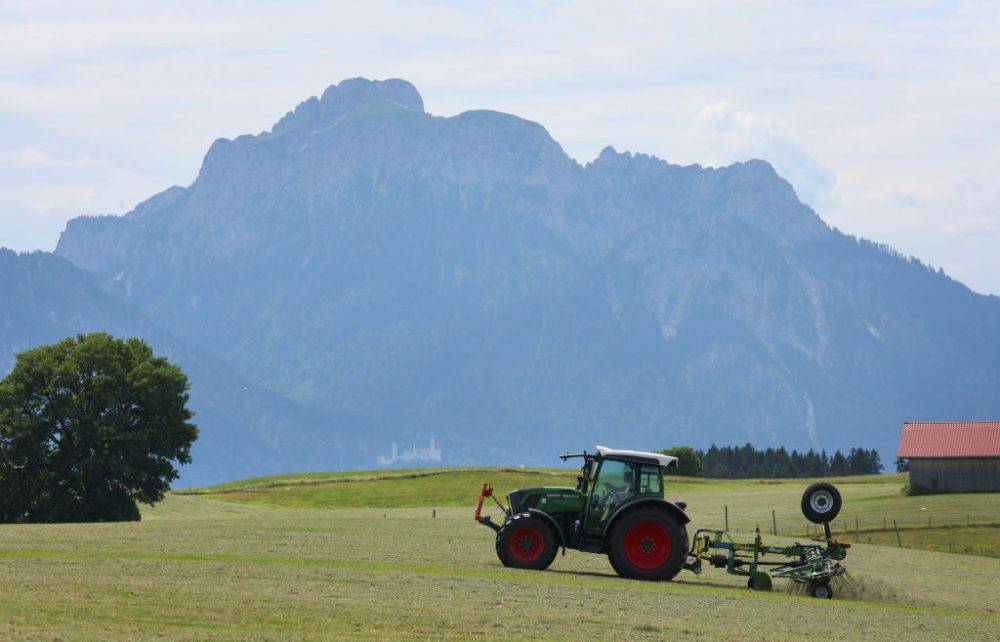
Surprisingly, South Africa’s agricultural machinery industry reported solid sales in June 2023. For example, tractor sales were up by 13% year-on-year, with 930 units sold, and combine harvester sales were at 64 units, up 28% year-on-year.
One has to ask what underpins these sales in a year when agriculturalists, myself included, have been vocal about the pressures of rising input costs and interest rates on farmers.
What I think we are seeing here are the deliveries of the machinery orders that were made in the past few months when farmers were still enjoying the gains of the past few seasons’ ample harvests combined with higher prices, thus improving farm profitability. South Africa is an importer of some of the major tractors and combine harvesters, and these deliveries could take time, especially with frequent problems at the ports. Hence, I suspect we are seeing orders for the past months, reported in June.
If we accept this logic, we should not necessarily view these robust sales as an indicator of farmers’ improved financial conditions. Importantly, even the better financial position in the past few seasons were specific to grains and oilseeds farmers, not across the sector.
For example, farmers in livestock and poultry have been under financial strain for some time. The rising input costs — yellow maize and soybeans have been one of their major problems.
One may ask why we discuss high feed costs when South Africa had ample grains and oilseed harvests in the past three seasons.
The major reasons for this were higher global maize and soybean prices caused by drought in South America, rising demand in China, Covid-19 related supply chain disruptions and Russia’s war in Ukraine.
South Africa is interlinked with the global grains and oilseeds market, and domestic prices tend to follow the global price movements, and this is what we observed. For this reason, the local livestock and poultry sector couldn’t benefit fully from the large domestic grains and oilseed supplies.
The farmers who enjoyed some benefits of higher prices and ample harvest were grains and oilseed farmers, and they spent some of their financial gains on improving farm equipment in the past few years.
But the environment has changed. Although we have a large grain harvest on the horizon, with the 2022-23 maize harvest estimated at 16.4 million tonnes, the second largest on record, and soybeans at a record 2.8 million tonnes, the prices of these commodities have declined by roughly 15% year-on-year.
Moreover, agricultural machinery sales have been robust in the past few years. For example, South Africa’s tractor sales in 2022 amounted to 9 184 units, up 17% from the previous year and the highest annual sales for the past 40 years. The combine harvester sales amounted to 373 units in the same period, up 38% from 2021 and the highest yearly sales figure since 1985. The ample crop harvest of the 2021-22 production season (and the 2020-21 and 2019-20 seasons), combined with generally higher commodity prices, specifically grains and oilseeds, helped boost farmers’ incomes and their ability to procure new machinery.
Farmers will probably slow the purchases because the need for replacements of older machinery may not be as high as in previous years. Moreover, unlike the past few years, when interest rates were more accommodative, the rising interest rates will continue to put pressure on farmers’ finances. Also worth noting is that the relatively weaker rand/dollar exchange rates will negatively influence the farmers’ machinery buying decisions.
Notably, as we approach the 2023-24 summer crop production season, farmers’ focus will be the input costs. Although other input costs prices, such as fertiliser and agrochemicals, have softened in recent months, the current price levels are still well above long-term levels. These are all the factors I believe will slow agricultural machinery sales in the coming months.
Wandile Sihlobo is chief economist of the Agricultural Business Chamber of South Africa, author of Finding Common Ground: Land, Equity, and Agriculture and visiting research fellow at the University of the Witwatersrand’s School of Governance.
The views expressed are those of the author and do not necessarily reflect the official policy or position of the Mail & Guardian.
– Magashule vs Mbalula: Icons of South Africa’s leadership malaise | The Mail & Guardian
Submit and get free exposure here: Showcase Your Business | Advertise Your Special Offers.
