Malema: Brics+6 step in right direction to end West’s imperialist domination:

Economic Freedom Fighters (EFF) leader Julius Malema said its central command team (CCT) welcomes the inclusion of the six nations to Brics because it is underpinned by the need for common prosperity and not by the neo-colonial need to exploit the world’s natural resources as the West does.
Malema was speaking on Sunday at a press briefing after the CCT meeting that was held over the weekend in Kempton Park.
The EFF leader said the expansion of Brics into “a progressive and forward-looking” group now has a mandate to end the “imperialist domination of the world” by the West.
South Africa hosted the 15th Brics summit, which took place in Sandton, Johannesburg, last week where the Brics chair, President Cyril Ramaphosa, announced the inclusion of Argentina, Egypt, Ethiopia, Iran, Saudi Arabia and the United Arab Emirates in the economic bloc.
The Mail & Guardian reported that the inclusion of oil-rich Saudi Arabia is considered a big coup for the Brics alliance as it positions itself as a powerful force against the West’s hegemony. Of the new members, Saudi Arabia has the largest GDP.
The Brics countries — Brazil, Russia, India, China and South Africa — are seen as a counterweight to the Western-led world and world news was abuzz after the announcement of the Brics +6. Questions were raised about whether the bloc will rival US leadership, given talks of de-dollarisation and a Brics currency at the summit.
“Brics +6 is a step in the right direction … We believe that in addition to the six new countries that will be admitted into Brics in 2024, there has to be an inclusion of Cuba, Venezuela, Palestine and the Democratic Republic of Congo and all progressives must support Brics as an alternative to the G7 and Nato war alliance,” Malema said.
He said he believes African countries should use South Africa’s proximity to its friends in Brics +6 to pursue the development of pan-African infrastructure programmes and projects.
At least 20 countries, four from Africa, had formally requested to join Brics.
“The African continent is still far behind in terms of intra-continental infrastructure and projects that can uplift the lives of our people. The African Union and all African countries should speak in one voice to pursue partnerships that will result in the development of economically beneficial pan-African infrastructure such as railway projects and electricity transmission lines that will interlink the entire continent, and bring about electricity and industrial expansion for jobs and economic common prosperity,” Malema said.
“These are issues we will be raising and placing on top of the agenda during the 16th Brics+6 summit in Russia in 2024.”
Moscow confirms Wagner boss Prigozhin’s death:

Wagner mercenary chief Yevgeny Prigozhin was formally confirmed dead on Sunday following genetic analysis, investigators said, as anger and questions over what caused his plane to crash earlier in the week continued to mount.
Speculation that the Kremlin may have been involved in the crash has been rife, with the incident coming exactly two months after Wagner staged a mutiny against Moscow’s military leadership.
“Molecular-genetic examinations have been completed as part of the investigation into the plane crash in the Tver region,” Svetlana Petrenko, a spokeswoman from Russia’s investigative committee said.
“According to their results, the identities of all 10 victims were established, they correspond to the list stated in the flight list,” she added.
Among the nine other people listed onboard the Embraer private jet that crashed on Wednesday was Dmitry Utkin, a shadowy figure who managed Wagner’s operations and allegedly served in Russian military intelligence.
Makeshift memorials
Russian officials opened an investigation into air traffic violations after the crash but have otherwise not disclosed details about its possible cause.
Kremlin spokesman Dmitry Peskov described the incident as “tragic” to reporters on Friday, calling rumours of possible foul play an “absolute lie”.
His comments came as the Kremlin appeared to rein in groups like Wagner, with a presidential decree signed Friday stipulating that paramilitary fighters will have to swear an oath to the Russian flag.
In an address Thursday, President Vladimir Putin said he had known Prigozhin — once a loyal ally — since the early 1990s, describing him as a man who made mistakes but “achieved results”.
But his comments did little to stem mounting questions and anger over the mercenary’s chief’s death, with makeshift shrines to Prigozhin springing up across Russian cities.
Men stood solemnly in front of a makeshift memorial on Moscow’s Varvarka Street, just outside the Kremlin.
“He was killed,” said one man wearing a shirt marked with the letter “Z”, a symbol representing Russia’s offensive in Ukraine.
“He was killed by his enemies. We won’t say who. The investigation will reveal. But we hope that revenge will catch up with those who committed this crime,” he added.
Another man at the memorial speculated over who was responsible for the Wagner chief’s death. “Prigozhin had a lot of enemies in our country, abroad, in Ukraine and Africa,” said Renat, 53.
Wagner forces, which Moscow used to prosecute some of the Ukraine conflict’s bloodiest battles, also maintained a significant military presence in Africa.Similar memorials were spotted across the country, in cities like Perm and Saint Petersburg, Russia’s former imperial capital and Prigozhin’s birthplace. — AFP
Ramokgopa: Load-shedding will continue into summer:
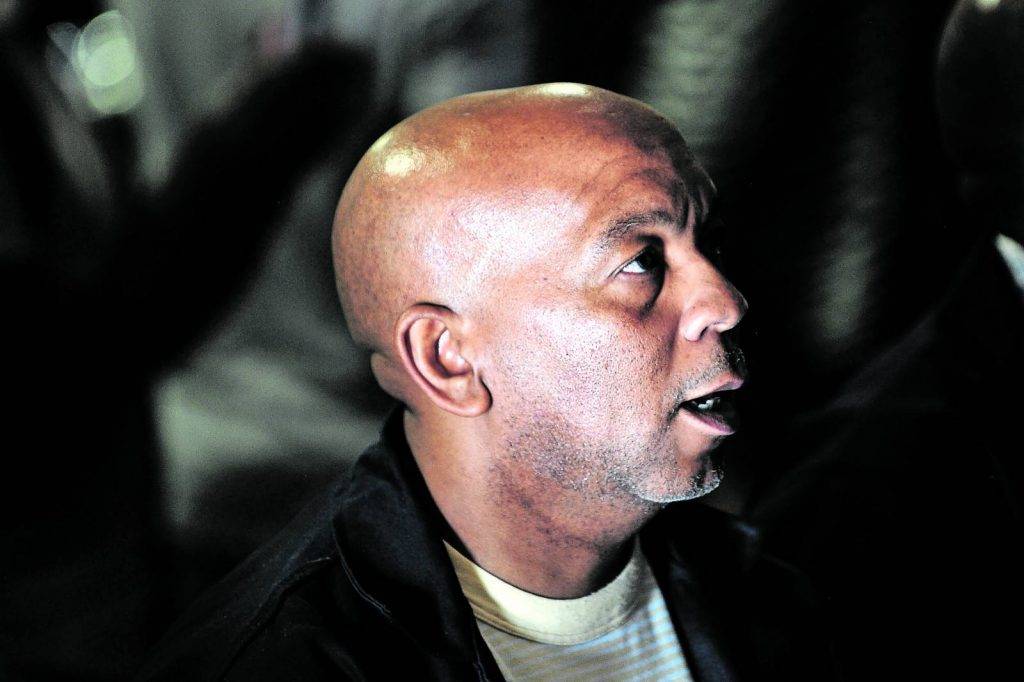
Electricity Minister Kgosientsho Ramokgopa said load-shedding will continue because Eskom will not compromise on planned maintenance even as the demand for electricity is reduced as the country moves into summer.
At a media briefing on Sunday the electricity minister gave an update on the implementation of the Energy Action Plan, which was launched in July 2022 as a roadmap to end load-shedding as quickly as possible and promote the long-term sustainability of electricity supply in South Africa.
He said planned outages will give the team at the power utility an opportunity to do “good maintenance” and improve the health of the generating units.
“We have units that are unreliable, that keep tripping and that is why we need to accelerate planned outages. We will take out the units, fix them and ensure that they come back healthy, rejuvenated and are able to run for longer hours approximating their design capacity,” Ramokgopa said.
The electricity minister said planned outages will be a priority even if it means that the country is at stage one load-shedding during the day. “We will live with that in the short term so that we are confident about the performance of these units.”
Historically, load-shedding has been higher in winter as consumers demand more electricity to keep warm and the demand tails off in summer leading to less demand on already compromised plants.
“As part of the winter outlook we did indicate that we would slow down on planned outages but once we get out of a very difficult winter we would ramp up planned outages to make sure we protect these machines to ensure their sustainability and reliability going into the future so we are beginning to ramp up,” Ramokgopa said.
“You will see that the number [of planned outages] will gradually go up as demand slows down. This is an opportunity for us to take out the units and continue to fix them. We still remain above the 15 000MW in relation to the capacity loss factor. We want to bring it down to below 15 000MW and that is where our Achilles heel is.”
The planned capability loss factor of an Eskom plant is the ratio between the unavailable energy of the units that are out on planned maintenance over a period compared to the total net installed capacity of all units over the same period.
Expect more load-shedding than 2022
As a response to a question from the media Ramokgopa said the number of days of load-shedding experience this year will not be fewer than 2022. “It will be exceptionally higher but I am confident we will get out of this very difficult situation.”
The electricity minister said in terms of projection he does not think the utility will do better than the record number of days of load-shedding experienced last year, but “we remain confident about our ability to resolve the load-shedding question. The energy availability factor will continue to come up and we will get out of this situation.”
There were 205 days of load-shedding in 2022 and in 2023 there have already been 238 days of blackouts, according to the Outlier.
Asked about Eskom’s performance since he became elected electricity minister in March, Ramokgopa said Eskom moved from a low of 40% energy availability factor to a 60% energy availability factor. Planned outages are coming down and that had been achieved over a period of four months.
Energy availability factor is the percentage of maximum energy generation that a plant is capable of supplying to the electrical grid, limited only by planned and unplanned outages.
“We are very bullish about the prospects going into the future. We have had exceptional performance and this is from the time I have been invited to work with the team,” he said.
Eskom suspended load-shedding until 4pm on Saturday. It then implemented stage three until 5am on Sunday, followed by stage one daytime load-shedding on Sunday.
The power utility said the temporary suspension of load-shedding was the result of lower weekend demand.
Submit and get free exposure here: Showcase Your Business | Advertise Your Special Offers.