Mantashe asked Ramaphosa not to give all his powers to electricity minister:

Mineral Resources and Energy Minister Gwede Mantashe said he had told President Cyril Ramaphosa not to transfer all his powers to Electricity Minister Kgosientsho Ramokgopa.
“Now you leave me as a minister of petrol. How does it work? How can it work if I’m just a minister of petrol?” Mantashe said at the 133rd annual general meeting of the Minerals Council South Africa on Wednesday.
Ramaphosa last week Ramaphosa removed Mantashe of some of his powers under the Electricity Regulation Act in favour of Ramokgopa, saying this was meant to ensure effective coordination and to deal urgently with the country’s electricity crisis.
But energy analysts have said a close reading of section 34 of the Electricity Regulation Act made it clear that Ramokgopa has been allocated “nothing meaningful” in the division of powers between the energy and electricity portfolios.
On Wednesday, Mantashe said his department was working with its “sister” department of public enterprises to urgently resolve load-shedding and improve conditions in the mining sector.
According to data from Statistics South Africa, mining output has seen more than 12 consecutive months of year-on-year declines.
The Mail & Guardian has reported that the creation of a new electricity ministry had shocked the president’s allies, including Mantashe. The move was seen by Ramaphosa’s inner circles as an effort to contain his two most powerful cabinet ministers, Mantashe and Public Enterprises Minister Pravin Gordhan, who were battling for control over electricity.
At the Minerals Council AGM, Mzila Mthenjane, the head of stakeholder affairs at Exxaro Resources, was announced as the new chief executive, replacing Roger Baxter who has been in the position since May 2015. Mthenjane will join the Minerals Council in late August.
“We are pleased to appoint someone of Mzila’s experience and ability. He has, in his three decades of involvement in the mining and financial industries, garnered the experience the Minerals Council needs for its next chapter in a rapidly changing world,” council president Nolitha Fakude said in a statement.
The Minerals Council also released its integrated annual review for the year ended 31 December 2022, which showed that the sector’s direct contribution to GDP was R493.8 billion for the year, compared with R475 billion in 2021.
Employee earnings rose to R174.9 billion from R166.2 billion, while employment in the sector also increased to 475 561 people in 2022 from 458 954 the prior year.
“Looking back on 2022, it has been a tough year for everyone, not least the mining industry. However, we are determined to continue playing a meaningful role in the economy, society and communities in which member companies operate,” Fakude said.
Heads roll following ‘wasteful’ R134 million North West security tender:

A “wasteful” R134 million North West security tender which led to squabbles between the head of the department of social development and its political overseer has led to both officials being suspended.
Moreover, department head and accounting officer Relebohile Mafokane, who already faces a Special Investigating Unit (SIU) inquiry over allegations that he submitted fake tertiary qualifications, on Tuesday allegedly sent an “invalid” suspension letter to another official, Msebenzi Mphela, on the same day he was himself suspended by Premier Bushy Maape.
Maape’s office said in a statement that the premier had put Mafokane — who was appointed head of department in May 2021 on a fixed five-year term — and North West MEC for social development Boitumelo Moiloa on “special leave” for a month over a “near administrative paralysis” in the department.
Last week the Mail & Guardian reported that the North West government would forge ahead with an 18-month R133.9 million security expenditure signed off by Mafokane, despite the provincial treasury’s internal audit report finding that it had been awarded to 10 companies without the consideration of “key essential factors”.
These included the department’s failure to determine the number of sites it needed security for and the rates per security officer to be employed, which led to a potentially incorrect calculation of the projected expenditure.
The audit report stated that the questionable calculation “may translate into fruitless and wasteful expenditure”.
Even after he was suspended, Mafokane still sent Mphela a suspension letter, accusing the department official of “dereliction of your duties, gross insubordination, misrepresentation and/or gross negligence”.
In the letter dated 30 May, Mafokane said Mphela had failed to attend to matters related to the submission of the department’s annual performance report, which was meant to be processed by the provincial audit committee.
A senior social development official, who spoke on condition of anonymity, said Mphela did not directly report to Mafokane and “is known as the best performing employee in the department”.
“The official in question reports to acting chief director for corporate services Lorato Gasealahlwe, who Mafokane does not recognise. Mafokane once dismissed this chief director without following proper procedures,” said the source.
“The provincial treasury had to be called to reinstate the chief director with immediate effect. From a layman’s point of view, [Mphela’s] suspension is an invalid suspension.”
Another high-ranking provincial source, who also did not want to be named, said the failure to complete the social development department’s annual performance plans and reports were caused by what they called maladministration by Mafokane.
“Mafokane has consistently undermined the MEC since his appointment in 2021, and he has been protected by the premier who has not supported his own MEC to the detriment of the department,” the insider said.
The sources’ assertions were echoed by the provincial legislature’s health and social development committee, which turned both Mafokane and Moiloa away on 12 May before they could present the department’s annual performance plan and budget for the 2023-24 financial year.
Committee chairperson Gavin Edwards said the presentation was rejected because of “persistent squabbles” between Moiloa and Mafokane. The department head told the legislature that he had been “stripped [of] his powers as the accounting officer, and that he had not been part of developing the annual performance plan”.
“This after the head of department had signed off tenders for security contracts to the value of R130 million two weeks ago. When were the powers stripped?” Edwards asked. “We are asking ourselves what is happening with service delivery because it is clear that the head of department and the MEC cannot work together.”
In a statement, Anele Xhati, the social development secretary of the North West chapter of the National Education, Health and Allied Workers’ Union (Nehawu), accused Maape of giving Mafokane “full protection” and allowing the accounting officer to undermine the MEC and to do “as he pleases”.
“Nehawu has on numerous occasions called on [the premier] to intervene in the maladministration of the department and irregular procurement of goods and services,” Xhati said.
In announcing Moiloa and Mafokane’s suspension, Maape’s office said over the past few months it had conducted the implementation of directives on “professionalisation of the public service, which includes, among other things, a system of delegations between executive authorities (MECs) and accounting officers”.
“Unfortunately, this has not been successful in the department of social development leading to a near administrative paralysis which risked finalisation of the annual performance plan, departmental budget for [the] 2023-24 financial year, and potentially the submission of the annual financial statement as well as the annual performance information for 2022-23 financial year,” it said.
“This discord has the potential, if not managed, to paralyse service delivery and harm the poor and vulnerable persons who are serviced by the department.”
SIU spokesperson Kaizer Kganyago confirmed that the unit was investigating claims that Mafokane misrepresented his qualifications and submitted allegedly fraudulent documents ahead of his appointment as departmental head.
The request for the SIU’s investigation was made by Aaron Motswana, the chairperson of the North West legislature’s portfolio committee on the premier, finance, cooperative governance, human settlements and traditional affairs.
Motswana confirmed that he had requested the SIU’s involvement.
The M&G sent detailed questions to the Maape’s office about the claims that the premier had protected Mafokane, the alleged undermining of the MEC, the SIU’s investigation into the accounting officer and whether Maape would consider extending the suspensions once the month is up.
In a curt response over the phone, Maape’s spokesperson Sello Tatai said the premier’s office had nothing further to add, outside of Tuesday’s statement.
“We are not going to respond to any other matter [raised in your questions] because we have stated categorically that this is the last communication on the matter,” Tatai said.
Takatso-SAA deal: unveiling the global phenomenon of acquisitions:
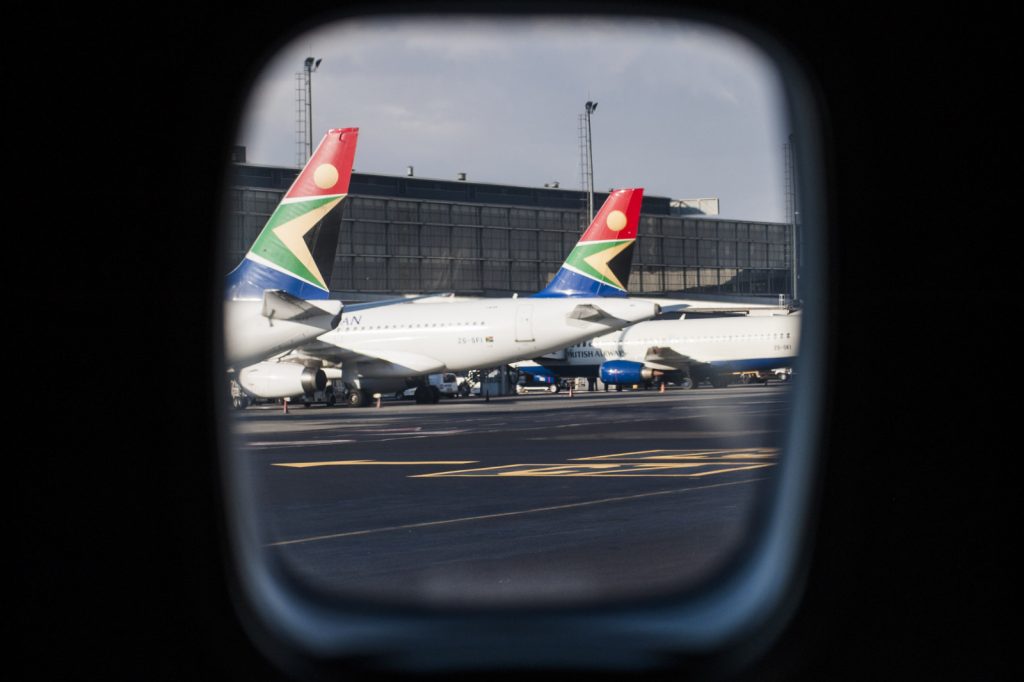
The acquisition of South African Airways (SAA) by the Takatso Consortium for R51 has sparked considerable debate and media criticism. However, it is essential to understand that such acquisitions involving nominal amounts are not uncommon globally.
By exploring international case studies of companies that were sold for a nominal sum that later experienced successful turnarounds, I hope to shed light on the broader context and commercial justifications for these transactions. These cases shed light on the potential for transformative change and commercial justifications behind such deals.
Let me explain.
In the corporate world, acquiring a company for a nominal sum often entails strategic considerations beyond the apparent monetary value. Such transactions involve complex agreements, restructuring plans, asset acquisition and liability mitigation.
The exchange of a symbolic dollar amount signifies a transfer of ownership rights and a commitment to revitalising the acquired entity. Let us delve into global case studies to comprehend the rationale behind these seemingly unconventional deals.
One noteworthy example is Etihad Airways’ sale of its 40% stake in Air Seychelles for $ 1. This transaction, although raising eyebrows, was driven by strategic considerations. Etihad Airways, facing financial challenges, sought to focus on its core operations.
By divesting its stake to the Seychelles government, the airline aimed to foster economic growth and ensure Air Seychelles’ long-term sustainability. This case demonstrates how $ 1 transactions can be part of broader strategic realignments and mutually beneficial arrangements.
Turning our attention to the Takatso-SAA deal, it is crucial to consider the commercial justifications behind this acquisition. South African Airways has faced significant financial and operational challenges in recent years, leading to its business rescue and subsequent restructuring.
The Takatso Consortium, consisting of Harith General Partners and Global Airways, recognises the potential for revitalising the national carrier and positioning it as a key player in the African aviation market.
Firstly, the nominal acquisition cost allows the Takatso Consortium to assume control of SAA’s assets, intellectual property and operational infrastructure while minimising the burden of legacy debts. This provides an opportunity for a fresh start and a strategic turnaround. The consortium can implement efficient management practices, optimise routes, and streamline operations to enhance profitability.
Secondly, the deal facilitates a strategic partnership between the consortium and the South African government. By sharing responsibilities and resources, both parties can work together to rebuild the airline, boost tourism, and drive economic growth. This collaboration aligns with the government’s goal of job creation and economic transformation, providing a pathway for sustained success.
Critics may argue that selling a national asset for a nominal amount undermines its true value. However, it is important to acknowledge that the sale of distressed companies or those in need of substantial restructuring often requires a pragmatic approach. The Takatso-SAA deal reflects the acknowledgment of the challenges faced by the airline and the need for innovative solutions to ensure its long-term viability.
Let’s face these irrefutable facts.
While Air Seychelles operates seven aircraft with only two of those leased, SAA operates a fleet of seven aircraft with all but one flying jalopy leased.
Furthermore, Numsa’s relentless pursuit of substantial wage increases, coupled with its refusal to accept SAA’s necessary restructuring efforts due to its financial struggles, resulted in a devastating strike staged by its members. The airline incurred a staggering daily loss of approximately R50 million throughout the duration of the strike.
The drastic reduction of SAA’s workforce from over 11,000 employees to a mere 2,000, along with its limited operation in comparison to the routes it once dominated, is the result of numerous factors. Among these factors, is the influence of corrupt union leaders who exploit their positions to prioritise their own financial interests over the well-being of vulnerable workers at an airline that is, ineluctably, now on life support.
Let us delve into notable examples of troubled entities that were sold for a nominal sum and later experienced successful turnarounds.
Case Study 1: Chrysler Corporation:
One of the most iconic examples is the sale of Chrysler Corporation to what became known as “The Chrysler Five” in 1979 for a token $ 1. Facing financial distress, the automaker required substantial restructuring and innovation. The new management, led by Lee Iacocca, implemented aggressive cost-cutting measures, introduced popular models like the minivan, and negotiated government assistance.
This resulted in a remarkable turnaround, allowing Chrysler to regain its profitability and play a significant role in the US automotive industry.
Case Study 2: Chelsea Football Club:
One of the powerhouses in English soccer, Chelsea was facing ruin in the early 1980s after a long-running battle with property developers who tried to evict them from their London stadium.
In 1982, the club was sold to businessman Ken Bates for one pound. Bates didn’t waste time turning the club’s fortunes before selling it to Roman Abramovich. Chelsea now has a net value estimated at $ 3.1 billion.
Case Study 3: General Motors:
During the 2008 financial crisis, General Motors (GM) found itself on the brink of collapse. The US government stepped in to prevent its demise and provided financial assistance. As part of its restructuring efforts, GM filed for bankruptcy and emerged under new ownership, with the US Treasury holding a majority stake. Although the government’s investment exceeded $ 1, the restructuring exemplified the commitment to revitalise a troubled company. GM subsequently underwent significant operational improvements, strengthened its product lineup, and regained profitability.
In these cases, the $ 1 acquisitions served as catalysts for change, enabling transformative strategies to revitalise struggling companies. Several common factors contributed to their success:
- Strategic Vision and Leadership: Effective leadership, coupled with a clear vision for the future, played a crucial role in driving organisational transformation. The new management teams in each case implemented bold strategies, innovation, and decisive actions to reposition the companies for success.
- Operational Restructuring: Focused efforts on operational efficiencies, cost reductions, and streamlining processes helped eliminate waste and improve profitability. By making tough decisions and aligning operations with market demands, these companies could regain competitiveness.
- Product and Brand Innovation: Successful turnarounds often involved revitalising product offerings, identifying new market opportunities, and rejuvenating brand appeal. Investing in research and development, introducing new products and effectively marketing them played vital roles in reconnecting with consumers.
It is evident that these deals represent a pragmatic approach toward achieving long-term sustainability and success.
The Takatso-SAA deal aligns with a broader global trend of troubled companies being sold for nominal amounts. By examining notable examples across the world, we witness the transformative potential of $ 1 acquisitions. These cases underscore the significance of visionary leadership, operational restructuring, and innovation in driving successful turnarounds.
Of course, the Takatso-SAA deal, a scenario where company law arguably takes precedence over procurement law in the context of a state-owned entity, is slightly more than double the $ 1 acquisitions phenomenon that is the subject of this essay.
Public enterprises minister Pravin Gordhan’s alleged interference in the deal has cast a pall on what should easily be the biggest black empowerment deal in local aviation.
Though Gordhan denies the allegations, the public has an inviolable right to know about any wrongdoing on the part of those involved in this transaction notwithstanding their political or business profile. If Gordhan is found to have acted unlawfully, accountability mechanisms must be instituted.
Lest we forget, our Constitution makes no provision for political, religious or business deities.
While concerns about possible wrongdoing surrounding the Takatso-SAA transaction have been raised, it is important to approach the allegations with objectivity, fairness, and an emphasis on verifiable evidence.
Transparency, due diligence, regulatory oversight, independent auditing, and the presumption of innocence are critical factors in evaluating the validity and fairness of the claims. Only through a thorough examination of the facts can a conclusive determination be reached.
Tebogo Khaas is founder and chairperson of Public Interest SA.
The views expressed are those of the author and do not necessarily reflect the official policy or position of the Mail & Guardian.
Submit and get free exposure here: Showcase Your Business | Advertise Your Special Offers.