
Mathjabeng in financial freefall:
Auditor-general Tsakani Maluleke has outlined how embattled ANC-led Mathjabeng Local Municipality ANC-led Mathjabeng Local Municipality incurred a deficit of R871.6 million for the financial year, with total liabilities exceeding assets by R5.8 billion.
Maluleke’s report, dated 11 February 2026, covers the period from 1 July 2024 to 30 June 2025. She issued unqualified audit opinion on the municipality because the lack of reliable supporting data prevented her office from verifying several critical figures.
Only 61% of the municipality’s planned targets were achieved even though it had spent 117% of its budget during the reporting period.
The municipality owes Eskom more than R1.58bn and Vaal Central Water more than R6.84bn. Both accounts are long overdue.
“Note 47 to the financial statements indicates that the municipality incurred a deficit of R871 618 930 during the year ended 30 June 2025 and as of that date, the municipality’s total liabilities exceeded its total assets by R5 879 577 803. The municipality also owed Eskom R1 586 717 577 (2024: R848 602 951) (debt relief portion: R5 250 339 733) (2024: R5 250 339 733) and Vaal Central Water R6 841 210 884 (2024: R5 841 839 566),” Maluleke’s report stated.
Regarding service charges, the auditor general was unable to confirm R1.28bn in water and electricity revenue because the municipality relied on estimated billing instead of consumption data.
On bulk purchases, electricity and water losses totalling more than R723 million could not be verified because units sold were not accurately tracked.
Debt impairment — money owed to the municipality that is unlikely to be recovered — exceeded R6.7bn.
Maluleke’s report also identified multiple errors in the reporting of net cash flows from operating and investing activities, while there was insufficient evidence for R135.6m in changes to net assets.
The report further raised concerns about the municipality’s ability to continue operating and flagged financial mismanagement, including unauthorised, fruitless and wasteful expenditure.
Unauthorised expenditure amounted to R946.3m, reflecting money spent beyond the approved budget. A significant portion of the R151.7m in fruitless and wasteful expenditure consisted of interest and penalties incurred because the municipality failed to pay its creditors on time.
Irregular expenditure amounted to R95.8m and stemmed from non-compliance with supply chain management requirements.
Maluleke noted that the municipality failed to investigate most of the irregular and unauthorised expenditure to determine liability or hold officials accountable.
Among the municipality’s major service delivery failures were pothole patching, sanitation and electricity infrastructure. Only 12% of the pothole patching target for the west region and 8% for the east region was achieved.
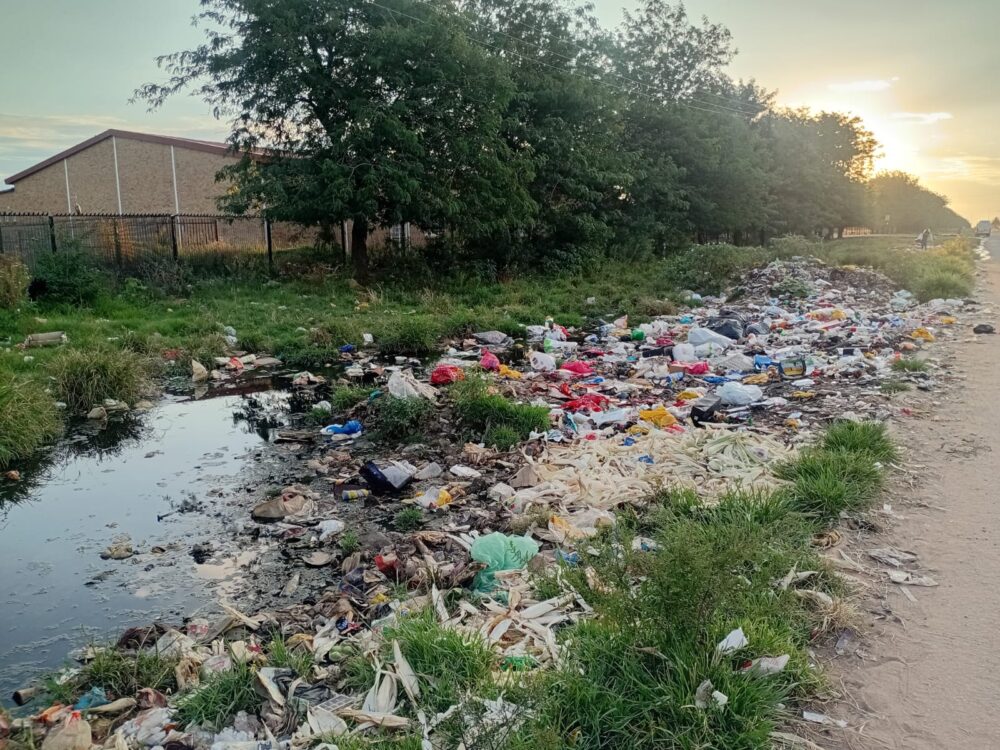
With regard to sanitation, only 14% of household and business waste removal backlogs were addressed within 48 hours, against a target of 100%.
For electricity infrastructure, only 13% of the work on a new substation was completed against a target of 70%.
The report also detailed several material irregularities. One involved a revenue consultant who was paid R253.6m based on a percentage of revenue that auditors found the company did not generate, as the revenue originated from pre-existing government property valuations.
The report stated that in September 2018, the municipality appointed a consultant as a revenue investigator and collector for 24 months — from 15 October 2018 to 14 October 2020.
On 6 July 2020, the accounting officer informed the consultant that the municipality intended extending the appointment on a month-to-month basis until a new service provider was appointed.
“The month-to-month appointment continued until February 2025, when the contract was terminated by the municipality,” the report stated.
In February, during a visit to the municipality, sources in Mathjabeng told the Mail & Guardian about the contract, although the mayoral spokesperson denied such an agreement existed.
The sources alleged that contracts in the municipality were being awarded to companies linked to senior ANC leaders in the province, contributing to a lack of accountability.
“The appointment of the consultant was not on a time-and-cost basis and was based on a percentage of the money collected on behalf of the municipality, which was stated as follows in the service level agreement: ‘The contract monetary value shall be for the sum which will amount to 25% of collected monies on behalf of municipality. This amount is inclusive of VAT,’” the report said.
“The accounting officer therefore did not take all reasonable steps to ensure that the resources of the municipality are used effectively, efficiently and economically, as required by section 62(1)(a) of the MFMA [Municipal Finance Management Act].”
According to the report, information obtained from the municipality showed that the consultants’ work mainly involved the revaluation of properties owned by the Free State department of public works and infrastructure, which were listed on the municipality’s valuation roll.
Auditors found no evidence of other revenue-enhancement activities.
“From the appointment date until 7 June 2024, the municipality paid a total amount of R253 609 346.73 (VAT inclusive) to the consultants, based on revenue directly received by the municipality from the department for assessment rates and municipal services.
“The non-compliance is likely to result in a material financial loss for the municipality if the municipality’s resources are not utilised in an effective, efficient and economical manner.”
Another irregularity involved “ghost infrastructure”.
In one case, R7.2m was paid for an attenuation dam that was never constructed.
On 12 April 2017, the municipality awarded a R13.7m contract for the construction of the Nyakallong stormwater system. Two variation orders totalling R3.26m were approved in 2017 and 2019.
Payments estimated at R7.2m were made for the attenuation dam after the consulting engineer certified the work as complete.
However, during a site visit, auditors found the project incomplete. The attenuation dam had not been constructed, the contractor had abandoned the site and the work performed was substandard.
“This contravened section 65(2)(a) of the MFMA, as an effective system of expenditure control for the approval and payment of funds was not maintained. The overpayments made on the project are likely to result in a material financial loss for the municipality if not recovered,” the report said.
The accounting officer was notified of the material irregularity on 5 May 2020 but failed to provide sufficient evidence of corrective action.
“On 9 June 2021, I referred the material irregularity to the Directorate for Priority Crime Investigation (DPCI) for investigation, as provided for in section 5(1A) of the PAA.
“The referral was acknowledged by the DPCI on 23 June 2021.”
The investigation was later completed and handed to the National Prosecuting Authority, resulting in the arrest of a municipal official and two representatives of the service provider.
Their first court appearance was in July 2023. The case has been postponed several times.
“The trial was set to commence in May 2025 but was provisionally withdrawn from the court roll to consider and consult on further evidence.
“To date, the matter has not been re-enrolled on the court roll. I am following up with the National Prosecuting Authority on the progress of this matter.”
The report also highlighted what Maluleke described as an environmental collapse at the Henneman, Phomolong and Witpan waste-water treatment works, which have allegedly “totally collapsed”, leading to the discharge of raw sewage into the environment and groundwater systems.
Maluleke said the Henneman wastewater treatment works was no longer operating effectively, resulting in the ongoing spillage of untreated sewage into the surrounding environment, including groundwater, the Rietspruit and connected watercourses.
The municipality, he said, had failed to take reasonable measures to prevent pollution and environmental degradation, as required by the National Environmental Management Act and the National Water Act.
“The discharge of raw or untreated sewage into the environment is likely to cause substantial harm to communities exposed to and dependent on the contaminated water resources.
“The accounting officer was notified of the material irregularity on 7 December 2022. The accounting officer did not take appropriate action to resolve the material irregularity.
“On 27 February 2024, I referred the material irregularity to the Department of Water and Sanitation (DWS). The referral was accepted by DWS on the same day and the investigation is currently in progress.”
The Phomolong and Witpan wastewater treatment works face similar problems.
Treasury has withheld R7.3m of the municipality’s equitable share allocation due to its failure to repay unspent conditional grants.
“As disclosed in note 16 to the financial statements, the municipality materially underspent the conditional grants by R76 326 709 (2024: R74 598 566).
“As disclosed in note 28 to the financial statements, the National Treasury withheld R7 305 000 (2024: R20 007 000) equitable share from the municipality due to an arrangement with the National Treasury for the repayment of unspent conditional grants.”
Safety vs profit in building sector:

Globally, falls from height remain the single largest cause of construction-related deaths. It’s a statistic that feels distant until you see what’s happening on the ground.
I was driving through the Eastern Cape recently when something on a construction site left me speechless. A warehouse was going up, steel frame exposed, nothing unusual there.
Here’s the part that left me puzzled: workers walking along the structure, balancing several metres above the ground, with no harnesses in sight. No visible fall protection.
The unsettling part is how normal it looked. Perhaps because in many parts of the continent, it is.
We don’t talk much about scaffolding. It’s not the finished building and it’s not the architecture that gets photographed or posted online. It’s temporary, functional and almost invisible to anyone who isn’t involved.
Look up at the Cape Town or Sandton skyline and you will see a temporary skeletal labyrinth of steel hugging the sides of burgeoning high-rises. The structures are the lifeblood of urban development, yet they represent one of the most high-stakes environments in the construction sector.
South Africa is building up. Higher buildings, denser urban nodes, more complex developments. As the ambition grows, so does the reliance on scaffolding to support it.
But there is more to scaffolding than just putting up metal poles and planks. There’s engineering, physics and precision.
A fully erected scaffold around a tall tower can run to many kilometres of tubing and weigh hundreds of tonnes, effectively a second, temporary building wrapped around the permanent one.
In places like Hong Kong, it’s a showcase of precision. They use bamboo scaffolding; skilled rattan workers can erect it several times faster than steel, making it the only major city in the world that still uses bamboo in skyscrapers. But when it goes wrong, it goes wrong fast.
Most residential and commercial projects operate at heights between 15m and 30m. That comes with risk.
But in South Africa, particularly on large industrial builds or major urban developments, scaffolding often reaches 60m to 100m or more.
Wind becomes a factor and load calculations become critical. Materials behave differently under pressure. The margin for error disappears. Yet, the industry operates in a constant push-and-pull between safety and speed. Because construction timelines are tight, budgets are fixed and delays expensive.
In 2015, scaffolding collapsed in Sandton during the construction of the Grayston Drive pedestrian bridge. The temporary structure fell onto the M1 highway during peak-hour traffic. Two people were killed and 19 others injured.
In the middle of last year, there was a scaffolding collapse at a shopping centre in Springfield Park, Durban. The workers were 6m high and installing signage, when the structure failed and they fell.
One construction worker died and four others were injured.
Incidents like this are often the result of something being skipped, rushed or underestimated which leads to a missed calculation, overlooked inspection or a decision made under pressure.
In a sector where people are working at height, those decisions carry consequences that can’t be undone.
Hassan Suleman, the owner of Form Force Scaffolding, said: “At height, scaffolding stops being a temporary structure and becomes a primary risk system. You’re no longer just building access, you’re engineering stability under constantly changing conditions — wind, load, human movement. The biggest mistake we see in the industry is treating scaffolding as secondary to the build.
“It’s not. If the scaffold fails, everything fails. That’s why if it’s not engineered properly for the exact conditions on that site, it doesn’t go up. No deadline is worth overriding that.”
Form Force Scaffolding has a 100% safety record with no fatalities.
Suleman said safety wasn’t a department or a checklist. It was a culture that ran through every level of the operation.
On its sites, anyone could raise a concern and stop work if something didn’t feel right. Engineering standards were not flexible, depending on deadlines or budgets. “Because once you start bending those rules, you don’t know where it ends.”
There is a portion of the market operating on the basis of undercutting. Contractors who win work by submitting the lowest quote often do so by cutting the things that keep workers safe: fewer inspections, lower-grade materials and less experienced teams.
Insurance premiums for high-risk construction work have increased significantly in recent years. Insurers are watching the sector closely and South Africa has had enough incidents to raise concern. That cost gets passed down the chain.
Material costs don’t sit still either. SANS-compliant steel is tied to global markets and a volatile rand. A project priced months in advance can quickly become unprofitable by the time construction starts.
Then there’s the skills gap.
Highly experienced riggers and supervisors are in short supply. Many of the most skilled professionals in this space have decades of experience, yet there isn’t a strong enough pipeline of talent coming through behind them. The same people are stretched across multiple projects, carrying a level of responsibility that’s difficult to sustain.
This creates an environment where cutting corners becomes tempting.
The irony is that the most important part of scaffolding is the part no one sees. It’s the planning, engineering drawings, the load calculations and daily inspections.
The repetitive checks that take place long before anyone climbs the structure. When the discipline of the above slips, the entire system becomes vulnerable.
South Africa needs a stronger training pipeline for scaffolding and rigging. More accredited programmes and more practical, on-site mentorship. A clearer path for workers to move from entry-level roles into skilled, certified positions.
Then there is enforcement, which is something we struggle to get right across many departments in South Africa. We have regulations.
The Occupational Health and Safety Act and SANS standards are solid but the issue is consistency. Enforcement needs to be visible and unavoidable, especially for repeat offenders who continue to operate outside the rules.
There is also some responsibility that should be put onto the client.
Developers and contractors continue to award work to the lowest bidder without properly interrogating safety records, methodologies and compliance; the cycle continues. As always in construction, cheap becomes expensive quickly when something goes wrong.
As South Africa continues to build upward, scaffolding will remain the silent partner in the growth. It won’t feature in the brochures and it won’t be the selling point. Yet it’s always there, holding everything together while the real work happens.
A message Suleman drives home is that the temporary structures might be temporary but the consequences of getting it wrong are permanent. We don’t see scaffolding when a building is finished; it disappears, as if it had never been there.
As we keep pushing our skylines higher, the real measure of progress won’t be how tall we build; it will be whether every person who went up came back down alive and uninjured.

Submit and get free exposure here: Showcase Your Business | Advertise Your Special Offers.
