
Suspended Police Minister Senzo Mchunu on Friday stuck to his guns in defending his decision not to consult cabinet ministers and senior police management prior to ordering the disbandment of a task team investigating political killings.
Mchunu told parliament’s ad hoc committee probing allegations of corruption in the policing system that he did not breach any laws by not consulting the relevant senior police management including national police commissioner Fannie Masemola, KwaZulu-Natal commissioner Nhlanhla Mkhwanazi and crime intelligence head Dumisani Khumalo, among others.
“I didn’t breach any law and I do want us to have an agreement, I do want us to have an agreement or consensus that because I didn’t convene a meeting with general Fannie Masemola, general Nhlanhla Mkhwanazi and general Dumisani Khumalo, it does not constitute an offense,” he said.
He added that a feeling of guilt should not be imposed on him because he hadn’t consulted the relevant people.
Masemola, Mkhwanazi and Khumalo have all accused Mchunu of interfering with police operational matters. They argued that Mchunu did not have any powers to disband the task team as this was not within his scope as a minister, with the decision solely lying with Masemola.
On Friday Mchunu said he had briefed President Cyril Ramaphosa on the disbandment after the fact, and that he agreed with the briefing he gave him.
Mchunu has been accused of disbanding the task team to protect underworld figures including Vusimuzi “Cat” Matlala, who is alleged to have funded his trip for the ANC January 8 celebration in Cape Town earlier this year.
In 2018, due to the rise of political killings in KwaZulu-Natal, Ramaphosa established an inter-ministerial team which included ministers of justice, police, defence and intelligence, and this is when the task team was born.
But five months into his tenure as a police minister last year, Mchunu seems to have disbanded the team without consulting these ministers.
“This is a political task team in SAPS (South African Police Service). Don’t equate it to overall policing in South Africa to make me feel guilty that I didn’t consult on the team specifically in the dedicated manner in a day, don’t make me feel guilty because I’m not guilty for that,” Mchunu told parliament on Friday.
“There are no ministers in the inter-ministerial committee in the seventh administration, which featured in the sixth administration as a structure that presided over the steering committee or any other structure below on the (task team).
“You are not the president, you can’t just convene and say you are older than me in the cabinet and I want you to come and discuss with me some matter, it doesn’t work like that.”
Mchunu said he stood by his decision to disband the team as he was worried that it was wasting tax payers’ money.
“When I wrote this letter, I was five months into a five-year term and it was necessary. I still say I stand by my decision, it was legitimate and it was proper that I raised these matters because I felt that we may even be breaching the PMFA [Public Finance Management Act].”
During Friday’s inquiry in parliament, a recording of a conversation between Mchunu’s chief of staff Cedric Nkabinde and Mkwanazi was played as part of what the suspended police minister said was evidence of threats made by the KwaZulu-Natal commissioner. The clip played on Friday however did not corroborate this claim.
Economic Freedom Fighters leader Julius Malema urged the minister and his team to bring the relevant clip before the committee next week.
MPs demand action over irregularly appointed National Skills Authority chair:
The appointment of the chairperson of the National Skills Authority (NSA) has been flagged as irregular and potentially corrupt by members of parliament, as the candidate does not have the required qualifications for the role.
Asanda Luwaca was appointed into the position in May by the then minister of higher education and training, Nobuhle Nkabane. President Cyril Ramaphosa fired Nkabane in July after she was accused of political interference in public appointments. She was under scrutiny, allegedly lying about the process of Sector Education and Training Authorities (Seta) board chair appointments.
A government gazette states that the candidate appointed to the role of National Skills Authority chairperson should have an academic qualification at National Qualifications Framework (NQF) level nine (master’s degree) from a recognised institution.
Records show that Luwaca holds only a BA Honours degree in political science and government from the University of South Africa, after obtaining a BA in Politics from the University of Johannesburg.
She previously served as executive chairperson of the National Youth Development Agency.
uMkhonto weSizwe MP Sihle Ngubane told the Mail & Guardian that the party had picked up on how Nkabane had handled several matters inappropriately in the department, including this irregular appointment.
He said the party had raised the issue in a letter to the current Higher Education Minister, Buti Manamela, providing all the relevant evidence.
“We have written to the minister and said ‘this is wrong’. The appointment is illegal, and it needs to be withdrawn, cancelled, and they need to find an amicable way of redoing it or correcting it because she was onboarded in a wrong way,” Ngubane said.
Manamela has himself also come under fire over his appointment of administrators to three troubled Sector Education and Training Authorities.
Luwaca’s appointment deliberately excluded other qualifying candidates, Ngubane said.
“All of a sudden, they hire a person who has NQF level seven or eight, which means she has disadvantaged all other people who are qualified for the job, who could have fitted the profile, who could have applied for the job, who could have competitively submitted their CV.”
In the MK party letter, Ngubane said the appointment was irregular, flawed and potentially corrupt. “This appointment seems to have disregarded the official minimum qualification criteria as set out in the government gazette and, if substantiated, undermines the principles of transparency, fairness and merit in public sector recruitment.”
He also accused the former minister of “political patronage and cadre deployment,” as Luwaca had previously been affiliated with the ANC parliamentary caucus. Ngubane added that the appointment was not only unethical but may represent a breach of legal obligations under the Public Service Act and other governance frameworks, which “poses significant risk to institutional integrity”.
“It’s obvious the minister bulldozed officials and instructed them to do the wrong things,” he said.
Luwaca and the executive officer of the National Skills Authority, Zamokwakhe Khuzwayo, referred the M&G’s request for comment to the department of higher education and training.
The department said it noted the concerns raised regarding compliance with the government gazette outlining the qualification requirements for the appointment of the NSA chairperson.
“Minister Manamela, who assumed office subsequent to both the publication of the Gazette and the appointment process in question, has accordingly directed the relevant officials within the department to verify the veracity of the information placed before him regarding the appointment of the chairperson,” spokesperson to the minister, Matshepo Seedat, told the M&G.
The measure is intended to ensure that the appointment process fully complies with the legislative and regulatory requirements that define and guide the functioning of the National Skills Authority, Seedat said.Any further steps or decisions will be based on the findings and recommendations emerging from the verification process, she added.
“Once the verification process has been finalised, the minister will communicate the outcome and any further steps that may be taken.”
MPs are expecting Manamela to withdraw Luwaca’s appointment and restart the process from scratch so that other people can compete, Ngubane said.
Dove, the Department of Basic Education (DBE), and the Development Bank of Southern Africa (DBSA) united to empower girls across South Africa, marking International Day of the Girl Child 2025 with the #ChangeTheCompliment campaign.
As part of Dove’s Self-Esteem Project (DSEP) – which has reached over 137 million young people in 153 countries – this year’s campaign encouraged parents, caregivers and educators to shift praise from appearance to recognising girls’ values, achievements, and inner strengths.
This ongoing collaboration with the DBE reflects a sustained commitment to building self-worth and resilience among South African girls.
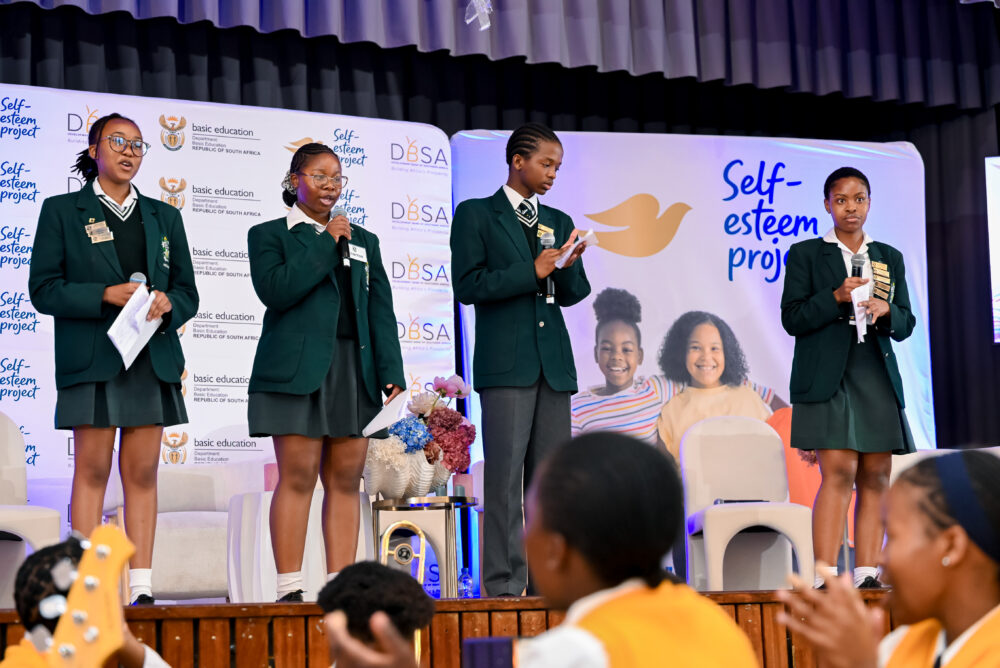
In the week leading up to International Day of the Girl Child, Unilever employees, Dove Influencers and Learner Support Agents from the Department of Basic Education delivered Body Confidence workshops at a number of schools in Gauteng and Kwa-Zulu Natal such as Umqhele Comprehensive, Bonwelong Primary, Midrand High and Newlands East Secondary School, reaching 600 learners through hands-on self-esteem education.
The #ChangeTheCompliment campaign, launched on International Day of the Girl Child, challenged the norm of appearance-based praise. Instead, it urged South Africans to broaden the way we compliment girls, empowering them with recognition for their courage, creativity, intelligence and achievements. This initiative is not about eliminating compliments like “pretty” or “cute” but fostering confidence that goes beyond looks.
#ChangeTheCompliment is more than a campaign — it’s a call to action. For Dove, it represents our commitment to helping girls develop confidence that isn’t tied to appearance alone. When girls are only praised for how they look, they begin to believe that’s where their value lies. But when we shift compliments to celebrate their creativity, kindness, courage or intelligence, we help them see their full worth. For the young girls we reach, this change can be transformational — it builds lasting self-esteem and empowers them to lead, dream, and thrive beyond beauty.” – Anele Nzimande Maphanga, PR Lead (BWPC) at Unilever.
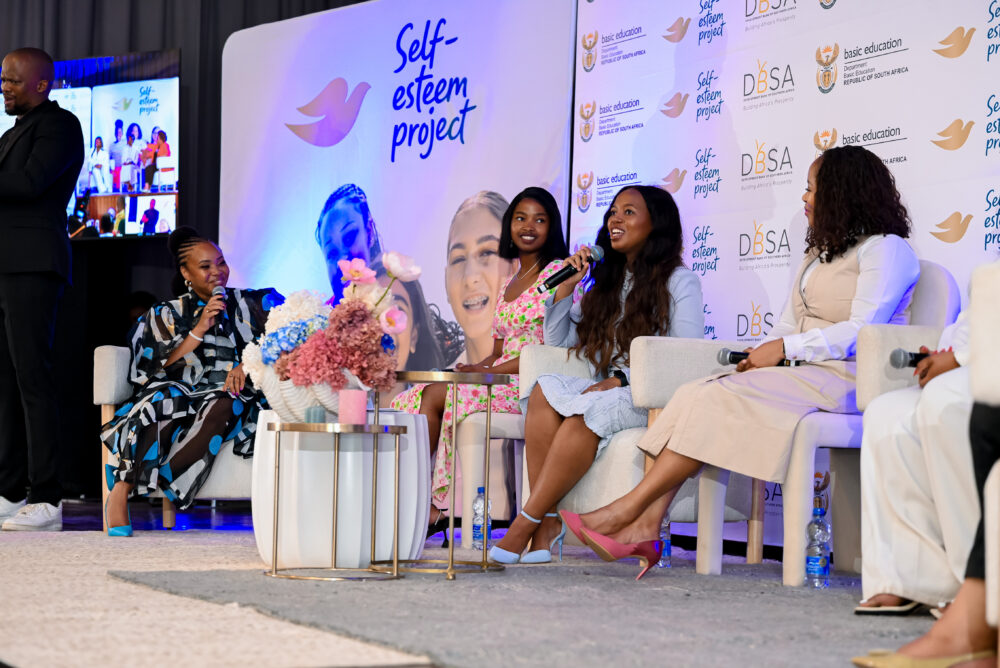
The Commemoration of the Girl Child at Midrand High School on 17 October brought together the Deputy Minister of Basic Education, Dr Reginah Mhaule, Gauteng MEC for Education Matome Chiloane, Acting Director-General Granville Whittle, DBSA executives, Unilever and Dove representatives, UNICEF, GIZ, and other key stakeholders. The event featured motivational talks, panel discussions, and learner voices under the theme: “The Girl I Am. The Change I Lead.”
The Deputy Minister of Basic Education, Dr Reginah Mhaule said “For over seven years, we have walked this journey with Unilever, through its Dove brand, creating spaces of reflection and empowerment for our young people. In recent years, we have been joined by the Development Bank of Southern Africa (DBSA) — a partnership that has strengthened both the reach and impact of this important work. We do this because we believe that, while our country has made significant progress in achieving gender parity in access to education, the lived realities of young women and girls still call for deeper, more sustained attention. At the same time, we recognise the growing need to respond to the vulnerabilities of young men and boys, ensuring that no one is left behind in our collective pursuit of equality, dignity, and opportunity.”
With over 500 Learner Support agents trained to deliver Body Confidence workshops, thousands of learners across South Africa will gain access to evidence-based resources and support, thus creating a sustainable foundation for girls’ empowerment
“Growing up, I often heard compliments about my looks, but the words that truly shaped me were those that recognised my kindness, courage, and creativity. As South Africans, we have the power to uplift the next generation by celebrating their talents and dreams,” says Dove Influencer, Lesego Legobane (Thickleeyonce) .
Global research highlights the urgent need for this work:
- Over 80% of South African girls report feeling ashamed of their appearance.
- 83% have altered or concealed at least one aspect of their bodies before sharing photos on social media.
- By age 13, around 83% of girls have used selfie editing or retouching apps or filters.
- 20% of South African girls aged 10–17 said they would be willing to be 25% less intelligent if they could be 25% more beautiful.
The #ChangeTheCompliment campaign urges all South Africans to celebrate girls for who they are and what they do, not just how they look. By expressing sentiments like “You are beautiful AND courageous” or “You are intelligent”, we can foster a generation that recognises their intrinsic worth beyond just physical appearance.
To learn more, visit https://www.dove.com/za/dove-self-esteem-project.html to download free resources and tools to help start the conversation.
About the Dove Self-Esteem Project:
Dove is the largest self-esteem education provider in the world, offering no-cost, academically validated tools to parents, teachers, mentors, and children for nearly two decades through the Dove Self-Esteem Project. To date, Dove has reached more than 137 million young people globally across 153 countries with DSEP, with a goal of reaching 250 million young lives by 2030.
Submit and get free exposure here: Showcase Your Business | Advertise Your Special Offers.
