
Meeting by meeting, listening, building trust, popular power is not passe:

Democracy can be about more than elections and the sudden moments of rupture enabled by social media. The patient work of building popular movements remains essential
Morocco has never applied to join Brics, and views SA government as ‘hostile’:
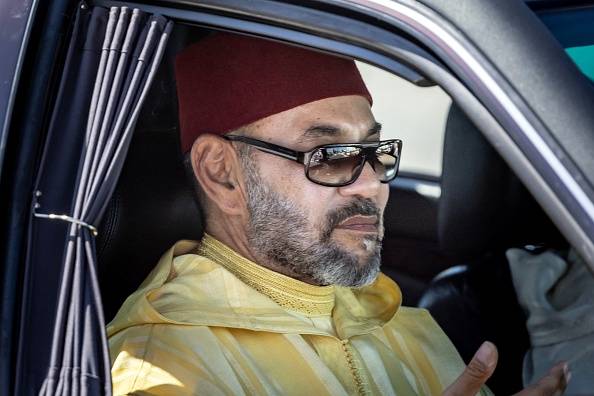
The Moroccan government has declined an invitation to participate in the African outreach programme at next week’s BRICS summit in Johannesburg, the foreign ministry said.
In a statement released on Saturday, Morocco’s foreign minister Nasser Bourita’s office said that it has not applied to join the multilateral body.
This against the backdrop of historically strained relations between the South African government and the North African nation over its continued occupation of Western Sahara, the only African state yet to achieve independence from colonial occupation.
On Saturday, the kingdom’s foreign ministry said there had “never been any intention to positively respond to the invitation” to participate in the Brics (Brazil, Russia, India, China, South Africa) programmes which had been issued by South Africa ahead of the summit.
The move comes in response to a comment by South Africa Minister of International Relations and Cooperation, Naledi Pandor, in which she noted that Morocco was among those nations which had applied to join Brics.
The expansion of the body, which holds its 15th summit from 22 August, is among the key issues on the agenda, with a number of other African states having applied to join Brics.
However, the Rabat government said the invitation to participate in the outreach programme had been issued “unilaterally” by the South African government.
“Morocco has therefore assessed this invitation in the light of its strained bilateral relationship with this country” and had declined participation.
The Moroccan government said Pretoria had consistently “shown a primary hostility towards the Kingdom, and has systematically taken negative and dogmatic positions on the question of the Moroccan Sahara.”
Morocco’s ambassador to South Africa, Youssef Amrani, confirmed the authenticity of the statement, which had been issued to clarify the situation.
“Morocco has not accepted an invitation to participate in the Brics outreach programme and has never applied to join Brics,” said Amrani.
South Africa recognises the Sahrawi Arab Democratic Republic, which controls part of Western Sahara and has been under Moroccan occupation since the withdrawal of Spain in the 1970s. The ANC is an ally of the Polisario Front, the Sahrawi liberation movement.
A diplomatic source said that a Sahrawi delegation would be attending the Brics Africa Outreach on 24 August and that there was “no way” that Morocco would have attended the event due to their presence.
“Sahrawi will be there as they are members of the AU, so the Moroccans will avoid any event or forum that they are at as participation would be tacit acknowledgement of their statehood,” the source said.
Rabat said Pretoria had “multiplied, both nationally and within the African Union, its notoriously malicious actions against Morocco’s higher interests” which had included “deliberate and provocative breaches of protocol” in issuing the invitation.
“Many countries and entities appear to have been invited arbitrarily by the host country, without any real basis or prior consultation with the other member countries of the Brics group,” the statement read.
The Moroccan government said it maintained “substantial and promising bilateral relations” with the other Brics members and enjoyed strategic partnership agreements with three of them.
“However, the kingdom has never formally applied for membership of the Brics group. There is as yet no framework or precise procedures governing the expansion of this group.”
Rabat said it remained committed to multilateralism, and those platforms should not be used to interfere in the internal affairs of sovereign states.
Morocco’s relations with Brics would continue to fall within the general framework of the kingdom’s foreign policy.
Comment from the International Relations and Cooperation spokesperson Clayson Monyela will be added once received. Monyela had not responded to calls and messages from the Mail & Guardian at the time of publishing.
Rights groups urge Tanzania to free critics of UAE port deal:

Rights campaigners have urged Tanzania to release three people, including a former legislator, saying they could face treason charges for criticising a deal with an Emirati company to manage the country’s ports.
Amnesty International said Willibrod Slaa — a former parliamentarian and diplomat — and two activists were arrested at the weekend after speaking out publicly against the ports deal signed last October by President Samia Suluhu Hassan.
The agreement paves the way for DP World, a logistics company controlled by the emirate of Dubai in the United Arab Emirates, to manage all the ports in Tanzania in consultation with the government. It was ratified by parliament in June.
Critics of the deal say it poses a threat to Tanzanian sovereignty and security, but the government has defended the accord, arguing that it will improve efficiency, cut costs and increase revenues.
“The Tanzanian authorities’ crackdown of critics of the UAE port deal reveals their growing intolerance to dissent,” Amnesty’s east and southern Africa director, Tigere Chagutah, said in a statement earlier this week.
“The authorities must stop arbitrarily detaining activists simply for peacefully expressing their views and immediately and unconditionally release these activists.”
Slaa and his co-accused could face treason charges, a non-bailable offence that carries a death penalty, Amnesty said, citing the trio’s defence lawyers.
At least two dozen people have been arrested since June for opposing the deal, Human Rights Watch (HRW) said last week.
“The Tanzanian government should end these arbitrary arrests and take further steps to address the challenges to freedom of expression,” said HRW researcher Oryem Nyeko.
Tanzanian rights campaigners on Tuesday also condemned the arrests, asking the authorities to release the detainees.
“We believe the human rights defenders have the right to offer opinions about anything in our country, including … the port agreement,” the Tanzania Human Rights Defenders Coalition and other groups said in a joint statement.
“They should not face any intimidation or be arrested for expressing their freedom of speech.”
Albert Chalamila, regional commissioner of Dar es Salaam, said on Tuesday that the government would “deal with” any public protests against the deal.
“All those who misled the public … are all in detention. I have told them to do whatever they want to do but I will deal with each of them,” he warned. “Dar es Salaam is not a place for violence.”
Hassan came to power in March 2021 after the sudden death of her autocratic predecessor, John Magufuli. Although she has reversed some of Magufuli’s most controversial policies, critics called her a “dictator” after Freeman Mbowe, leader of the Chadema opposition party, was arrested on terrorism charges in July 2021 before being released.
Chadema is among those opposing the deal, which gives DP World exclusive rights for a period of 12 months to negotiate with the government on how best to manage the country’s 80 ports.
In June, Transport Minister Makame Mbarawa told parliament that the investment by DP World would improve the performance of Tanzanian ports, allowing more ships to dock there. — AFP
Submit and get free exposure here: Showcase Your Business | Advertise Your Special Offers.
