Merry coalition Christmas, and a happy GNU year:
Thursday.
The time is upon us — thankfully — when the political class finally gives it a break, apart from the odd contractual obligation church service that nobody has any real interest in, participants included.
The last by-election of the year is over and done with.
The ANC had a pretty decent day at the office to close off the year.
It beat the Inkatha Freedom Party (IFP) and the uMkhonto weSizwe (MK) party to take ward??two, Dambuza in Pietermaritzburg — a very big result in an area where it was hammered on 29 May.
The ANC also snatched ward seven at Hantam local municipality in the Northern Cape from the Democratic Alliance (DA), a nice early Christmas present from the good people of Calvinia.
The non-stop barrage of WhatsApp messages, emails and X posts churned out by the political parties has finally stopped, along with the last-minute flurry of congresses, people’s assemblies and rallies that those who would like to rule the country subjected us to.
The South African Communist Party (SACP), the Economic Freedom Fighters (EFF) and the MK party all gave it a last fling before heading off for their holidays.
They came out of their weekend events re-positioning themselves ahead of the local government elections, with the communists finally deciding to stand independently of the ANC, rather than backing it.
The SACP is tired of the ANC giving the DA more cabinet seats than them and figure they can rectify this by taking the governing party on at the polls, much like Jacob Zuma did.
Zuma’s strategy won him plenty of votes, but when it comes to cabinet seats — or even MEC positions — the old man’s party got dololo.
Solly Mapaila is no Jacob Zuma, so the SACP might end up positioning itself even further from the levers of power come 2026 than it is at the moment.
The EFF has lined itself up as a potential ally for the ANC in local government and beyond — provided it ditches the DA in return, either after the 2026 vote or at the end of Cyril Ramaphosa’s term as party president.
EFF president Julius Malema believes the ANC will dump the DA after its next conference as a result of a victory by the faction in the governing party that finds it ideologically — some would say financially — impossible to co-govern with DA federal chair Helen Zille and party leader John Steenhuisen.
Malema is gambling on the emergence of Paul Mashatile — or Gauteng Premier Panyaza Lesufi — at the head of the ANC come December 2027, but he, like Ace Magashule, may too discover that five years is a very long time in politics.
Zuma is vibing Black Jesus and has positioned his party as the focal point of resistance to the government of national unity.
Zuma wants all the other parties to vote for him come the 2026 and 2029 elections.
uBaba reckons they should make their X next to his head from here onwards until he is back in the Union Buildings, and then go about their business as before.
Which all sound lovely — except that this might mean them pursuing a career outside of politics once the votes have been counted.
That’s how things played out for MK founder Jabulani Khumalo and the rest of the MPs who got pulled from their seats to accommodate Zuma’s celebrity friends from the EFF.
Likewise for the All African Alliance Movement, who stood down Mogoeng Mogoeng as its presidential candidate and backed Zuma’s party, only for Bishop Sophonia Tsekedi and the rest of its would-be parliamentarians to get shafted.
The EFF, MK party and the SACP appear to have more energy left at the end of the year than those who actually run the country.
They have been more than happy to take their vacation quietly, with no fuss, after a hard five months at work in the government of national unity.
The ANC contingent was so worn out that it even cancelled the final national executive committee meeting of the year, while some, like Lesfui, appear to have cut and run earlier than the rest.
Five months of doing business with Zille will do that.
The DA is likewise quiet.
Helen is still TikTokking away about the Bela Act, but the rest of the party are tjoepstil, exhausted from half a year of calling the manager every time Ramaphosa signed something.
They — like Lesufi and Johannesburg mayor Dada Morero — have gone missing and are happily Decembering elsewhere, the weekly beef with the ANC replaced by turkey, gammon and Yorkshire pudding with gravy.
Merry coalition Christmas, and a happy GNU year.
Second political realignment is in the offing ahead of 2026 poll:
South Africa’s first major political realignment since 1994 took place earlier this year in the aftermath of the 29 May national and provincial elections, with the ANC’s loss of its parliamentary majority forcing it into coalitions nationally and in KwaZulu-Natal, Gauteng and the Northern Cape to stay in power.
The ANC reached out to its historical opponents — the Democratic Alliance (DA), Inkatha Freedom Party (IFP) and Freedom Front Plus — to form a government nationally and in KwaZulu-Natal and the Northern Cape.
In Gauteng, the ANC’s coalition talks with the former official opposition collapsed, leading Premier Panyaza Lesufi — one of the fiercest opponents of working with DA in the ANC and its alliance — to form a minority government with the Patriotic Alliance, Rise Mzansi and the IFP.
The government of national unity (GNU), and of provincial unity in KwaZulu-Natal, have held since their formation mid-year, but have generated internal pushback in the ANC and its alliance partners.
The South African Communist Party (SACP) and labour federation Cosatu both oppose the ANC’s relationship with the DA, as do many of its leaders and rank-and-file members, and have been calling on it to reconsider its decision and choose other partners with whom to govern.
Seven months on from the May elections, a second major political realignment is taking place, with several of the parties repositioning themselves ahead of the 2026 local government elections and the national and provincial elections three years later.
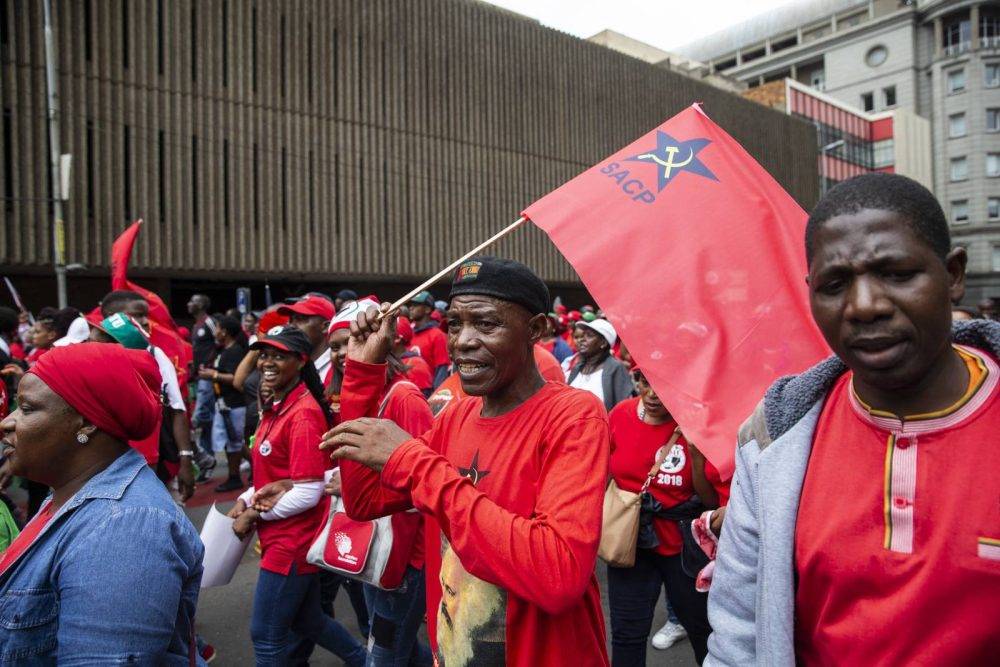
Last weekend, the SACP, a long-standing ANC alliance partner, confirmed its decision to contest the 2026 vote as a standalone party.
The SACP special national congress ratified the resolution by its central committee that ends 30 years of the party backing the ANC at the polls and introduces it as a potential competitor, rather than an ally.
The SACP will contest all wards in the country and is considering how to fund its campaign and whether to “donate” its votes to the ANC, should it take wards in the municipalities.
The party has made it clear it would prefer the ANC to draw the Economic Freedom Fighters (EFF) into the GNU to replace the DA and it is likely to maintain this position when negotiations over the formation of councils in hung municipalities take place after the local elections.
In his opening address to the recent SACP congress, its secretary general, Solly Mapaila, said as much, describing the ANC-DA relationship as a “doomsday coalition”, but he also closed the door on working with Jacob Zuma’s “counter-revolutionary” uMkhonto weSizwe (MK) party.
Mapaila said the SACP was not abandoning the alliance — or splintering the ANC — but was “asserting its independence” because of the governing party’s repeated failure to pay attention to the issue of reconfiguring the alliance.
The SACP will meet the ANC ahead of the latter’s national executive committee lekgotla, which traditionally sets out the priorities for government for the year ahead as part of a process of “continuous engagement” they agreed to in November.
The parties held their first bilateral talks last month in what was a clear attempt by the ANC to head off the decision to contest the polls and agreed to the pre-lekgotla follow-up as a concession to the SACP’s demand that it be consulted.
But whether this will allow the SACP to influence the cabinet process, which will have to also accommodate the DA and other parties, or whether it is simply a toy telephone, remains to be seen.
ANC secretary general Fikile Mbalula told the media ahead of the special congress that his party would “engage further” and do everything possible to “undermine” the decision, which would have “dire consequences” for the alliance.
“We have cautioned against that,” Mbalula said. “It will have far reaching implications as allies going forward. If the SACP and the ANC contest in [the same] ward, we are going to clash and we are going to divide the base.
“So, it has got implications and that is why we cautioned against that.”
EFF looks to the ANC
The SACP — and by implication the ANC — are not the only parties facing hard choices regarding how they position themselves in a changing political landscape.
The appearance of the MK party on the political scene not only cost the ANC its majority in May but also robbed the EFF of its position as the country’s third-largest party.
The EFF, which concluded its third national people’s assembly at the weekend, has been forced into a process of realignment itself as it chooses how it works — and with whom — with its reduced numbers.
Shifting alliances at council level have seen the EFF entering into power-sharing arrangements with the ANC in metro councils in Gauteng, removing the DA from power in both Johannesburg and Tshwane, and co-governing in Ekurhuleni.
The party has also helped the ANC retain power in eThekwini in KwaZulu-Natal and now appears ready to attempt to replace the DA as the ANC’s partner nationally.
EFF president Julius Malema told delegates to the people’s assembly that the party is ready to go into a coalition with the ANC on condition that the DA is removed from the government of national unity.
Malema said the GNU would not last, predicting that, if President Cyril Ramaphosa did not bring into effect the two contentious clauses of the Basic Education Amendment Laws (Bela) Act, ANC members would remove him.
If Ramaphosa was not removed in the near future, it would happen after the ANC’s 2027 national conference, at which he was likely to be replaced by a person opposed to the current GNU, Malema predicted.
“The person who is going to be elected is a person who is going to fight the GNU and that is why we are saying it will not last,” he said.
“Everywhere else it is being rejected but people keep imposing it on members of the ANC.
“So, don’t rush, comrades, we are waiting, we are going to enter this government. We are waiting. You will see.”
Malema also shot down the idea of a coalition with the MK party, to which a number of key EFF leaders, including Floyd Shivambu, have defected.
He has rejected Zuma’s “unity” approaches — and turned down an invitation to its first anniversary rally on Sunday — despite the two parties having been part of the self-proclaimed “progressive caucus” in parliament in opposition to the ANC-led GNU. “We want nothing to do with uMkhonto [but] it’s their own [problem] if they want them,” he said at the weekend about a possible ANC-MK party alliance. “We can’t choose friends for them anyway. They were friends together, criminals.”
The EFF has also urged its members to view the MK party as enemy number one, accusing its leaders of trying to destroy it by poaching key leaders and undermining its unity.
Black messiah
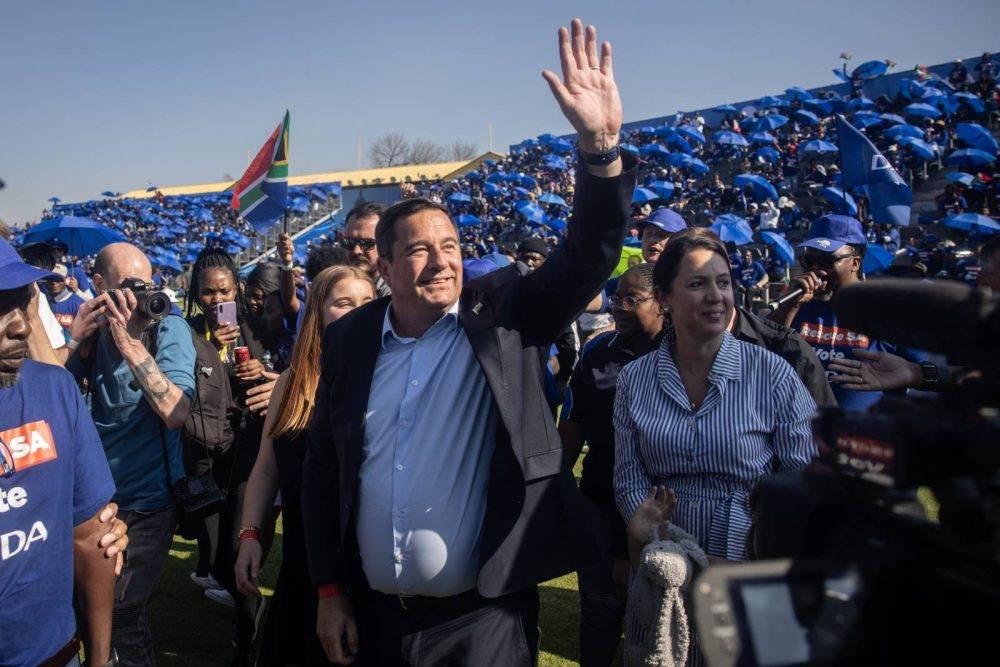
Zuma, in turn, has positioned MK as the focal point of a united front among black parties and at the weekend used its anniversary rally to sell it as such to other parties and his supporters.
Several other smaller parties — including Xiluva and the South African Rainbow Alliance — have already collapsed into Zuma’s party.
The MK party’s secretary general, Shivambu, said it expected more to do so during the course of next year.
On Sunday, Zuma called on those parties that remained to vote for MK in 2026 and 2029 to help it achieve victory.
The former head of state said “black parties should stop fighting each other” in the coming elections, help the MK party take power, and then return to normal politics.
“We are not playing here. This is the last phase of our fight for our country,” he said.
“There are four years left before we vote again and take back what is ours and to fix our country. Are you with me? Stop acting like it will take 10 years. We need to work now, so we can be back in power.”
He said “black people must come together in local government and fix what happened in the past” in the coming election.
Zuma continued this theme at a gala dinner on Monday evening, at which he urged party members and leaders not to respond to insults from other political parties.
“Your business is to promote uMkhonto weSizwe so that people can see that, if this organisation is in power, we will have peace,” he said, urging those in attendance not to fight for positions.
The MK party has found itself in court over the removal of MPs to accommodate members brought in after the elections and recently lost cases in both the Mpumalanga legislature and the national assembly.
It also faces tension at ward level where disputes have broken out over the party replacing candidates chosen by its local supporters with those it has selected.
Zuma said the party would take action against people who continued to fight for positions.
“Our journey is a genuine one. The positions don’t mean anything — you waste your energy, time on hating a person who has not taken anything from you. We want people to stop their anger and have comradeship.”
ANC’s hard choices
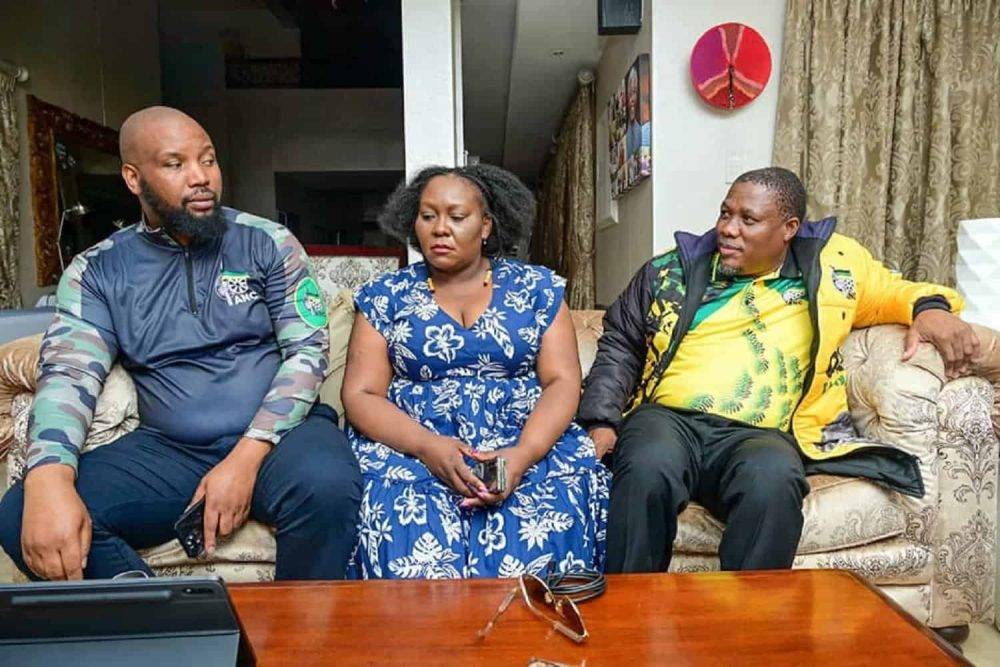
The ANC’s first executive committee meeting of the year next month will not only be faced with how to deal with its dysfunctional KwaZulu-Natal and Gauteng leadership structures, but how it responds to the scenario unfolding before it.
The party leadership is battling to deal with internal pushback over the relationship with the DA, which will intensify as the 2026 elections — and the ANC’s next elective conference — approach.
The public tension with the DA over the Bela Act has been seized upon by opponents of the GNU in the ANC, as have that over foreign policy and the National Health Insurance, and will be used as a lever to try to move the ANC towards the SACP and the EFF in the future.
For now, the ANC will try to contain the fallout with its alliance partners internally while it smooths over the public clashes with the DA over policy issues by dealing with them at the level of the cabinet clearing house set up by Ramaphosa to resolve disputes between coalition partners.
In the case of the Bela Act, they are likely to use enabling regulations to resolve the stand-off over the implementation of two contentious clauses, allowing the process to go ahead while satisfying the concerns of both sides.
Speaking to journalists at the SACP congress at the weekend, ANC deputy president Paul Mashatile, who led the party’s delegation, said they would wait for further details of the SACP’s decisions before determining their effect on the tripartite alliance, which includes Cosatu.
“They will brief us after their congress. Once we have the details, we will discuss the implications for the alliance,” he said.
Responding to questions about strained relations, Mashatile admitted that the ANC’s formation of a unity government had drawn ire from alliance partners because they had not been consulted about the processes.
“We acknowledge the criticism that consultations came late during the GNU process. We have since engaged with our partners to address their concerns,” he said.
Innovating for Inclusion | Mark Harris on the Future of Tech, Startups, and Media:
In the latest episode of The Angle Podcast, we sit down with Mark Harris, CEO of Tshimologong Digital Innovation Precinct in Johannesburg, to discuss how technology can address systemic challenges, create jobs, and inspire a new generation of innovators in South Africa.
We dive deep into the lack of scalable funding for startups in the country and talk at length about accessing funding, incubating business and what post-funding support could and should look like.
With a storied career spanning 34 years at IBM and leadership roles in media and tech, Harris brings deep insights into the intersection of technology, creativity, and entrepreneurship.
Tshimologong has evolved from its roots in traditional IT to become a hub for digital creativity and tech-driven change. Today, the precinct focuses on empowering disenfranchised youth and startups to leverage technology for economic and social impact. By blending resources like maker labs, animation studios, and tech training, Tshimologong often serves as a launchpad for entrepreneurs and innovators across South Africa and sometimes the continent.
Tackling the startup challenge
One of the most pressing issues discussed was the lack of scalable funding for startups in South Africa. While Tshimologong has had success incubating businesses through its various programs, Harris acknowledges the gap in post-incubation support and venture capital funding.
“For South Africa to get serious about startups, we need to bridge the funding gap,” Harris explained. “Catalytic funding helps, but we also need stage-one and stage-two investments to create sustainable enterprises.”
Harris highlighted the importance of partnerships with bilateral agencies from Europe and innovative training programs like the Molo Academy. These initiatives not only provide skills but also create real-world opportunities, particularly in emerging fields like animation, gaming, and digital arts.
Media and the democratisation of content
Given Harris’s experience in media also came into play, as he shared his thoughts on the convergence of technology, marketing, and content creation. He painted a picture of a future where niche publications and influencer journalists thrive, powered by platforms that combine journalistic integrity with the gig economy.
“The rise of the influencer journalist is reshaping how we think about media,” Harris said. “The challenge is to maintain credibility and ethics while embracing new technologies and audience-driven models.”
Building the future
Looking ahead, Harris said, “Success for us means scaling beyond the precinct, creating impactful enterprises, and building a sustainable ecosystem for future generations.”
He further outlined his vision for Tshimologong – scaling its programs, deepening ties with Wits University’s research capabilities, and establishing an evergreen venture fund to support future startups.
https://tshimologong.joburg/
Scott Peter Smith is a co-founder of The Angle and founder of Submedia+, a cross-platform publisher in non-fiction storytelling. He is the former chief digital officer of the Mail & Guardian, where he led the publication’s digital strategy and product development.
The Angle – African perspectives on digital culture, media, money and governance.
The Angle explores African perspectives on digital culture, creativity, media, money, and governance. Through engaging storytelling and authoritative insights, we spotlight the innovators and technologies shaping the continent’s digital future.
Our mission is to deliver actionable, illuminating insights on Africa’s evolving digital culture—spanning creativity, business, technology, and policy. We celebrate the creators, businesses, and policies breaking into the mainstream, while amplifying the voices and innovations carving the path forward. https://theangle.africa/
Submit and get free exposure here: Showcase Your Business | Advertise Your Special Offers.