
Meyiwa Trial: State qestions accused’s ‘police assault’ claims:
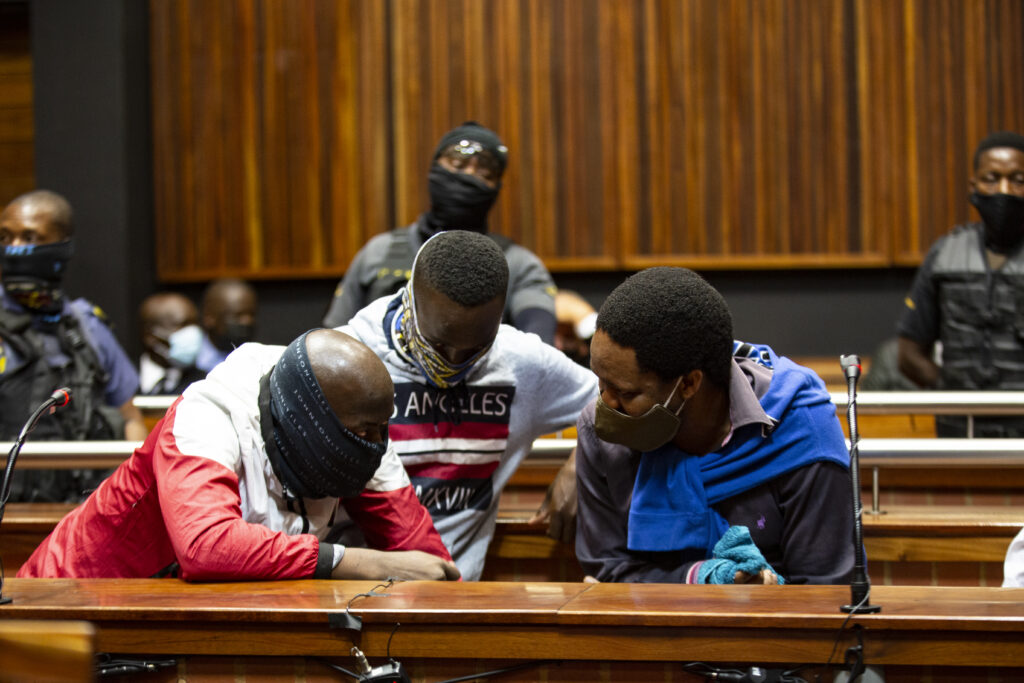
Muzikawukhulelwa Sibiya is on the stand in the trial-within-a-trial to determine whether confessions made by him and accused number two Bongani Ntanzi are admissible

Draft Integrated Resource Plan accepts coal reality, says Thungela chief executive:

“It’s accepting reality.”
This is how Thungela chief executive July Ndlovu characterised the recently-published draft Integrated Resource Plan (IRP), which proposes that Eskom delay decommissioning certain of its coal-fired power stations.
Speaking to the Mail & Guardian on the sidelines of the 30th Mining Indaba, Ndlovu added: “People say, ‘We should accelerate getting rid of fossil fuels by 2030’ — as if that is going to happen. What we have just seen with the IRP is a recognition of reality. We are desperately short of power. We are not even investing fast enough in renewables to close that gap. And now you want to close the little that you’ve got? Where is the logic?”
The 2019 iteration of the IRP envisioned that Eskom would decommission about 24 100 megawatts of coal-fired capacity by 2034. But the new plan proposes postponing plant shutdowns to avoid the economic hit of their premature decommissioning.
Ndlovu — who, as well as heading up South Africa’s leading coal exporter, also serves as the chairperson of FutureCoal — said the proposed postponement “is good news for our people”.
It is also good news for local coal producers, which have been knocked by Transnet-related logistics constraints, as well as falling coal prices.
In its outlook on the industry, the Minerals Council noted that Eskom burned 102.4 megatonnes of coal in its 2022-23 financial year. “If the planned decommissioning of 24 100MW by 2034 were to remain a policy priority, the demand for coal by Eskom would be radically reduced. As a result, the export market will play a crucial role in maintaining mining and logistics jobs.”
According to the Minerals Council’s analysis, the value of total coal sales was down 22.1% in 2023 compared to the year prior.
Meanwhile, coal miners have also had to contend with a wave of negative sentiment against the commodity, which has affected long-term investment in the industry, the Mineral Council noted.
This is certainly the case. But Ndlovu said that although coal finance may become more difficult to come by, it won’t disappear.
Vusi Mpofu, sector lead for mining and chemicals at Nedbank Corporate and Investment Banking, was also hesitant to count out coal altogether.
Nedbank’s energy policy excludes it from financing thermal coal mines outside of South Africa. The bank has also committed not to provide project financing for new thermal coal mines, regardless of jurisdiction, from 1 January 2025. The policy also restricts Nedbank’s exposure on coal mining lending to 1% of its group loans and advances, targeting 0.5% by 2030.
“I think we underestimate the longevity of coal,” Mpofu said.
“Of course the pressure is going to come from their ability to raise capital from institutions such as ourselves. But I do believe that the contracts they currently have are with the utility providers. So you look at Exxaro, with its long-term contract to supply Eskom, the business case is still there. And it is going to be there for as long as it takes for South Africa to replace that baseload, which is 30 to 40 years into the future.”
State capture: Professional enablers can and must be held accountable for their role:

The National Prosecuting Authority (NPA) has recently announced that German software company SAP will pay R2.2 billion to South African state entities and government departments as restitution for its role in state capture. This was the result of a coordinated resolution between the NPA and the US Department of Justice, following an investigation into SAP’s breaches of the American Foreign Corrupt Practices Act. This welcome news shows that it is indeed possible to hold to account multinational, professional firms which have hardly ever faced consequences for their role in corruption in South Africa.
These firms were not simple opportunists or unwitting victims of politicians soliciting bribes.
Any serious account of state capture in South Africa demonstrates how professionals were able to ensure that the plans to decimate state institutions for private gain were carried out. Lawyers have exploited legal loopholes to protect corrupt actors from accountability; legal firms have also been used to target political opponents to state capture. Accountants, auditors and bankers have hidden transactions, facilitated tax evasion, and helped launder money. PR managers have laundered the reputations of those involved in state capture. Management consultants and financial advisers have worked with allies in state entities to set up extremely lucrative contracts, from which the state has seen little benefit — indeed, the “consulting services” have often been extremely harmful to these institutions in myriad ways. Large, multinational service providers, like SAP, entered into kickback agreements in order to secure lucrative contracts — while dramatically inflating the cost to the South African public purse.
While the roles of these individuals and companies often goes unremarked, South Africa has seen a strong and persistent effort by journalists and civil society to shine a light on them — and to push for accountability. Though the implicated companies themselves continue to deny wrongdoing, there is a general acknowledgement that systemic corruption and state capture cannot be fought without addressing the roles of these crucial actors. But private actors are not held to the same checks and balances that govern our public representatives and hold them accountable. Even large fines, such as the R2.2 billion due to be paid by SAP, often fail to serve as an effective deterrent. So what more can be done?
Much is made of ethics standards, codes of conduct, and training, especially by private companies themselves and business associations. While these are laudable efforts, they generally already exist and have done little to prevent corrupt activities. Professional firms that are truly committed to fighting corruption must create robust internal systems to deter unethical behaviour, incentivise whistleblowing and ensure that there are swift and meaningful consequences for unethical actions. Professional associations should actively monitor adherence to professional codes and standards, and ensure that they are enforced by the imposition of sanctions — including, of course, exclusion. Management consultants and other newer professions that are not subject to professional oversight by an external body should form associations. After all, it is in their own best interests to safeguard the status of their profession.
It is also important to consider structural and regulatory interventions to limit the opportunities for corruption to arise. “All-service” firms face conflicts of interest inherent in their business model. These firms — such as KPMG, PwC and Deloitte — offer an array of services, including auditing, legal and consulting services, to the same clients. Auditors, for example, must conduct independent oversight and are mandated to act on the irregularities they identify. But they may be discouraged to do so if their firms are simultaneously participating in high-paying advisory work for the same client, for fear of compromising those contracts. Legal and financial advisers are routinely employed to help clients evade accountability — while the same company conducts their audits. Independence is key to professionalism and is indispensable for oversight functions such as auditing. Splitting the audit functions of large all-service firms could be one way to safeguard that independence.
The confidentiality and secrecy under which many professionals operate means that improper conduct can go undetected. Although this might be appropriate when dealing with private clients, where public money is involved, it is critical that there are robust transparency rules in place to allow for proper checks and balances of public contracts.
Meaningful accountability for wrongdoing is the key mechanism through which we can change the culture and practices of these companies. When these companies have been held accountable in the past, they have generally faced fines of varying amounts. Indeed, many of the firms discussed in our chapter have been fined in different jurisdictions across the world — but they are generally so profitable that fines pose no meaningful deterrent to unethical behaviour, which is usually extremely lucrative. More severe legal sanctions, such exclusion from the profession through mechanisms such as disbarment or withdrawal of accreditation, would be more effective as accountability mechanisms, as long as they are rigorously, swiftly and predictably applied as part of a robust monitoring and enforcement system by professional associations and regulators.
Criminal sanctions for professional enablers are vital to changing the way of doing business that facilitates and encourages corruption. Both firms and individuals should be criminally liable: companies should not be absolved of responsibility by scapegoating individuals, and key individuals must be held accountable for their actions. We need robust and capable law enforcement for criminal sanctions to serve as an effective check on private companies’ involvement in corruption.
The state capture saga has made clear just how intimately involved private companies
are with the core work of the state. There is serious work to be done in evaluating the relationship between the state and private professionals. What kind of work should the state hire professionals to do? How do we evaluate the quality of professional work and manage these contracts? How do we capacitate state entities to eliminate the need to contract out — and avoid the risks involved? The disastrous outcomes of state contracts with professional providers such as McKinsey and Bain demonstrated the need to overhaul the public procurement system. A new Public Procurement Bill has been tabled in parliament but the proposed legislation is not as strong as we hoped and will not comprehensively address the mechanisms of corruption unearthed by the Zondo commission on state capture.
Ultimately, deterrents and regulation can only do so much. At the heart of most of the corruption detailed in the book and in the Zondo commission report is the politicisation of state institutions and the public administration. Our procurement budget is approaching R1 trillion a year; government contracts are extremely lucrative for private companies and individuals. The patronage system embedded in our state governance and ruling party structures ensures that political actors have a significant level of control over awarding major contracts. This is why so many professional firms like Bain and Bosasa have tried — and succeeded — to establish close ties to ANC politicians and senior state-owned enterprise officials, and why so many professional organisations such as the SAP did not hesitate to pay large commissions to politically-connected middlemen. This is how the game is played and most reforms will do little to change these fundamental incentives. It is therefore critical that we grapple with the nature of our political system and economy, and find ways to protect our public administration from this kind of political interference.
This op-ed is based on a chapter by Devi Pillay and Cherese Thakur in State Capture: How and Why it Happened (2023).
Submit and get free exposure here: Showcase Your Business | Advertise Your Special Offers.
