
Mixed fortunes for Africa in 2024:

This year, Africa will be the second-fastest-growing economic region in the world (after Asia) at 4%, according to the International Monetary Fund (IMF), but behind the headline figure is a less auspicious reality.
Fresh conflict, more military coups, the renewed Israel-Gaza conflict and the lingering Russia-Ukraine war are contributing to stifling better growth across the continent.
Many African states were already suffering due to slow post-Covid-19 recovery, climate change shocks, increased food insecurity, political instability, weak global growth and high interest rates.
Thirty-three of the continent’s states are classified as least developed and these economic shocks have pushed an estimated 55 million people into poverty since 2020 and reversed more than two decades of progress in poverty reduction.
It is not all bad news. South Africa is set to overtake Nigeria and Egypt as the continent’s largest economy this year, the IMF predicts.
Some African regions are also expected to outperform others. East Africa, once again, is expected to perform better — location, human and physical infrastructure and politics have contributed to this trend.
Debt burdens
Debate over African debt will be prominent this year. Elevated interest rates and a stronger dollar make it more expensive for African countries to service dollar-denominated debt, something that has pushed a number of countries into further debt distress.
As this year begins, nine African states are in debt distress, a further 15 are at high risk and 14 at moderate risk. Zambia and Ghana defaulted on their debts, joined recently by Ethiopia.
There are several eurobond maturity payments due in 2024 and 2025, with prohibitively high yields, making debt rollovers a less viable option.
An eurobond is an international bond that is denominated in a currency not native to the country where it is issued.
South Africa can manage its repayments. Ethiopia, despite the civil war and entering the G20 common framework, continued to pay its coupons but is now struggling and defaulted last month. It will need to reprofile its bond repayment schedule, which is due to end in December.
Kenya has been negotiating its eurobond and plans to use funds drawn from the IMF’s programme and the World Bank to repay its eurobond debt over the year. Tunisia and Egypt also have eurobond repayments due in 2024.
A pan-African payment system that will allow African nations to trade among themselves, using their own currencies, is however, gaining momentum.
This Pan-African Payment and Settlement System, developed by Afreximbank, is hosted by Kenya. All central banks are expected to join by the end of this year, followed by many commercial banks by the end of next year.
Commodities
The focus on accessing strategic and critical minerals from Africa, and protecting their supply chains, will continue to be the focus of foreign powers.
Africa is rich in strategic minerals, including rare earths, such as lithium, graphite, bauxite, manganese and cobalt, all essential for modern technologies.
This year will see the first full year of operation of the upgraded Lobito Corridor in Angola, a US and EU-backed rail project which will ultimately connect the Democratic Republic of the Congo (DRC) and Zambia’s mineral deposits to the Atlantic coast.
Due to increased demand and prices, some African governments will continue to review their contracts with mining companies and seek additional value.
Major contract renegotiations are ongoing in Botswana and DRC, and there are new mining regulations in Mali and Burkina Faso.
Conflict hotspots
Worsening political instability in parts of the continent, exemplified by the nine military coups since 2020, including in Gabon and Niger in 2023, have sharpened focus on the fragility of constitutional rule. Countries already under military leadership are increasingly unstable, such as Burkina Faso, Mali and Niger, and further coups are possible in them.
The Sahelian region will continue to be a terrorism epicentre in 2024. In 2023, sub-Saharan Africa accounted for 48% of global deaths from terrorism. Attacks have spread beyond historical hotspots such as the Sahel and the Horn of Africa to Southern Africa and the coastal regions of West Africa.
Prolonged conflicts, poor rule of law, human rights abuses, discrimination, exclusion and unemployment have all contributed to this crisis.
Other conflict hotspots will continue to be of concern in 2024, particularly eastern DRC, northern Mozambique, parts of Cameroon and Somalia, and another flare-up in Ethiopia is possible. Sudan’s armed conflict could evolve towards a de facto partition of the country.
Elections
This will be a record year for elections globally and Africa will have 17 national presidential and/or legislative polls.
Elections in Burkina Faso and Mali to transition from military rule are uncertain as their juntas keep postponing them.
A December referendum to approve a new constitution for Chad, after nearly three years of transition from military rule, is expected to pave the way for transitional president Mahamat Déby to run for president in this year’s national elections.
In SADC, Botswana, Comoros, Mauritius, Namibia, Mozambique and South Africa will go to the polls.
The elections that will be most scrutinised will be Mozambique, which will have a new president (the incumbent is stepping down), and South Africa, where all eyes are on whether the ruling ANC can win an outright majority.
Senegal’s presidential elections next month will be fiercely contested and December’s in Ghana might result in the defeat of the National Patriotic Party at the ballot box and the return of ex-president John Mahama and his National Democratic Party to power.
Algeria’s and Tunisia’s elections will draw attention and those in the Comoros, Mauritania, Rwanda and South Sudan are expected to return their incumbents.
Next month, the Assembly of Heads of State and Government of the African Union will vote for a new chair and deputy chair of the commission. There will also be voting for the commissioners and these results will inform the direction of the AU.
At the next Commonwealth Heads of Government meeting in Samoa, in October, a new secretary general will be elected and it’s Africa’s turn — Gambia, Ghana and Tanzania are fielding candidates, so far.
Multiple summits
This will be a busy year of international summits for Africa’s leaders. In November, the first Saudi Arabia-Africa summit was hosted in Riyadh, the latest in a growing list of “Africa+1” summits. It attracted more than 50 leaders, in comparison to the second Russia-Africa summit in St Petersburg in August, which attracted 17 leaders. Like Russia, though, Saudi Arabia invited countries suspended from the AU.
Will Beijing invite Africa’s juntas to the ninth Forum on China-Africa Cooperation? This comes as China marked the 10th anniversary of the launch of its global infrastructure project, the Belt and Road Initiative, and new data shows its lending to Africa has fallen to its lowest level in almost two decades.
This year will see an increased pace of forum shopping. A second UK-African Investment Summit in London is scheduled for May and 25 governments have been invited.
An Italy-Africa conference will be held in early this year and Rome, which is president of the Group of Seven (G7) nations, has pledged to make the continent a central theme while it is at the helm.
The next Korea-Africa Summit will be held in June and New Delhi has announced its next triennial India-Africa Forum Summit.
Under India’s G20 presidency, in August, the AU joined the organisation and has the same status as the EU, previously the only regional bloc with a full membership. Its previous designation was “invited international organisation”.
From this month, Brics has expanded to include two African nations — Egypt (representing Africa and the Arab world) and Ethiopia (headquarters of the AU).
However, managing continental politics can be tricky. An AU-Arab League summit planned for November was cancelled due to disagreements among African states about the Sahrawi Republic’s (Western Sahara) attendance.
Celso Amorim, a special adviser to Brazil’s presidency on international affairs, said Africa would be central to Brazil’s foreign policy this year. Brazil is the chair of the G20 in 2024.
International engagement with Africa will increase further and many African states welcome this and are looking to diversify their global partnerships or revive old ones.
Managing how to promote national, regional and continental priorities with the growing number of foreign suitors will require African states to prioritise better and could result in having to make difficult choices, more often.
Dr Alex Vines is the Africa director at Chatham House.
First-of-its-kind study defines boundaries of Angola’s water tower:
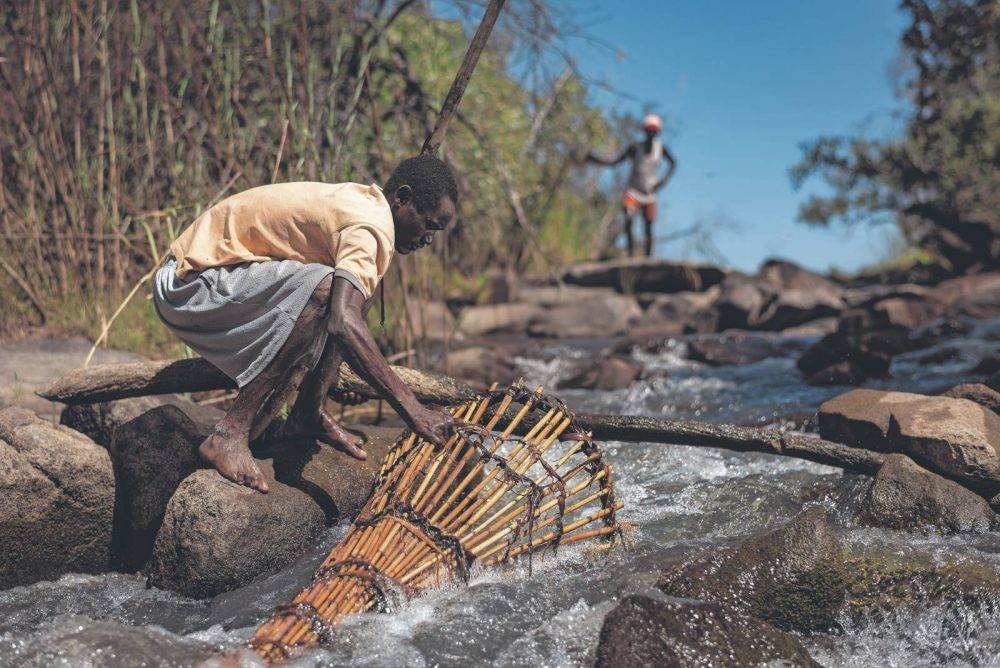
Africa’s lack of permanent snow and ice has meant that global maps typically portrayed the continent as having no “water towers” — mountains and highlands that provide lowlands with fresh water.
A team of National Geographic Okavango Wilderness Project researchers have challenged this notion in a recent study, which has defined the boundaries of the Angolan Highlands Water Tower for the first time.
Angola, referred to as the “water tower” of Southern Africa, is a source of many major rivers in the region. Its highlands store large quantities of fresh water, which flow hundreds of kilometres downstream, sustaining people, farms and nature in some of the most arid regions.
Like most African water towers, the Angolan Highlands Water Tower lacks snow or ice. Its steady supply is instead made possible by gradual groundwater flow, highland source lakes and extensive peatlands. Despite its hydrological and ecological importance, within academic science, a lack of defined boundaries around it has hampered efforts to protect and preserve it.
“This is the first study to define the Angolan Highlands Water Tower and quantify its precipitation contribution to river basins,” said lead author Mauro Lourenco, a geospatial ecologist and data analyst for the Wild Bird Trust, which co-founded the Okavango Wilderness Project with the National Geographic Society.
Lourenco said it’s well known that rainfall in Angola contributes to rivers that flow vast distances away from the source waters. The Angolan Highlands Water Tower had been mentioned briefly, without much detail, in a few scientific journals, books and reports, but “had not had direct investigation, as was done in this paper, before”.
He and his supervisor Stephan Woodborne — a senior accelerator mass spectrometry scientist at iThemba Labs — found an average of 423km3 of rain falls over the Angolan highlands each year on average, amounting to nearly 170 million Olympic-size swimming pools.
The water tower occupies an area of 380 382m2, providing freshwater resources to Angola, Zambia, Zimbabwe, Mozambique, Democratic Republic of the Congo, Namibia and Botswana.
Using 40 years of regional precipitation data, the research defined the boundary of the water tower as an area of Angola’s Central Bié Plateau above an elevation of 1?274m.
The Angolan water tower is the southern source of the Congo Basin, the western source of the Zambezi Basin and the sole water source of the Okavango Basin and the Okavango Delta, a Unesco World Heritage Site and Africa’s last remaining wetland wilderness.
“Local communities depend on this water, and the surrounding environment, for their livelihoods,” Lourenco said.
About 95% of the water that flows into the Okavango Delta originates from precipitation in the Angolan Highlands.
Although the delta is formally protected by Botswana and recognised as a Unesco World Heritage Site and Ramsar Wetland of International Importance, the newly defined Angolan Highlands Water Tower has no such protections, despite being the source of the delta.
The researchers correlated annual precipitation over the water tower to annual Okavango Delta flood inundation estimates.
“We identified that the flooding extent is most strongly correlated to early rainfall in Angola,” Lourenco said. “In other words, good rains in the early rainfall season are likely to result in larger floods, as opposed to good rains in the end of the rainfall season.
“This is because of the antecedent conditions [the conditions pre-flood], which include the first and second flood pulse of each river to the delta. If rainfall is increased during this period, it will likely result in a greater Okavango Delta flood event later in the year.”
The peatlands and Kalahari sands in the water tower area are responsible for retaining and slowly “releasing” water downstream to the Okavango Delta, even during the dry season, providing year-round flows.
“This seepage-driven runoff is very important and unique among other studies that have identified water towers based on the presence of snow and ice [glaciers]. Of course, it is hard to find glaciers in Africa, but Africa does have many water towers, and the conditions are quite different from that of areas with glaciers.”
The mechanisms are different in African water towers and “there is much more work to be done to understand how each of them functions”, Lourenco said.
In their paper, the authors described how the extensive minefields resulting from the Angolan Civil War limited access to the isolated Angolan Highlands region, leaving it little studied, despite its significance.
The water tower, too, lies within a sparsely populated region of Angola.
“It is difficult to access, and field work requires local knowledge and understanding of landmine presence,” Lourenco said, adding that its remote population is generally poorer, less healthy and less educated than that of other areas and their livelihoods are affected by a lack of recognition of the importance of the land they occupy.
Steve Boyes, National Geographic Explorer and co-founder of the National Geographic Okavango Wilderness Project, said the Angolan water tower is not only key to the future of Southern Africa and its long-term resilience to climate change, but has profound cultural and spiritual importance.
“It’s called ‘Lisima Lya Mwono’ (source of life) in the local Luchaze language and the people who live here have sustained this landscape through their traditions and knowledge.
“Now that we’ve defined the boundaries of the Angolan Highlands Water Tower within academic science, we need to protect it, in partnership with communities.”
An important first step is recognition of the water tower as a Ramsar Wetland of International Importance “and we look forward to securing that designation”, he said.
“Angola does not have any Ramsar-inscribed wetlands [one has been recently proposed],” said Lourenco.
“As a result, the recognition of a Ramsar site would be highly beneficial to the [Angolan Highlands Water Tower] and Angola as it would open up the possibility of having further wetlands recognised and protected.”
Lourenco said the source lakes within the Angolan water tower are considered sacred places.
“They are recognised by the communities as such and so they are mostly left alone and people tend to visit them from time to time. They do not make their homes near the source lake because of how sacred they are to the people.”
Residents recognise the importance of peatlands for fishing, cultivation of food and raw materials.
“Farmers are given the opportunity to work on peatlands but the peatlands are often left alone to rejuvenate for several rainfall seasons after cultivation. There is rotation between the people who want to grow food on them and the peatlands are recognised as important because of this.”
Climate change is “probably the greatest” threat to the Okavango Delta and its catchment area.
Other threats include population increase and development.
“Development that is unsustainable would likely put pressure on natural resources, the most important being water [hydroelectric dams and irrigation schemes]. Water quality is likely to decrease owing to increased development in the catchment.”
Timber production is another.
“The tree cover is vital to the functioning of the water tower. Within the Angolan Highlands Water Tower there is a threat of major logging as what has occurred throughout other regions in Angola, mainly by the Chinese. The Angolan government needs to look very closely at timber production and forest protection,” Lourenco said.
“I think the major threat is an increase in human population and development but that is necessary in these populations.”
The system is largely buffered against the natural forces of drought and floods but unsustainable development and the effects of climate change “could shift it from a resistant system to a vulnerable one”.
“This is why the natural mechanisms that have enabled water to flow into the Okavango Delta and other major river systems need to be protected.”
Boyes said that describing the Angolan Highlands Water Tower — its topography, altitude, mist-belt, peatlands, rainfall patterns and lithology — has developed a deeper understanding of the little-known water towers of Africa.
“Last year, we launched the Great Spine of Africa series of expeditions with support from the Rolex Perpetual Planet Initiative, the largest non-military expeditionary mobilisation in Africa’s history with 200 river expeditions planned over the next eight years.”
The objective is to explore and better protect more than 1.2 million square kilometres of irreplaceable African watersheds and wetlands by 2035, working with local residents. “We believe that the water that we have documented for the first time in Angola is the largest expression of a water tower like this in the world,” Boyes said. “Now, we are looking at an archipelago of these water towers all the way up Africa. There is a generation of work still to be done on these rivers, establishing baselines so that we can protect them properly.”
Submit and get free exposure here: Showcase Your Business | Advertise Your Special Offers.
