MK party unveils its first constitution to “strengthen discipline”:
The uMkhonto weSizwe party (MK) has officially adopted its first constitution, a move that its leaders say will establish a firm code of conduct and unify the organisation.
The constitution, effective immediately, empowers party officials to take decisive action on internal matters, national chairperson Floyd Shivambu told a media briefing on Friday.
The party, led by former ANC president Jacob Zuma, was registered last September and launched in December and this is the first attempt to codify its operations. It will have structures similar to those of the ANC and the Economic Freedom Fighters (EFF), but will not hold elective conferences.
Shivambu said the party’s highest decision-making body approved the constitution during a recent national high command meeting, setting the foundation for its internal governance and disciplinary framework.
The constitution outlines the party’s values, principles, standards and operating procedures, including a code of conduct for members aimed at maintaining discipline and cohesion, Shivambu said.
“The constitution of the uMkhonto weSizwe party … instructs and empowers the national officials to appoint a national prosecutor, responsible for internal prosecutions on behalf of the organisation,” he said.
The party has also introduced an 11-member internal disciplinary committee responsible for holding members accountable for violations of the code of conduct. The committee, Shivambu said, is a critical component of the MK party’s commitment to organisational discipline and internal stability.
According to the constitution, “there are certain instances where a lengthy disciplinary process will not be necessary, such as when members disrupt meetings or bring firearms to gatherings, threatening the security of our organisation”.
It introduces a stringent probation period for new members, who will undergo a 24-month evaluation before being fully accepted into the party.
During this period, if any member is found to have grossly violated the code of conduct, the party’s top officials have the authority to terminate their membership immediately.
Once the probationary period is over, the national disciplinary committee will assume responsibility for managing the discipline and conduct of non-probationary members.
Shivambu said this stance on discipline reflects the party’s efforts to safeguard its internal integrity, particularly as it welcomes an influx of new members, including high-profile leaders, into its ranks.
It also comes after a number of MPs who had been recalled by the party to make space for new leaders unsuccessfully took the MK leadership to court.
Shivambu also addressed what the party calls “parallel structures” in the organisation, expressing concern over the existence of multiple leadership factions operating at different levels, which are said to be undermining unity and order.
“There are several parallel structures and leadership positions at all levels of the organisation. Such will come to an absolute end once the leadership has been announced at all levels. We will not tolerate insubordination and will isolate elements that seek to destabilise our movement,” Shivambu said.
In a nod to its growing influence, the MK party has seen an influx of new members, including leaders from smaller parties.
This has however not sat well with some existing members, whom Shivambu urged to “avoid the pitfalls of gatekeeping and factionalism”.
Shivambu, who himself defected from the EFF to join MK, said new members and leaders would be appointed to various leadership roles across all levels of the party and all structures had been instructed to abide by decisions taken by its higher structures.
JSC gets on with its work as Hlophe storm blows over:
In the end, there was barely any drama over former judge John Hlophe’s empty seat at the Judicial Service Commission (JSC)) as it began interviewing candidates this week to fill more than 50 vacancies on the bench.
Hlophe, who led the Western Cape division of the high court before he was impeached in February, resigned on Monday in protest at the decision not to postpone the sitting, pending finalisation of the legal challenges to his appointment to the commission.
Word of his resignation came from the uMkhonto weSizwe (MK) party, while commissioners were interviewing candidates for three positions at the supreme court of appeal.
JSC spokesperson advocate Sesi Baloyi confirmed that the commission had got the news from the media as it had received no direct communication from Hlophe or the speaker of the National Assembly.
“We have not had anything, so all we know, we heard from you,” she told journalists in Johannesburg at a routine, first-day briefing.
The JSC received a letter from Speaker Thoko Didiza the following day confirming that Hlophe had withdrawn from the body.
His decision followed Gauteng high court judge Stuart Willis’ dismissal last Saturday of the MK party’s application for an interdict barring the JSC from continuing with its work this week.
The party will now have to nominate another of its MPs for appointment as one of the National Assembly’s six representatives at the commission but the legislature said this process would not be completed before the current round of JSC interviews conclude next week.
Baloyi has indicated that the commission is proceeding in the belief that it remains properly constituted.
The MK party had argued otherwise in its court papers, saying the sitting would not be quorate in Hlophe’s absence.
Willis dismissed this notion at the weekend, like the Western Cape high court did last month when it granted the Democratic Alliance (DA) and Corruption Watch an interdict barring him from participating in the sitting.
The DA confirmed to the Mail & Guardian that part B of its two-fold application would continue as the conduct impugned was not that of Hlophe or his party but of the National Assembly.
Like Freedom Under Law, the other two applicants who approached the high court argued that the chamber had acted irrationally in rubber-stamping the nomination of a judge removed from the bench for gross misconduct to serve on a body that must assess the suitability of candidates for judicial appointment.
Didiza had taken the position that the law was silent on the extraordinary scenario of a former judge being nominated to become a member of the same entity that had urged his impeachment.
Therefore, parliament opted to observe the long-standing custom of appointing whoever a particular party put forward.
Freedom Under Law told the court that this was “a big mistake” because the assembly had to consider its constitutional duty to promote and protect the independence of the judiciary when designating members to serve on the JSC.
Instead of making a choice in line with the Constitution, it made no choice at all but impermissibly delegated its power and discretion to the MK party.
“There must be at least a discretion exercised — thought given to the question: ‘Is this candidate suitable for appointment, is the candidate capable of doing the job, is the candidate someone whose participation in the appointment of judges will instil confidence in the public mind in the manner in which judges are appointed?’” advocate Wim Trengove argued.
Asked by Justice Selby Baqwa what this implied for past parliamentary appointments, Trengove replied: “Let me assume for a moment that they have probably always done so, well, then they have always acted unlawfully.”
So, though the Hlophe chapter was short-lived, the litigation it spurred will serve to clarify the assembly’s obligations when choosing the politicians who represent it at the JSC. But its brevity was not simply the result of legal review but the commission’s resolve not to be derailed.
It did not blink at a letter of demand sent by the MK party but let it proceed to the high court on a hiding to nothing.
Although former chief justice Raymond Zondo did much to restore decorum to JSC sittings after parliamentary representatives routinely turned these into political theatre — and denied worthy candidates appointment — Chief Justice Mandisa Maya has brought another level of discipline to the process.
Part of it is ruthless time-keeping, even if it means telling Gauteng judge president Dunstan Mlambo he has exhausted his quota of questions and is not allowed to raise another.
This happened on Wednesday when Mlambo was questioning KwaZulu-Natal high court judge Nkosinathi Chili on the apparently fractious atmosphere at the court.
Chili was interviewed for promotion to deputy judge president of the division and had said, in reply to Mlambo’s initial question, that as a deputy, he would see it as his duty to help the judge president heal any rifts: “If a division is not united, members of the public lose confidence in the justice system.”
Chili also said he would volunteer to resolve the problem of the slow rate of finalisation of criminal trials in the regional court.
But he stumbled when ANC MP Fasiha Hassan asked how he would handle a sexual harassment complaint at the court.
Chili, the present trial judge in the arms deal corruption case against former president Jacob Zuma, replied that he would immediately conduct a “mini investigation” and, if there was a prima facie case, suspend the colleague in question, pending the outcome of a full investigation.
When Maya followed up by asking which legal instrument he would take these steps in terms of, he hesitated.
Commissioner Mvuzo Notyesi intervened to ask: “Do you accept that sexual harassment constitutes a misconduct which should be reportable to the Judicial Service Commission for investigation?”
Chili replied that he did, to which Notyesi said: “Then why don’t you simply say so?” Advocate Tembeka Ngcukaitobi twisted the knife by adding: “Well, he says he is going to suspend the culprit himself.”
This is a topical, touchy subject for the JSC.
Former chief justice Zondo last year asked Maya to oversee the drafting of a sexual harassment policy for the judiciary but this remains a work a progress.
Pressure in this regard increased after Selby Mbenenge, the judge president of the Eastern Cape, was accused of sexual harassment by a clerk in the Makhanda division.
This week, the Judicial Conduct Tribunal was due to start hearings in the matter. It marks the first time the tribunal has to deal with charges of this nature against such a senior member of the profession and the JSC has earned criticism for seeming to cut Mbenenge slack by not recommending his suspension, on the basis that he was already on special leave.
The JSC on Tuesday interviewed three candidates for a vacancy in the Eastern Cape division but decided not to recommend any for appointment. It settled on justice ZP Nkosi for appointment as deputy judge president of KwaZulu-Natal.
On Monday, it decided to recommend KwaZulu-Natal high court judge Piet Koen, Western Cape high court judge Elizabeth Baartman and Johannesburg high court judge Phillip Coppin be appointed to the appellate court.
Koen was the initial trial judge in the Zuma corruption case but recused himself in January last year. He was criticised for doing so, since it made for further delay in a matter already much delayed by Zuma’s Stalingrad defence tactics.
But Koen, when pressed on the subject by Democratic Alliance MP Glynnis Breytenbach, said his belief that recusal was indicated had been vindicated. He withdrew because of the views he had expressed on the merits of aspects of Zuma’s ongoing bid to force the removal of Billy Downer as state prosecutor.
In a subsequent application with the same aim, eventually dismissed by Chili in March, Zuma had pleaded precisely these points he had anticipated, Koen said.
Koen was eloquent on the difficulty courts faced when confronted with accused who used multiple interlocutory applications and every possible avenue of appeal to frustrate the finalisation of a case.
“The primary question with Stalingrad is the question of availability of appeals,” he told Breytenbach but added the answer was not as simple as denying leave to appeal.
A judge could only close the door when it was clear, on the facts, that though the law allowed the applicant the right to appeal, it had been exercised in bad faith.
“But that is not something, in our constitutional dispensation, I think a court should lightly conclude.
“Even if application for leave to appeal is refused, there is another step that is available and there is another step available if that is refused, and you can go right up to the constitutional court and the constitutional court judgment — an application can be brought for it to be rescinded and that is really only when you get to the ceiling.”
He suggested that the Law Reform Commission might consider looking at limiting the number of stages of appeal that are available to litigants or defendants.
On Tuesday, the commission recommended the appointment of Gauteng high court judge Susannah Cowen as deputy president of the Land Court after an interview in which she called for a radical judicial rethink on land reform.
“We need to take an ambitious view of what land justice is about.”Next week, the commission will interview seven candidates for the post of judge president of the Western Cape — a division scarred by strife that festered during Hlophe’s tenure.
African youth perspectives on STEM and climate action:
LCOY 2024 aims to provide youth aged 14 to 25 with the tools and knowledge to participate in climate policy and STEM-based solutions actively
As the impacts of climate change intensify, African youth are stepping up to take active roles in shaping the future of climate action. Through initiatives like the Local Conference of Youth (LCOY) South Africa 2024, young people are demonstrating their commitment to climate justice, science, technology (STEM), and sustainable development. The LCOY South Africa 2024 post-event, scheduled for October 18 at the African Leadership Academy in Roodepoort, will serve as a vital platform for African youth to deepen their understanding of climate finance, the Just Energy Transition, and the role of STEM in addressing climate challenges.
Empowering Youth Through Climate Policy and STEM
Organised in collaboration with Climate Action Network South Africa (SACAN), the Global Shapers Community Tshwane Hub, the African Leadership Academy (ALA), the Department of Science and Innovation (DSI), the New Economy Hub (NEH) and the Mail & Guardian (M&G), LCOY 2024 aims to provide youth aged 14 to 25 with the tools and knowledge to participate in climate policy and STEM-based solutions actively. This year’s theme focuses on building youth engagement in climate negotiations, promoting an understanding of climate finance, and supporting the transition to a just, low-carbon economy.
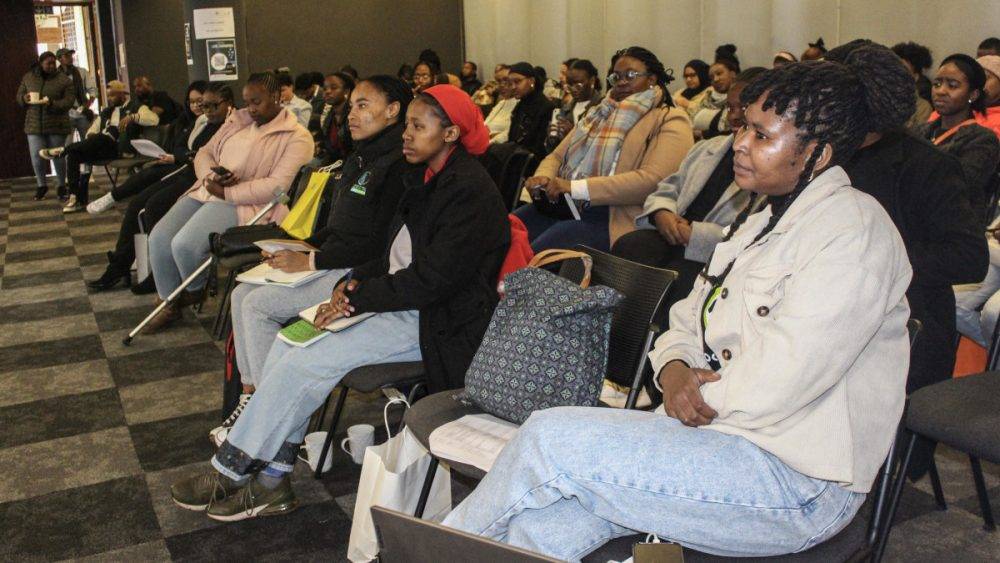
Climate finance remains a critical issue in the context of South Africa’s Just Energy Transition. The LCOY 2024 post-event seeks to break down the complexities of climate finance, particularly for younger audiences. The event will introduce a Climate Finance Toolkit designed to demystify climate finance and the ways it can support a sustainable and equitable energy future for South Africa. Through interactive workshops and discussions, participants can also draft a youth statement on the Just Transition ahead of COP29 in Baku, Azerbaijan.
The Role of STEM in Climate Action
A central element of LCOY South Africa 2024 is highlighting the role of STEM in advancing climate action. The conference will underscore how science, technology, engineering, and mathematics can accelerate solutions to climate change. In a rapidly evolving world, the next generation of African leaders must understand the importance of scientific innovation in solving global challenges.
By engaging young participants in workshops focused on STEM applications, LCOY South Africa aims to inspire future leaders to harness technology for positive change. STEM offers tools to build a sustainable future, from renewable energy innovations to climate-resilient agricultural techniques. LCOY 2024 provides a foundation for future climate innovators by developing youth capacity in these areas.
Youth Voices in Policy and Climate Finance
The event focuses on climate finance and emphasises the need for youth perspectives in financial decision-making. As South Africa grapples with the complexities of transitioning from coal and other fossil fuels, young people’s active participation in climate finance discussions is essential.
Participants will engage in sessions led by experts from civil society organisations (CSOs) to co-create a collaborative climate finance document. This document will represent youth input and perspectives on optimising financial mechanisms to benefit marginalised communities during South Africa’s energy transition.
Appreciation to Our Partners
The success of LCOY South Africa 2024 would not be possible without the valuable contributions of our partners. Climate Action Network South Africa (SACAN), Global Shapers Community Tshwane Hub, African Leadership Academy (ALA), the Department of Science and Innovation (DSI), the New Economy Hub (NEH) and Mail & Guardian (M&G) have all played crucial roles in making this event a success. Their ongoing support helps empower African youth to be at the forefront of climate action, STEM innovation, and policy engagement.
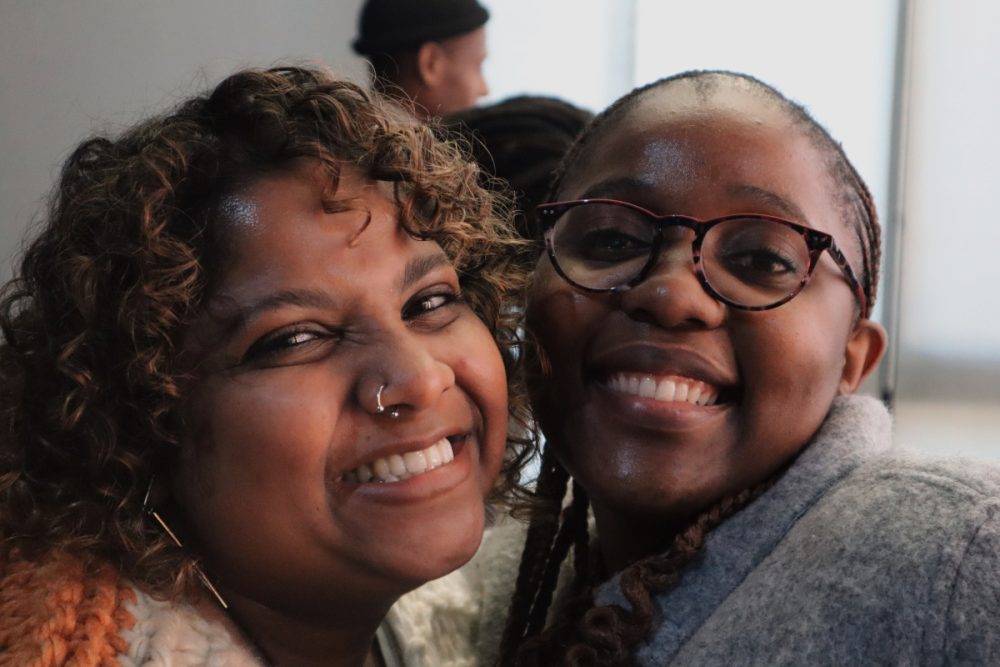
Africa 2024 would not be possible without the valuable contributions of our partners. Climate Action Network South Africa (SACAN), Global Shapers Community Tshwane Hub, African Leadership Academy (ALA), the Department of Science and Innovation (DSI), the New Economy Hub (NEH) and Mail & Guardian (M&G) have all played crucial roles in making this event a success. Their ongoing support helps empower African youth to be at the forefront of climate action, STEM innovation, and policy engagement.
As African youth continue to rise to the challenge, LCOY 2024 is a testament to their capacity to lead a sustainable future.
For more details, visit: https://sacan.africa/portfolio-item/lcoy-south-africa/
Submit and get free exposure here: Showcase Your Business | Advertise Your Special Offers.