Mpumalanga joins the green hydrogen shift:
In the quest for cleaner and more sustainable energy sources, South Africa is emerging as a key player in the global green hydrogen (GH2) transition. With its commitment to reducing carbon emissions, a strategic focus on hydrogen production is aimed mainly at the decarbonisation of industry, according to experts.
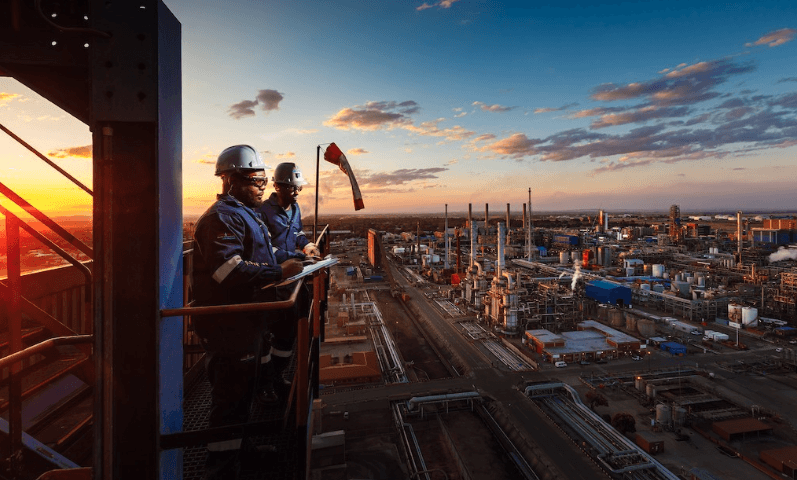
A leading GH2 enterprise is taking shape in Mpumalanga, where the HySHiFT renewable hydrogen project is developing sustainable aviation fuel, or e-kerosene. The aviation industry is responsible for about 12% of global transport emissions and HySHiFT aims to find ways to reduce its carbon footprint, according to the project partners.
In 2022, a consortium comprising Sasol, Enertrag, Linde and HydRegen announced they would use energy sources such as wind and solar to power 450 megawatts of renewable electricity and a 200MW electrolyser needed to split water into oxygen and hydrogen. This green hydrogen would be used in Sasol’s existing facilities to produce enough e-kerosene to fuel two flights between Germany and South Africa a day, they said.
The German government has pledged a grant of €15 million (about R300 million) to the project, which is being developed at Sasol’s Secunda operations.
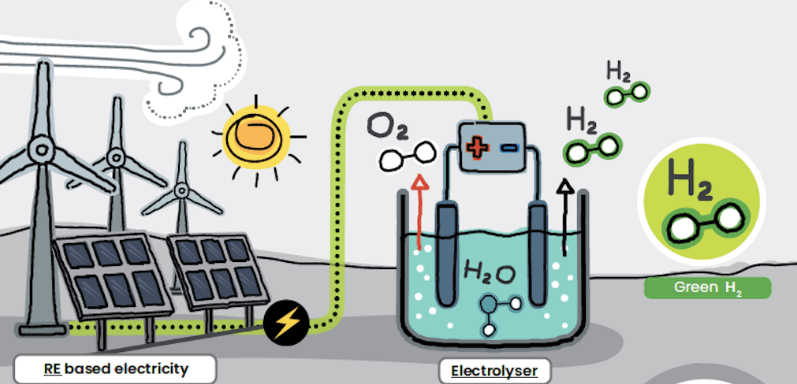
Graphic courtesy Talking about Green Hydrogen
Hard-to-abate sectors
“We are confident that green hydrogen is key to decarbonising various hard-to-abate sectors, as well as the transport sector,” Sasol president and CEO Fleetwood Grobler said.
“At our Sasolburg operations, we have successfully commissioned a 3MW solar farm that powers existing electrolysers. We have already achieved daily production of approximately 150kg of green hydrogen during the plant’s commissioning phase,” Grobler said.
In the near term, this will be bolstered by a further 69MW wheeled from the Msenge Emoyeni wind farm in the Eastern Cape, he added.
“We expect this to come online in 2024 and it will enable our Sasolburg electrolysers to produce up to 5 500kg of green hydrogen a day.
“Having reached this historic milestone, much more work is to be done, which includes developing the regulatory environment in which green hydrogen mobility can thrive.”
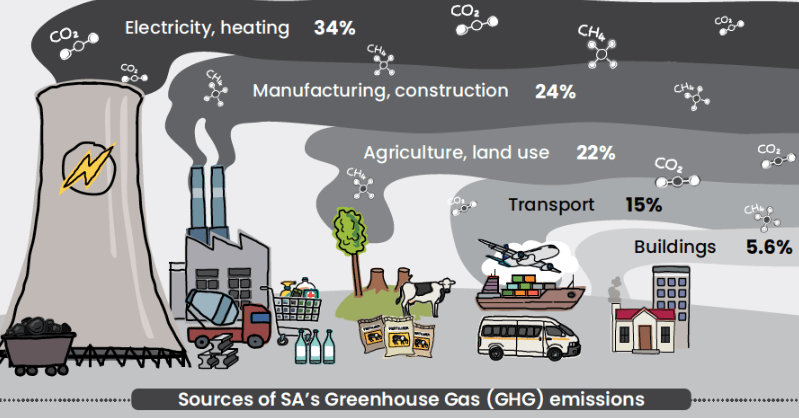
On October 19, the cabinet approved implementation of the Green Hydrogen Commercialisation Strategy, which aims to position South Africa as a major producer and exporter of GH2. The government has estimated that the hydrogen economy has the potential to add 3.6% to gross domestic product by 2050 and create 370 000 jobs.

Decarbonisation goals
According to Charlotte Mokoena, executive vice president at Sasol, GH2 is expected to play a critical role in South Africa’s decarbonisation goals beyond 2030.
“As we implement our decarbonisation progammes and transition to sustainable energy sources, this will have a direct impact on our workforce, communities and value chain,” she said. “It is imperative that we build the resilience of our communities and employees to ensure we sustain livelihoods and thrive as the transition unfolds.”
Mokoena said the just energy transition is a complex undertaking which necessitates a collaborative approach.
“The availability of funding, skills and capacity to deal with this massive challenge resides across our ecosystem and beyond that it must be tackled together. We need to leverage partnerships to realise impact beyond the scale, and Sasol, together with our partners, is taking a lead in shaping the development of South Africa’s green hydrogen ecosystem.”
Mokoena said Sasol is accelerating developments in the emerging GH2 economy, ranging from renewables procurement to pre-feasibility studies with the government on both greenfields and brownfields projects.
“This includes a large-scale export-orientated GH2 project in the Northern Cape, production of sustainable fuels from GH2 in our Secunda and Sasolburg facilities, hydrogen mobility and the supply of GH2 for steel production.”
Heavy industry
Speaking during the South Africa Green Hydrogen Summit from 16 to 17 October, Joanne Bate, the chief operations officer of the Industrial Development Corporation (IDC), the state-owned development finance institution and implementing agency of industrial policy, explained the importance of GH2 in the energy transition.
“We’re looking at hydrogen for decarbonisation of industry, including the petrochemical industry, and for new export products, specifically sustainable aviation fuel. The key role of IDC has been driving the commercialisation strategy and providing project development funding to some of the early-stage projects in the GH2 value chain,” Bate said.
“A lot of heavy industrial processes like steel manufacturing require very high levels of heat in the manufacturing process and what makes hydrogen very efficient in that process is that hydrogen has a very high heat point.”
She said the industrialised triangle of Secunda in Mpumalanga, Sasolburg in the Free State and Vanderbijlpark in Gauteng “is where the hydrogen for decarbonisation of existing industry becomes very important. Sasol has the top technology used to proceed to produce synthetic fuels, so that’s currently the priority project.”
The reason GH2 is a priority, she added, is that “we will lose our manufacturing or heavy manufacturing industrial base if we don’t decarbonise it by between 2028 and 2030. The only reasonable means of decarbonising is through GH2 because they’re very high heat-intensive processes and green hydrogen is the most effective way of decarbonising this.”
She pointed out that in Japan, which is heavily dependent on coal-fired power stations like South Africa is, “they’re importing a significant amount of coal but they are also looking at using ammonia, which is the derivative of GH2, in order to feed their coal-fired power stations”.
There’s potential for hydrogen to be used in different applications, including keeping power stations open “because you’re using the ammonia instead of coal”.
Bate emphasised that the big shift in the energy conversation is that it’s no longer just about coal and electricity. “It has to be about the chemical industry, which will allow the Mpumalanga province to create new jobs,” she said.
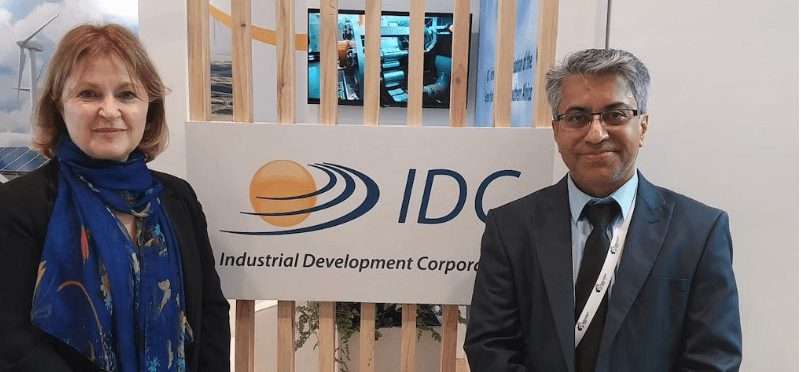
Photo: Thabo Molelekwa
Early-stage projects
In 2022 the IDC signed a memorandum of understanding with German state-owned investment and development bank KfW to assist early-stage projects with grant funding to help accelerate the development of GH2. Part of this was an agreement that will enable the IDC to manage €23 million in grant funds from the German government.
“IDC is looking at a number of GH2 projects. We are one of the few development banks internationally that offers project development funding,” Bate said.
However, she added that South Africa does expect significant foreign direct investment into the projects.
“We really do want to ensure that there is foreign direct investment, whether it comes in the form of equity. We’re not really concerned about what that equity looks like.”
Mahandra Rooplall, IDC’s industry development planner who is working on the national hydrogen commercialisation strategy for South Africa, said there is a global race to establish developing countries as GH2 hubs to supply export markets.
“If we come too late to the party, those markets will be tightened up and we will have lost the opportunity for the country. So, it is about ensuring that we reach commercial scale quickly enough to ensure that we decarbonise and protect our industry, and also take a meaningful role in the hydrogen economy,” he said.
SA-H2 Fund
In June this year, the SA-H2 Fund was launched, an innovative blended finance fund that aims to secure $ 1 billion to accelerate the development of the GH2 sector in South Africa. The fund is supported by Climate Fund Managers and Invest International BV (II) of the Netherlands, Sanlam in South Africa, the Development Bank of Southern Africa (DBSA) and the IDC, in collaboration with other strategic partners.
In a statement released by the DBSA on the day of the launch, Andrew Johnstone, CEO of Climate Fund Managers, said: “To achieve net zero by 2050, urgent and unprecedented action is needed. We believe that GH2 is both the pathway and the solution to the global energy transition.
“South Africa combines deep technical and capital markets with world-class conditions for generating renewable electricity through solar and wind power, key drivers in the production of green hydrogen. Fitting within the framework of the just energy transition, SA-H2 will help empower South Africa to claim its rightful place as a world leader in this exciting and necessary sector.”
The SA-H2 Fund would join the SDG Namibia One fund, which aims to secure $ 1 billion in funding for the country’s GH2 development, as “the second-of-its-kind, regional blended finance fund to develop and fund GH2 projects”, Johnstone said.
“Succeeding in a just transition to cleaner energy rests on our ability to create a viable marketplace that attracts and mobilises public and private capital,” said Catherine Koffman, group executive: project preparation at the DBSA.
“We will create and use innovative blended finance architecture and structuring to build a substantial pipeline of GH2 projects in South Africa. This will give private-sector developers access to risk capital from an early stage of development, throughout construction and into operations.”
Thabo Molelekwa is an associate journalist of Oxpeckers Investigative Environmental Journalism and a graduate of our #PowerTracker professional support and training programme. This investigation was supported by the African Climate Foundation’s New Economy Campaigns Hub.
This article was first published by Oxpeckers.
The post Mpumalanga joins the green hydrogen shift appeared first on The Mail & Guardian.
Space biology will be a first for Africa :

‘Because we are largely removed from the space researchers in Europe and America, our students and researchers think differently and more creatively’
It will be a first for Africa: one innovative step by the North-West University (NWU) and one giant leap by the continent. The NWU’s Faculty of Natural and Agricultural Sciences is set to launch the research area SpaceBiology@NWU.
According to one of the project leaders, Professor Henk Bouwman, this multidisciplinary research area — which is going to encompass expertise from other NWU faculties such as Engineering too — will research how biology can assist with living in space.
“Humans will be back on the Moon in a few years, but colonisation of the Moon and Mars is still some time away. That is why we need research to assist in the process. In situ production of fibre, carbohydrates, fats, protein, nutrients and oxygen will be key for sustained living in space under confined, constrained and extreme conditions. This means organisms must be sustained at productive rates, which implies functional ecosystems based on regolith. Regolith refers to unconsolidated, non-biologically enriched rock and dust.
“The only way to do that is to select and test organisms and communities under simulated (analogue) conditions on Earth, and then to replicate the experiments in space, and eventually the Moon and Mars. Knowledge of how microorganisms, plants, animals and ecological combinations react in space and on the Moon and Mars is required. Africa has many harsh conditions that harbour organisms that may be candidates for space flight and colonisation on the Moon and Mars. Our deserts, poor soil areas (often also classified as regolith), mine shafts, isolated islands, aquatic systems and other ecologies have organisms that can sustain and transform regolith into sustainable and arable soils,” says Bouwman.
The rise in spaceflight and space exploration by national (such as NASA, the National Aeronautics and Space Administration, and SANSA, the South African National Space Agency), international (ESA, the European Space Agency) and commercial entities (such as SpaceX and Blue Origin) has increased the need for space biology research, and groundbreaking research by the NWU has already shown that earthworms are able to grow normally and reproduce relatively normally at up to six times Earth’s gravity. Now it is time to see how they function under microgravity conditions.
“One of the challenges we will be looking at is how to use microbes and earthworms to convert regolith to soil in order to plant plants. There are so many possibilities. We have the best ecotoxicologists in Africa, and we have so many exceptional researchers who are able to measure stress and the effect of stress on biological systems. I think we are perfectly positioned to conduct such research. We have the expertise at the NWU to conduct research to facilitate long space flights and the future colonisation of the Moon and Mars. It may take many months to years to reach Mars, and that requires about 1,4 tonnes of food per person. We will have to be able to grow our own food in microgravity situations,” Bouwman explains.
The African continent is home to some of the harshest conditions on the planet, and the NWU’s expertise regarding ecosystems in these conditions is an invaluable resource.
“There are a vast number of plants, animals and microbes that not only live but thrive under these harsh conditions, and we need to exploit and harness our knowledge about them as we embark on this new adventure for our species. Just think of the multitude of practical developments that can be brought back to Earth and have practical applications for conditions in Africa.”
This includes growing edibles in conditions previously deemed unsuitable for that purpose.
The escape velocity needed to punch through Earth’s thick atmosphere and the grip of gravity is immense. The same can be said of the out-of-the-box thinking required to make a success of the next great human endeavour.
“We sit at the bottom of Africa, largely removed from the body of space researchers in Europe and America. This means we have students and researchers who think differently and more creatively, as they are not confined by previously established norms concerning such research. We are much more inclined to think broadly than our northern counterparts.”
It is a space odyssey, a voyage to the final frontier.
“It is exciting, it is dangerous, it is new, and it is challenging. Why not embark on this journey?” Professor Bouwman asks with a gleam in his eyes.
Indeed, why not? Watch this space.
To find out more, follow this link.
The post Space biology will be a first for Africa appeared first on The Mail & Guardian.
Inter-School Forum points the way forward for youth:

One of the primary concerns for today’s youth is the world they are inheriting, which often leads to ‘eco-anxiety’
Youth Day: Introduction by Ayush Desai, St John’s Sixth Form
Youth Day, observed annually on June 16, is a profound commemoration of our nation’s young generations and their pivotal role in shaping South Africa’s history. Holding historical significance, it is rooted in the Soweto Uprising of 1976, a pivotal moment in South Africa’s struggle against apartheid. Yet nearly half a century later, in 2023, its relevance and its spirit remains strong as it continues to serve as a reminder of our nation’s collective journey towards equality and freedom.
Today, Youth Day maintains its relevance as the nation confronts contemporary challenges. This day serves as a poignant reminder that the spirit of activism displayed by the youth of 1976 still lives on, empowering today’s generation to contribute to the ongoing transformation of South Africa. As we celebrate Youth Day, we see it as a beacon of hope, a tribute to the past, and a call to action for the future. Its origins in the struggle for freedom and equality provide an enduring message that resonates with the youth of South Africa in 2023, inspiring us to work towards a more just and inclusive society.
Intention of the Forum
The Inter-School Forum was established in 2022 by two St John’s students who sought to provide a space for young voices to discuss youth mental wellbeing. The forum brings together students from both public and private schools with the intention of fostering safe spaces for youth to discuss, solve and reflect on their role in society. This year, the Inter-School Forum, organised by Alexander Tafur and Jonathan Shiferaw, aimed to increase student dialogue around an array of social issues and challenges, and to establish how much responsibility the youth of today need to take in solving societal problems. The mental load of the average teenager is immense, and often a reaction to this is social apathy. The forum worked at understanding the increase in social apathy, as well as establishing an action plan to ensure improved mental wellbeing.
Outline of Forum structure
The 2023 Inter-School Forum programme was divided into three main sections:
1. Environmentalism: Eco-anxiety and Activism
2. Gender: Awareness, Knowledge and Activism
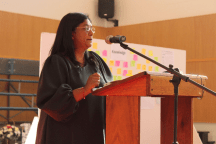
3. Social Responsibility versus Social Apathy
In each session, the students aimed to reflect, understand, evaluate and problem solve. The sessions were activity-based and sought to foreground the nuances of youth responsibility.
In addition, the delegates participated in a community service project and were privileged to hear insight from the formidable Advocate Andrea Johnson, head of the National Prosecuting Authority’s Investigating Directorate.
Environmentalism: Eco-anxiety and activism
1) Introduction
One of the primary concerns for today’s youth is the world they are inheriting. Climate change, pollution, deforestation, habitat loss and many more increasingly prevalent issues are undoubtedly altering our precious planet for the worse. Moreover, after decades if not centuries of environmental neglect, there is an overwhelming societal view that any efforts towards environmental restoration would be nothing but trivial. The constant news of the irreversible harm to our planet is leaving many feeling agitated. “Eco-anxiety” is the term now given to these feelings of uneasiness felt by increasing numbers of the youth. This concern is what prompted us to hold discussions centred around environmental activism, asking how both the government and the youth should act, as well as how to remain positive among all the negativity.
2) What is the government’s role?
Government should always act in the best interests of the people, and while it may not seem like a priority, this includes ensuring their people live in safe and naturally thriving environments. Unfortunately, governments tend to focus on short-term gains rather than long-term sustainability, and promote industrialisation without implementing strategies to prevent pollution and poor resource management. Moreover, when governments do eventually propose these strategies, they do not provide the consistency of efforts required. Nevertheless, government has a pivotal role to play in the environmental movement, and this role entails the following:
– Taking accountability for corruption
– Improving waste management structures
– Providing sustainable housing to prevent urban townships, which are unfortunately large contributors of neglected waste
– Establishing recycling systems, especially in schools for youth education
– Implementing waste taxes
– Easing taxes on private entities to encourage local, “green” businesses
– Expanding protected areas
– Regulating privatised electricity suppliers
– Investing in renewable energy resources
– Making eco-friendly goods and services easily accessible.
3) What is the youth’s role?
The youth are a powerful majority, and as such, there is much they can accomplish if they take action. They can do more than just hold the government accountable; they can hold themselves accountable by having the difficult conversations and upholding the basic principles of caring for each other and the environment in which we live. Action inspires action, and there are many routes the youth can take for environmental advocacy:
– Non-violent protesting, lobbying, and petitioning to ensure their voices are heard
– Using the positive influences of social media campaigns to promote widespread awareness
– Popularising sustainable and conscious consumerism
– Holding events, forums and discussions with other young, action-driven individuals
– Requesting leadership positions for the young members of a community, to ensure the presence of the youth perspective in management
– Taking part in service initiatives, such as park and river clean-ups, planting trees and educating the children of local communities
– Taking the time for self-education
– Voting for leaders consciously
4) How can we stay positive about our role?
The youth often spend too much time focusing on the negatives, and forget to acknowledge the positives. Successful developments in environmental conservation require celebration. Taking pride in our actions, no matter how small, is the first step towards positive attitudes, and positive change. Moreover, we cannot lament over what we failed to do, and forget to do what we still can. Taking action requires supporting one another, so that individual burden is reduced, and belonging can be cultivated.
We need to inspire hope in ourselves, our friends, and our communities. Hope requires motivation through visualisation, whether it be litter-free parks or thriving game reserves. If we know what we are fighting for, we will find comforting clarity among the everyday chaos. Feelings of pride and comfort are the incentives that we need to foster. If we still feel lost and confused, mindful introspection will allow us to identify our source of worry, and to find our remedy, whether that be speaking with friends, making a poster, or taking in a confident breath.
5) Reflection by Boris Daley, St John’s College
During our insightful engagement in the Inter School Forum, two crucial themes emerged in our environmental conversation: the pivotal role of government action and the empowering potential of youth engagement. It became evident that the government serves as the anchor in combating climate change, as it holds significant responsibility and power. Privatising the electricity industry and endorsing sustainability-focused companies were proposed short-term measures, while long-term strategies included upskilling workers in sustainable energy production and green initiatives.
Equally significant was the discussion on the youth’s role in environmental advocacy. Their potential for catalytic change through political involvement, community service, and leveraging digital platforms was highlighted. Holding the government accountable through non-violent protests and petitions serves as a way for the youth to get their voices heard where they are denied.
Maintaining a positive outlook towards environmental action emerged as a key element. Focusing on what lies within our sphere of influence and seeking support from like-minded individuals fosters a sense of collective purpose. The emphasis on creating engaging, relatable activities, such as the Pink Drive or Daredevil Run, showcases the power of passion in driving change. Additionally, finding pride in local communities resonates strongly, as it allows for a more immediate and tangible connection to the broader environmental cause.
This meeting reinforced the idea that government intervention and youthful enthusiasm are not mutually exclusive, but are powerful allies in a collective pursuit of a sustainable future. Their harmonious collaboration promises a brighter, greener tomorrow.
6) Concluding statement
Ultimately, we need to trust in the power of optimism. Positive attitudes are what will lead to positive change. Environmental degradation is undoubtedly a cause for concern, but if we simply hold our governments accountable while identifying what we ourselves need to do, the last step is simply having the belief and perseverance to accomplish it.
Gender: Awareness, knowledge, activism
1) Introduction
In a society where people’s understanding of the definition of gender and what it means to belong to a particular gender has become increasingly complex, the engagement with gender issues is more vital than ever. This holds particularly true in South Africa, where we have unfortunately borne the weight of the world’s gender-related challenges, alongside the persistent scourge of gender-based violence. With all of these considerations in mind, it becomes evident that there is substantial value in addressing a set of key questions related to gender. Bringing together delegates from both monastic and co-educational schools presents an opportunity to tap into diverse perspectives on these issues, each group having approached them in different ways and to varying degrees. This diversity of viewpoints promises to provide valuable insights as we strive for a more equitable and inclusive world.
2) Evaluating our awareness
We cannot engage in conversation around gender issues if we do not first acknowledge our current understandings and perspectives. There are a range of gender-related concerns in today’s society, and for each, our level of cognisance will vary. In asking the forum’s participants to evaluate their awareness of different matters, the following viewpoints were raised:
– Gender-based violence: This is a prevalent South African and global issue that mentally and physically affects a wide range of women, who often do not get the support they need.
– Gender inequality: It is a matter of unfairness exposed as unequal pay gaps and power dynamics as well as inequity in sports and job opportunities.
– Trans-gender and schools: Still a controversial and misunderstood topic with varying levels of recognition in sports and single-sex, monastic schools.
– Toxic masculinity: A concept that affects both sexes, as it labels men as superior and unemotional and women as inferior and sensitive. It is an issue prevalent even at the school level, and requires male teenagers to hold
themselves and their small social groups responsible.
– Feminism: A movement meant to give a voice to the voiceless and to incite equality, but has become vastly misunderstood and caused an emphasis on negative viewpoints and a polarisation of the sexes.
– Gender roles: The ideas carried on from past generations and traditions that suggest men to be the “breadwinners” and women to be the “nurturers”; in our current society, these ideas need to be re-evaluated.
3) Evaluating our Knowledge
In addition to simply being aware of gender-related matters and concerns, people should actively educate themselves in order to achieve the level of understanding needed to craft solutions. The forum’s participants were asked to evaluate and share the knowledge they held, and the following was recorded:
– Gender-based violence: Women suffer the most from gender-based physical harm; one in three women globally have experienced GBV, and every three hours a women is killed from it; the issue is prevalent due to the lack of reported cases from victims/survivors; South Africa has one of the highest rape statistics in the world; the death of Uyinene Mrwetyana sparked GBV conversations across South Africa in 2019.
– Feminism: Promotes an equally inclusive environment and removes stereotypes and prejudice; different forms and factions of feminism exist, such as matriarchal feminism and intersectional feminism; adaptations in the ideology have occurred over time.
– Transgender and schools: Some schools have accepted it, and some have not; transgender students suffer disrespect, prejudice and alienation; it is medically and psychologically accepted but is widely misunderstood socially.
– Toxic masculinity: Seen as an aggressive response to not feeling secure in your masculinity; masculinity does not need to entail physical or behavioural dominance but rather confident, kind, and open-minded values, as masculinity is not inherently toxic.
– Toxic femininity: The converse to toxic masculinity, this is when feminine qualities are seen as negative traits to display or indulge in; a perversion of the values of the true feminist movement.
– Gender inequality: Men hold more positions of power than women and receive greater opportunities for education, employment and representation; less than 10% of CEOs in the Forbes 500 are women.
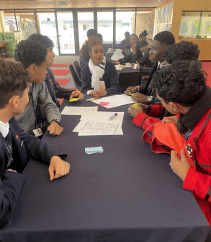
environment, gender and social apathy.
– Gender roles: It is an accepted idea in many families that men are the breadwinners and women are the nurturers; there has been a Westernisation of African societies around gender; our current generation is more open and accepting of change.
4) Evaluating our activism
Awareness and knowledge is crucial to develop our understanding of issues and concerns around gender, but this understanding is futile if we do not use it to take action and spark the necessary change. There is much that the youth can take upon themselves to implement their ideas for change. Among the responses recorded at the forum, these can be largely subdivided into two categories: activism geared around communicating with others, and raising awareness. The following key points arose:
– Establishing paths for communication and awareness, whether it be through friendship groups, conferences, posters, podcasts or social media;
– Sharing your opinions and asking questions, respectfully, even when you feel they will be considered insignificant or criticised;
– Opening channels for support, protection and education through community outreach;
– Advocating for basic rights through petitions, non-violent protests, campaigns and lobbying;
– Reporting cases of human rights violations that often go ignored;
– Setting up forums, student panels, donation drives, and sex education at schools;
– Using the platform of student leadership for servant leadership;
– Learning the value of mediation skills, mindful communication, empathy and compassion.
5) Shaping school education around gender
As an assignment, delegates were asked to draft an outline of the content they would include for a topic around gender in the LO Curriculum, with the existing IEB SAGs and DBE NCS documents as a reference. The following sub-topics were frequently incorporated into people’s curricula:
? Sex Education:
– Queer relationships
– How sexual relations affect individuals of the other gender (especially important in monastic schools)
– More comprehensive understanding of consent
? Gender-based violence:
– Educating students about the causes, not just the symptoms and
treatment
– Spreading further awareness
– Impact of drinking culture on GBV
– Guided, open conversations about the effects
? Gender roles:
– Understanding that issues of abuse are not exclusive to a specific gender
– Intersection of gender roles and the oppression of the queer community
– How cultural background intersects with the understanding of gender roles.
6) Reflection by Christina Vaudran, Parktown High School For Girls
I participated in the Inter-School Forum at St John’s College for Youth Day. One of the topics was gender and its implications in our schools. We started off with the prompt “How aware are you of gender issues such as gender-based violence, feminism, gender roles etc.” There were varying responses, but right from the start I felt that, as the only girl in my discussion group, I was more hyper-aware of gender and how it plays a role in my life. The boys in my group seemed to view it as a minor factor in their lives, whereas I felt it to be something I grapple with on a daily basis. This opened up a conversation in my group, and the boys were very keen to hear about my experience.
They soon realised that they thought about gender less because their gender does not put them directly in harm’s way, unlike most women in South Africa where gender-based violence is endemic. We all agreed that the expectations of gender-roles can be draining and unhealthy. We unpacked how all-boys schools can be breeding grounds for toxic environments, as the boys are often expected to hide all weakness or vulnerability and to be “manly”. These unrealistic standards are not only harmful to the boys, but also translate into toxic masculine behaviour like locker-room talk and other elements of rape culture. The discussion taught me a lot, and I realised how vital these kinds of conversations are to break down the barriers that gender puts up, especially in single-sex schools.
7) Concluding statement
In closing, this segment provided a dynamic platform for igniting change through vibrant discussions surrounding gender-related issues. It has been a journey of self-reflection, awareness-building, and a detailed call to action that resonated with all participants. We untangled the difficult themes of gender-based violence, toxic masculinity, gender inequality, and more. Ultimately, we were exposed to the different life experiences that hopefully helped participants develop more informed and empathic views on the role that gender plays in South Africa.
Social responsibility vs social apathy
1) Introduction
“The youth of today are the leaders of tomorrow” – Nelson Mandela
South Africa’s current socioeconomic and political instability has resulted in huge amounts of pressure being placed on young people today. As technology continues to make our lives more interconnected, it has exposed us to an array of social issues throughout the world, from climate change, police brutality to gender-based violence. With the rise of social awareness and youth activism, there is a demanding sense of obligation to be cognisant about how our actions impact the world. For many, the societal pressure to be constantly informed and committed to every single cause is a task that is simply too taxing on their mental well-being. As such, we have seen the rise of apathy and indifference to our country’s challenges. This section was intended to provide a safe space for delegates to discuss the burden of social responsibility and the appeal of an apathetic attitude.
2) What societal issues do the youth feel responsible for?
With a plethora of social justice causes that require emotional investment, time and even money, it felt poignant to identify for what social justice movements young people actually felt responsible:
– Overt racism;
– Mental health awareness: checking in on others; being aware of your impact on others; focusing on self-care, such as avoiding “trauma-dumping” and working on physical health;
– Community Outreach: includes both passive and active acts of service in local communities; the majority of participants found their required school community service hours as an enlightening and worthwhile experience;
– Xenophobia – in particular taking accountability for cruel and insensitive “jokes”;
– Being an ally — supporting queer and black movements, without feeling the need to be “recognised” or praised.
3) Which issues are difficult to address?
– Race is an incredibly personal and sensitive issue, especially in lieu of our apartheid past and the rise of cancel culture;
– Holding friends and family accountable for their potentially problematic language and actions is difficult without compromising relationships;
– Staying committed to environmentally-sound purchasing practices can often feel like a waste of time and financial resources.
4) How to balance fighting for others and protecting yourself?
The forum concluded with the participants formulating a three-step plan on how to best protect their mental health while remaining engaged in activism.
Step 1: Establish boundaries
– Introspection:
Take some time to reflect on your own needs, values, and priorities,
understanding what is personally important to you.
– Define Your Boundaries:
Clearly define the boundaries you need in various aspects of your life, such as in school, relationships, and personal time. Be specific about what you are comfortable with and what you are not.
– Communicate Your Boundaries:
Communicate your boundaries clearly and respectfully to those around you. Explain why these boundaries are important to you and how they can help you be more effective in supporting others.
Step 2: Prioritise Self-Care:
– Self-Assessment:
Assess your current self-care practices and identify areas where you can improve. This could include sleep, healthy eating, exercise, relaxation, and socialising.
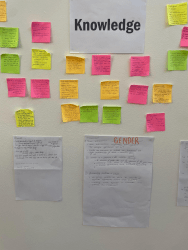
board.
– Create a Self-Care Plan:
Develop a personalised self-care plan that includes specific activities and practices you can incorporate into your daily or weekly routine. Make sure it aligns with your needs and preferences.
– Commit:
Commit to your self-care plan and schedule these activities into a calendar or diary just like you would for any other important task. Prioritising self-care is essential for maintaining your physical and emotional wellbeing.
Step 3: Choose your battles
– Identify Your Values:
Reflect on your values and the causes that resonate most with you. Identify which issues you are most passionate about and genuinely believe in.
– Research and Evaluate:
Thoroughly research the causes that you are invested in to understand the nuances and complexities of what you want to support or fight for. Assess the potential impact your involvement could have as well as the resources and time required.
– Prioritise:
Prioritise the causes or initiatives that are most aligned with your values and where you believe your efforts will have the greatest impact. Focus your time and energy on these areas to avoid spreading yourself too thinly and ultimately becoming apathetic in the face of social ills.
5) Reflection by Makanaka Dumbu, St Andrew’s School for Girls
In the vibrant tapestry of the Inter School Forum, an inspiring exploration unfolded — igniting the age-old debate of social responsibility versus social apathy. As Youth Day was approaching, our focus turned to the youth — to us — whose potential to shape a better tomorrow is so great.
With passion and purpose, we embarked on a journey of self-discovery — reflecting on the societal threads that resonate deeply within us. This voyage led to a collective awakening, as we realised the power of our shared commitment to effect change in various South African communities.
During the ebullient discussions, we dared to confront the most formidable societal challenges. An exploration of “Rhodes Must Fall” and the odyssey of James Baldwin stirred our souls. As a collective, we held polarising views on this notion that “travelling abroad makes one more cognisant of the world around you”.
Amid the fervour, a poignant question emerged: should activists remain on familiar soil or venture into the global arena? This query kindled a symphony of diverse viewpoints which later sparked a debate on the merits of martyrdom.
In the heart of this exchange, a radiant truth emerged: the path of balance is where sustainable transformation thrives. The dance between social responsibility and social apathy still calls us to illuminate the darkness with our own purposeful action, all while still taking the time to care for our own wellbeing.
The Inter School Forum has bestowed upon us a radiant torch, shining light on the importance of youth engagement, fostering dialogue and sculpting a legacy of positive transformation upon the canvas of our South African society. With this knowledge we could each return to our individual schools and promote youth engagement that fosters positive change within this rainbow nation.
Reflection by Luyanda Madliwa, St John’s College
Because I’ve lived in a generation that has been told since childhood that the future of this country is in our hands, and hearing how different people engage with these imposed responsibilities was the part of the forum I anticipated most. The key questions being asked revolved around the balance between this societal responsibility and one’s responsibility to one’s self. This led to some interesting discussion regarding whether a cause you wouldn’t lay your life down for is worth fighting for, the impact made by being a martyr and whether that impact outweighs the contributions a living activist can continue to make.
In a similar vein, what tangible educational value is offered by overseas tertiary institutions, and in what context taking opportunities at these institutions as an activist is beneficial or detrimental to their cause. These discussions were only valuable because there was enough dissent among the different groups at the forum to create a number of different views which were all well substantiated. For example, it was argued that an activist leaving the country to pursue tertiary education overseas would allow them to bring increased foreign attention to their cause, while others argued that in doing this, you remove the more tangible impact of your activism, which has a greater negative impact in the short term, especially as a key member of any activist groups or movements.
Disagreement like this is incredibly valuable and is only facilitated by an environment where people are comfortable speaking openly, and broadly speaking I think is the biggest strength of the forum.
6) Concluding statement
The forum has provided us with a powerful platform for exploring the profound questions surrounding social responsibility versus social apathy, particularly within the context of South Africa’s complex socio-political landscape. As we approached Youth Day, it was abundantly clear that the youth of today were conflicted about their roles as the leaders of tomorrow, but were ultimately looking forward to ushering in a brighter, more equitable future for all.
Community Service Activity Response by Tadiwanashe Kudzurunga, St John’s College
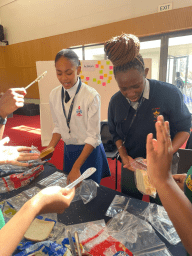
conjunction with The People’s Pantry.
The St John’s College Interschool Forum team planned out a community service initiative that would be in conjunction with the Boys and Girls Club (the donation centre) and The People Pantry located on 19th Fuller Street, Bertrams, Johannesburg, 2094. The Interschool Forum managed to make over 1 000 peanut butter and jam sandwiches which were donated. While making the sandwiches, interesting discussions took place, songs were sung and a sense of community was found.
The People’s Pantry was founded out of emergency and a need for intervention during the trying Covid lockdown pandemic in early 2020 due to the loss of economic opportunities and an increase in food insecurity. It has a range of initiatives, including food drives and community swap-and-shop: an inspired initiative which provides a space for people to trade recyclable items for shop points, and ultimately those points are used for food.
If you are interested in supporting The People’s Pantry and getting involved within their community, they are currently looking for assistance with regards to kitchen, food supplies, people with animation skills, TPP website maintenance, and graphic designers to elevate their funding and ultimately support their community better. Their website is: https://thepeoplespantry.org.za/
Conclusion
As the 2023 Inter-School Forum drew to a close, we found ourselves deeply enriched by the vibrant dialogues and profound reflections of all the dedicated delegates. This unique gathering, which ventured into the realms of environmentalism, gender awareness, and the balancing act of social responsibility, reinvigorated our enthusiasm toward social activism.
In the realm of environmentalism, we uncovered the vital roles of both governmental action and youth responsibilities, highlighting the need for collaboration in shaping a sustainable future. We realised that every action counts, and that our collective efforts are essential for the protection of our planet.
Within the subject of gender, we delved into the multifaceted landscape of awareness, knowledge, activism and, lastly, education. We confronted the challenging issues of the past and present, igniting conversations that transcended gender boundaries. The forum served as an opportunity to foster empathy, understanding and a renewed commitment to gender equality.
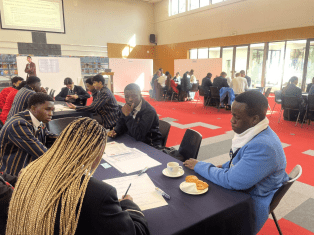
School Forum hosted by St John’s College.
In the ongoing battle of social responsibility versus social apathy, we navigated the public and personal complexities that young people face in the modern world. We discovered that sustainable transformation in our communities requires us to find the balance between personal wellbeing and our societal obligations. The discussions on activism, martyrdom, and self-care highlighted the path towards personal growth and collective social progress.
Our journey culminated in a heartwarming display of community service, where our actions could speak louder than our words. By coming together to support the People’s Pantry, we witnessed the tangible impact of unity and compassion, reinforcing the belief that change begins within our communities, however small.
As we conclude the journey of the 2023 Inter-school Forum, we move forward with newfound knowledge, empathy, and activism. The lessons learned and connections forged will continue to inspire us to be the change-makers South Africa needs. We are the bearers of a brighter future, and together, we shall find the way towards a more equitable and sustainable tomorrow.
Contributors
Alexander Tafur (St John’s College), Jonathan Shiferaw (St John’s College), Luyanda Madliwa (St John’s College), Andile Nkumane (St John’s College), Andza Mbelengwa (Kingsmead College), Aryan Bhatt (St David’s Marist Inanda), Aryan Naidoo (Steyn City School), Austin Machido (St Stithians Boys’ College), Bashah Magele (Steyn City School), Ayush Desai (St John’s Sixth Form), Bonga Mathe (St David’s Marist Inanda), Bonolo Lenong (St Stithians Girls’ College), Boris Daley (St John’s College), Bryce Driver (St John’s College), Cassidi Opperman (Sacred Heart College), Chris Van Der Westhuizen (Northcliff High School), Christina Vaudran (Parktown High School For Girls), Daniel Chibafa (St John’s College), Giacomo Riccardi (St Benedict’s College), Grace Nyapfungwe (St Peter’s College), Isabelle Johnson (Northcliff High School), Jenna Meyer (Redhill School), Jerushan Moodley (Parktown Boys’ High School), Jessie Gaju Mugabo (St Stithians Girls’ College), John Shaw (St Peter’s College), Joshua Naidoo (Parktown Boys’ High School), Kali Selepe (St John’s College), Khumo Kumalo (St John’s College), Levi Nyathi (Highlands North Boys’ High School), Luke Yazbek (St John’s College), Lwandle Nkosi (Kingsmead College), Mahlako Mogano (Sacred Heart College), Makanaka Dumbu (St Andrew’s School for Girls), Megan Astfalck (St Stithians Girls’ College), Nobuhle Mogashwa (Northcliff High School), Ntuthuko Masetlwa (Kingsmead College), Oabilwe Sesoko (Roedean School for Girls), Rania Haffejee (Roedean School for Girls), Rofhiwa Muambadzi (Parktown High School for Girls), Rufaro Moyo (St Andrew’s School for Girls), Russell Davis (Sacred Heart College), Ryan Zietsman (St Stithians Boys’ College), Sibulele Mtengenya (St Stithians Boys’ College), Siyabonga Nkomo (St David’s Marist Inanda), Stefanos Michaelides (St Benedict’s College), Swazi Mdluli (Kingsmead College), Tadiwanashe Kudzurunga (St John’s College), Takondwa Mphande (St Peter’s College), Thandolwethu Kambule (St John’s College), Thato Madibo (Parktown Boys’ High School), Tristan van Rensburg (St Stithians Boys’ College), Troy Poto (St John’s Academy), Unathi Ngwenya (St John’s Sixth Form), Zimasa Bukula (Roedean School for Girls), Lethokuhle Sikosana, Tracy-Lee Edwards and Ndivhudzannyi Mphephu.
The post Inter-School Forum points the way forward for youth appeared first on The Mail & Guardian.
Submit and get free exposure here: Showcase Your Business | Advertise Your Special Offers.