
‘I just didn’t have it in me to write an honest, sad ballad the way I have written before. I felt like I was spent in that particular frame.’
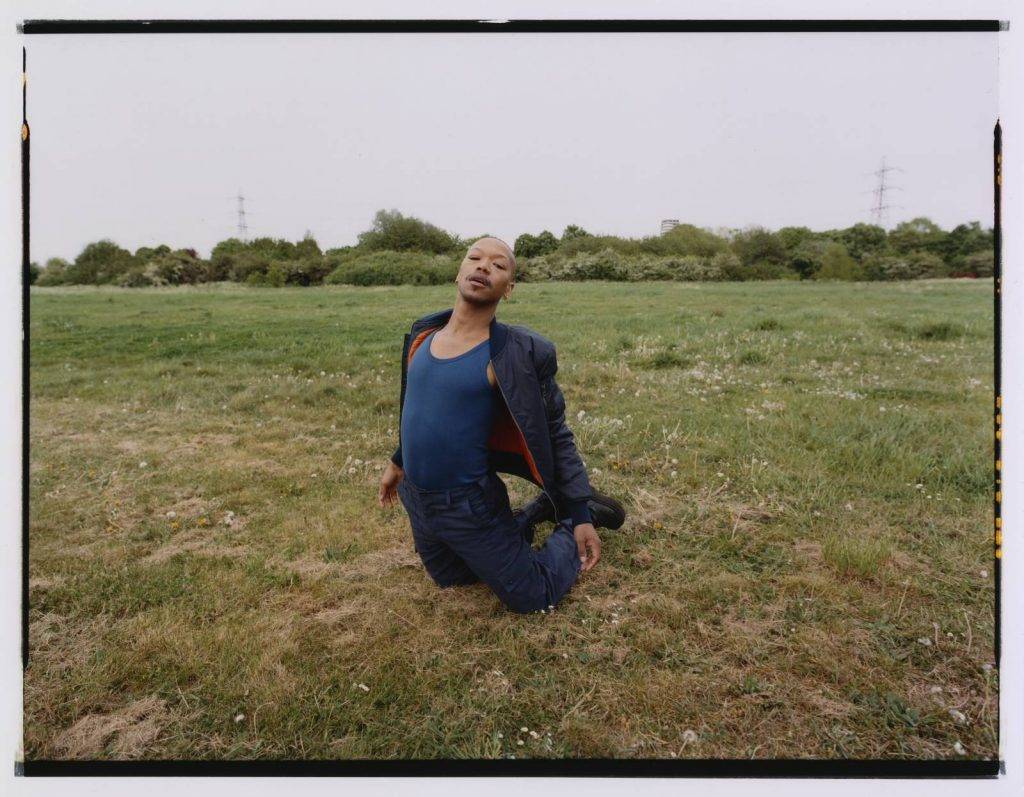
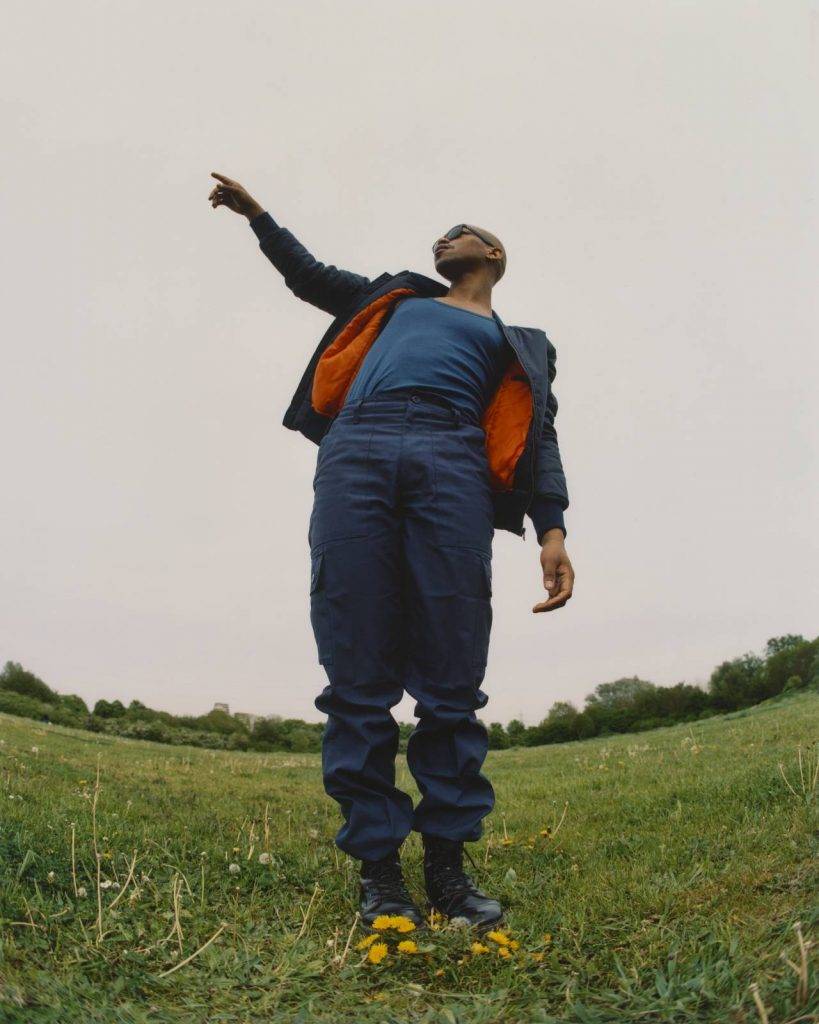
Five years after the release of their devastating second studio album You Will Not Die — which gave us a glimpse into their life’s journey of discovery — Nakhane is back with a new album called Bastard Jargon.
It was written and recorded while they were living in South Africa but Nakhane has since moved to London.
“London is interesting, particularly as an immigrant, but I am happy. It is home now. I feel like my roots are starting to get a little bit deeper here. But I miss home. Imimba yami (my roots), as we would say in isiXhosa, will always be in South Africa.’’
Nakhane has been up to a lot since You Will Not Die dropped in 2018. They duetted with Anohni; have been cited as an inspiration by Madonna; sung the role of Siddhartha in a musical with Elton John and Christopher Plummer; acted in the feature film Two Eyes and a screen adaptation by Debbie Tucker Green of her play Ear For Eye and performed alongside Glenn Close and Patti LuPone in John Cameron Mitchell’s podcast musical anthem with Cynthia Erivo, Homunculus.
They have also written numerous newspaper and magazine articles and Nakhane says there is another novel on the way.
The singer says You Will Not Die wasn’t exactly a party album and felt it when it was time to perform a 2pm slot at festivals.
“The sun is glaring down on us and I’m singing these sad songs to people who just want to dance and I thought, ‘I can’t keep crying for people. I want to write an album that has movement in it.’ You know?”
“I just didn’t have it in me to write an honest, sad ballad the way I have written before. I felt like I was spent in that particular frame. To do it would have been redundant and a little bit boring, to me, maybe not to other people, but to me,” says Nakhane.
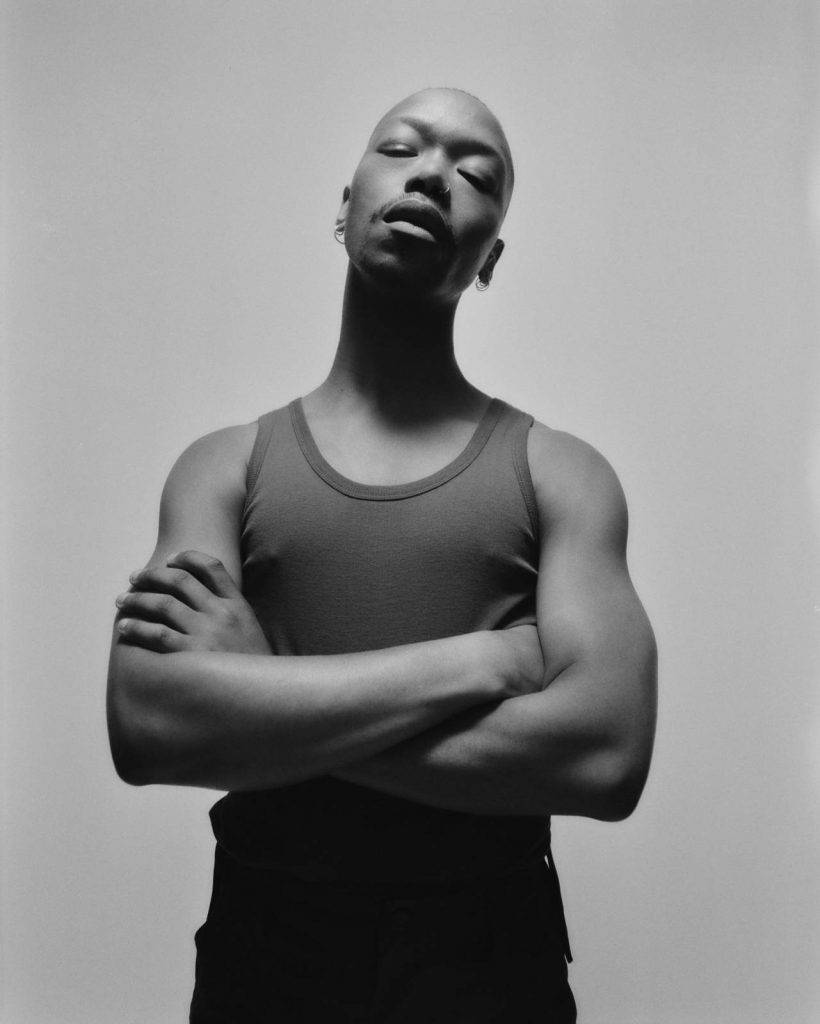
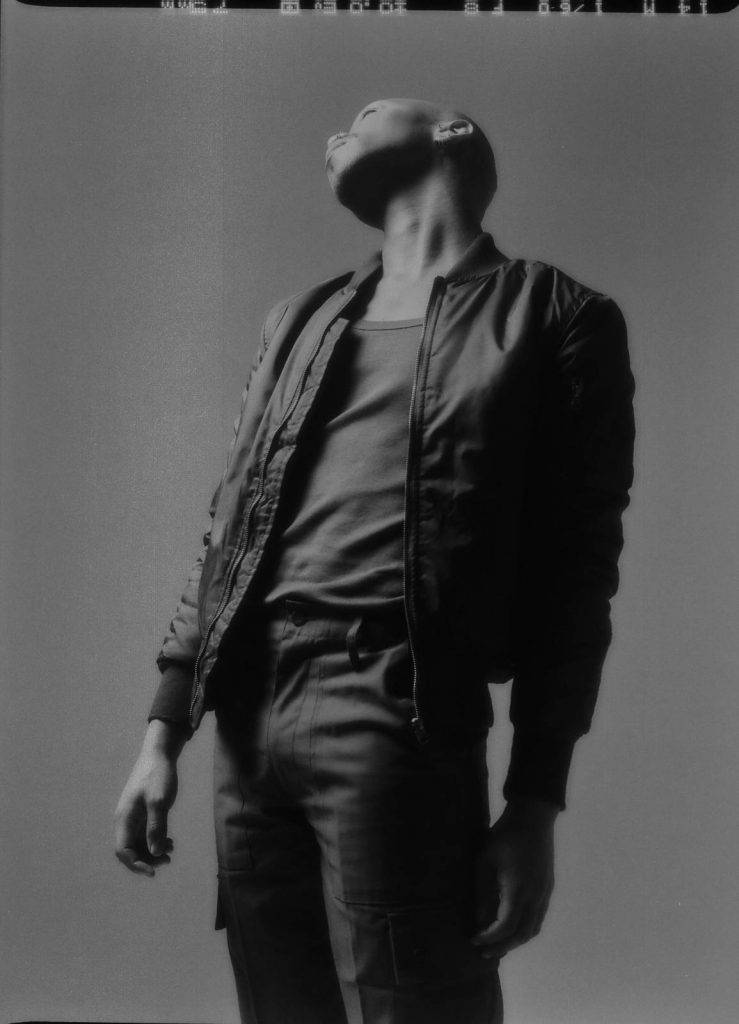
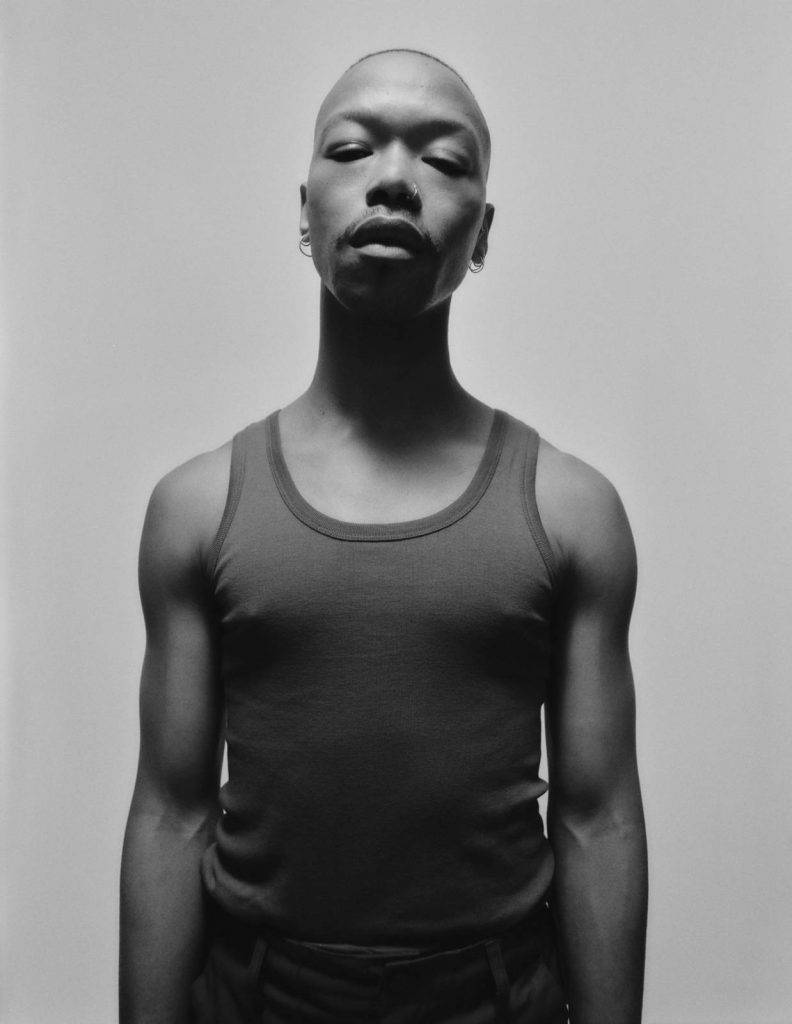
Enter Bastard Jargon, an album with grit, sass and with sounds that pulsate so much you are forced to get on your feet and move.
It was written over 18 months in the Portuguese capital Lisbon, Ghent in Belgium and in London, Oxfordshire and Hastings in the UK.
“I wanted to make [the kind of] loud, rude, upbeat album that I have never made before. I actually thought that You Will Not Die would be that album but, with the subject matter I was dealing with, it just didn’t make sense to do that,” says the 35-year-old.
“There have always been clues that I would make an album like this. If you listen to Clairvoyant, Interloper and even Christopher,” Nakhane says.
They had a fascination with rhythm and percussion during the making of Bastard Jargon and this tells you how different the album is to their previous body of work.
“I was layering the drum machines before anything else. Normally, they are additives, they are what you add to give spice to the song whereas, this time around, they were the foundation. Then I would add the melody and then add chords if the song needed chords, which is why it was so hyper-kinetic because it was all about movement,” they say.
Nakhane says there are a few artists that inspired the sound they decided to go with while making Bastard Jargon.
“I was obsessed with Halloween by TKZee, which I think is one of the most brilliantly produced albums of all time.
“I know it doesn’t sound like it, but during the production work for Bastard Jargon the album, I was really listening to Wu-Tang (36 Chambers). I liked how it was mixed. There is something so rambunctious and wild about that album.”
They also mention Trompies, Lebo Mathosa and Donna Summer. Nakhane says they wanted to pull from music that was not desperate.
To realise this vision they had for Bastard Jargon, they got in the legendary Nile Rodgers as executive producer.
“I was on a TV show called Later with Jools Holland and I knew that Chic was playing and I was going to be there. There were murmurs of Nile Rodgers knowing who I was and would possibly like to meet me.
“I was flattered and really fucking scared. I was in my makeup room, laying on those barber chairs with footstools doing my makeup when Nile came in. As I was getting up to greet him, I tripped on the footstool and I literally fell into his arms and he caught me. Something out of a romcom and also so humiliating,” says Nakhane.
The pair exchanged numbers and Nakhane thought Rodgers did it simply because he is a nice person. A while later, as they were starting to work on Bastard Jargon, they told Rodgers they would like him to do some production work on their album. He did not respond immediately but, when he did, he showed a keen interest in working with Nakhane.
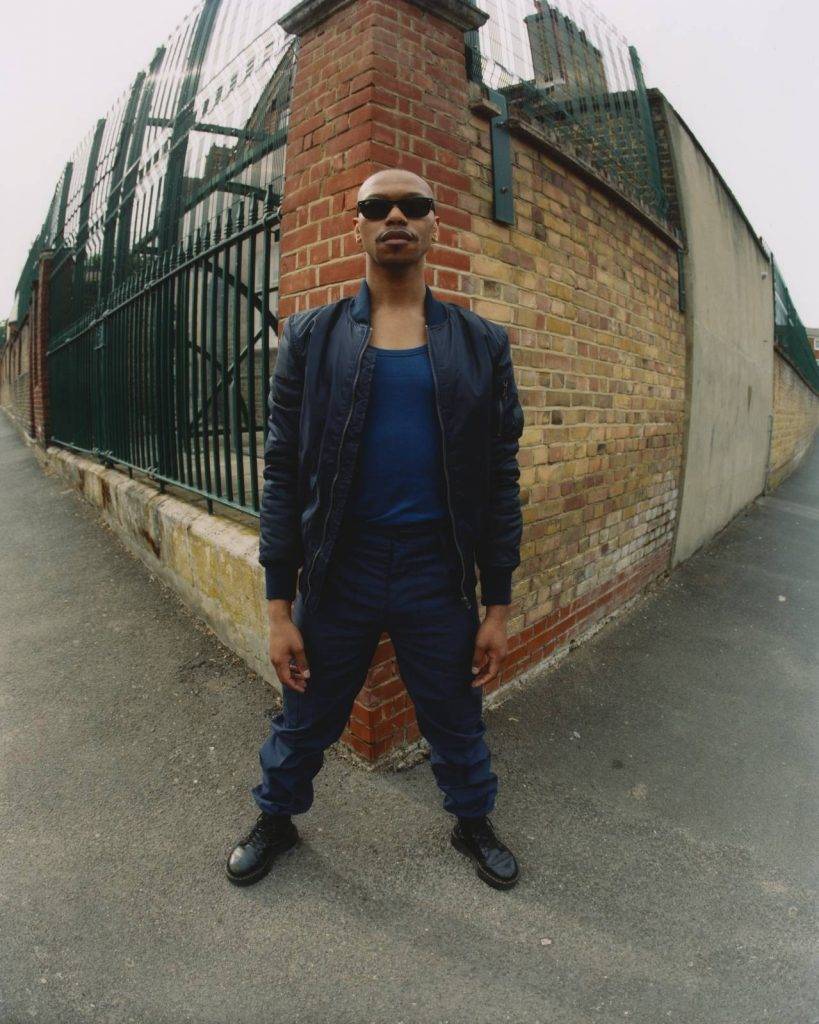
Rodgers plays on the second track Tell Me Your Politik, where Moonchild Sanelly gives a fierce verse singing, “I once dated a boy/who always changed on me/when strangers’ around/it really hurt/the sex was bomb/the change was kak.” The verses are raunchy, vulnerable and savage. Nakhane says: “I wanted it to sound like a pack of wolves barking, saying, ‘Unless you get your politics right, I’m not gonna fuck you.’”
Nakhane says the collaborations happened remotely because of the lockdown restrictions, however, they saw that as a blessing in disguise: “I had total control of everything; I could say no to certain things.”
The South African singer, real name Nakhane Mahlakahlaka, also says they enjoyed working with Raphael Saadiq, who plays bass on Hold Me Down. Nakhane tells Apple Music, “The bass is actually by Raphael Saadiq. It’s simple, but it travels. It walks, it walks around the melody, which he’s so good at.”
All 10 songs were written, or co-written, and co-produced by Nakhane, who also has an engineering credit on most of the tracks.
They want the album to make people feel good. “I have made people cry for a long time.”
“There is this great interview with Toni Morrison where she talks about writing The Bluest Eye and how the book is dark and has sad parts in it, but that she wanted to have characters that are full of life and hope, because life has that,” says Nakhane.
“I just don’t want to be known as a person who writes ‘make-you-cry music’. Don’t get me wrong, some of the lyrical content in this album has been some of the saddest things I have ever written, but I wanted the music to be hopeful. I wanted the music to make people feel good and I wanted to feel good making it.”
D-Day for ANC as De Ruyter appears before parliament committee:
South Africans expect revelations as important as those emanating from the state capture commission when former Eskom chief executive Andre de Ruyter appears virtually before a physical sitting of the standing committee on public accounts (Scopa) on Wednesday.
De Ruyter’s anticipated submissions about the corruption networks, sabotage and incompetence at Eskom — and the indifference to both from the governing ANC, its ministers and officials — could provide a moment of truth for graft-fatigued citizens, who are yet to experience any meaningful movement on Chief Justice Raymond Zondo’s state capture commission recommendations.
Two narratives have played out publicly since February, when De Ruyter made his damning allegations to eNCA about how the battered power utility — poised to officially enter stage eight and possibly higher load-shedding levels in winter — is mismanaged and allegedly gorged on by seemingly insatiable ANC cadres and politically-protected criminal syndicates.
In the first narrative, Scopa members will have to consider De Ruyter’s allegations — the product of his direct interaction with local and foreign investors — that the ANC’s quasi-socialist ideology is an obstacle to reforming Eskom (and other collapsing parastatals) and that criminal syndicates linked to the governing party are sabotaging the national electricity provider to supplement their lifestyles.
De Ruyter alleged in the interview that at least two senior ANC leaders — former deputy president David Mabuza later being named by Democratic Alliance leader John Steenhuisen as one — were the shadow hands behind the R1-billion a month that, by De Ruyter’s estimation, is looted at Eskom.
The second narrative is the one being peddled by the ANC: that it is not corrupt, and that De Ruyter made the allegations because he is a white Afrikaner who failed in his job and is unable to shake his capitalist ideology. Even if there are corrupt individuals in the governing party, ANC thinking goes, that the number is miniscule, and the party stands as a beacon of integrity and hope.
Wednesday could also be a moment of truth for parliament — an institution with oversight that benefits only the governing party and its leaders.
But Scopa, which has as tradition an opposition party chairperson, is a slightly different beast. It is chaired by Inkatha Freedom Party (IFP) MP Mkhuleko Hlengwa.
The IFP will probably have a seat at the table during coalition talks if the ANC does not have an outright win in the national and provincial general elections next year. KwaZulu-Natal will certainly be on the table, where the ANC could lose its majority. Showing true leadership in a high stakes public investigation will place the IFP and its leaders — most notably Hlengwa, who is viewed as an exciting young political prospect — in strong negotiation positions.
But truth could also be the victim on Wednesday. The session could descend into racial tropes being hurled at De Ruyter by the ANC and the Economic Freedom Fighters. The ANC Scopa members could stage a walkout in protest over a “political attack” on the party, thus using their majority to slam shut any possibility for the National Assembly to launch a full inquiry.
Truth is a contested space in South Africa. It has never been easier to label information “fake news” or to claim a person or organisation is the victim of a “third force disinformation campaign”, or that the “Western controlled media” is trying to set a narrative to “force regime change”.
But in the end, no matter how much one tries to provide alternative facts, the truth will be revealed. Deception, propped up by complex lies in a multi-tiered organisation such as Eskom, cannot sustain constant and intense scrutiny when political will is added to the mix.
At some point, the lie will be exposed.
Will De Ruyter provide that breach in the sea of lies we have come to expect from the governing party or will he, like so many before him, fade into the distance as we hurtle towards a new crisis?
Incoming Eskom CEO’s biggest question: ‘Who’s my boss?’:
“Who’s my boss?”
That should have been the first, and most important, question the five candidates for Eskom CEO should have asked the panel interviewing them over the past few months. This is especially the case after the appointment of Kgosientsho Ramokgopa as the country’s electricity minister in February as part of the president’s big, or rather not-so-big, cabinet reshuffle.
While, in practice, the board is the incoming CEO’s boss, we know that they will have to answer to not only Pravin Gordhan, as the public enterprises minister, but Gwede Mantashe as the mineral resources and energy minister and, of course, Ramokgopa. One can also never discount the very real prospect of a call from the presidency whenever the country hits another heightened stage of load-shedding.
Yes, this is a highly politicised role, given its centrality to the economy and next year’s elections, where the ANC is facing the very real prospect of having to get into bed with one of the opposition parties to stay in power. It’s a job that will have three ministers calling at odd hours, a board chairman and the president. It is what it is.
A thick skin, a security lock on their lunch tin and strict adherence to governance will best protect the winning candidate — anything else would only serve to weaken their position — especially if the politics of the country change next year, which looks ever more likely. Turning around Eskom is an operational job and I suspect that policy statements on the future energy mix will only get the prospective CEO into a deep layer of trouble. Leave that to the chairperson, Mpho Makwana.
It’s the operations that matter and that is where the work of the CEO should be focused. There are seasons for chief executives — they are brought in either to dream up a new vision for a company, keep the status quo (a CEO-sanctioned successor) or to drive an urgent operational turnaround. When I look at the Eskom equation, it’s the latter — and that means moving the head office to the most troubled of Eskom’s operations — Tutuka power station in Standerton, Mpumalanga.
That’s where you inspire a turnaround, I think. Sitting in Megawatt Park hasn’t quite seemed the position from which to spark the revolution that’s so needed at Eskom. But, I suppose, for all the previous incumbents and their executives, Sunninghill, just a few kilometres from Sandton, was preferable to Standerton.
They’ve got to get the respect of the more than 32 000 Eskom employees, who will either make or break their tenure. Let the ministers wear the suits for the GCIS media pictures when they visit operations. As the new CEO, you wear the Eskom uniform.
The views expressed are those of the author and do not necessarily reflect the official policy or position of the Mail & Guardian.
Submit and get free exposure here: Showcase Your Business | Advertise Your Special Offers.
