Navigating environmental responsibility in the Global South:

In a world increasingly conscious of its ecological footprint, the intricate web of environmentalism, class struggle and education often remains obscured. Jason Hickel’s tweet, “Environmentalism without class struggle is using paper straws while the rich take 9-minute flights in their private jets,” serves as a poignant catalyst for reflecting on the stark disparities between global environmental responsibility and its impact on learners in the Global South.
A Global Imbalance
As a postgrad candidate in environmental and geographical science at the University of Cape Town, a registered Candidate Environmental Assessment Practitioner (EAPASA), and most importantly as a geography teacher in South Africa, my daily interactions with students unveil a paradox — those who contribute minimally to environmental problems find themselves shouldering a disproportionate burden.
While the affluent can make sustainable choices, our learners navigate a landscape of environmental challenges that extend far beyond their making.
In dissecting this imbalance, it becomes evident that environmental concerns are not equal-opportunity burdens. The consequences of climate change, resource depletion and pollution are not felt uniformly across the globe. Instead, they cascade down, affecting regions with lesser historical contributions more acutely.
Education Under Strain
The crux of this issue penetrates the realm of education. How do we teach learners in the Global South to embrace their environmental responsibilities when they grapple with the consequences of actions in which they had little agency?
In South Africa, and in similar regions, environmental issues are not abstract concepts discussed in classrooms; they are tangible, daily challenges. Students witness the repercussions in their communities — erratic weather patterns, resource scarcity and ecological shifts.
The environment, a topic often confined to textbooks, becomes a lived reality that shapes their educational journey.
The Local Impact of Global Decisions
This piece transcends the symbolic gestures of environmental consciousness, like the use of paper straws, to examine how global decisions reverberate locally. The focus shifts from the individual choices of the privileged to the collective experiences of those disproportionately affected.
Consider the carbon footprint of a nine-minute private jet flight, a luxury accessible only to a select few. The emissions from such extravagance contribute significantly to the global environmental crisis. Yet, the repercussions are felt most intensely by communities in the Global South, where the effects of climate change disrupt lives and livelihoods.
Acknowledging these disparities is essential for fostering a more equitable environmental discourse. This platform stands as a crucial avenue for amplifying this perspective. By shining a light on the silent struggles faced by learners in the Global South, I urge a reevaluation of the current narrative on environmentalism.
The global conversation on environmental responsibility must evolve beyond surface-level changes and embrace a deeper understanding of the interconnectedness between class struggle, education and ecological well-being.
In contributing to this dialogue, I aim to spark not only awareness but also tangible shifts in how we approach environmental challenges. It is a call for inclusivity in environmentalism — an invitation to consider the nuanced ways in which different communities experience and respond to our shared planetary crisis.
A Call for Holistic Environmentalism
Environmentalism cannot be divorced from its social and economic contexts. The discrepancy in how environmental burdens are distributed globally demands a shift in our approach. It calls for a more holistic environmentalism that recognises the interconnected nature of class struggle and education.
In the Global South, our students are not just recipients of environmental lessons; they are active participants in a complex ecosystem where daily realities intertwine with broader ecological challenges. As educators, we face the responsibility of navigating this terrain, guiding our learners through the complexities of environmental stewardship while acknowledging the systemic inequalities at play.
To address this issue effectively, education must evolve to equip learners with the tools to navigate their environmental responsibilities in a world shaped by global decisions. It requires a curriculum that not only imparts knowledge but also cultivates critical thinking and a sense of agency.
Learners in the Global South should not be passive recipients of environmental information but active contributors to solutions. By fostering a deep understanding of the interconnectedness between local actions and global consequences, we empower our students to engage in meaningful environmental advocacy.
Towards Inclusive Solutions
The narrative surrounding environmentalism often revolves around individual choices, such as reducing personal carbon footprints or adopting sustainable lifestyles. While these actions are essential, they must be complemented by a broader societal shift. True environmental justice demands inclusive solutions that address the root causes of environmental disparities.
This is not a call to abandon individual responsibility but an insistence on recognising the collective responsibility of communities, industries and nations. The Global North, with its historical contributions to environmental degradation, must actively engage in supporting initiatives that alleviate the burdens shouldered by the Global South.
A Shared Responsibility
As we navigate the complexities of environmental responsibility, let us move beyond superficial discussions and embrace a more nuanced understanding. This platform serves as a beacon for this transformative dialogue.
In acknowledging the unequal distribution of environmental burdens, we pave the way for a more just and inclusive approach to environmentalism. This is not just a South African issue — it is a global imperative. Our collective responsibility extends beyond borders, demanding a united effort to address the environmental challenges that affect us all.
By fostering a dialogue that intertwines environmentalism, class struggle and education, we pave the way for a more sustainable and equitable future. Through shared understanding and collaborative action, we can navigate the intricate web of environmental responsibility and build a world where the burden is borne collectively, irrespective of geographical borders.
Iviwe Mtubu, Geography and Mathematical Literacy teacher at Westerford High School, instructs grades 8 to 12. He earned his qualifications from the University of Cape Town in science and humanities, focusing on environmental and geographical science and education. A Jakes Gerwel Fellow, he was recognised in 2021 among the Mail and Guardian’s top 200 Young South Africans in Education. Iviwe is also a Registered Candidate Environmental Assessment Practitioner (SA) with EAPASA.
Investors bank on African timber for sustainable building boom:

Wooden buildings like the engineered timber construction planned for the world’s tallest wood building in Zanzibar may only be starting to appear in cities worldwide, but that is not stopping investors from betting on wood becoming a key building block in African construction.
“About 200 years ago, everyone was building with timber, then it shifted to cement, steel, and stones. Now people are going back, especially with modern housing,” explained Karl Kirchmayer, co-founder and managing partner at ASC Impact.
Although wood buildouts in major cities and towns are hardly in the mainstream, the trajectory, based on recent commercial activity, leans towards a timber-centric future, according to ASC.
In October 2022, the Burj Zanzibar was unveiled on the East African archipelago as the world’s tallest hybrid timber structure. Due for completion in 2026, it is located in Fumba Town, Zanzibar’s pioneering eco-town developed by the German-led engineering firm CPS.
Growing interest in wood is fuelled by its sustainability credentials and the increasing global emphasis on reducing the carbon intensity of the construction sector.
According to Energy Monitor, replacing energy-intensive building materials with timber will prevent some 100 billion metric tonnes of carbon dioxide entering the atmosphere by the end of the century.
According to Kirchmayer, the popularity of hybrid housing units, where concrete is used only for the foundations and timber for the majority of the structure, is also set to gain in popularity due to faster construction times.
With vast lands conducive to tree growth, Kirchmayer and ASC Impact believe that Africa is ripe for reforestation initiatives that support mass timber production and other green projects.
“The best way to sequester carbon is by planting new forests, particularly across vast surfaces. Utilising these trees for timber means the carbon is sequestered in the buildings, replacing steel and cement. This carbon remains bound as long as the structure stands,” he said.
Substituting all the imports of sawn wood and construction wood is where they see the biggest benefit.
“So we want to produce the construction wood for the inland market. With new plantations and forests and sustainable forestry, you create not only the timber and sustainable construction material but also a lot of sequestration, substituting steel and cement,” he explained.
Already, ASC has concessioned over 300 000 hectares for reforestation and is targeting an investment of €400 million in the coming years.
To avoid pushback from governments apprehensive about allocating land solely for forestation, ASC Impact is integrating agriculture and carbon offset projects into its offerings.
“So we are planting for inland consumption … we are planting corn, soybeans, sunflowers and various other crops,” he said.
“Communities and governments are much more open to investments in agriculture than to only carbon sequestration or reforestation projects. So we have not only the agricultural revenue, but also the timber revenues after a very long period, and we are also selling carbon credits.”
This model has resonated with investors.
Kirchmayer notes that one of the key challenges facing mass timber adoption in Africa is the existing regulatory framework, which often favours energy-intensive construction methods.
However, progressive policy changes and increasing awareness of sustainable building practices are beginning to pave the way for greater acceptance of mass timber. Early adopters in countries like Kenya and South Africa are setting precedents, showcasing the feasibility and benefits of mass timber structures.
“I know this is a cultural thing and also a development thing in the way that people think that higher quality construction is with concrete and cement,” he said.
ASC Impact, with a footprint in Congo Brazzaville, Ethiopia, and Angola, is not the only company trying to ensure that timber is seen as a building solution for the future, in Africa and elsewhere.
Last year, New Forests, a forestry company based in Australia, raised $ 200 million from three investors for its new fund that aims to support sustainable forestry in Africa.
The fund, named the African Forestry Impact Platform, is the first fund dedicated to Africa by New Forests.
The fund has a target of raising $ 500 million in the next two to three years. — bird story agency.
People and animals: A shared history, shared cruelties:
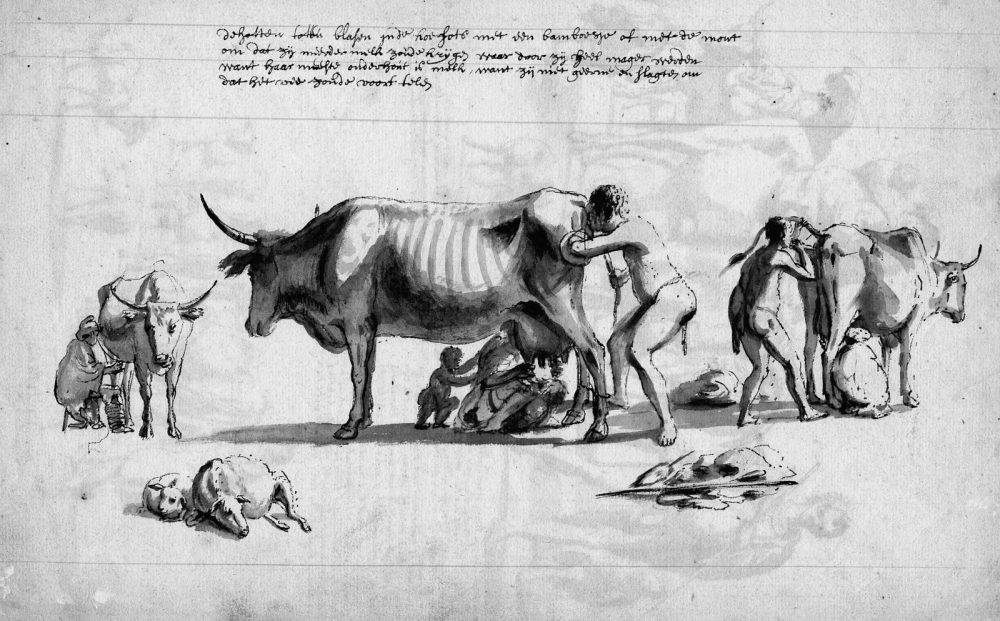
In the cold winter of 1913, herds of gaunt beasts roamed the South African veld. In his book Native Life in South Africa (1916) Sol Plaatje ascribed this to a newly imposed and monstrous law: the Natives Land Act. This Act imposed a fine of £100 on white landowners quartering Africans on their farms and a further fine of £5 per day if Africans dared leave their livestock on that farm while seeking refuge elsewhere.
Thus, Plaatje continued, “black people must take the road immediately and be kept moving day and night until they die of starvation, or until the owner (who is debarred, by Section 1, from purchasing a pasturage for his cattle) disposes of them to a white man.
“Such cruelty to dumb animals is as unwarranted as it is unprecedented. It reads cruel enough on paper, but we wish that the reader had accompanied us on one journey, say, during the cold snap in the first week in August, when we travelled from Potchefstroom to Vereeniging, and seen the flocks of those evicted Natives that we met.
“We frequently met those roving pariahs, with their hungry cattle, and wondered if the animals were not more deserving of pity than their owners. It was heartrending to listen to the tales of their cruel experiences derived from the rigour of the Natives’ Land Act. Some of their cattle had perished on the journey, from poverty and lack of fodder, and the native owners ran a serious risk of imprisonment for travelling with dying stock.”
Plaatje sketches a bleak picture of the expulsions, summary evictions, and forced stock sales precipitated by the Natives Land Act, passed by Parliament in June 1913. As the opening lines of his book observe: “Awaking on Friday morning, June 20, 1913, the South African Native found himself, not actually a slave, but a pariah in the land of his birth.”
These new pariahs were expelled from white farms they had long occupied only after the ploughing and sowing were completed. Thus Africans began to reap a new and bitter harvest.
It is hard to explain the cruelty of this law. One way is to trace it to the aftermath of the South African War (1899 – 1902), during which Boer families found their farms ruined and their livestock dead or stolen. In the decade that followed, their agteruitgang (regression) relative to English-speakers and Africans became a social evil, a political weapon and a predictable method of whipping up an angry crowd in any rural constituency.
Fantasies of returning to the old boerelewe (farmer’s life) became nightmares, later to erupt in open rebellion. Some farmers rented their land to African sharecroppers, others sold up or simply abandoned their fields for the cities.
Pre-1913 sharecropping had made the black man a “partner”, albeit an unequal one, of the white landowner, but the new legislation of 1913 was an attempt to force autonomous black peasant families to become wage labourers. To live legally, Africans in what had suddenly become “whites-only” districts were forced to become workers on white farms or leave the land they had once worked for themselves.
It was, however, in the Orange Free State, the area that Plaatje knew best, that [the Natives Land Act] restrictions on African land purchase, rent tenancy and sharecropping were at their most draconian. It was in the so-called “Free” State — as Plaatje observed with acerbic satire — that the animal question became pivotal.
The clamour for the criminalisation of sharecropping was stronger here. Nor was this surprising as so-called poor whites, devastated by the war, resentfully observed the comparative affluence of sharecropping African families who came back from Basutoland after the war with their livestock.
The poor white families watched these well-fed herds and flocks return and thought bitterly of their own beasts lost in the conflict. They had regained their land, but they had no animals to graze it — and feelings of resentment festered over the decade. Although the “land” aspects of the legislation are what are now most often discussed as the paramount issue in this formative piece of law on the road to apartheid, we need to rethink this idea. Especially in the Free State, the issue of animals actually shaped what happened.
So I want to add another analytical category — species — to the troika of class, race and gender through which the Act has generally been viewed. Adding animals changes how we think about the past.
Plaatje himself reflected on the societal and individual understanding that stemmed from cattle, be it from the intimacy of the kraal or from a far-flung cattle post. Kgomo (the cow) was revered for featuring in the full range of human desires and needs. This rendered individual cattle Modimo o o nko e metsi mogodungwana o bolelo (a God with a wet nose who always provides).
Plaatje certainly believed that investment in cattle was the core economic strategy in African society: “An African home without its flock and herd is like an English home without its breadwinner.” Cattle had long been the source of convertible and transportable wealth. Thus one of the most devastating immediate consequences of the Act for black farmers was the forced sale of their animals.
An expanding black rural economy, profiting from several successive good seasons and the opening up of the maize export market, reached an apex of accumulation just as white agriculture began capitalising. Moreover, the economic boom led to an increase in wages for rural Africans, which they invested in livestock.
Livestock (in turn) opened up access to a complementary income in hides, transport, and meat. This gave Africans more independence and had an impact on grazing resources — two developments that the 1913 Act affected, albeit with regional variations.
White landlords had no problem with tenants’ oxen in the ploughing season, but they resented animals of less direct and practical advantage to themselves. For black tenant farmers, access to grazing land for their livestock was of paramount importance, but white landlords increasingly begrudged the loss of grazing.
In 1914, Plaatje went to London as part of an South African Native National Congress (SANNC, later known as the ANC) deputation to protest against the Natives Land Act. After their plea to the Imperial government fell on deaf ears as Britain mobilised for World War I, Plaatje remained in London. Here he spent time completing his book Native Life in South Africa, which was published in 1916, in an attempt to win the sympathies of the broader British public.
Native Life was favourably and widely read by the British public, for whom it was intended. Plaatje knew his public, he knew his empire, and he used its own words, its own laws, and its own emotions. A central sensibility that culture-brokers used to help define what it meant to be “British” and “middle class” was abhorrence of animal cruelty.
By the early twentieth century, there had been a fundamental shift in the human understanding of animal cruelty. Indeed, since the long eighteenth century, there had been a revolution in feeling fostered by preachers, poets and philosophers. Early social commentators actually saw English brutality as a problem entrenched in the nature of the nation.
The growing British literature of sentimentality centred on animals. Such sentimentalism infused the morality codes of social institutions, from the evangelical movement to the aesthetics of the novel, as the century wore on. Of course some animals were more sentimentalised than others.
Poultry and pigs receive scant attention in the broader literature or in Plaatje’s animal diaspora. Goats and sheep receive some mention in his book, but his focus is on specific animals: horses and especially cattle. Both the horse and the ox were good subjects — their perceived morality was contingent upon their (respectively) noble and docile service to humans not offered by other livestock.
In 1822, the British Parliament passed an Animal Protection Act, which afforded protection to sheep, cattle, and horses. Two years later, the first anti-animal cruelty organisation was founded in England, and laws against cruelty to dogs (1839 and 1854) and against animal-baiting and cock-fighting (1835 and 1849) followed.
Surprisingly, anti-cruelty campaigns for animals long preceded anti-cruelty efforts for children. The Royal Society for the Prevention of Cruelty to Animals was composed mainly of the professional middle classes and their energies were first directed towards the wanton leisure pursuits of the British working classes: cock and dog fighting, bull running, ratting, and baiting of animals (all this while the arguably almost equally gory pursuits — indeed “blood sports” — of the aristocracy, such as steeplechase, fox hunting, and stag hunting, were largely ignored).
This was part of the desire of the “respectable” middle class to discipline the new working class into higher standards of public behaviour. By disciplining — in essence by “civilising” — the publicly disruptive element, they hoped to domesticate the wildness they feared would disrupt the social order. They hoped to tame the animal within.
In the metropole, cruelty to animals preceded cruelty to humans as a public issue. Plaatje would not have been unaware (given his obsession with slavery and his repeated rhetorical deployment of the concept over 60 times in the text of Native Life) that the British Parliament only passed the Emancipation Act, which established a plan to free all of the slaves in its West Indian colonies in 1833, a decade after the Animal Protection Act.
The irony cannot have been lost on him, especially as he was also reeling from the betrayal of the Anti-Slavery and Aborigines’ Protection Society (APS), which actively opposed the SANNC deputation to London in 1914. The APS argued that the Land Act guaranteed “contented populations [i.e. ‘natives’] enjoying the free play of every legitimate tribal institution, flocks and herds”.
Plaatje adopted another form of respectability: the interdenominational Brotherhood Movement, which gave him both a platform and financial help during his three-year campaign in England.
The movement had been founded in 1875 among the Nonconformist churches to promote the practical application of Christianity, and Plaatje drew on their emphasis on hands-on religion and respectable, aspiring working-class and lower-middle-class values. His own Christianity found expression in the language of universal humanity, suffering, and mercy, making him the “champion of the oppressed”.
This is evident in his attack on the hypocrisy of purportedly Christian lawmakers:
“It may be the cattle’s misfortune that they have a black owner, but it is certainly not their fault, for sheep have no choice in the selection of a colour for their owners, and no cows or goats are ever asked to decide if the black boy who milks them shall be their owner, or but a herd in the employ of a white man; so why should they be starved on account of the colour of their owners?
“We knew of a law to prevent cruelty to animals, but had never thought that we should live to meet in one day so many dumb creatures making silent appeals to Heaven for protection against the law.”
“Cruel”, “being cruel” and “cruelty” stand out starkly in Plaatje’s text. The idea is used as adjective, verb and noun, and occurs 39 times in the text. This is almost certainly because he had picked up on a stomach-churning irony: that the British Prevention of Cruelty to Animals Act was passed a year after the enactment of the Natives Land Act. This had not escaped him. Indeed, Plaatje had observed hypocrisy, British sensibility, and the power of emotions about animals a decade earlier. During the Siege of Mafeking, he had already seen how a growing public humaneness could be marshalled as effective propaganda, because the kind treatment of animals — especially horses — was increasingly mobilised as a hallmark of civility.
The Land Act precipitated more-than-human suffering. Plaatje observed a number of refugees driving their dwindling stocks towards the Basutoland Protectorate, where British law prevailed. He found it comforting to know that, once they crossed the river, “these exiles could rest … and water their animals without breaking any law. Really until we saw those emaciated animals, it had never so forcibly occurred to us that it is as bad to be a black man’s animal as it is to be a black man in South Africa”.
The Lion’s Historian: Africa’s Animal Past is published by Jacana Media.
Submit and get free exposure here: Showcase Your Business | Advertise Your Special Offers.