Navigating the noise: Supporting students with autism:
In the past, young people with autism rarely went to university. However, as we understand more about autism, and get better at supporting children and teenagers with autism to be successful at school, more of them are able to go to university.
Autism is a word we use to describe a range of developmental disorders that lead to difficulties with social communication and interaction, alongside restricted or repetitive behaviours like repetitive movements, rigidly adhering to specific routines and being under- or overreactive to sensory input (like avoiding certain sounds, or being fascinated with flashing lights). Dr Chung from the Center for Autism and Neurodevelopmental Disorders at the University of California highlights that our understanding and diagnosis of autism has changed over time. However, it is widely recognised that people with autism need support. World Autism Awareness Day, marked on 2 April, serves as a reminder of this.
The need for support comes from the difficulties that people with autism have participating in everyday life. Difficulties with social situations means that students only have one or two close friends at university. Logan Julius, and academic advisor at Stellenbosch University, also highlights that what is often misunderstood as having “no emotions” is often because of a heightened emotional sensitivity, which enables a meaningful connection with people beyond verbal expression. Nevertheless, when comparing themselves to other students who have close connections with many friends, this can feel quite lonely. It can also mean that students are reluctant to ask for help, even when they need it.
One student in a study of the lived experience of students with autism said “I don’t want to draw any attention to myself as needing any help. I’m just scared to ask for help in the mean time because I don’t want to hear if I’ve got it all wrong and I’m almost scared to hear what they’ve got to say.” This highlights why we need to encourage students with autism to access university services early in their academic journey. This can help them better communicate their needs with their lecturers and ensure they receive academic support before a crisis happens.
Another challenge is managing the sensory landscape of university life. Dr Monique de Wit, an occupational therapist and rural health specialist at Stellenbosch University, highlights how students with autism may struggle with noisy and crowded lecture venues, flashing lights and loud music at social events and the lack of any private space to retreat to. This is especially the case when they need to share rooms with other students. All this sensory input can be quite overwhelming.
A study in the British Journal of Occupational Therapy that included 150 students with disabilities suggested that there are many ways in which the learning environment at universities can be improved. This includes reducing sensory input by designating quiet spaces and reducing bright lighting, providing opportunities to access fresh air and nature and creating spaces with comfortable seating and soft furnishings. One student in that study suggested “it can be a multiuser space but the rules are it is a quiet, sensory safe haven where one can sit and read or meditate or just try to relax or sleep”.
Another study published in the Journal of Occupational Therapy Education found initial evidence to support using simple items like fidget toys, hand exercise balls and aromatherapy putty as a way of reducing anxiety and managing sensory needs. Lecturers can also create inclusive learning spaces by offering students choice in attending class or listening to a podcast. This is especially important for those days that university life feels overwhelming.
Marina Sarris at SPARK for Autism also highlights how staying organised and maintaining a routine can be difficult for students with autism, especially those who recently left school. At university, there is no bell to remind you to go to class, no teachers following up regularly on incomplete work and no caregivers to make sure that basic tasks like doing the laundry is done. Competing demands from different modules further adds to the complexity of managing your time. In a study published in the International Journal of Disability, Development and Education, a student with autism said “I’m getting really, really anxious and I’m worried that I won’t have the confidence and organisational skills to succeed. Just the thought of going back makes me feel sick. It’s exhausting.”
Despite these challenges in daily life, it is also important to recognise that autism comes with its own “superpowers” that students can use to their advantage. Students with autism may be highly intelligent. People like Nikola Tesla, an electrical engineer who invented alternating current, and Anthony Hopkins, an internationally acclaimed actor, are two examples. Students with autism also have the ability to hyper-focus on a particular topic or field. This amazing ability likely contributed to Michael Phelps’ commitment to his swimming training and John “Doomsday” Howard’s success as a Mixed Martial Arts champion.
People with autism have a higher level of sensory awareness and a depth of perception and recognition of detail that other people often miss. In other words, people with autism have a better sense of what it really means to “smell the roses”. Along with this, their creative thinking and unique ways of looking at the world can also be channelled into artistic or musical talents.
Occupational therapist and author of the Create2Grow art programme for children with learning differences, Beth Conolly, offers the following top tips for university students with autism:
“University brings a whole new set of demands, perspectives, feelings, information, colours, sounds and smells. This may feel like bombardment in the beginning, a war zone that one must not only acclimatize to but somehow thrive in! Be gracious to yourself and take it slow; this is a tough transition for any person and the neurodivergent mind may have an even harder time finding equilibrium in the chaos of university life.
“Take the time to develop the routines and strategies you need to navigate your new surroundings. To do this, you must not only learn your study content but yourself and the environment astutely. Find a calm perch on which to sit and observe the details. In time, you will find they were not as overwhelming as you once thought. There, hidden in the algorithms, patterns and rules of life, are reasons why people think, feel, interact and learn the way they do. Don’t be afraid to ask questions and refine your hypothesis testing, because once you have committed yourself to the study of life, you will be better equipped to manage it. There is no better place to do this than at university, a microcosm of society and all things complex!
“The reward for your diligent study will be an increased tolerance and ability to bring structure to the chaos and create an internal process, a way of thinking and responding, that enables you to discover your full potential and maximize the niche you contribute to this ecosystem.”
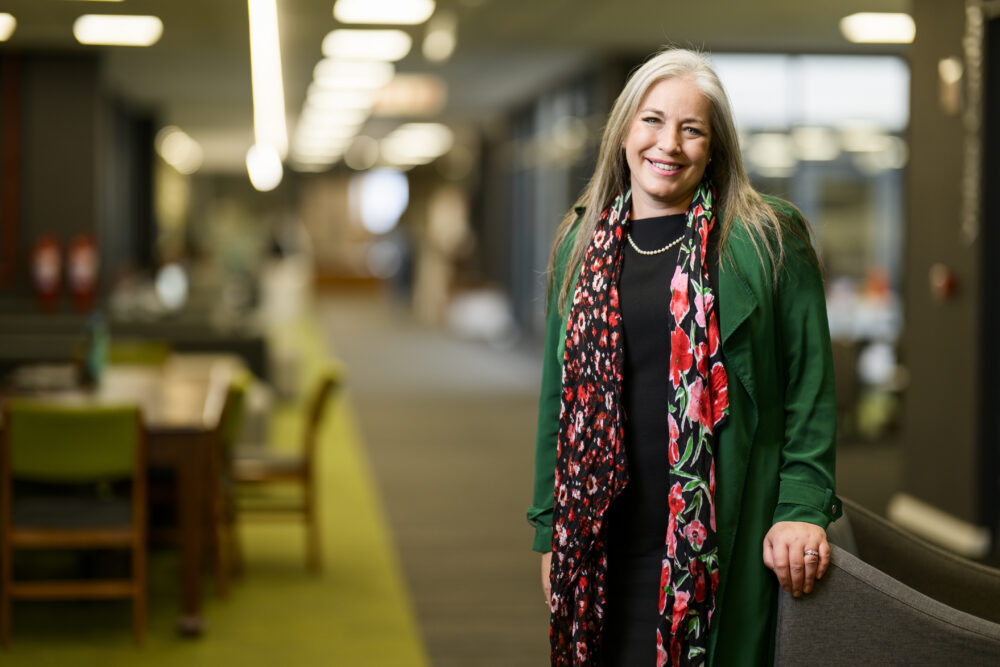
Professor Nicola Plastow is an associate professor of occupational therapy at Stellenbosch University. She promotes students’ health and wellbeing by advocating for occupational justice and by supporting students to participate in the daily activities that are central to student life.
Retail didn’t die; it merely reset:

I had breakfast with the CEO of Hammerson, Rob Wilkinson, at The Silo Hotel last week. It was one of those conversations that forces you to rethink a narrative we’ve all become comfortable with. If you’ve been paying attention over the past few years, you’ve probably heard some version of this: retail is dead, e-commerce has won, big malls are dinosaurs.
Except, sitting across the table, listening to a business, which was “on its knees six years ago”, talking about growth, expansion and rising values, it is evident that the story has evolved into something different.
Retail didn’t die; it adapted. And in some areas and cases, it has come back stronger.
Wilkinson put it bluntly: “The past 18 months have shown how the retail market has transformed.”
What’s changed is not demand but rather behaviour. It’s the “renaissance of retail”, as Wilkinson calls it.
The rise of platforms like Amazon forced retailers to rethink everything. But instead of replacing physical stores, online has ended up reinforcing them.
“The market now understands you need to be online and offline,” he said.
Omnichannel isn’t a buzzword anymore; it’s essential for survival. And most importantly, it’s profitable.
Hammerson said the most valuable customer today was the one who interacted both digitally and physically. They spent more, returned more often and engaged more deeply with brands.
Courier services are expensive and retailers are slowly but surely realising that they cannot solely absorb the costs anymore. When you want to return an unwanted item, retailers encourage you to come into the store for the return — most times this results in the same customer purchasing more goods from the store.
That has triggered a new trend we are seeing globally: fewer stores but better ones. It’s not about scale and aggressive store roll-out nationally anymore; it’s about chasing quality spaces in better locations.
Instead of 150 mediocre stores scattered across a country, brands want flagship space in the best-performing centres with the strongest footfall.
Wilkinson called it simply: “You get the best or the rest.”
Hammerson’s portfolio reflects that strategy. It has 10 core-city dominant centres across the UK, Ireland and France, all in dense, well-connected urban nodes. As for vacancies? They’re nearly full — 96% occupancy, with assets in Dublin and Marseille approaching 99%.
In real estate, high occupancy plus rental growth doesn’t just improve income, it compresses yields and drives value. Hammerson’s UK portfolio is trading at net yields of 7% to 8.5%. That’s expected to tighten, which means property values go up.
If shopping for physical goods isn’t the main driver of people physically walking back into malls, what is?
The answer is experience.
“The real driver bringing people back is experiential retail,” Wilkinson said. Think less “buy and leave” and more “stay, engage, return”.
In one of its Bristol centres, Hammerson introduced a new-format luxury cinema. Not just any cinema but a destination. Footfall extended into the evening, meaning restaurants and late-night retailers could benefit from shoppers’ increased dwell time.
The asset’s economics have changed. With unexpected insight twists that no one expected. Gen Z love big shopping malls. “They’re one of the biggest contributors to footfall and spending,” he said.
After being locked out of physical experiences during Covid, they’ve come back with the intent to socialise, shop and spend. Retail has become cultural again.
When it comes to Hammerson, it has hidden value sitting beneath its mall portfolio too.
That value being a lot of land. Across the centres sits about 30 hectares of additional space that has an estimated value of around £300 million (about R6.8 billion). Undeveloped land gives optionality.
“We can develop it, recycle capital, or hold,” Wilkinson explained.
In Dublin, Hammerson has tested this. A residential tower with 107 units, built-to-rent, integrated into the retail environment. A mall on your doorstep is a great accessory to a residential offering like this. Convenience is key.
It’s a model that feels familiar if you’re watching what’s happening in places like Waterfall City or parts of Cape Town. Retail is evolving into mixed-use urban infrastructure.
Then there is the tech layer that we do not see. Hammerson has invested heavily in data and technology inside its centres. Something far more sophisticated than your standard footfall counter.
Its systems can (anonymously) track customer movement, understand behavioural patterns and even assess how shoppers respond to advertising and store layouts.
“It’s transformational compared to what we had before,” Wilkinson said.
Incorporating data science into the shopping experience is how the mall can continuously improve the shopper experience. It changes everything from leasing decisions to tenant mix to rental strategy.
Why should South Africans care about this? Here’s the part that makes all of the above more than just an interesting European case study:
A third of Hammerson’s shareholders are South African. The Public Investment Corporation and Coronation Fund Managers are among its largest investors. And the company is listed on the Johannesburg Stock Exchange. That means South African capital is exposed to this retail recovery story.
If global retail real estate is repositioning, stabilising and in some cases growing again, what does that mean for how we think about listed property locally?
For years, the topic of listed property has been a difficult conversation in South Africa. Covid hit valuations, interest rates squeezed yields and confidence fluctuates.
But sitting in that room, listening to a business that has repaired its balance sheet, repositioned its assets, improved occupancy and is actively looking to acquire, we see that the listed property is not a static story; it’s cyclical and strategic.
Hammerson is looking ahead to acquisition opportunities, with several large UK retail assets expected to come to market as overleveraged owners exit. It is preparing to buy when others are forced to sell and that is its next play.
There’s a tendency in property to latch onto simple narratives like office is dead, retail is dead and everyone is moving to Cape Town. But when it comes to this asset class, retail didn’t disappear; it has reset.
The weaker assets struggled for a long time, while the stronger ones adapted. Now, the top performers are evolving into more complex and diverse spaces than traditional malls. They are becoming places where people don’t just shop but also spend time, live and connect. Perhaps this is the lesson from the retail sector worldwide today.
Focusing more on what type of retail survives rather than whether it will survive. If the future of retail is fewer, better, more experiential spaces in prime locations, then we don’t have to worry about whether malls are obsolete. Rather, we should see if we have been looking at the wrong malls all along.
For South African investors with exposure to companies like Hammerson, here’s food for thought: Are we underestimating the comeback of physical retail because we’re thinking about it the way it used to be?

Submit and get free exposure here: Showcase Your Business | Advertise Your Special Offers.