
No need to axe police minister, says ANC:
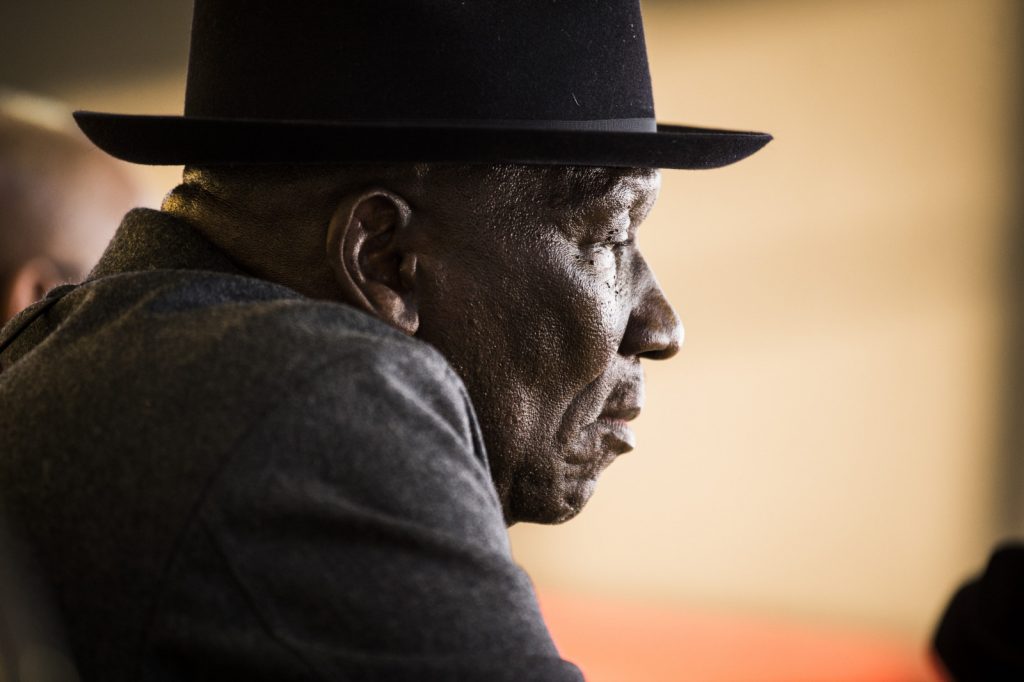
The ANC has defended the performance of its deployee, Police Minister Bheki Cele amid calls for him to be fired, saying that it trusts and supports him.
Speaking on the sidelines of the party’s national executive committee meeting on Monday, ANC chair of the subcommittee on peace and stability, Polly Boshielo, said that it was unfair for Cele to be blamed for the lawlessness which has gripped the country.
Several organisations, including civil society groups and opposition parties, have urged President Cyril Ramaphosa to sack Cele.
In November 2022, the Democratic Alliance said he had ruined the South African Police Service. DA MP Andrew Whitfield — reacting then to Cele’s controversial statement encouraging police to shoot first and ask questions later — said this was inciting violence.
“The litany of failures on the watch of Bheki Cele as police minister makes for shocking reading. It is a shameful indictment on President Ramaphosa that he has not held Cele accountable a long time ago. His failings have cost the lives, the dignity and the security of countless South Africans. President Ramaphosa must get rid of this shameful minister before more lives are lost,” Whitfield said.
In August, Cele presented crime statistics in parliament for the quarter 1 April to 30 June 2023 which showed that the murder rate had fallen by 3.1%, but the number of police officers killed had almost doubled.
The number of sexual offences cases dropped by 2% to 11 616, rape declined by 2.8% to 9 252, while incidents of assault with intent to do grievous bodily harm rose by 8.2% to 37 491. Attempted sexual assault cases jumped 22.6% to 510.
Highlighting crimes against women and children, the statistics showed that murders rose 4.7% from 855 to 895, while those of children specifically climbed 20.6% to 293 over the three months. The attempted murder of women rose significantly — by 20.2% to 1 417 — while that of children increased by 15.3% to 354.
“It’s unfair to put the blame on comrade Ndosi [Cele] when he is trying as much as possible to do the best he could do. As the ANC, we have trust in him and we are supporting him. Me and him have sleepless nights; it’s the ANC who said we don’t want any lawlessness and we are working hard to ensure that,” Boshielo said.
She credited Cele for successes in other departments including home affairs, saying enhanced border management was part of the police minister’s efforts.
“Let’s not talk about an individual as if he appointed himself. That is not for him to answer. That is for us, as the ANC. If we were not happy with him, we would have taken action,” Boshielo said.
The post No need to axe police minister, says ANC appeared first on The Mail & Guardian.
Fall in tractor sales is not due to farmers’ concerns:

One critical data release in South Africa’s agricultural sector this past week was tractor sales, which often tell us much about the financial conditions in the sector and prospects for the next season, when approaching planting.
But, this year, I think one has to look at the sales data differently, particularly when gauging the prospects for the 2023/24 summer crop season.
There are various reasons for the recent moderation in sales, which do not necessarily signal downbeat prospects for the season.
First, one has to appreciate that the relatively more robust agricultural machinery sales of the first half of this year were primarily a tail-end benefit of the past season when large harvests and higher commodity prices boosted grain and oilseed farmers’ finances.
The delays in the delivery of the orders raised the sales figures for the first half of the year. Over the medium term, the sales will probably remain subdued, despite the current 2022/23 large grain and oilseed harvest, but somewhat above long-term average levels.
The recent month’s sales point to this path. For example, South Africa’s September 2023 tractor sales were down (-8% y/y), with 715 units sold.
Although we have a large grain and oilseed harvest, with the 2022/23 maize harvest estimated at 16,4 million tonnes, the second largest on record, and soybeans at a record 2,8 million tonnes, I don’t expect a boost in machinery purchases. Furthermore, the prices of these commodities have declined by roughly 15% y/y, specifically maize.
Also worth highlighting is that tractor sales have been robust in the past few years, therefore, the replacement rate will be reasonably low.
With the 2023/24 summer crop production season starting this month, farmers are focused on input costs and weather prospects. Although various input cost prices, such as fertiliser and agrochemicals, have softened in recent months, the current price levels are still well above long-term levels, putting pressure on farmers’ finances in an environment where commodity prices have declined somewhat.
Moreover, the high interest rates continue to put financial pressure on them, adding to our downbeat view of South Africa’s agricultural machinery sales, although they probably won’t be as low as levels seen in 2017/18.
Still, this does not mean the production outlook is bleak, even with El Nino prospects. As I recently stated in these pages, the outlook from the South African Weather Service remains encouraging. It stated in its recent Seasonal Climate Watch that “the multi-model rainfall forecast indicates above-normal rainfall for most of the country during mid-spring (Sep-Oct-Nov) and late-spring (Oct-Nov-Dec)”.
The service added, “Early-summer (Nov-Dec-Jan), however, indicates below-normal rainfall over the central parts of the country and above-normal rainfall for the north-east.”
This means that some regions of the country, mainly central to western, won’t have the same start to the season as the eastern areas. Still, the broad sentiment is that showers will probably support crop germination during the beginning of the 2023/24 production season.
This is also an encouraging message for horticulture and livestock, as the rains will help production conditions in these subsectors.
With such weather prospects, combined with generally improved soil moisture from the previous rainy seasons, one should not view the moderation of tractor sales as an indicator that farmers are being cautious ahead of the new season but mainly as reflecting the key factors we outlined as drivers of the current sales trend.
Wandile Sihlobo is chief economist at the Agricultural Business Chamber of SA and author of A Country of Two Agricultures.
The post Fall in tractor sales is not due to farmers’ concerns appeared first on The Mail & Guardian.
‘Russia-Ukraine’ is SA word of the year for 2023:

In celebration of Dictionary Day on 16 October, the Pan South African Language Board (PanSALB) announced “Russia-Ukraine” as the country’s word of the year for 2023.
Dictionary Day celebrates the birth of Noah Webster, an American writer best known for publishing the first dictionary in 1806, which he continued to expand for the next 27 years.
PanSALB shortlisted candidate words based on real language use and media research company Focal Points analysed frequency statistics from October 2022 to September 2023 by tracking keywords that were used in credible print, broadcast and online media. “Russia-Ukraine” was selected over “interest rate”, “Brics” and “geopolitics”.
“‘Russia-Ukraine’ came out as the most dominant keyword, accounting for 44% of the total clip count and mentions, followed by ‘Brics’ at 27%,” PanSALB said.
“The prominence of the Russia-Ukraine war in South African public discourse can be
attributed to various factors, including the country’s official stance on the war, the mediation envoy of African leaders led by President Cyril Ramaphosa, its impact on the hosting of the Brics summit and political pressure to arrest Russian President Vladimir Putin.”
PanSALBs head of marketing and communication, Ntombentle Huluhulu told the Mail & Guardian that the South African word of the year was broken down into two categories to accommodate social media and “kuning” had been chosen from a shortlist, which included “danko”, “cima”, “ivale mfana”, “bathong” and “10 past 4”.
“A lot of things have happened this past year and the significance is to reflect on the past year and how people express how they feel,” Huluhulu said.
“As you can see, there are social issues in the shortlisted words and it paints a picture of how things are going in the country and the political landscape.”
Furthermore, she said social media was a place of expression, with people borrowing terms from other languages to create a new meaning.
“Words like ‘bathong’ had always been known as a SeSotho/ SeTswana/ SePedi expression but social media has given it a whole new meaning,” Huluhulu said.
“Kuning” emerged with a commanding 61% clip count, followed by “bathong” with 27%.
“‘Kuning’ is an isiZulu word that means ‘it’s a lot’ and is frequently used by social media users to express feeling overwhelmed with too much information or dealing with multiple challenges at once,” PanSALB said.
“Other words and terms that were considered include ‘inflation’, ‘hita hlula’, ‘zama zama’, ‘isigaxa’ and ‘yoh’.”
The post ‘Russia-Ukraine’ is SA word of the year for 2023 appeared first on The Mail & Guardian.
Submit and get free exposure here: Showcase Your Business | Advertise Your Special Offers.
