NWU earns Renewable Energy Initiative Award for solar investments:
The North-West University’s (NWU’s) ongoing commitment to sustainable energy through its trailblazing solar projects across its campuses has earned it the Renewable Energy Initiative Award from the Higher Education Facility Management Association of Southern Africa (HEFMA) recently.
“Winning this award among 26 southern African universities and 50 TVET colleges shows our dedication to renewable energy,” says Hendrik Esterhuizen, director for engineering and legal compliance at the NWU. “Our solar systems now allow us to supply power even while emergency generators are active, offering both energy capacity and financial savings.”
This was also a great day for Esterhuizen, as he was announced as the next president of the HEFMA, following in the footsteps of Lindokuhle Mzolo.
The university’s solar installations include 1 100kWp on the Mahikeng Campus, 2 600kWp at Potchefstroom and 385kWp at Vanderbijlpark. These projects have made the NWU a leader in campus-based solar generation.
“The Mahikeng, Potchefstroom and Vanderbijlpark campuses are making tangible impacts with these projects, contributing to both our sustainability goals and financial savings,” Esterhuizen says.
The NWU’s solar energy approach is aligned with a broader sustainability strategy, guided by a five-pillar model focused on energy management. Renewable energy remains central to this approach, supporting the university’s pledge to reduce its carbon footprint and aligning with Universities South Africa’s informal commitment to becoming carbon-neutral by 2050.
“We are setting a path towards carbon neutrality, and although this is challenging, renewable energy will play the largest role in achieving this goal,” says Esterhuizen.
This recognition from the HEFMA on 17 October 2024 underscores the NWU’s growing role in sustainable campus management and sets a benchmark for other educational institutions striving for a similar impact.
With future plans to incorporate solar systems into all new buildings and major renovations, the NWU is reducing its dependence on traditional energy sources while steadily embedding renewable energy into its infrastructure, thus fostering both sustainability and academic research opportunities.
• Follow the link to the article here: NWU earns Renewable Energy Initiative Award for solar investments | news.nwu.ac.za
Bertie Jacobs
Communication Specialist
Potchefstroom Campus
Mobile: (076) 021 6193 | Phone: (018) 285 2010
bertie.jacobs@nwu.ac.za
Bongi Mvuyana: Album a powerful soundtrack to listeners’ lives:
It is two firsts for me on Thursday evening, 17 October.
Out the back of trendy Braamfontein restaurant The Activist, along a narrow alley, a sharp turn where a security guard unlocks a gate and one descends underground — about 20 steep steps down a dark staircase.
It’s my first visit to Untitled Basement, where I am about to see singer-songwriter Bongi Mvuyana for the first time at the launch of her second album Power.
Lights are low … funk band The Meters’ Just Kissed My Baby is creating just the right ambiance of anticipation over the PA.
The band’s instruments are set up and sound-checked in the middle of the floor, seating arranged in a horseshoe filling up with some of the coolest people in the city — dressed sharply, casually sipping whiskey, wine or beer, exuding a calm sense of belonging.
I position myself directly across from the microphone, where Mvuyana will be singing.
The MC finally takes to the stage, welcoming us. First her band come out, then Mvuyana emerges, radiating confidence, grace and ownership over her space.
Her attention to detail is immediately apparent.
The way she presents herself, the handpicked band, the engineering of the sound and even the stage setup — including beautiful flower arrangements — reflects her passion and commitment to her craft.
It isn’t just another performance; it is a deeply personal expression of the years of hard work, growth and evolution that have gone into this album.
The emotional connection between Mvuyana and the audience is undeniable.
As she sings Ngizokulinda, a track from Power, the crowd responds in ways that are both beautiful and raw — some are ululating, others screaming in delight, many are raising their arms as though they were in a place of worship.
The music has taken hold of everyone in the room, guiding their emotions and spirits.
Power is a genre-fluid album that draws from her vast musical influences. One of the most evident is the late, legendary Busi Mhlongo.
Mvuyana mentions that she wishes she could have met Mhlongo, who has been one of her biggest inspirations.
Describing her vocal range feels like an impossible task. She has the kind of voice that fills every corner of a room, with deep, sensual low tones and crisp, clear high notes.
And it’s not just her voice — it’s how she uses it, how she commands the stage. She sings with her entire being, her hands move gracefully through the air as if painting the very notes she’s releasing.
A few days later, we are chatting on Google Meet.
Mvuyana’s energy and excitement from the launch are still palpable.
“I am inspired and excited,” she says with a glowing smile.
“This has been a long time coming for me and it’s incredible to finally be back on stage performing.
“I think this is what it’s all about for musicians — just having your music out there and sharing it with people.”
She says Power has been 10 years in the making. Over this decade, it went through five iterations before it felt right.
Mvuyana’s musical path has been one of patience, reflection and learning to trust the process.
“The journey has taught me to be patient with music,” she explains. “To let it grow and evolve and to understand that there needs to be growth and evolution within oneself as well.”
She had hoped to release the album earlier but, as she put it, “Nothing felt right until this moment.”
The album was worth the wait. The music feels personal, intimate and universal at once, as if Mvuyana has crafted each track for a different part of you.
African influences pulse through Power, creating a rich, diverse sound that feels both timeless and modern.
“For me, blending genres isn’t an intentional decision,” the singer-songwriter says. “It’s more about what the song needs.
“I see music, I hear it. Even before it’s created, I can hear where the song wants to go and so I just take it there.”
She turns to Mhlongo.
“She was very brave,” Mvuyana says. “She stayed true to who she was as a Zulu artist.
“She was bold and fearless in her singing. I often say she threw her voice around — it sometimes feels like there wasn’t a vocal idea she couldn’t explore.
“I love how she moved from vulnerable to fierce,” she continues, “and that’s something I’ve learned to do with my own voice.”
“How I achieve that,” she explains, “is by treating my voice as an instrument. While we’re expressing messages through song, there’s often an expectation of how a singer should deliver those messages.
“But for me, I treat my voice just like any other instrument.
“So, just as much as I use it to carry the message, I explore different harmonies and vocal expressions.
“I play with it, just like a saxophonist or trumpet player would with their instrument. I don’t see limitations in how far my voice can go.”
I ask about the amazing connection I saw she has with her audience.
“I truly care about my audience and how they experience the music,” Mvuyana says.
“I invited them into the performance. When I structure my shows, I always think about them and how I hope they can connect.”
As for the future, she hopes Power will become a staple album for listeners, a soundtrack to their lives.
“I want people to love it, to cry to it,” she says, smiling.
“I want them to say, ‘Yes, that’s exactly how I feel.’”
Say goodbye to 80s disco in PE? Never!:
I grew up in the northern areas of Port Elizabeth in the Eighties — a collection of so-called coloured townships and a single, small Indian-origin group area called Malabar.
My hood Malabar had no pubs or clubs and, since this was in the time of apartheid, going to African townships or white areas would be illegal. Therefore, everyone in Malabar went to the coloured night clubs.
The main club, which was dominated by persons of Indian origin, was called The Godfather. It was headlined by a cult DJ, known as Mr Shakes, who would be accompanied by someone called Chessy B.
When I say cult, I am not kidding. Underground audio cassettes of sets by Mr Shakes and Chessy B would go around the northern areas and would be played by kids in cars and on ghetto blasters.
A Mr Shakes and Chessy B set consisted of the same songs, in the same sequence, with the same in between and over songs “ad-libbing” every weekend. The entire crowd would know which song would be played next and exactly what Mr Shakes would sing or Chessy B would rap.
Generally, The Godfather had as many people inside as outside. There were hosts of guys parked in cars, with their boots open, enjoying a drink or two.
The club was on the first floor, with a small, raised dance floor, with basic disco lights, and a big bar — priorities very clear.
Like most PE clubs, it smelled of stale beer and cheap perfume.
But I didn’t frequent The Godfather — as a rebel it seemed too safe a choice. There were three other choices: The Alabama and Galaxy in Schauderville and the Golden Fountain, near Salsoneville.
I never saw the inside of Galaxy, which had a reputation for being gang-controlled by either the Mongrels or Mafia, so I can’t give an eyewitness account.
The Alabama was my joint — affectionately known as “The Alla”. I went there on Friday nights. I would hitchhike to The Alla, confident that I would make enough friends to give me a lift back at the end of the night. My charm always worked, as I was never stranded, ever.
The Alla had a special attraction — they sold quart-sized beers, which were cheaper than the small pints in The Godfather.
I wasn’t a cheapskate, but as a school-going kid, I could not afford that much.
The Alla had a huge dance floor because it was old-school and predated disco and DJs playing records.
It used to have a full band and the dance floor was for ballroom or “langarm” dancing.
It had the usual disco lights, including ultraviolet lights, that lit up any article of clothing that had white on it.
Some clubbers would dance around an American flag and were called the “Americanos” and others around the Union Jack (I don’t remember if they had a nickname).
Wednesday was Ladies’ Night, when the Fountain was the place to be. However, Fountain was too far to hitch to, so we would generally convince a friend or a friend’s girlfriend to take us. Remember, women had free entrance on Ladies’ Night.
The Fountain was the most modern of the northern areas clubs, with two dance floors — a large one and a more intimate one below.
It had a huge horseshoe-shaped bar, with windows looking out onto the parking lot.
No club ever asked for proof of age — they were only interested in whether you could afford the entry fee, usually around R10 or R15.
The Eighties was a weird decade, especially for South Africans. We were trapped in the isolation of apartheid but, having had television since 1976, we got the occasional glimpse of the world outside.
The world itself was still in the throes of the Cold War. On the red side, was the Soviet Union, behind the so-called Iron Curtain. On the other side, was the West, led by an unapologetic US under the presidency of former Hollywood actor Ronald Reagan.
Culturally, the world was also divided. You could easily stay in your cultural lane and not be exposed by anything different.
Musically, a Seventies hangover was still lingering in the echoes of disco music.
Disco was the defining music of the Seventies. In fact, exactly 50 years ago, in November 1974, one of disco’s most important songs was released — Gloria Gaynor’s Never Can Say Goodbye. It took disco from the underground into the mainstream.
It also became one of the significant records of the era, earning the distinction of being the first number one on the first dance/ disco chart to appear in Billboard magazine.
“Quite simply, Never Can Say Goodbye was a huge success,” Derek Anderson writes in his excellent blog, Derek’s Music. “Record buyers loved it and clubbers too.”
As that decade evolved, both black and white America came to embrace disco, especially with the release of Saturday Night Fever in 1977.
That its disco-laden soundtrack’s prominent songs, like Stayin’ Alive and Night Fever, were by the Bee Gees, white boys from Australia, and the movie starred John Travolta and Karen Lynn Gorney, both white actors, made it even more appealing to white America.
Disco came with all the sexual deviance and drug culture of the European capitals, which had already ceded their defence and security to the US — the freedom of disco culture from religious fervour was real.
The US had indoctrinated itself into believing that the threat of the Soviet Union and imminent nuclear war was real. This disco-infused freedom could therefore not be tolerated.
The government had learned its lesson with the hippie generation’s opposition to the Vietnam War and was damned if it would allow another left-leaning youth movement to take over.
Plus, with the centrality of the Cold War era, stability was crucial to the feeding of the US’s military industrial complex.
Cue right-wing Christian fundamentalists, who historically have always been ready to stop change in America, when called upon. And so it was again.
Disco was regarded as an affront to rock music. But it was really the disco club culture that bothered the Karens of the day.
Nothing was more symbolic of their racist and homophobic backlash than the infamous “Disco Demolition Night”. It happened on 12 July 1979 in Chicago, at Comiskey Park, where the blowing up of disco records in a controlled explosion ended in a riot.
This event cancelled — to use today’s language — disco as a music genre in the US. Flashy three-piece suits, bell-bottom trousers, natural hair, cross-racial relationships, drug use and acceptance of homosexuality and transvestites were rejected along with the music.
The US retreated back into its own verkrampte self without the influence of mainland Europe.
That brought about the demise of disco but certainly not its death.
Disco had introduced electronic technology into music — just listen to contemporary music such as Daft Punk’s and one can still hear clear echoes of the Giorgio Moroder-produced seminal Seventies disco track I Feel Love by Donna Summer.
And, in South Africa, with its colonial links to the UK, as well as various European white communities which had settled, there was still a fair amount of European cultural influence on pop culture. In Italy, Italo Disco continued to thrive.
Also — tomes have been written about it — house evolved from disco, so the beat, while initially again retreating into the underground of Chicago gay clubs, went on and on.
In the later Eighties, house started going mainstream once again, following a similar pattern to that of its disco daddy.
All those influences, plus other genres, form part of the eclectic pop culture I grew up in the Eighties in the northern areas of PE.
It was the soul of Motown; the pop-funk of Michael Jackson; the R&B of Teddy Pendergrass and Tavares; the tracks Midnight Man by Flash and the Pan and Sheila?E the Prince-produced duet Love Bizarre. There was the pop-friendly remake of Tainted Love by Soft Cell.
Later in the decade followed the techno pop of the Pet Shop Boys and Depeche Mode, the beginnings of fusion jazz, the big-stadium rock of Guns N’ Roses, as well as club dance music through remixes, and danceable British pop.
Of course, it also included our South African dance of Stimela, Sipho “Hotstix” Mabuse, Brenda Fassie, Yvonne Chaka Chaka and others.
Our club music had its roots in disco and its club culture — it is what seeped through the walls of apartheid.
What developed from disco was regarded as British as opposed to American. And for me as a teenager, already beginning to experiment and rebelling against mainstream norms, I was drawn to that non-American dance music.
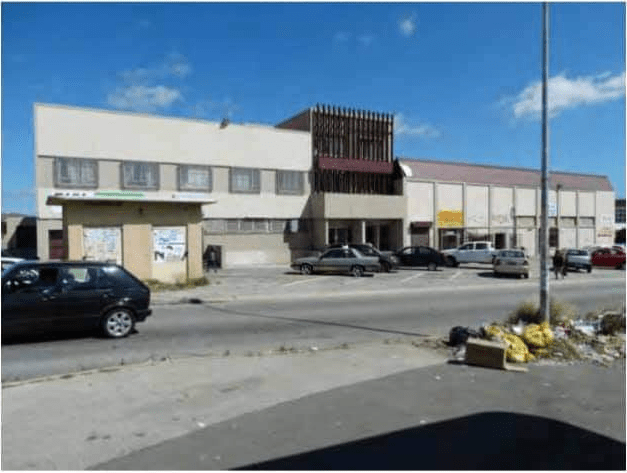
The Alla no longer exists — it is a supermarket and small shopping centre now. But the music and memories live on and we will never say goodbye to those days.
Donovan E Williams is a social commentator as @TheSherpaZA on X.
Submit and get free exposure here: Showcase Your Business | Advertise Your Special Offers.