
Objects of Desire | Upgrade you:
While the true definition of “self-care” is murky and the notion of “living your best life” is luxuriously ambiguous, there are a few pillars of the lifestyle of the home body. Elements of nourishing the body through acts of self-care include scent, sensuality, serotonin, sanctuary and, for many, style.
As the cooler months start rolling in, ways of pampering oneself — both big and small — go a long way. While Beyoncé once sang “upgrade you”, which urges listeners to indulge their partners, rather upgrade yourself and your self-care practices with indulgent, over-the-top objects, simply because you can.
Scentsational
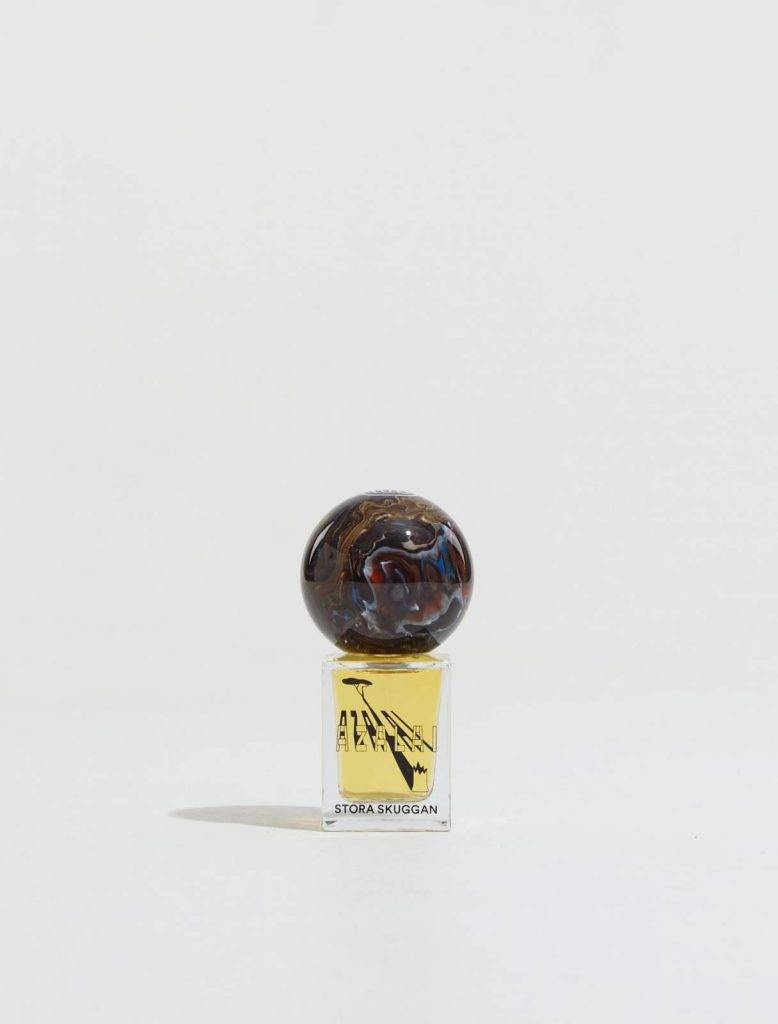
The nature of scents is constantly evolving, with new niche perfumers popping up while legacy fragrances come and go from our top shelf picks. The latest scent to hit our radar is from Stora Skuggan, a Stockholm-based perfumery that handmakes all its fragrances. The Azalai fragrance stems from a single acacia tree in the Sahara, bringing subtle solitude. Available through VooStore.


Sexy prints
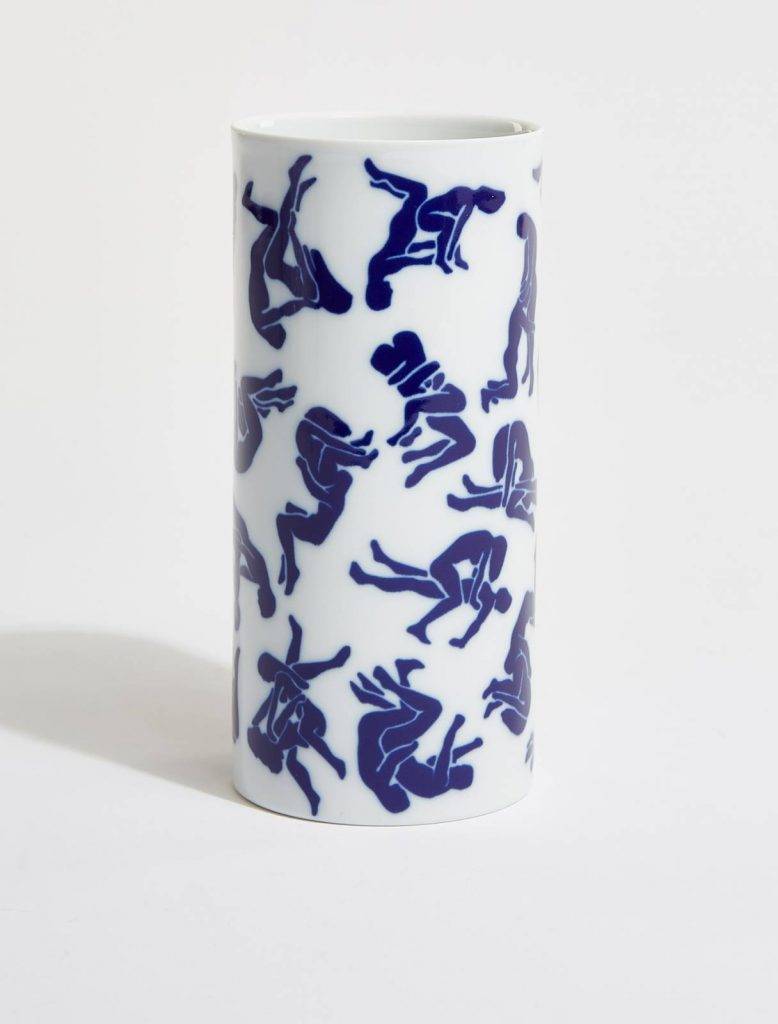
This is far from your grandmother’s china. Grab the set of six plates, vases, and cylinders to show your sanctuary some love. The handmade Kamo-Sutra Porcelain collection is for the modern homebody who understands the sensuality of food, flowers and precious objects. Available through Viso Projects.
Game changers
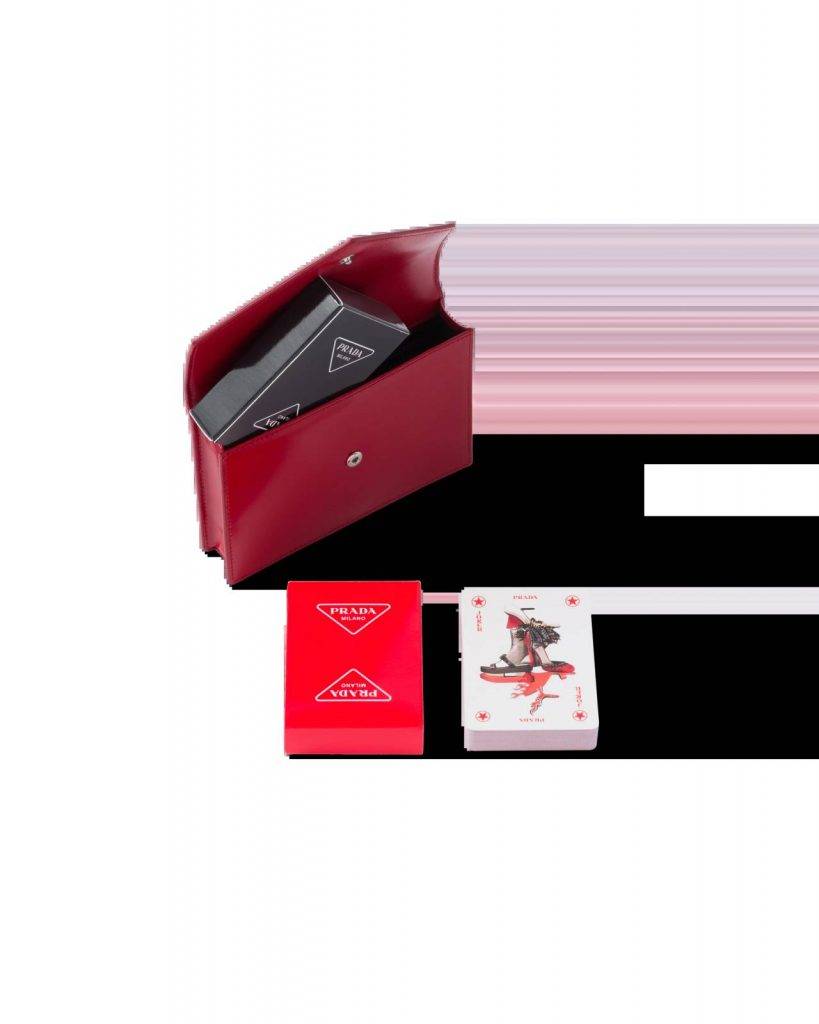
Make your next move with these Prada playing cards. If you’re going to stay at home with an ace up your sleeve, why not make it as indulgent as a luxurious Prada deck with a leather case? The entire set, from case to cards, carries Prada’s signature metal triangle, which was first designed in 1913 by Mario Prada for his luxury trunks. Available through Prada.
Slip in
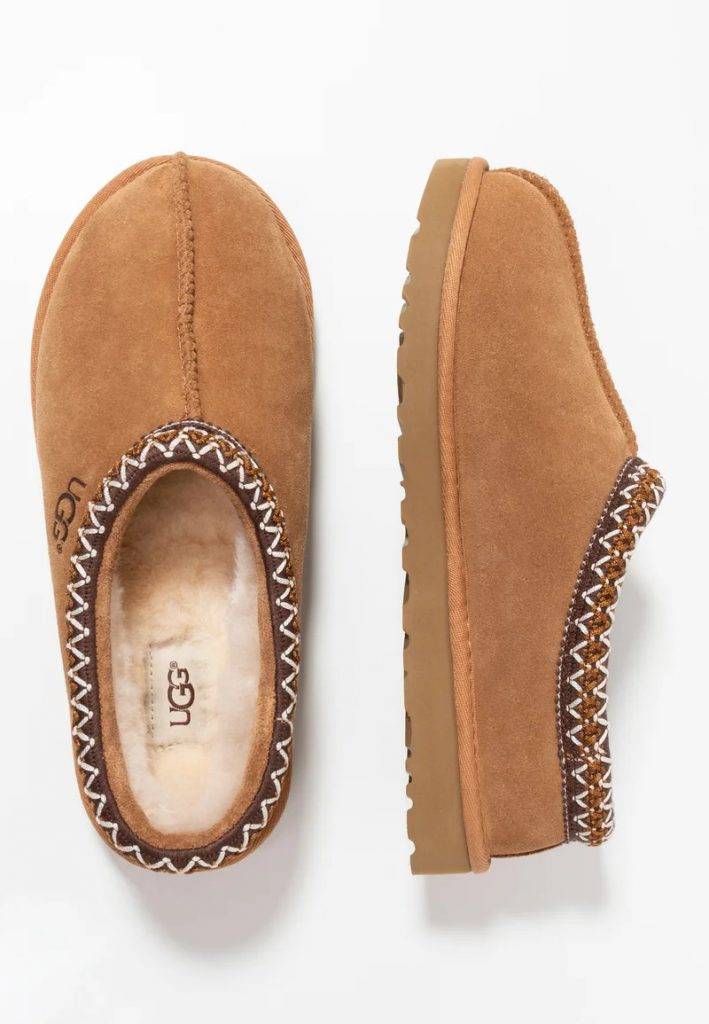
Finding the most comfortable pair of slippers is one of life’s greatest joys. You have probably seen the UGG Tasman all over social media and shop windows as the new slipper in vogue. Well, there’s a reason for that — they’re uber comfy, your toes feel warm and your feet feel supported. The Tasmans are also great for those who don’t want to “put on” slippers but would much rather slip on their slippers. Available through Trenton.
Illiteracy costs South Africa’s economy R119 billion, report says:
The World Literacy Foundation says illiteracy is costing the country’s economy R119.03 billion as about 3 million people struggle to read, write and do basic maths.
The nonprofit organisation released the Economic Cost and Social Impact of Illiteracy report on Sunday, highlighting the financial cost and social effects of 4.7% of South Africans having low-level literacy skills.
Reduced earning capacity and social costs are the main reason illiteracy is costing the economy each year, said Andrew Kay, chief executive of the foundation and co-author of the report. Early data also showed a drop in literacy rates post-pandemic.
“Illiteracy is ruining lives and is linked with an array of poor life outcomes, such as poverty, unemployment, social exclusion, crime and long-term illness,” Kay said in the report. “Literacy can change everything in the life of a young person and provide a pathway to reach their full potential.”
Researchers from the University of Pretoria completed the South African portion of the Progress in International Reading Literacy Study on reading and literacy levels among grade four and five learners. They found that reading in the country’s schools has not improved and that children need more books and reading activities at home and in school to improve their literacy.
Vineet Ladia, the co-founder and director of software company Edukite, told the Mail & Guardian that the reading crisis in South Africa had worsened after the Covid-19 pandemic, with only an estimated 18% grade four learners able to read for meaning, as per the latest 2030 Reading Panel report, published this year.
“Reading for meaning is a foundational skill that shapes a learner’s journey all through school and into the workforce,” he said. “Only a concerted national effort can take us to the targeted 90% literacy rate by 2030. It is an enormous challenge but a few countries have done it in the past.”
In the hope of getting children to read and help relieve the problems facing the education system, Edukite has launched an interactive e-learning app.
“The app makes learning more accessible, fun and simple to understand for this generation of learners in the digital age. The most beneficial thing about the app is that the curriculum is stored offline on the devices and is free to download on Google Play Store, so learning can continue at any time or in any place, despite load-shedding and data or wi-fi limitations,” Ladia said.
The app features a basket of subjects from grades four to 12, and also provides practical ideas and content training for teachers.
“A majority of the foundation phase teachers across the country need to be retrained to teach reading for meaning and we, as Edukite, believe that technology has to play a significant role in teacher training and quality assurance,” he said.
Another company has also become involved in trying to improve literacy and numeracy. Funeral insurer Avbob has partnered with Oxford University Press South Africa to launch the Avbob Road to Literary Trolley Library campaign.
The campaign, which began on 1 March, saw 260 trolley libraries, valued at R50 000 and donated by the publisher, given to primary schools and education non-profit organisations. The books are in all of South Africa’s 11 official languages.
The World Literacy Summit is hosting about 500 specialists from 85 countries at Oxford University in the UK.
Chairperson of the World Literacy Council Tony Cree said the conference this week would play a central role for the first time post-pandemic, bringing together practitioners and academics to share the latest global research and learning to address the spike in illiteracy.
“The meeting will put a spotlight on people and organisations doing exemplary and innovative work in the literacy sector around the world. We know the past 24 months have highlighted the need for communities to unite for literacy,” Cree said
Prisons, profits and privatisation’s perils:
Over the past couple of weeks, the Thabo Bester saga, brilliantly reported on by GroundUp, has captured the nation’s attention. Adding to the intrigue, the revelations not only expose Bester’s audacity — as the convicted murderer and rapist successfully took almost everyone for a ride — but the grave failures of a system that ought not be messed with.
In the simplest, and most benign view, prisons serve to protect people from those currently deemed a danger to society. They are also meant to protect the people kept inside them, though, as Michel Foucault has proposed, the view that prisons also exist to mete out punishment has tended to muddy the water.
Multiple reports suggest that G4S, the private security company that was in charge of running the Mangaung Correctional Centre from which Bester escaped, failed to fulfil both of these mandates.
Last week, the national commissioner of correctional services, Makgothi Thobakgale, announced that a temporary manager had been appointed to take control of Mangaung prison from G4S. An investigation by the Department of Correctional Services found that Bester was assisted in his escape and that the facility’s security system had been compromised.
“This is a necessary remedy following this embarrassing incident which has undermined the authority of the state,” Thobakgale reportedly told press during a media briefing.
But the authority of the state was undermined in the first place when it ceded some of its responsibilities to the private sector, expecting that it would act like any government should — in the interests of the public. If the state hopes to avoid future embarrassment, or far worse, it ought to do what it can to avoid privatisation.
In a 2013 right-of-reply article, published by the Mail & Guardian, Andy Baker, then the regional president of G4S Africa, boasted about the British multinational’s successes at Mangaung, the second-largest private prison in the world.
Baker wrote the article amid damning allegations about G4S and the firm’s conduct at Mangaung prison, also published by the M&G. Inmates were allegedly drugged, shocked and tortured by G4S staff when they refused to comply with their orders.
The prison, Baker said, was “an excellent example of a public-private partnership”. This was despite the fact that, weeks earlier, the Department of Correctional Services had assumed command after having established that the management had lost “effective control over the prison” following spate of stabbings, riots, strikes and hostage taking.
Not long after Baker put out his view, then minister of correctional services Sibusiso Ndebele told parliament that privately-run prisons in South Africa were failing.
The idea of having public-private partnerships for prisons, Ndebele said, had good intentions behind it, however, the experiment was obviously failing. “It’s a good intention. It’s one of those experiments that we wanted to say ‘in 20 years, this is what we experimented on,’” he said.
“It’s one of the attempts that we did and other countries are coming to the same conclusion that we are coming to — that it doesn’t work very well.”
The department has two 25-year contracts with G4S, one for the Mangaung prison and the other for the Kutama Sinthumule Correctional Centre in Louis Trichardt, Limpopo, which commenced in July 2001 and February 2002, respectively.
When Ndebele appeared before parliament in November 2013, with about 14 years to go before the end of the two contracts, the annual cost of the two facilities was R800 million.
South Africa’s “experiment” with privatising parts of the country’s prison system was not without precedent.
In the early 1990s, the UK government had the private sector step in due to overcrowding. G4S runs a handful of those private prisons. In 2018, the UK government had to take over the running of HMP Birmingham prison from G4S after discovering its squalid conditions.
The US, which is known for having the highest prison rate in the world, has a long history with profit-making prisons, though it was only in the 1970s that private companies began assuming and expanding control of correctional service facilities.
In 2001, according to a paper by the Bureau of Justice Assistance, an agency within the US department of justice, there were 184 privately-operated correctional facilities worldwide and 158 of those were in the US.
Between 1985 and 1997, the US prison population ballooned from nearly 750 000 to more than 1.7 million. In 1997, close to half of all inmates were black.
In a 1998 article for The Atlantic, American journalist Eric Schlosser wrote: “The prison-industrial complex is not only a set of interest groups and institutions. It is also a state of mind. The lure of big money is corrupting the nation’s criminal justice system, replacing notions of public service with a drive for higher profits.”
A lot can go wrong when a public service becomes a profit-making enterprise. The private sector’s involvement in the prison system has put inmates — people — in terrible, maddening danger, their rights infringed upon in the name of keeping the cogs of these money-making machines turning.
For some, it might be easy to dismiss the privatisation of the prison system as a necessary evil and something that only hurts those deemed deserving of punishment.
If that is the prevailing view, God help us. But it might also be helpful for those people to consider how privatisation stands to affect them, and us all, by putting a higher price tag on services that ought to be accessed at an affordable rate or for free.
When the government allows this to happen — to the cost of quality education and healthcare, to reliable electricity — it is effectively signing off on an even more unequal society in which the private sector gets to determine the threshold at which people are deserving.
The ultimate price of this is something I think most would rather avoid.
Submit and get free exposure here: Showcase Your Business | Advertise Your Special Offers.
