
On our mind: Could getting hit on the head during sport cause brain disease later?:
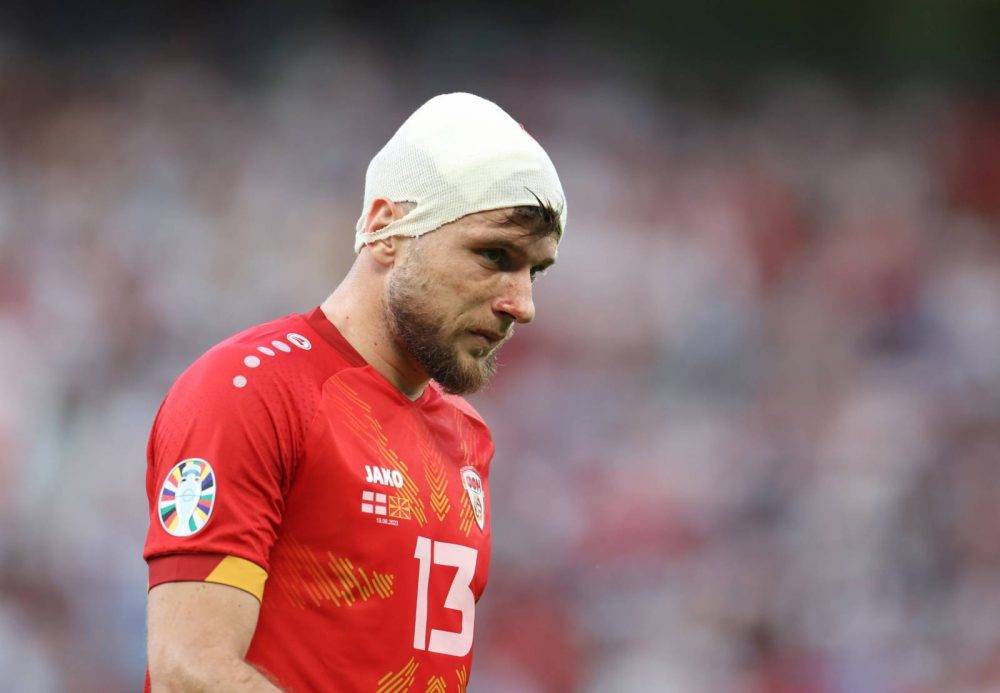
A new take on research from the past five years means that the rules of sports may be about to change — and could see players spending more time off the field.
In June, the Concussion in Sports Group (CISG), a network of head injury experts who set the standard for how these injuries are treated in sports, said that repeatedly getting knocked on the head may be “potentially associated” with someone developing an untreatable brain disease, chronic traumatic encephalopathy (CTE).
CTE, which can only be diagnosed after death, is a condition that causes memory loss, changes in personality and violent behaviour. It has mostly been found in people with a history of head injuries.
In the past, experts have looked at whether there could be a link between playing contact sports and the chance of developing brain diseases, such as dementia, Parkinson’s or amyotrophic lateral sclerosis (ALS).
With ALS, the nerves that control how the body’s muscles move start to die, and as with CTE, it gets worse over time. Former South African rugby player Joost van der Westhuizen died of this condition in 2017.
Head injuries in sports have been big news lately. A group of former rugby players — amateur and professional athletes — claim their brain damage is due to injuries from play and are suing World Rugby for not making the rules of the sport safer. Former New Zealand player Carl Hayman, 41, who has been diagnosed with early-onset dementia and probable CTE, is part of the lawsuit.
The sport group’s move marks an about-turn since their previous statement in 2017, in which they said there wasn’t enough evidence to prove the brain disease is caused by frequent hits to the head. The panel of experts maintains in their latest statement that this connection cannot be confirmed, despite public health agencies saying that CTE is caused “in part” by head impacts.
The new document also says that if someone is suspected of having suffered a concussion, they should be examined more thoroughly immediately during the match — which could change the rules of play in some sports.
Need for a time-out
The group advises that a 10 to 15-minute check-up should be done away from the field if a concussion is suspected, said Jon Patricios, a sports medicine physician and one of the authors of the consensus statement at a press recent briefing. If medics think it’s not safe for players to go back to play, they will have to sit out the rest of the game.
Although the rules of professional rugby already allow for players to leave the field to be checked for a concussion, the CISG’s new recommendations could mean that a rule change for soccer is also on the cards.
In this game, play must start again after about three minutes of interruption. If a concussion check longer than this has to be done — as the CISG recommends — a player will have to leave the pitch and their team will have to carry on with one less pair of legs. If players can’t return at all, the game will have to finish with other players in their place.
Having to make a decision in three minutes or taking time to do an off-field assessment while the team is one player down could put pressure on medics to rush an assessment — and potentially miss a symptom of a serious injury.
The International Football Association Board, who makes the laws for soccer, decided in January 2021 to trial a permanent concussion substitute rule. This would allow a team to replace a player suspected of having a concussion without using up one of the three normal subs, which they often use at tactical moments in a game — but the catch is that the player can’t return to the game again at all.
Players want a temporary concussion substitute rule instead. This means that if they’ve had a hard hit on the head, they’d be able to be checked thoroughly — in a quiet area like a changeroom, away from prying eyes. If the medics clear them, they can go back to the game.
After the CISG’s new statement came out, professional soccer players worldwide again asked for this to be considered, saying that it will “protect [their] health and wellbeing”.
But in January, soccer’s rule-making board rejected the idea of temporary concussion substitutes, because, they said, it would increase the chance of misdiagnosis and a player returning to the field, which could make their injury worse. Moreover, they said, “team doctors do not see concussion events very often and cannot be expected to perform a full head-injury assessment at speed”.
Previous research, new understanding
The CISG’s new statement is based on 10 systematic reviews done since 2017. In a systematic review, researchers look at the findings of many studies on the same topic and draw out patterns that hold across all of them. This is why this type of analysis is seen as one of the most reliable forms of evidence in health research.
In one of the reviews, the authors identified 14 813 studies that had something to say about whether concussions and repeated head injuries in sports affect athletes’ brain health later in life. They included only 28 in the end, because the studies had to be of the case–control or cohort type.
In such study designs researchers look at the chance of a condition, like a brain disease, developing in people who are exposed to a certain factor (they’re the “cases”) compared with those who aren’t (they’re the “controls”), or they track a group of people with the same characteristics or experiences — such as playing contact sport and called a cohort — over time.
To understand whether there could be a link between brain disease and repeated head injuries, the factor being investigated was having often received a blow to the head. “Cases” were former athletes — either professional or amateurs — and the “controls” were people who did not play any sports.
The conclusions showed that former professional athletes may have a bigger chance of getting diseases that destroy the nerves that control muscle function later in life, but not amateur-level players.
Yet a prominent study on head impacts and CTE, published last year by a group of researchers led by Chris Nowinski, a neuroscientist and cofounder of the Concussion Legacy Foundation, a United States nonprofit involved in research on concussions and CTE, was not included.
Why was the Nowinski study not considered?
The study didn’t meet their review conditions, says the CISG. For starters, Nowinski and his colleagues did a narrative review, which describes the general context around a research topic from published studies but without choosing them in a very systematic way. Secondly, although Nowinski and his colleagues did look at six case-control studies as part of their paper, they were not designed to measure the risk of the disease, as the CISG was specifically interested in and so they couldn’t be included.
But the CISG says they still need better evidence, including cohort studies, before they can say for sure that repeated head impacts cause CTE. Such studies would need to account for factors such as someone’s level of education, genetics and general health and lifestyle factors such as smoking, high blood pressure or heart disease, which research has shown can affect whether someone develops a brain disease, says Robert Cantu, a co-author of the statement and a professor of neurosurgery at Boston University.
To prove that hard hits to the head cause brain diseases, researchers would also need to know how bad these knocks must be and how many someone must have had, the statement says.
In a study published in the journal Nature Communications in June, scientists examined the brains of 631 former American football players that had been donated to research after their death.
By using data about the force with which a helmet is hit in different player positions in this sport and how long someone played during their life, the researchers could create a model to predict whether an athlete could develop CTE.
The results showed that the more hits to the head someone receives, the worse the brain damage — and that with each extra year someone played, the chance of developing the brain disease rose by 15%.
Will the new views be a game changer?
The CISG says sports in which head injuries are not examined properly should seriously think about making “rule changes in the interest of player welfare”.
This story was produced by the Bhekisisa Centre for Health Journalism. Sign up for the newsletter.
Mbalula: Don’t blame ANC for highway police brutality:

Images of Deputy President Paul Mashatile’s VIP protection unit “kicking” men “like a football” on the side of the N1 freeway will forever be etched in the consciousness of society, ANC secretary general Fikile Mbalula warned on Wednesday.
He said such incidents were often blamed on the ANC by “opportunists”, tarnishing the party’s name.
Mbalula was speaking at a media briefing on a range of issues that included the Phala Phala matter involving President Cyril Ramaphosa and the money stolen from his game farm, as well as the ANC’s stance on Russia’s war in Ukraine, after the ANC’s national working committee (NEC) meeting this week.
He said the ANC condemned the police brutality, which went viral on social media over the weekend, adding that it was the type of violence that could incite protests to “take down the government”.
He called for a full Independent Police Investigative Directorate (Ipid) inquiry, and for the suspension of the VIP protection unit members identified in the video.
Brigadier Athlenda Mathe, spokesperson for the South African Police Service (SAPS), told the Mail & Guardian on Wednesday that it had already served suspension notices on the officers.
According to a statement released by the South African National Defence Force Union, the victims are military trainees who told the union that they were driving from Johannesburg to Pretoria when a black SUV pulled up next to them and an occupant pointed a firearm at them, before more SUV’s boxed in their vehicle.
A video clip shows the officers assaulting the trainees on the N1 roadside where one is left unconscious after a kick to the head, before the VIP officers return to their vehicles and drive away.
“This runs against the grain of what SAPS stands for — the majority of our men and women service our country diligently,” Mbalula said.
“We saw a small Polo [in the video clip] and then people being trampled on by police. Ipid must investigate what threat [they saw] in that Polo which made them act in the manner in which they did,” he said.
“From the eye of the man on the street, we saw brutality, people being trampled on. It is the kind of thing that takes people to march to take down the government. We saw people on social media frowning on it,” Mbalula said.
“We want to ensure this matter is investigated and properly reported to the public. It is easy point scoring to apportion blame on the deputy president who doesn’t carry out his own protection, but people are employed to protect him, those are law enforcement officers,” he said.
He also condemned other incidents of road rage, including last week where a police officer shot dead a Joburg metro police officer in Braamfontein, and the unauthorised use of police blue lights when officers are travelling on personal social visits.
Phala Phala
On the issue of acting public protector Kholeka Gcaleka’s findings that cleared President Cyril Ramaphosa of any wrongdoing regarding the handling of theft of dollars from his private farm in Limpopo, Mbalula said the NEC welcomed her report.
He said it was “only opportunists” who sought to abuse the code of ethics by falsely accusing Ramaphosa and undermining constitutional democracy.
“The ANC welcomes the report that found there was no evidence of paid work outside of his duties as president,” Mbalula said.
Regarding the ANC’s position on Russia’s war in Ukraine, he said the NEC had reiterated its position that the party was a “messenger of peace and not war” and reaffirmed its non-aligned “anti-war” stance.
Mbalula said the NEC had also reflected on trade union Solidarity’s complaint about amendments to the Employment Equity Act filed against the government with the International Labour Organisation, alleging that these are “biased against minority groups” and in violation of the ILO’s Discrimination (Employment and Occupation) Convention of 1958.
He said the government had to demonstrate to the ILO that Solidarity’s allegations were “incorrect and damaging” to South Africa.
“They said the result would be the disposal of coloureds and Indians from jobs and replacing them with Africans … they are reigniting the apartheid era of ‘swart gevaar’ tactics, creating a racial gulf of Africans on one hand and coloureds and Indians on the other.”
He said the ANC’s definition of “black” comprised Indian, coloured and black African people.
The NEC had also focused on energy security problems, Mbalula said, adding that Eskom had stabilised its electricity generation capacity and cut planned maintenance downtime, reducing daily stages of load-shedding from stages four to six down to stages one to three during the last few weeks of June.
“We all know the story, there is no grid collapse — it’s a total falsehood. We will face the challenges,” Mbalula said.
He commended Eskom staff for the improvement in electricity supply.
Virtual classes can solve overcrowding and learner placement crisis:

Virtual classes are one of the solutions to alleviating the ongoing problem of overcrowded classrooms and excluded learners in Gauteng, KwaZulu-Natal and the Western Cape.
Nearly 60% of the population lives in these three provinces, and the numbers have risen, creating greater demand for learner placements, according to Corrin Varady, the chief executive of education technology company IDEA.
“This can place pressure on schools in terms of catering for so many pupils in such a short timeframe, which can have an impact on the quality of the education provided,” he said.
Coupled with the continuous decline in the number of teachers in the country, Varady said the situation would only deteriorate unless a scalable technology solution was put in place.
“Virtual education can reach more people, faster and more cost effectively than simply building more schools. Does that mean we shouldn’t be building classrooms or schools? Absolutely not. The optimal mix would be to blend physical and virtual education so students are exposed to a mixture,” he said.
“These schools can help to mitigate challenges fuelling the country’s learner placement predicament such as overcrowding, teacher shortages and lack of adequate school infrastructure, while also improving learner outcomes.”
This virtual learning goal can be achieved by growing the numbers of learners who have access to the blend of online and in-school teaching and will help ensure that no child is left behind because of where they live, Varady said.
“Digital education can assist in delivering large parts of the curriculum model without displacing teachers or removing the relevance of schools. Technology in a 2024 mindset is about how technology is seen as part of a public sector delivery package and not as a private sector privilege.”
Varady explained that about half of the country’s primary school children are in classes with more than 40 learners, and 15% are in classes exceeding 50. “The higher the learner to teacher ratio, the lower the personalisation of the learning experience. This, in turn, negatively impacts learner outcomes.”
He said the technology helps to personalise learning so issues can be addressed immediately, when the learner encounters them, and not after they’ve completed their end-of-year exams when it is probably too late.
“Access to this technology could therefore mean the difference between passing and failing,” Varady said.
But Tholokuhle Coetzee, who used to teach at Streetlight Schools — an initiative which aims to improve access to quality education in underserved areas — does not see virtual learning as the answer.
“This digital education thing is a bit unrealistic. Yes, we live in the cities and well established provinces but there are still problems like load-shedding to consider,” he said.
But Varady disagreed, saying load-shedding and connectivity infrastructure are often cited as major obstacles in the deployment of e-learning, but the biggest one is that the country has not grasped how e-learning could work in the public sector environment.
“Although South Africa is in the midst of an energy crisis and lacks enough internet access, asynchronous and offline learning solutions could bypass these challenges since they allow pupils to learn from anywhere and at any time,” he said.
“Equality is a non-negotiable. If we can see technology as a great equaliser — where it does not discriminate — rather than as the cause of the divide, we can have a conversation about how universal access to basic education and public sector high achievement rates are one and the same thing.”
“One thing is clear, unplaced learners do not need to be a continued challenge if we plan better, develop digitally and think ahead for the sake of access, outcomes and our future labour market,” Varady added.
The department of education was contacted but had not responded by the time of publication.
Submit and get free exposure here: Showcase Your Business | Advertise Your Special Offers.
