OPINION: Just energy transition is integral to election promises:
Recent work at the think tank ODI sheds light on how governments, multilateral development banks and private sector investors might navigate the energy transition in politically savvy ways to align with climate change goals. This is important regarding South Africa’s 29 May elections because national development priorities centre on energy and unemployment: two key delivery priorities of the country’s Just Energy Transition Partnership (JETP).
Yet, for a long time the value chain around Eskom has been a significant source of rents for some powerful actors connected to certain ANC factions, including those associated with the previous president, Jacob Zuma. Today, however, President Cyril Ramaphosa, heads a different political faction in the ANC, with fewer vested interests in fossil fuels.
Moreover, Eskom is in crisis: South Africa has endured severe power outages over the past couple of years. As the outages and related costs rose, so did Eskom’s debt burden, with increasingly dire effects on the economy and the government’s fiscal position. This abysmal performance of the electricity system and its negative effects on the broader economy are hurting the ANC’s track record in office.
Although there may be both elite and broad-based interests behind an energy transition, there are powerful opponents. Some in the ANC continue to campaign for the full development of fossil fuels (mainly coal) and fearmonger job losses associated with the inevitable energy transition.
Moreover, dispersed power from contrary political factions in the ANC present a challenge to Ramaposa’s position and to a rapid and just energy transition. For example, Minister of Mineral Resources and Energy Gwede Mantashe has proposed extending the lives of specific coal plants by 10 years in the Integrated Resource Plan (2031–2050). He also publicly contradicted the JETP, saying that, “given the abundance of coal resources in the country”, it would continue to play a “significant role in electricity generation” until 2050.
The Integrated Resource Plan can be interpreted as an internal challenge to the JETP and symbolic of Ramaphosa’s inability to secure political consensus on the energy transition even from senior members of his own political party.
Reconciling these competing positions within his own party, and the broader political landscape will only become more difficult should the ANC need to enter into a coalition government after the elections.
Ironically, former president Jacob Zuma, who many hold responsible for Eskom’s poor performance, is now campaigning for the newly established uMkhonto weSizwe party, further dampening the ANC’s electoral prospects.
This election is seen by many as the country’s most important one since the fall of apartheid in 1994. But the balancing act of implementing a just energy transition in one of the most unequal countries in the world might become even more salient in future elections.
Against this background, mining communities and trade unions are important players with potential veto power, and the JETP is being designed with a view to compensating, or at least placating them.
South Africa’s JETP Investment Plan emphasises restorative justice for coal communities in the transition away from coal as the country’s main source of power. It highlights that a core aim of the energy transition is to redress high levels of energy insecurity and poverty and creating quality jobs in new sectors such as electric vehicles, green hydrogen, renewable energy and manufacturing. Most of the dedicated just transition investments in the JETP Investment Plan are accordingly committed to regions where coal mines, and coal-fired power plants are concentrated.
It is not only organised interest groups that want the government to take the lead in managing a just energy transition. Citizens want the government to take the lead on limiting climate change and reduce its impacts (41%), and implementing a just energy transition is a crucial aspect of this. In contrast, only a minority of South Africans see rich or developed countries (5%) as primarily responsible for taking climate action in the country.
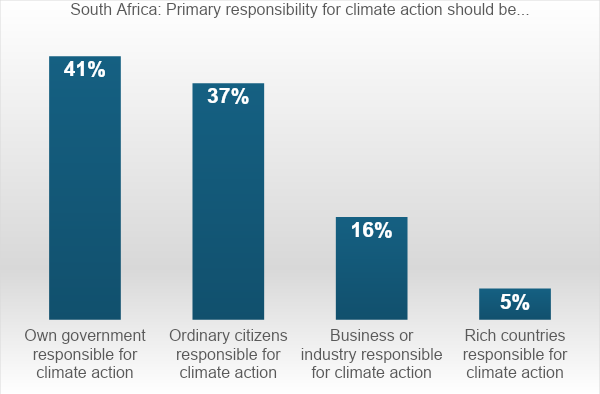
Figure 1: South Africans sentiment on who is responsible for climate action (Source: Data from Afrobarometer).
Internationally, this sentiment on responsibility attributed to the South African government strongly aligns with the climate finance arrangement of the Just Energy Transition Partnership. International donors such as the United States, United Kingdom and the Netherlands have committed to $ 11.9 billion in financing to support the government’s plans for an energy transition that can take advantage of opportunities created while also putting in place local economic development safeguards to minimise its effects on people affected by the transition. This is particularly important in the South African context because of how many people will be directly and indirectly affected by coal mine closures
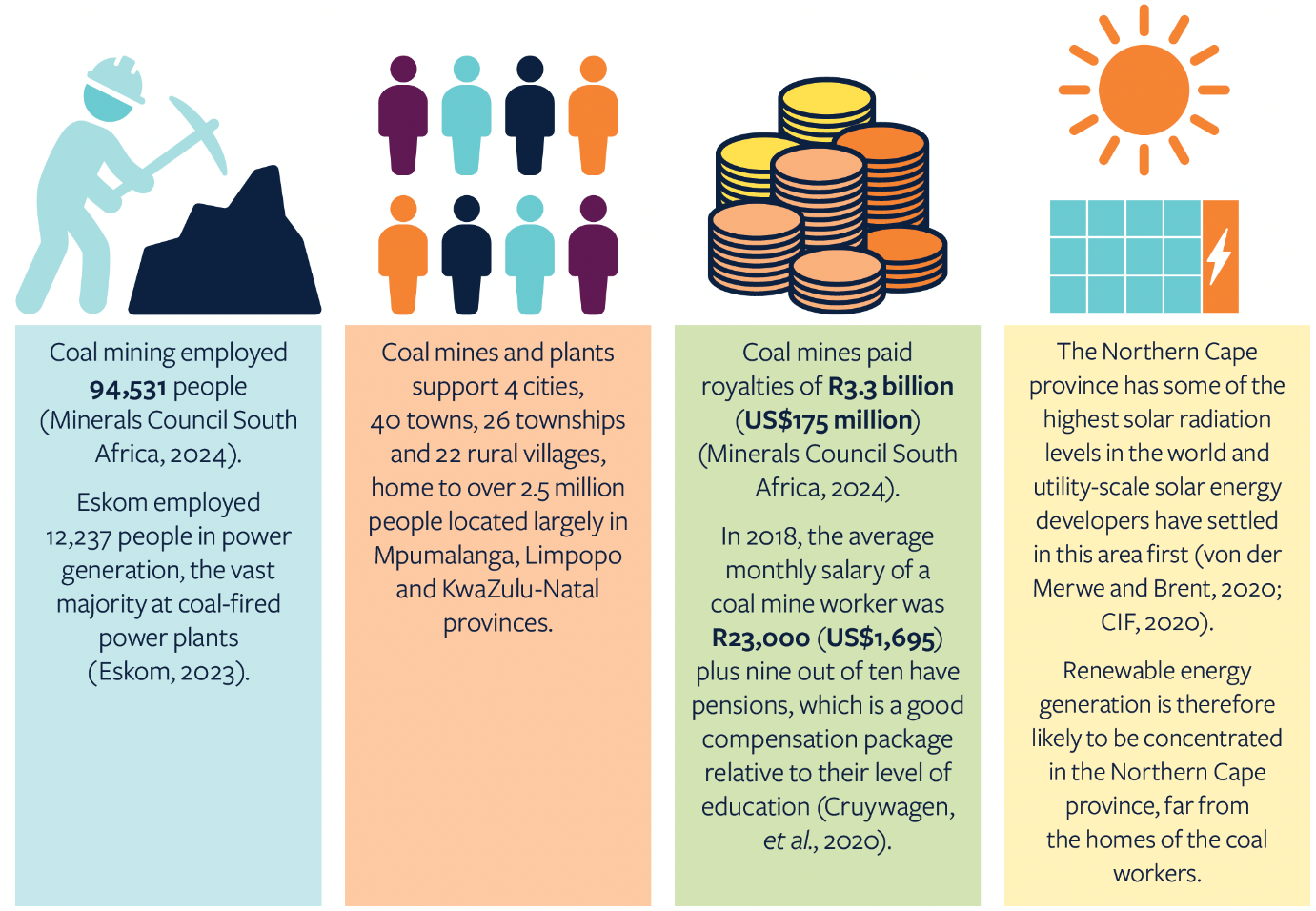
Figure 2: Statistics relevant to a just energy transition in South Africa in 2023 (source: ODI Working Paper: Putting the ‘just’ in Just Energy Transition Partnerships)
As South Africa stands at the energy transition crossroads, it is critically important that it does not pursue a self-harming developmental pathway through continued fossil fuel development. It should rather take every opportunity to shift development pathways to embrace opportunities presented by the energy transition and reduce the vulnerability of its people and energy systems.
Securing bottom-up buy-in from the wide range of stakeholders affected by the energy transition will be increasingly important to election cycles as climate action progresses. This includes those with strong stakes in the incumbent system, workers who may see their jobs at risk and low-income groups. Political fearmongering that aims to take advantage of these groups’ concerns will have to be managed.
As only 43% of South Africans are aware of human-caused climate change, according to recent survey data, there is danger that uninformed voters, the eighth lowest score across a sample of 39 African countries, can be more easily swayed away from progress on climate action.
There are inevitably winners and losers in any energy transition, which makes it both highly politicised and contested. We will have to wait and see if this election will advance or set back the JETP through its selection of those in power.
Dr Nick Simpson is a senior research fellow in the Climate and Sustainability team at ODI. His research focuses on how we can best respond to climate change with special interest in climate-resilient development pathways for Africa.
Dr Matthias Krönke is a researcher at Afrobarometer and a visiting fellow at the London School of Economics and Political Science. His research focuses on how political parties contribute to democracy and deal with major challenges such as climate change.
Overcoming political gridlock by building a unified left in South Africa:
Not that long ago there was a lot of optimism about the election that is now just two weeks away. Political analysts and citizens were excited about the ANC being punished at the polls and hopeful that real consequences for the party’s failures would be a wake-up call to our rulers.
For many, that optimism has evaporated and there is now a real sense of fear. A plethora of opinion polls have shown that the ANC could dip well below 50% in the national election and impeccable sources in the party are saying this will result in a coalition government with the Economic Freedom Fighters (EFF) and the ANC led by Paul Mashatile. In KwaZulu-Natal, where the polls show the uMkhonto weSizwe (MK) party surging, there is even deeper fear of the prospect of a coalition government led by the MK party in alliance with the EFF.
It is possible that the fears about the national outcome may be overblown. In a brilliant piece in Business Day Johnny Steinberg, our most thoughtful and independent political analyst, raised some deep methodological and ethical questions about the polling outfits, including their closeness to the Democratic Alliance (DA) and the wider organisational ecosystem of the right-wing of the liberal bloc.
But it seems certain that in KwaZulu-Natal the MK party’s surge is going to be a real factor in the election. This is terrifying for the obvious reason that Jacob Zuma is an authoritarian kleptocrat with contempt for democracy and holds far right views on social issues.
The problem faced by most voters in this election is that the only real choices are between an ANC that has long passed its sell-by date, the authoritarian kleptocrats in the EFF and the MK party, or the various liberal parties primarily funded by the Oppenheimer family. Liberalism will never be able to represent the aspirations of the majority with the result that for most potential voters there is no credible party on the ballot.
This logjam in our politics can only be resolved with the emergence of a genuine democratic left or social democratic party. The failure to develop an honest and democratic party to the left of the ANC is a serious problem for our democracy and our society. Resolving this problem requires real political maturity; the maturity to understand the contours of the problem and to act to resolve the problem.
My participation in the left has largely been through many years of work as a trade union educator with a number of unions. Over the years I have also got to know grassroots activists in various organisations and I know a good many left actors in universities and NGOs.
Because I am a free floating actor, not involved in any particular organisation, I have been able to speak to influential players in all factions of the left over a number of years. This does not mean that my analysis of the failure to build a left party is correct or without flaws, but it does mean that it is independent and that it draws on years of conversations with a wide range of people.
The understanding that I have come to has two central elements. One is that a minor part of the failure to develop a left party is the general breakdown between much of the middle class left, mostly located in universities and NGOs, and the mass-based organisations of the left. Many university and NGO people feel that the leaders of the mass-based organisations act as gatekeepers who limit access to their organisations.
Many people in the grassroots and working class organisations think that some university and NGO people feel they have a right to control the mass-based organisations and to treat their elected leaders and internal processes without respect.
There have been some cases where donor funds have been used by university and NGO people to try to intervene in movement and union elections. This has not been well received. There have also been cases when university and NGO people have lobbied the media to attack elected leaders with whom they have disagreements. Again this has not been well received.
There are some bitter divisions at play but with sufficient maturity and perhaps some independent assistance in conflict resolution it must be possible to achieve some degree of repair, even if not with all individuals. All the successful left parties around the world included mass based organisations and intellectuals and so trying to repair the broken relationships in South Africa is an important task.
The major challenge that must be met if the logjam in the South African left is to be overcome is to fix the relations between the mass-based organisations. The largest such organisations are trade union federation Cosatu (about 1.8 million members), the National Union of Metalworkers of South Africa (Numsa) (about 400 000 members), the South African Communist Party (SACP) (about 340 000 members), and Abahlali baseMjondolo (about 150 000 members). These numbers are drawn from online sources and may be dated in some cases, but they are useful to give a general sense of the collective power of these four organisations.
There are also a number of smaller but important organisations including the Amadiba Crisis Committee and the South African Federation of Trade Unions aside from Numsa. But the big four organisations are numerically and politically the most powerful and this is where attempts at building collaboration and a shared left identity should be prioritised.
There are a number of lines of division. The main one is that Cosatu and the SACP remain in alliance with the ANC and that this creates a stark division with Numsa and Abahlali baseMjondolo. Another line of division is that Numsa’s Marxist-Leninist politics are quite ideologically similar to those of the SACP on questions aside from affiliation with the ANC and that both organisations are ideologically very different to the bottom-up radical democracy of Abahlali baseMjondolo.
Numsa still blames the SACP for its expulsion from the Cosatu in 2013, and Abahlali baseMjondolo blames the SACP for not speaking out against the regular assassination of the movement’s leaders. Both are also suspicious of Cosatu’s ongoing relationship with the ANC.
But these four organisations are aligned on all kinds of issues. They are all strongly in support of Palestine, for an increase to the minimum wage, against austerity, opposed to xenophobia, and so on.
It could be possible for them to meet, in a small closed meeting focused on building consensus, to identify matters of shared concern and to agree to act together on these matters. To get the ball rolling and build trust, issues that are not particular to any one organisation could be prioritised and collective action could be carried out in ways that don’t require huge investments in time, people and resources. For example, if all four organisations collectively picketed an appropriate target, such as McDonalds, in support of Palestine, the costs and risks would not be high but people could get to know each other and trust could be built.
If this kind of collective action is sustained over time and sufficient trust is built, all four organisations could then agree to begin to support each other’s internal struggles, such as strikes, struggles against evictions and resistance to repression. If this could be achieved then we could slowly start to see a viable left at scale.
None of this would easily resolve the central problem of the differing views on the ANC but working together could start to create a sense of a left that is bigger than any of its constituent organisations and that shares a set of core principles.
This could only help to move the left outside of its organisational solos and into a wider awareness of a shared identity and struggle that would, in time, open up political possibilities. It is worth a try.
Dr Imraan Buccus is a political analyst.
Health problems the hidden hurdle behind learners’ reading difficulties:
In the villages of Limpopo, where Sepedi is the dominant language and economic problems are prevalent, a deeply concerning issue persists — poor reading proficiency among children in their mother tongue.
Recent findings from the Progress in International Reading Literacy Study (PIRLS) 2021 reveal a staggering 81% of South African learners struggle to comprehend written text in any language. Limpopo consistently ranks as one of the provinces with the lowest reading outcomes in Sepedi.
Numerous local and international reports on literacy and numeracy, along with research, have identified multiple problems contributing to early grade reading difficulties. These include insufficient teaching materials in indigenous languages, ineffective bilingual curriculum implementation, inadequate literacy teaching strategies, educator shortages and insufficient support from district officials.
While considerable attention has been given to systemic factors within the education system and policy frameworks, a critical aspect often overlooked is the health of young learners, particularly in the foundation phase of South African classrooms.
My classroom observations in rural Limpopo further underscored these statistics, revealing a significant yet under-discussed dimension: health barriers hindering children from mastering basic reading skills. Rather than struggling with the language itself, many children have hearing impairments, vision deficiencies and speech disorders. In resource-constrained classrooms, these conditions often go undetected because of a lack of teachers with specialised training.
A prevalent problem was visual impairment. Some learners struggled to perceive the written text or content on the chalkboard, despite teachers’ efforts to enlarge letters or sentences. Even with such accommodations, learners continued to face obstacles in effectively observing and conveying information. Teachers frequently posed questions such as, “Can you see what is written?” or “Can you identify the sounds or letters in each word?” It became evident that some learners were unable to see the text clearly because of vision deficiencies that teachers may not have been aware of.
In one instance, I observed learners squinting, to the extent that some stood up or copied the written text from their peers. Alternatively, they would take their classwork books, move closer to the chalkboard, sit on the floor and write their classwork activities.
Another classroom presented a different problem where a teacher paired slow-paced learners with fast-paced learners. The fast-paced learners were tasked to point out the text as they read, showing the slower-paced learners how to read. But some reported that their partners were either not reading or pointing to the text correctly.
During another lesson, the learners struggled with reading text written in their mother tongue. The problem did not lie in the design or presentation of the materials; rather, the learners simply could not read. Some looked around the classroom when the teacher read for them, and while the teacher walked around assisting them, some learners only pointed at the words without reading or pronouncing them.
In other cases, when asked to copy words directly from the chalkboard, learners still could not see the words clearly even though they were written in a large font, and often wrote the words incorrectly. Some learners were struggling because of vision impairments while others had hearing difficulties.
We must ask ourselves: Can the children see? And if so, what do they see, and are they able to read aloud clearly to themselves, their peers, and their teacher? If not, what are the underlying issues?
In addressing these questions, we can better understand the multifaceted nature of the difficulties learners encounter and work towards implementing effective interventions to support their literacy development.
Teachers, although capable of identifying such health problems, lack the necessary training to address them effectively. Consequently, they may only be able to provide limited assistance, such as referring children to healthcare practitioners. But many parents are hesitant to accept such referrals because they are concerned about their children’s access to education and potential stigmatisation.
It is time to recognise the interconnectedness of health and education. Educators must expand their roles to include identifying and addressing health-related learning barriers. This requires theoretical and practical training on recognising signs of such barriers and facilitating appropriate interventions. Collaboration between teachers and health practitioners, involving professionals such as psychologists, physiotherapists, speech therapists, audiologists and ophthalmologists is essential in diagnosing and treating these conditions.
But addressing these problems is not solely the responsibility of educators. Government and education stakeholders must prioritise integrating health screening into the education system through policy reforms mandating regular health assessments for school-age children. Additionally, teacher training programmes should incorporate modules on recognising and addressing health-related learning barriers.
Community programmes are equally important. Mobilising resources and support from local health services, NGOs and community leaders can ensure that no child’s learning potential is hampered by undetected health issues. Collaboration between literacy NGOs and health practitioners can provide valuable insights into addressing reading problems comprehensively.
Addressing poor reading outcomes in South African indigenous languages requires acknowledging and addressing the underlying health factors. Breaking the silence surrounding these unseen barriers and working collectively towards building an inclusive education system are imperative to ensure every child can speak, see, write and hear so that they thrive in reading.
Nombuyiselo Zondi is a doctoral candidate at the University of Pretoria, Faculty of Education.
Submit and get free exposure here: Showcase Your Business | Advertise Your Special Offers.