
Ousted Joburg MMC Kabelo Gwamanda ‘wasting time and money by challenging his removal in court’:
Sources in the city’s executive believe the former mayor has become a ‘liability’ for the Johannesburg council
Sporting world needs to play its part in mitigating climate change, COP29 hears:
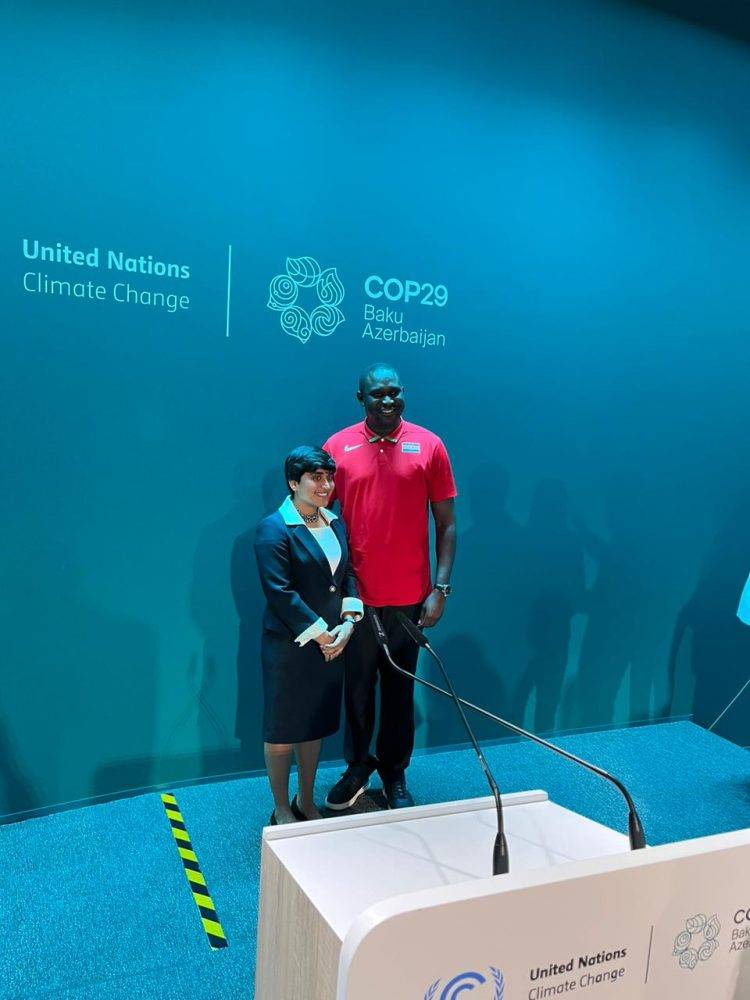
Sport has the power to pull people together in the fight against the climate crisis. This was the sentiment expressed during a session on sport and climate change at the 29th United Nations Climate Change Conference (COP29) in Baku, Azerbaijan on Monday.
Former English cyclist Chris Boardman, now the chair of Sport England, noted that 65% of children in a study said they wanted sport stars to speak out about a clean, sustainable future and wanted to hear stars like footballer Harry Kane talking about climate change and the environment.
Panel members spoke about how global sporting events push up greenhouse emissions, although there are various initiatives underway to combat this.
“Around 94% of emissions from last year’s Rugby World Cup in France was from the transport,” said Olivia Wessendorff of the International Transport Forum at the Organisation for Economic Co-operation and Development.
Partnerships with public transport is one way that these emissions can be cut, she said, using the example of train travel to venues that are less than five hours away instead of using planes and buses.
This was the equivalent of “taking one million cars off the road”, Wessendorff added.
Filippo Veglio, head of social and environment sustainability at Uefa, noted that, at the Euro 2024 tournament in Germany earlier this year, “81% of fans that went to Euro games did so with public transport”.
Effect on athletes’ performance
Sport has not been spared the impact of climate change, with high temperatures, air pollution, weather events and water cleanliness posing challenges for high-performance athletes.
“Training in weather higher than 40 and reaching 50? is extremely dangerous to train in. Air pollution makes you feel like you have smoked cigarettes and water bodies are filled with pesticides,” decorated Indian triathlete Pragnya Mohan said.
“Climate change is pushing us athletes and global citizens to all levels.”
She was concerned that climate change would have a serious impact on sports like triathlon and that, in some disciplines, records might never be broken as athletes were stretched to their limits.
New Zealand footballer Katie Rood said 120 000 grassroot games a year were cancelled because of weather conditions.
“Sometimes we can’t train because the air quality is not good enough. Prepping for the Tokyo Olympics we trained with extreme heat challenges. There had to be ice and slush ready before games. It also means shorter warm ups from 25 to 10 minutes,” she said.
In the Pacific, wind and weather patterns make it hard to train, Samoan sailor Eroni Lelua said. “It is difficult to prepare for events when climate change makes hectic weather more frequent.”
Partnering with fossil fuel groups
Delegates flagged the issue of affiliations with fossil fuel organisations. Over 130 professional women players from 26 countries with over 2 700 caps between them have come together to call for an end to Fifa’s sponsorship deal with Saudi Aramco.
“Aramco is the world’s largest state-owned oil and gas company, playing a major role in fuelling the climate crisis. The oil giant is also 98.5% owned by Saudi Arabia, who have a track record of human rights violations against women and other minorities, including the LGBTQIA+ community,” they said in a statement titled “Aramco sponsorship is a middle finger to women’s football”.
“As the largest state-owned oil and gas company in the world, Saudi Aramco is one of the corporations which is most responsible for burning football’s future. Grassroots football across the world is being smashed by extreme heat, drought, fires and floods but, as we all pay the consequences, Saudi Arabia rakes in its profits, with Fifa as its cheerleader.”
Athletes at Monday’s event said sport had the ability to inspire millions and that such partnerships showed a disregard for the people facing the dangers of climate change, many of whom are fans.
The athletes called for new partnerships to be struck, away from fossil fuels, with organisations doing environmental good.
South Africa’s growing online gambling market: challenges and potential:
For most people and industry companies, the online gambling market in South Africa is still unknown. The truth is that this market is still pretty young and in full development. Yet, there are many promising trends coming with a positive outlook for the future of the industry on this continent.
Read this article and enjoy a complete analysis of South Africa’s online betting landscape. We poured our sweat and knowledge to offer insights about its potential growth. So, let’s begin!
Online gambling in Africa today
The online betting industry in Africa is certainly growing fast due to better internet structure and the widespread use of mobile phones. Also, here, people see gambling as a way to make money rather than an activity to relax.
According to Statista, the African gambling market is going to bring $ 1.85 billion in 2024, and it could grow by 6.28% every year until 2028. By then, its value will be estimated at $ 2.36 billion. It’s definitely a strong growth in the industry.
The development will happen mostly thanks to online sports betting in particular. This market section is going to reach $ 0.86 billion in 2024. It showcases how popular sports betting will be across the African continent.
At the end of 2024 the average revenue per user in online gambling could reach $ 309.30. Also, by 2028, more than 7.1 million people will engage in online gambling, developing a large audience.
South Africa is becoming the main market for online gambling in Africa. This is because this activity is more popular there, given the great internet access and convenience. Statista shows in several reports a clear increase in the country’s online betting activity.
Gambling trends in South Africa
In South Africa, gambling consists of traditional options and new, innovative platforms that attract daring players. According to different studies conducted by industry experts, South African players have a favorite among betting activities: the lottery.
According to the study conducted by infoQuest, three in four gamblers practiced this activity. The next one is betting on gaming platforms, with a percentage of 62%, and sports betting with 55%. On average, these are the most popular activities gamblers practice in South Africa.
When did it all happen?
Most gambling activities at casinos take place on weekends. Of course, this time is mostly attributed to horse racing. For the lottery, there is not a particular time as gamblers love their nu, but it is any time of the week. The influence here is the online functionality.
The most frequent type of gambling in South Africa is sports betting, and it happens 12 per month on average. 7 times a month are casino table games, while slot machines are the least frequent, with only 5 times a month.
Why do South Africans gamble?
Gambling is an activity that you can do with your friends; it is not necessarily a solitary activity. Yet, more than 70% of gamblers prefer to do it alone. But why do they choose this activity? The reasons for gambling are numerous. Some say it’s fun and a good way to socialize, while others see it as a way to win some extra money.
However, experts in the industry always encourage players to bet responsibly and look at gambling as a way of entertainment. It’s never a way to become rich overnight, even if that can happen.
Are they winning or losing?
The study proves that there is a fairly even split between people who win and those who lose. The results should be at least alarming, as gambling can be a really sensitive subject with different outcomes.
Statistics show that the average bettor takes part in three different types of betting activities several times each month. So, gambling really is a big part of life for many South Africans.
At the same time, platforms with tempting promotions and the best online casino promo codes have transformed the industry, giving people more access to several betting options and easier ways to engage with gambling.
Online gambling in South Africa: future predictions
The future of online gambling is in the hands of the new generation of players in South Africa and their ability to grow up surrounded by technology. As internet infrastructure improves and technology advances, online gambling will become even more accessible.
However, given the statistics we’ve discussed, a better regulatory system will also be needed to protect users from distributive behaviors. Looking at the survey results, South Africa recognizes the importance of clear and strong laws.
We may say that the future of online gambling in South Africa looks pretty good, with new laws being passed to make the entire industry safer and more regulated for both players and operators. The government has the ability to generate significant tax revenue from gambling profit and its economic impact. So, it’s all for a safer and brighter future!
Submit and get free exposure here: Showcase Your Business | Advertise Your Special Offers.
