
Over R500m needed to rebuild Kruger after devastating floods, says minister:
The cost of repairing widespread flood damage to critical infrastructure in the Kruger National Park is expected to exceed R500 million, Forestry, Fisheries and the Environment Minister Willie Aucamp has said.
“The extent of the damage in the Kruger park is extensive,” he told a media briefing in parliament on Thursday. “There have been several bridges that have been washed away, roads that have been washed away and a number of camps that have been flooded.”
Over the past two weeks, severe flooding has affected large parts of Limpopo and Mpumalanga, destroying homes and infrastructure and killing 38 people.
For the Kruger, initial damage estimates are already above half a billion rand, but the final figure could rise once all areas become accessible, Aucamp said.
“We could not do proper estimates because there are several areas that are still flooded and as soon as we can enter those areas, SANParks (South African National Parks) will be able to do a better estimate and we will then plan on rebuilding it,” he said.
The damage includes washed-away bridges and roads, destruction of water and electrical systems and severe impacts on staff villages and tourist accommodation.
Several major roads and camps across both the northern and southern regions of the park remain inaccessible, with the northern and southern sections still cut off from each other. Malelane, Numbi and Paul Kruger gates remain open under an entry quota system.
To support recovery efforts, Aucamp announced the establishment of the SANParks Kruger Recovery Fund, which is aimed at mobilising donations from individuals and corporate entities.
“The establishment of the Kruger Recovery Fund … will enable us to get money from donors – from a R10 donation of a student to several million rands of donations from corporate entities that are willing to help us rebuild Kruger,” he said.
He urged the public to support the initiative, noting that SANParks could not rebuild the park without external assistance. The Honorary Rangers and internationally acclaimed author Tony Park have been appointed as patrons of the fund.
“The road to recovery is very long and a lot of restoration and work is ahead of us. The Kruger National Park is not just a conservation landscape – it is an economic lifeline for the region, a symbol of our national heritage, and a globally recognised conservation asset.”
SANParks, he said, remains committed to a resilient and adaptive management approach “as we navigate these climate-related challenges”.
He called on South Africans and the international community to contribute to the recovery effort, saying SANParks was committed to ensuring strong governance and accountability in the use of donated funds.
SANParks chief executive Hapiloe Sello said the park remained in recovery mode, with widespread closures and ongoing assessments.
“We have about 18 of our camps closed; we have begun mop-up operations. There are some areas that are still covered by significant amounts of water but in the main the levels of water have gone down,” she said.
Sello said the assessment processes have begun and we should know within a few days – a week or so – the full extent of the damage. “
Despite the scale of destruction, Sello said no lives had been lost in the Kruger. “We put safety first and our staff was disaster-ready and that is why we look back at the physical destruction with sadness, but we’re very proud of the fact that there’s no loss of life and serious injuries, either of staff or of tourists.”
While no tourists remain stranded in the park, more than 500 staff members are still cut off in two camps. SANParks is delivering food parcels to them and plans to relocate staff as conditions allow.
“They are in two camps – so it’s very large groups – we don’t have people that are truly isolated and we’re happy for that,” Sello said.
She appealed for public support, highlighting the strain on park staff. “Our plea for the Kruger staff [who] have worked tirelessly for more than a week … There’s a lot of camaraderie and unity with the staff. But we need your help. We can’t do this alone, Kruger is an icon of SA.”
Aucamp said that his visit last week to the Kruger had underscored the severity of the damage. “I am still affected by the extent of the impact and devastation to our cherished national asset,” he said.
The most important highlight is that no lives were lost, Aucamp said, crediting SANParks’ early warning systems and coordinated emergency response.
He noted that between 9 January and 19 January, the park recorded 24 073 guest entries — a 41% decline compared with the same period last year — raising concerns about immediate and medium-term revenue losses.
“SANParks is an entity that generates close to 80% of its operating budget, therefore the destruction of its tourism flagship puts the sustainability of the entire network of parks at risk.”
The floods came as the park was still recovering from similar damage sustained in 2023. The minister said the combined impact of repeated flooding has exceeded existing contingency and maintenance budgets, with prolonged recovery posing risks to conservation efforts, tourism income and surrounding communities.
Kruger is increasingly becoming a “natural disaster nodal point” because of dense infrastructure, complex hydrological networks and transboundary climate influences.
Aucamp emphasised that the Kruger Recovery Fund would be administered with independent oversight through three audit firms on SANParks’ panel to ensure transparency and donor confidence.
The SANParks Kruger Recovery Fund and Honorary Rangers’ Kruger Flood 2026 Fund are the only two legitimate funds authorised to receive donations for the recovery efforts.
During crises of this nature, the risk of fraudulent fundraising schemes increases significantly, the minister said, urging the public, partners and donors – local and international – to verify information and donate only through these sanctioned channels.
“I invite each and every one of us to contribute to the Kruger Recovery Fund to save our park through the various platforms that we have established and will share on our official social media pages, in the media and through other official channels in the next couple of days,” he said.
“Our goal is to ensure that all of the necessary governance protocols are adhered so we can confidently assure donors that their monies will not be pillaged. As such, we ask that people prepare their donations so long.”
As Kruger National Park celebrates its centenary this year, it is important to work to ensure that “many generations after us will have the same pleasure and privilege to catch a pride of lions feasting on an afternoon catch at sunset, witness the sky high giraffes reaching tree heights we can only dream of, while herds of rhinos roll around in a cooling mud baths around the park”, he added.
Smuggled birth control pills in demand:
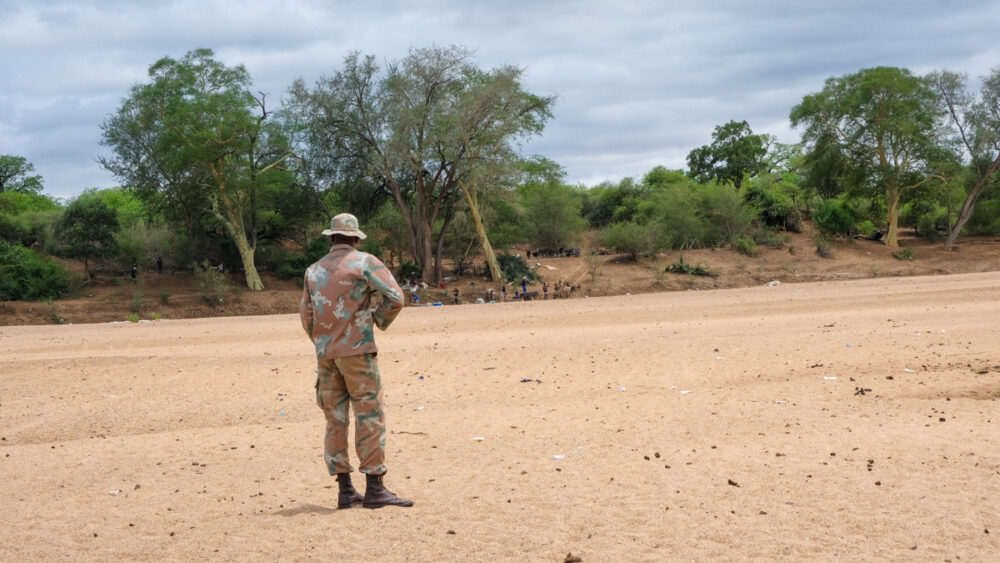
Dark clouds gathered overhead as an army convoy made its way along the gravel road leading in the villages.
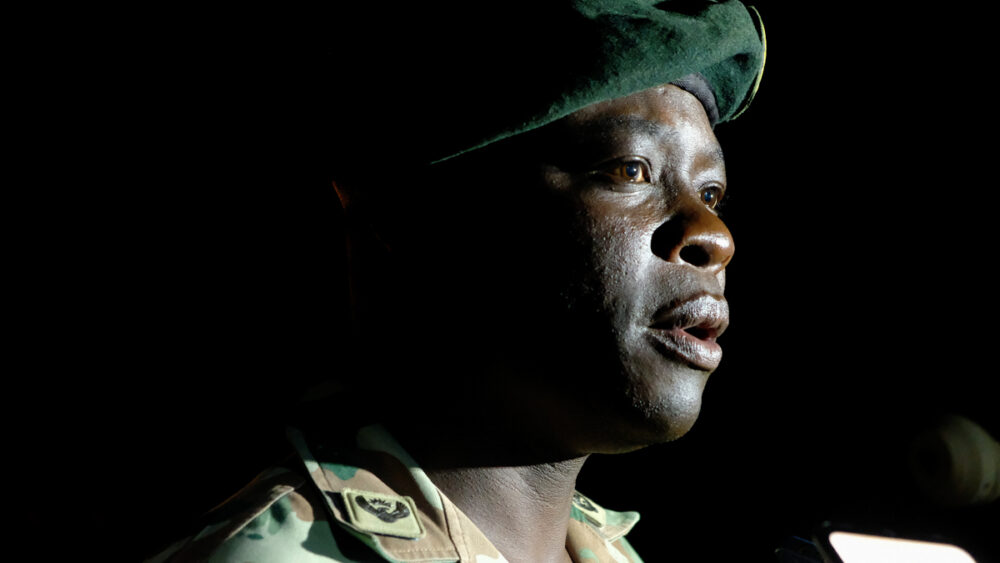
As armed soldiers jumped off the back of their vehicles and led the way toward the dry Limpopo River bank, their movement drew the attention of illegal smugglers who quickly withdrew from the area. Some stood in no man’s land while the army kept a watchful eye on them.
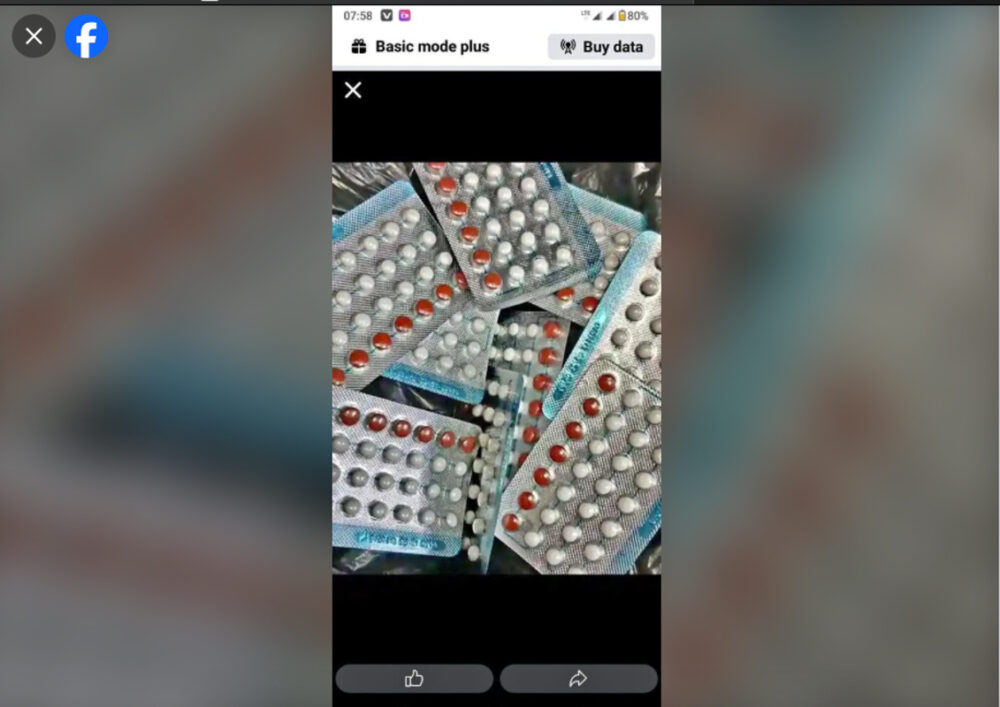
The illegal cross-border consignments include Zimbabwean contraceptive pills, which have found a market in South Africa via social media platforms like Facebook Marketplace, where suppliers sell them for R10 to R20 a packet.
Migrant women living in Johannesburg say they use the birth control pills because they have no other local options.
They cite language barriers and the barring of undocumented foreign nationals from accessing services at public health centres by vigilante groups such as Operation Dudula.
Last year members of Operation Dudula and March and March carried out a campaign of
blocking undocumented foreign nationals from using public healthcare services in public hospitals and clinics, accusing them of draining resources meant for South Africans.
The South Gauteng High Court later issued an interdict against the acts.
Janet Moyo (not her real name), who supplies contraceptive pills in the Johannesburg central business district, says her clients resell them in informal settlements and to migrant communities.
Moyo says she bought the bulk stock from a police officer who confiscated a box full of contraceptive pills from smugglers.
“I don’t just sell these pills; I also use them to prevent unintended pregnancies. I have never used pills provided free in local clinics in South Africa,” she said.
“After I gave birth to my first child here in Johannesburg 12 years ago, nurses offered me local pills, a brand most women complain causes nausea, weight gain and mood swings. I took them but did not use them.”
Another supplier, Sizani Nkomazana from Yeoville, who gets her stock from Facebook Marketplace, would travel to Zimbabwe to get the pills, crossing the border with the help of amaguma-guma, men who smuggled goods and undocumented people illegally into South Africa for a fee. This carried the risk of being raped by the men and getting arrested.
“I would run out of stock and my clients would sometimes go without,” she said.
“The risk of buying in bulk poses a greater health risk of using pills that have expired or been stored under conditions that are not suitable for them.”
The smuggling network includes the suppliers of pills from clinics in Zimbabwe and transporters to the South African black market and has thrived despite concerted efforts, among them South African National Defence Force (SANDF) patrols along the border.
The pills are brought into the country by runners who use illegal routes and informal cross-border transporters called “omalayitsha” who transport goods and people without documents between Zimbabwe and South Africa, using amaguma–guma to get them across the border.
“It’s a challenge to stop smugglers coming into South Africa because there are a lot of exits within the fence and that is where the contrabands can cross over,” Major Shihlangoma Mahlahlane, of the Joint Technical Operation for Operation Corona, told journalists in 2024 at Ha-Tshirundu, a Limpopo village identified as a hotspot for smuggling goods between South Africa and Zimbabwe.
“When we patrol towards the east, then they cross towards the west because they know the area is vulnerable, it’s not covered .”
Operation Corona is an operation led by the SANDF at South Africa’s ports of entry to tackle border-related criminal activities.
Mahlahlane said contraband smugglers often bribed their way across the border, often at night or early in the morning, using the cover of darkness to avoid security forces deployed along the border line.
Migrant women also opt for smuggled contraceptive pills from Zimbabwe because of the advert effect local pills have on their bodies, supplier Moyo says.
“I have been using Secure pills from Zimbabwe for 12 years and never experienced any side effects. My skin glows and I haven’t gained any weight,” she said.
The pills are branded and distributed in Zimbabwe as Secure — a progesterone-only contraceptive, and Control — a combined oral contraceptive pills.
The pills are provided to hospitals and clinics through the National Pharmaceutical Company of Zimbabwe and sold at an affordable fee, while in private pharmacies they sell at US$ 1 for two packs.
“Zimbabwean migrant women’s beliefs and practices relating to contraception or antenatal care are a continuation from their country of origin.
These continuities are instituted and facilitated through a series of transnational activities, maintaining social ties and communication,” says independent researcher Sibonginkosi Dunjana.
In her research paper, “Exploration of Zimbabwean Migrant Women’s Beliefs and Practices Surrounding Access and Utilization of Contraceptives and Antenatal Services in South Africa”, Dunjana highlights that Zimbabwean women’s beliefs and practices surrounding contraceptives or antenatal care are complex, multilayered and characterised by multiple intersections between personal, social and structural factors from both the country of origin and destination.
Nobuhle Dube, a mother from Hillbrow, believes contraceptive pills from Zimbabwe are more effective than the ones provided at clinics in Johannesburg.
“One can get pregnant while consuming local pills; even some South African women prefer using pills from Zimbabwe,” said Dube, who used Secure while breastfeeding and now uses the Control pill.
“I buy the pills from black market suppliers for R20 per packet, and there is no need for regular check-ups like blood pressure while taking these pills.”
Socio-economic status, lack of documentation and policies also prevent migrants from using local health facilities and medication, studies say.
When Sihle Moyo, a Zimbabwean mother of one, gave birth to her child at the Hillbrow Health Clinic in 2017, she immediately started using contraceptive pills provided for free at the centre.
But she says that as the years went by, she started facing discrimination from nurses who told her that family planning pills were meant for South African women only. Dube was introduced to the black market by a relative.
According to the State of the World Population 2025 report titled “The Real Fertility Crisis: The Pursuit of Reproductive Agency in a Changing World”, not all health systems can provide the full range of sexual and reproductive health services, whether due to poor integration of these services within healthcare systems, provider bias, insufficient availability of affordable and quality reproductive health commodities.
It says health policies are some of the most impactful means of supporting and expanding reproductive choice and that better policies are needed to help prevent unintended pregnancies and for women to have children when they are ready for them.
Both needs can be addressed by ensuring that the full range of sexual and reproductive health services are available and well integrated into primary health systems.
Department of health spokesperson Foster Mohale said: “According to the law of the country, no one should be denied access to health care services due to nationality nor immigration status.”
The National Health Act stipulates that “everyone has the right to access healthcare services, including reproductive healthcare”
This applies to everyone who resides within the borders of South Africa, whether documented or not.
This work was produced through a grant provided by the Wits Centre for Journalism’s African Investigative Journalism Conference 2025.
Beyond matric results: what meaningful education looks like in a changing world:
Each January, matric results dominate headlines across South Africa, offering a snapshot of academic performance at the end of a long schooling journey. For many families, these numbers matter deeply, symbolising years of commitment, sacrifice and hope. Yet, as the world young people are entering becomes increasingly complex, the national conversation around education is slowly beginning to shift. The question is no longer only how well students perform in examinations, but how well schools prepare them for life beyond the classroom.
Rising concerns around student wellbeing, future employability and ethical leadership have placed new expectations on schools. Parents are seeking environments that combine academic rigor with emotional intelligence, adaptability and a sense of purpose. In this context, strong matric results remain important, but they are increasingly seen as one indicator of a broader, more holistic educational experience.
Situated in the Winelands of the Western Cape, Somerset College offers a compelling example of how academic excellence can flourish within a values-driven, student-centred approach to education. As an independent, co-educational school offering schooling from Grade 000 through to matric, alongside the Cambridge A Levels pathway, the College has built a reputation for consistency, balance and intentionality in its educational philosophy.
The Class of 2025’s IEB matric results reflect this long-standing commitment. Students achieved an average of 4,15 distinctions per candidate with a 100% Bachelor’s Degree pass rate — a benchmark Somerset College has maintained for every matric class since the school’s inception in 1997 — underscoring a record of sustained and consistent academic performance rather than isolated success. Importantly, these outcomes are not pursued in isolation. Somerset College encourages students to select subject pathways aligned with their individual strengths and aspirations, whether through the IEB or Cambridge curricula, fostering both academic depth and personal ownership of learning.
Behind these results lies a deliberate approach to teaching and learning; one that values intellectual curiosity, disciplined thinking and meaningful engagement over rote achievement. Teachers are encouraged to build strong and meaningful relationships with students, creating an environment where students feel they belong and are challenged. This emphasis on connection allows students to take academic risks, ask questions freely and develop resilience in the face of difficulty; qualities that extend well beyond examination halls.
Central to the College’s ethos is the “Somcol Experience”- an educational journey that recognises that young people are shaped as much by who they become as by what they achieve. From early childhood through to senior school, students are encouraged to participate in a wide range of sporting, cultural, arts, leadership and service opportunities that complement academic learning.
Outdoor education, community engagement and experiential learning form an integral part of this experience. Whether on the sports field, the stage, in service initiatives or leadership roles, students are exposed to moments that foster empathy, teamwork and self-awareness. These experiences help cultivate confident, grounded individuals who understand their place within a wider community and the responsibilities that come with it.
Wellbeing is also increasingly recognised as foundational to academic success. Somerset College’s approach acknowledges the pressures young people face and seeks to equip them with the tools to think, manage challenge and change. A strong pastoral framework, combined with a culture of care and accountability, supports students as they navigate both the demands of school life and the broader complexities of adolescence.
As conversations around education evolve, so too does the understanding of what it means to prepare students for the future. Many of today’s students will enter careers that do not yet exist, in a world shaped by rapid technological advancement and global uncertainty. In this environment, adaptability, ethical reasoning and lifelong learning are as essential as subject knowledge.
Somerset College’s educational philosophy is grounded in the belief that schools have a responsibility to develop thoughtful, engaged citizens; young people who can contribute meaningfully to society while remaining true to their values. Graduates leave the College not only with strong academic foundations, but with the confidence to navigate university, careers and life beyond school with integrity and purpose.
As matric results once again take centre stage, Somerset College’s experience offers a timely reminder that academic success is most sustainable when it is rooted in a balanced, human-centred approach to education. When students are supported to grow intellectually, socially and emotionally, results follow naturally. For families considering what they want education to offer their children, the focus is often less on chasing numbers and more on choosing an environment where young people are supported to BELONG, empowered to BECOME, and inspired to thrive BEYOND — both at school and long after they leave.
Calling students starting Grade 8 in 2027
Experience what it means to learn, grow and thrive at Somerset College.
Event: SomCol Experience
Date: 28 February 2026
To attend, please complete the online application form: https://somersetcollege.org/admissions/
Submit and get free exposure here: Showcase Your Business | Advertise Your Special Offers.
