Pack Your Bags: Flight Centre’s ‘Rising Star’ Destinations Promise Even More in 2025:
South African travellers have a soft spot for the familiar, and last year’s Top 10 International Destinations list from Flight Centre was packed with favourites, including London, Dubai, Harare, Mauritius, Amsterdam, Istanbul, Lagos, Phuket, Paris and Auckland.
But, as Antoinette Turner, General Manager of Flight Centre South Africa, explains, 2024 saw some impressive booking jumps, with Flight Centre’s Year in Travel report revealing five destinations worth watching:
- China
Asia is poised to reclaim its crown as the world’s top travel destination in 2025, according to travel technology leader Amadeus, who dubbed this resurgence the ‘Asia Uplift’. South African travellers are already embracing this trend, with China seeing a dramatic surge in bookings – up 36% from the previous year. Top picks included Guangzhou (+47%), Shanghai (+24%), and Hong Kong (+6%). The appeal? Strong trade connections, fascinating culture, and direct flights.
For South African travellers:
- Visa required? Yes – must be obtained before travel.
- Best time to visit? Spring (March-May) or Autumn (September-November) if you’re looking for mild weather and fewer crowds.
- Rand-friendly? Relatively. 1 ZAR = approximately 0.42 CNY or 0.42 HKD*.
- Average flight time? Depending on where you’re heading (and if you’re choosing to go direct), anywhere between 13 and 18 hours.
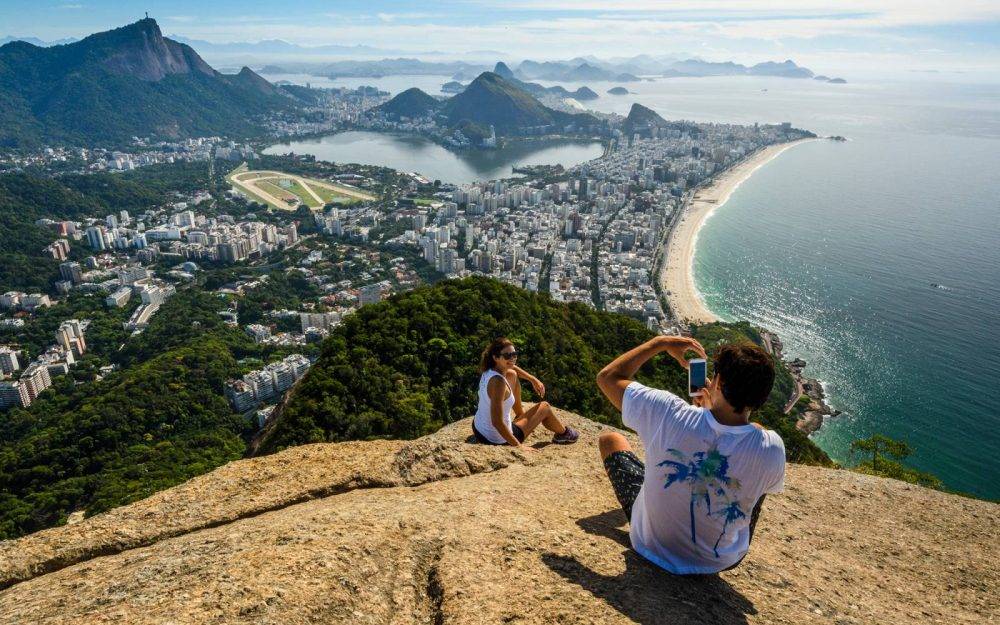
- Brazil
Turner says that the reintroduction of SAA’s direct flights to São Paulo contributed to an impressive 51% surge in Brazil bookings, with Rio de Janeiro (+58%) and São Paulo (+52%) leading the way. Whether drawn to the food, culture and vibrant energy of São Paulo, or the world’s biggest New Year’s Eve party on Copacabana beach, or easy access to the rest of South America, South Africans were heading to Brazil in their numbers!
For South African travellers:
- Visa required? No visa required for stays of up to 90 days.
- Best time to visit? March to November (to avoid the rainy season).
- Rand-friendly? Yes. 1 ZAR = approximately 0.31 BRL*.
- Average flight time? 11 hours.
- Mozambique
Despite Mozambique’s political challenges over the height of the 2024/2025 summer season, proximity and affordability still fuelled a 32% jump in bookings in 2024, with South Africans finding the country’s tourist resorts (including Bilene, the Bazaruto Archipelago, Inhambane, Pemba and Vilanculos) and magical coastline hard to resist.
For South African travellers:
- Visa required? No visa required for stays of up to 30 days (just be aware that your passport must be valid for at least six months after your date of travel).
- Best time to visit? The dry season is from May to November, but South Africans love Mozambique at any time of year!
- Rand-friendly? Yes. 1 ZAR = approximately 3.7 MZN*.
- Average flight time? 1-2 hours (with daily flights from major South African cities).
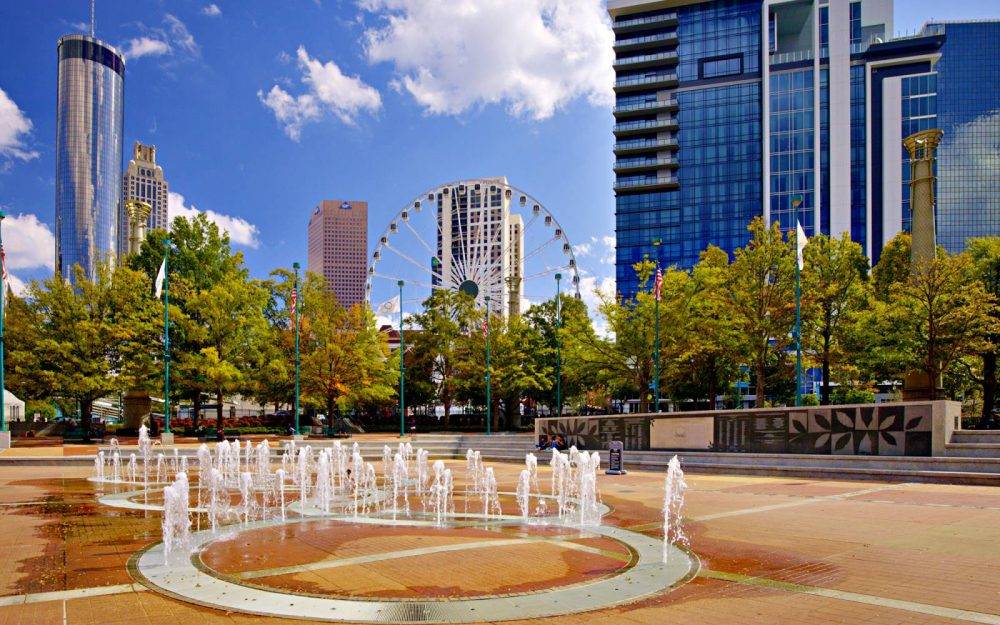
- Atlanta, USA
With a 14% growth in bookings, Atlanta emerged as a surprising new destination, serving as a gateway to the American South’s cultural heritage.
As Turner explains, Atlanta is a hub for Delta Airlines, which services both Cape Town and Johannesburg with direct flights to Georgia’s capital – perfect for South Africans looking to explore the Southern states of South Carolina, Alabama, Mississippi and Louisiana (hello, New Orleans!).
For South African travellers:
- Visa required? Yes, US visa required.
- Best time to visit? March to May or September to November.
- Rand-friendly? No. 1 ZAR = approximately 0.053 USD*.
- Average flight time? 16-17 hours.
- Mauritius
There’s not a list that Mauritius isn’t on!
“We’re seeing steady growth in our bookings to Mauritius,” says Turner. “And while a 2% booking increase may not seem dramatic, Mauritius already holds 4th place on our list of Top 10 International Destinations, so this continued growth underscores its enduring popularity among South Africans.”
For South African travellers:
- Visa required? No visa required for stays of up to 90 days.
- Best time to visit? May to December (dry season).
- Rand-friendly? Yes. 1 ZAR = approximately 2.6 MUR* (but consider an all-inclusive stay to avoid unnecessary surprises).
- Average flight time? 4 hours.
Travel Tips for South Africans in 2025
The diversity of these rising destinations reflects South African travellers’ growing appetite for both adventure and cultural experiences. From the bustling streets of Shanghai to the beaches of Mozambique, these destinations offer unique experiences at various price points and travel durations, catering to different types of travellers.
If you are planning a trip this year, Turner offers the following advice:
- Book well in advance for better rates, especially for long-haul destinations.
- Consider shoulder seasons for better value and fewer crowds.
- Check visa processing times, as some destinations may have longer wait periods.
- Check all entry requirements and documentation – including that you have at least six months left on your passport.
- Always opt for travel insurance.
- Keep updated on travel advisories and entry requirements, which can change frequently.
With proper planning, these destinations are more accessible than ever for South African passport holders.
Read the full Flight Centre ‘Year in Tavel’ report here.
*According to the exchange rate on 10 February 2025
Golf star Dylan Naidoo is a reincarnation of SA’s sports legends:
Many of my fellow South Africans are of the opinion that we should move away from the racial stigmas of the past. And, in a developing country, there is a strong case for this. But as much as we would like to practise this, sometimes it is just not possible.
I realised this when I watched Wayde van Niekerk win the 400m at the Rio Olympics in 2016. After the race, I stood in that stadium and held my South African flag up high. Many foreign spectators turned to me and cheered. What they didn’t know was that I wasn’t only celebrating Van Niekerk but the plethora of world-class South African “coloured” sportsmen who came before him.
You will not find their names in any halls of fame, sports or on those fancy SuperSport newsreels. You will not find their names alongside Graeme Pollock, Barry Richards or Gary Player — but they were great, nonetheless. Many say they were even better than the likes of Herschelle Gibbs, Benni McCarthy and Vernon Philander.
And there were a number of them — Pat Blair, Duncan Crowie, Charles Carey, Keith America, Boebie Solomons, Hector Fynn, Georgie Francis, Gavin Snyman and Mark Buckley (from soccer); Basil d’Oliviera, Tiffy Barnes, Koeki Neethling, Tiny Abed, Saaiet Majiet and Michael Patrick (cricket); David Samaai, Cavan Bergman, Marcelino Winlock and Raymond Anthony (tennis); Enver Lyners (table-tennis); Andy Wrankmore and Denver Hendricks (squash); Ron Elland and Precious McKenzie (weightlifting) and Cecil Blous, Herman Gibbs, Steve Rive, Cecil Wilton, Reshaad Williams, Ian February and Shaun Vester (athletics). And I’m just naming a handful.
To me, Van Niekerk is the offspring of this great line of sporting thoroughbreds.
And when I saw Dylan Naidoo had won the SA Open this Sunday at Durban Country Club, similar feelings ran through my veins. I thought about other great sportsmen of colour. Among them: Sugar Ray Xulu, Thiri Rampath, Steve Kalamazoo, Dharam Mohan, Jomo Sono, Maniraj Singh, Ace Nstolongoe, Super Naidoo and Daya Maistry (soccer); Stanley Govender, Yacoob Omar, George Langa, Devdas Govindjee, Solly Chotia, Ben Malamba, Baboo Ebrahim and Jugoo Govender (cricket); SS Maharaj, Jasmat Dhiraj, Hassan Mahomedy and Richman Mahlangu (tennis); Matthews Temane, Kiruban Naidoo, Karamchand Hiraman, Matthews Motshwareteu and Jock Maduray (athletics); Pradeep “King” Singh (volleyball); Tap Tap Makhatini (boxing) and Vincent Shabalala, Daddy Naidoo and, of course, the great Papwa Sewgolum (golf). Again, I’m only naming a few but there were many, many more.
When I think of all of them, it raises the question — had the playing fields been level, would there have been a different sports landscape in South Africa? Simply by judging the composition of current South African sports teams and the example of Naidoo’s victory, the answer can only be “yes”.
Sewgolum, of course, remains one of the greatest South African legends. He was not only famous because he won the Natal Open (on another rainy day at Durban Country Club), he became a legend because he won three Dutch Opens. For the son of a blind woman, who was so poor that he couldn’t afford to go to school and was forced to support his family by caddying — during the height of apartheid — that was really something.
So, when we celebrate Naidoo this week, we should spare a thought for all those who went before him.
Because Naidoo, in many ways, might just be the reincarnation of legends past.
Note: Maybe this should be an open letter to Gayton McKenzie, the sports minister, to make him realise that sport goes a lot further than what we see today on the local channels and it is time he started recognising these legends
Robbie Naidoo has been an author and a sportswriter for 30 years. He played representative tennis, squash and cricket and has reported locally and internationally and covered four Olympic Games.
South Africa needs to learn from disasters:
“Waves of creative destruction” is how economist Joseph Schumpeter once described the growth of capitalist economies. What underlies his comments is the awareness that growth involves commitment, discomfort and radical change.
It was the radical changes that Lee Kuan Yew introduced in 1959 when he became president of Singapore that boosted his country’s fortunes. He cracked down on corruption, overhauled the civil service and invested heavily in education and skills training. When compared with Johannesburg, which at that time, due to its mineral assets, was wealthier, today we can see the results of Yew’s efficient governance.
Within a generation Singapore transformed from a developing world to a first world economy, while Johannesburg is wallowing in the deepening mire of inner-city squalor and growing service delivery problems. Although its historical socio-political legacy brings an added layer of complexity to Johannesburg’s trajectory, it is important to note the role of effective governance in a nation’s growth and sustainability.
So, when we look at latter-day South Africa, what we see are current and approaching disasters. Load-shedding is a disaster. Failing public transport is a disaster. Political infighting is a disaster. Pervasive corruption is a disaster. Besides the damaging effect on daily life, economic and otherwise, it also signals to potential investors that South Africa is unable to ensure an enabling investor environment. This significantly undermines economic opportunities and is a significant hurdle to lift GDP growth to even above 1% for the current fiscal year.
South Africa’s many issues reaffirm that we live in a disaster-prone country. On any given day we are assailed by disasters, be they natural, such as droughts, floods and wildfires, or human-made, such as corruption, maladministration, high unemployment and poor service delivery.
And because we are integrally connected to the rest of the world, we must add the complications of Donald Trump’s presidency in the US. Already we’ve seen the results of this — the executive orders to terminate health aid to South Africa and the possible removal of the African Growth and Opportunity Act preferential trade agreement between the US and South Africa.
With the increasing stress that our disasters heap on us, it’s understandable why many believe we’re living in the age of kali yuga (a term from Hindu mythology referring to when everything unravels and there is increasing social unease and breakdown).
From the constant bickering in our government of national unity, it seems that one of the biggest problems facing us is lack of nationhood; a collective “we” feeling. This is both at citizen and public official level. The elections in 2024 that gave us the unity government might have affirmed our democracy but did they affirm our “unity”?
We constantly undermine each other, which exacerbates our problems. A case in point is AfriForum presenting their perspective of the Expropriation Act to Trump and provoking a backlash that will potentially negatively affect all South Africans.
Decades of living with uncertainty caused by various socio-economic and political problems has harmed the South African psyche. These have been constant since 1994 and have undoubtedly made many South Africans jittery, driving many to seek stability elsewhere in the world. And for those who remain, many view government initiatives with suspicion and cynicism.
But it doesn’t matter where we migrate to, having to live with uncertainty, complexity and more frequently occurring disasters is the new normal, globally. Author Wolfgang Grulke refers to current times as the “Era of Chaos” and what makes it more challenging is that we cannot really learn from the past. Author Nassim Taleb refers to trying to learn from the past as “retrospective distortion” because a completely different set of societal factors prevailed then.
If disasters, natural or human-made, form the new normal, then we have to learn how to mitigate them. Throughout our human history we have encountered disasters in various forms and intensities. When we shift our focus to a deeper understanding of disasters, we begin to realise that, contrary to conventional beliefs, disasters are not an end in themselves with only destructive outcomes, but that there are valuable lessons for us to acquire. In the natural world, disasters are part of nature’s cycles of rejuvenation and resilience.
And herein lies the problem — how do we, as a nation, learn from our disasters and convert these lessons into strengths? What can we learn from other countries, such as Singapore and South Korea, who have developed successful economies despite having similar problems to ours some years ago?
With all disasters, we need to find the inflection points that precipitated the disaster, take the lesson and be willing to self-correct. Unless we critically reflect on our actions, disasters will continue raining upon us. Futurist Alvin Toffler (author of Future Shock) summed it up eloquently when he wrote, “The illiterate of the 21st century will not be those who cannot read or write, but those who cannot learn, unlearn and relearn.” Managing disasters requires us to re-evaluate how we live, how we relate to other sentient beings and how we consume on the planet.
What is reassuring is that humans are intelligent, adaptable, dextrous and capable, but what we often lack is the consciousness to show more empathy, emotional intelligence and the willingness to act.
This begins with inner transformation, similar to what the group of Swedish scientists who developed the Inner Development Goals framework in May 2021 advocated to support the UN sustainable development goals. Their aim was simple — to create a process starting with self-awareness (being), then moving towards action. The rationale was that humans will only move intentionally once there’s been an ontological shift, that is, how they see themselves in relation to their environment.
We live in relationships — humans to humans and humans to nature — all integrally linked to each other. To manage disasters more effectively, we need to move beyond blaming and towards more empathetic, collective responsibility. Seeing disasters holistically and coming up with generative solutions through collective commitment might be the only glimmer of hope in our disaster-prone world.
Rudi Kimmie is director of the Aerotropolis Institute Africa at the University of KwaZulu-Natal. He writes in his personal capacity.
Submit and get free exposure here: Showcase Your Business | Advertise Your Special Offers.