
Paris art fair week and black representation:

In the folds of the Seine, Paris — with its age-old echo of revolutions, where cobblestones have borne both protest and promenade — awakens once more.
As an unyielding centre of insurrections, the city’s inherent toughness is captured in every stone, marking the tempo of both uprising and leisurely strolling.
During the Paris+ par Art Basel art fair week in late October, this resonance became clearer, urging one to attune — art, as a testament to existence, is constantly evolving, always in conversation, seeking its deserved place.
It’s during this time that Paris’s storied past weaves into the present, delineating where history brushes against the now.
The city pulses with life, at a juncture where ancient and contemporary seamlessly coalesce, highlighting the intricate dance between age-old traditions and modern reinvention. Art is not a static entity but a dynamic occurrence, an active verb unfolding in real time.
It’s found in the hushed whispers against walls adorned with murals, in the soft dialogues tucked away in corners, and in the audacious masterpieces that screamwithout uttering a word.
The streets of Paris during its art fair week are not merely pathways; they are living testimonies, echoing the melodies once played by Gerard Sekoto, retracing the steps where Pablo Picasso once danced, and whispering tales that James Baldwin penned.
Amidst this symphony, the sheer euphoria of being a South African in the city, especially during the Springboks’ Rugby World Cup triumph, charged the Parisian air with an electric vigour. This energy, palpable and pulsating, courses through the city’s veins, illuminating its essence.
Paris, with its historic standing as an art and culture nexus, firmly re-established its global significance during the famed art fair week.
Seven art fairs unveiled their treasures, solidifying the French capital as the undeniable epicentre for global art aficionados. The most prestigious, the Paris+, steered by the distinguished Art Basel group with Noah Horowitz at the helm, witnessed a noticeable absence of South African galleries and black artists.
Major names like Stevenson and Goodman, previously seen at the flagship Art Basel in Switzerland, were notably missing.
Yet, the vibrant presence of the SMAC Gallery was unmistakable.
Their choice to spotlight Benoni-born Simphiwe Buthelezi was ingenious. Her creations, a blend of materials ranging from steel to Zulu glass beads, were a sensation, underscoring herinnate talent and the gallery’s visionary approach.
The positioning of galleries within art fairs often reflects the ever-evolving contemporary art scene. Paris+’s commitment to budding galleries gave voice to Galerie Carole Kvasnevski and illustrates a continued renewal and vision.
Zanele Muholi’s monumental success the previous year was rivalled by this year’s installation in the Tuileries gardens of their sculpture The Politics of Black Silhouettes (2023).
Set not far from where Saartjie Baartman voiced her final words, art poignantly conveyed the enduring struggles and achievements of black identities.
Joël Andrianomearisoa, the renowned artist who represented Madagascar’s inaugural participation at the Venice Biennale, displayed his distinct vision not only at Macaal but also at Koyo Kouoh’s Zeitz MOCAA. His glass and metal artwork Serenade and the Triumph Of Romance (2023), gracefully positioned in the garden, amplified conversations through its research and experimentation with materials and sentiments.
Could it be that the upward movement of black figuration to prominence — a trend that has surged with vigour in recent years, is over?
A gallerist, whom I’d prefer to keep anonymous, exclaimed with exasperation: “Thank God! If I see another painting of a family album, I might just collapse.”
This perspective becomes clearer in the face of juxtapositions. A gallerist’s weariness with recurrent themes of familial reminiscences stands in stark contrast with the awe-inspiring works of maestros such as Henry Taylor, whose exhibition at Hauser & Wirth was not just a testament to his brilliance but a resounding affirmation of the relevance of black figuration.
His canvas isn’t merely cloth and colour; it’s an epoch, a history, a narrative.
Artistic trends aren’t mere whims that ebb and flow with the tides of popular opinion.
They are mirrors, reflecting back to society its deepest fears, aspirations, struggles and triumphs.
To consider the black figuration’s seeming retreat as a sign of its waning relevance is to engage in a superficial reading of art’s purpose. It’s not an ebb; it’s a deep inhalation, a momentary pause to gather momentum for the next wave, the next exploration, the next revelation.
The AKAA (Also Known As Africa) art fair, initiated by Victoria Mann, arose as a key platform championing African art eight years ago. Located at the Carreau du Temple, this fair has morphed into a microcosm of the vast African continent and its diaspora.
Over 30 galleries and 100-plus artists wove an enthralling tapestry of stories, histories and experiences.
With stalwart galleries’ continued allegiance and the debut of newcomers such as MCC Gallery, Primo Marella Gallery and Afronova, AKAA is sculpting a global artistic fraternity.
South Africa was prominently represented, with notable works by Ayanda Mabunu, Mpho Feni, Sizwe Sibisi, Aviwe Plaatjie, AO Ntshabele and numerous others.
The booth by Kalashnikovv Gallery, hosted by MJ Turpin and Matt Dowdle, showcased Isaac Zavale’s artwork, which perfectly encapsulated Johannesburg’s spirit of commercial innovation.
Alongside Zavale, artworks by Turiya Magadlela and Ayanda Mabulu offered incisive commentary on the socio-political dynamics of South Africa.
Emilie Demon’s Afronova, a notable advocate for African contemporary art, represents an array of distinguished artists, emphasising the vast artistic talent from the continent. It showcases works by talents such as Sibusiso Bheka, known for his urban narratives, and Lawrence Lemaoana, famous for his fabric artworks.
Other featured artists include the captivating photographer Alice Mann and the abstraction-focused Dimakatso Mathopa. In addition, Cape Town’s Ebony/curatedgallery presented works by artists such as Lisa Ringwood, Hugh Byrne and Haneem Christian.
The ensemble also highlighted Congolese artist Zemba Luzamba, known for his socio-political depictions.
The Lusophone influence was evident and impactful at both Perve Galeria (Lisbon) and Movart gallery (Luanda).
At Perve Galeria’s booth, the evocative paintings of Portuguese artist Teresa Roza d’Oliveira offered deep insights into the cultural ties between Mozambique and Portugal, drawing from her profound relationships and addressing themes such as gender rights and diasporic challenges.
On the other hand, at the Movart gallery, Mario Macilau, a former street child and winner of the 2023 Prix Roger-Pic, showcased monochrome photographs that delve into the stories of marginalised individuals, highlighting their resilience and the human essence amidst vulnerabilities.
Both artists use their mediums to portray stories of connection, adversity and strength.
From other parts of the continent, standout names like Franck Lundangi, Delphine Diallo and Tegene Kunbi left a lasting impression with their distinctive works.
Lundangi’s fusion of African and European styles was compelling. Kunbi’s award- winning paintings, inspired by Ethiopian textiles, resonated through their vibrant colours and rhythmic patterns.
Diallo’s poignant mixed-media photographic collages shed light on the diverse identities of the African diaspora. It was especially uplifting to witness David Brolliet, a Swiss collector, securing one of her works.
I witnessed Binelde Hyrcan signing a photograph from his fantastically challenging 2019 project In God We Trust at 31 Project.
There’s no art fair without its accompanying dinners and afterparties, including an invitation to Gagosian’s residence for the unveiling of Italian arte povera artist Giuseppe Penone’s work, the White Cube dinner in honour of the exceptional artist duo TARWUK and Thaddaeus Ropac’s opening for the remarkable Jamaican artist Alvaro Barrington.
As the swan song for the AKAA art fair, we gathered at the illustrious Soho House.
The afterparty was so sought-after that many collectors, galleries and artists were unable to gain entry, as the venue reached capacity.
With martinis and Johnny Walker Blues flowing freely, I dedicated my DJ set to the global protests for peace. Blending afro house, amapiano, dubke and cutting-edge electronic Arabic music, I crafted a quintessential Globalisto set.
My aim was to welcome everyone, regardless of class, colour, religion, race or gender, to partake in a communal dialogue. Through this, I hoped to emphasise art as a potent catalyst for resistance, peace, love and unity.
Instagram: @mo_laudi
The post Paris art fair week and black representation appeared first on The Mail & Guardian.
Gauteng’s treated water availability is tight, says water and sanitation department:

Rand Water is already over the limit for water it can extract from the Integrated Vaal River System (IVRS) and it would be irresponsible to increase it for Gauteng, said the director general of the department of water and sanitation.
Rand Water’s total capacity is 5 200 million litres of treated water a day. “We have to ensure that in the IVRS, the amount of water that’s taken out … is managed in such a way that we don’t end up in an even worse crisis,” said Sean Phillips, who was describing the root causes of the water supply problems in Johannesburg.
“We can’t have a situation where Rand Water is extracting so much water from the IVRS that if we have a drought in a few months time, that we would run the risk of all the dams running completely dry and a Day Zero-type situation. We have to ensure a degree of responsibility as to how much water is extracted from the Vaal River system.”
Phillips was addressing a meeting hosted and facilitated by WaterCAN, an initiative of the Organisation Undoing Tax Abuse, on Saturday, with Rand Water, the department and Johannesburg Water, civil society organisations and residents from multiple suburbs affected by water outages.
The meeting, held at the Women’s Jail at Constitution Hill, sought solutions to the ongoing water crisis in Johannesburg. The City of Johannesburg did not attend.
Farah Domingo, the spokesperson for the newly-formed water crisis committee, said that not having water for seven days in her area prompted residents to establish the committee. “I look after my 81-year-old mother and cleaning her with buckets of water in the middle of the night — we don’t have water every night — it’s very difficult.”
No buffer
Phillips said the R40 billion phase two of the Lesotho Highlands Water Project — the Polihali Dam — had been delayed by nine years. Although it is now under construction, it is due to be completed by 2028. Only then will it be possible for Rand Water to increase its abstraction of water from the IVRS.
Gauteng’s population now numbers more than 16 million people and the demand for water has grown rapidly. The province is a water-scarce area in a water-scarce country. “There simply isn’t sufficient naturally occurring water in the Gauteng area to supply the water demands to 16 million people and all the industries in Gauteng.”
The demand-supply relationship for treated water in Gauteng is “very tight”, he said, and the system is vulnerable to disruptions caused by heavy load-shedding, electro-mechanical breakdowns or the theft of cables.
Usually such breakdowns would not have a noticeable effect on water supply because of the ability to draw on reserve supply capacity, but there is no longer any reserve supply capacity.
In Johannesburg, water is usually gravity-fed from municipal reservoirs to households, this means that high-lying areas are worst affected by supply disruptions.
Rand Water has a R35 billion investment programme, which the bulk supplier is timing so that by the time phase two starts putting a lot more water into the IVRS, it will have the capacity to treat a lot more water. “Then the supply and demand situation for treated water in Gauteng should improve,” said Phillips.
Even so, Gauteng’s long-term water consumption will need to be carefully managed because there are limits to which further phases of the project or other water transfer projects can continue to provide additional water to Gauteng at an affordable cost.
“As we go for more expensive ways of bringing more water to Gauteng, that water is going to become more expensive for all of us in Gauteng. So, there’s an imperative for us to use water more sparingly because there isn’t a limitless supply of cheap water you can bring from elsewhere.”
Phillips said “everyone needs to work together” to bring down the average per person water consumption in Gauteng of 253 litres a day closer to the world average of 173 litres per person a day.
What needs to be done
Rand Water’s infrastructure is well-maintained and it loses only 3% of its water to leaks. On average, across Gauteng’s municipalities, their physical water losses stand at 35%. “The problem is not with Rand Water. The problem is in the municipalities, in their systems, due to decades of neglect and lack of maintenance.”
Joburg’s physical losses are 24% to 25%, while the international norm is 15%, “so Joburg is not doing too badly compared to many other municipalities. Nonetheless, we can have much less risk of the kind of supply disruptions that we’ve had, for the next few years if we can reduce these physical losses, because it will mean much more water available in the system,” said Phillips.
Municipalities need to improve their billing and revenue collection and allocate sufficient funding for maintenance and leak reduction, as well as invest in additional pumps, reservoirs and pipelines “that can make the system less vulnerable to disruptions”.
Rand Water’s chief operating officer, Mahlomola Mehlo, said its system is a “live system”, which will, from time to time, experience issues of infrastructure fatigue. “It’s 120-year-old machinery so you can imagine some of the infrastructure that we operate is that old. Be that as it may, it talks to a very robust maintenance programme, renewal of infrastructure and the rehabilitation of assets.”
Although most of its systems are exempt from load-shedding, “we have seen over time due to the instability of the grid, especially as we move from stages four to six, that we’ve got a lot more power supply interruptions”.
This is not necessarily from load-shedding but “purely from the instability of the grid”, Mehlo said, adding that strong relationships that have been formed with Eskom and City Power have helped to mitigate these supply risks.
“We’re quite alive to the fact that we’re not going to get off the grid tomorrow but we’ve got a hydropower and solar bid that has recently been adjudicated,” he said, adding it had procured huge generators, strategically placed at its tertiary sites to help counter the effects of load-shedding.
Logan Munsamy, the senior manager of operations at Johannesburg Water, said the City of Johannesburg should be consuming about 1 500 million litres of water a day, but it’s a concern that its consumption is still hovering above that.
“When we talk about consumption, we’re talking about the entire City of Johannesburg with all its challenges and its complexities. The weather does play a portion of it, the losses in the system also does play a part in it, but through our initiatives together with our partner Rand Water, you can see we’re starting to show a downward trajectory, which is a positive outlook.”
‘Perfect storm’
Craig Sheridan, the Claude Leon Foundation chair in water research and the director of the Centre in Water Research and Development at the University of the Witwatersrand, said the city is facing a “perfect storm”.
“We have climate change; we have water scarcity; we have population growth; we have poor city planning, which is why there’s too many people and not enough water. We have law enforcement challenges, which we’re all faced with at a personal level, and we’re facing at a municipal level and at a national level.”
Other problems include ageing systems and infrastructure, load-shedding and declining revenue in real international monetary terms “so we’ve got less bang for our buck when we’re buying international equipment”.
Sheridan said there are political instability and silos in the city. “We have civil distress, that’s why we’re all here … but what we’re not having is an integrated response. What I mean by that is you’re trying to put out fires right now. You’re not managing to address our current challenges, never mind manage our future needs within the budgetary constraints that we’re all trying to look at.”
The authorities need to share water data. “Your city planners have to know what the water quality is, what the water needs are [and] how much is being supplied because if that’s not publicly available information, when people start to develop … they don’t understand how the impact of this development will impact your water supply systems,” he said. “And once you’ve got this data, please lean on us as academics and as civil society. We can help.”
Munsamy said: “At the moment, we are so fixated on killing fires, we’re running all over the show. We just need to regroup and refocus and have these forum discussions as a utility and as a municipality and partner with you, you’re the eyes and ears … I’m not saying we run the perfect system but together we can push towards achieving it and we are going to work with civil society.”
The post Gauteng’s treated water availability is tight, says water and sanitation department appeared first on The Mail & Guardian.
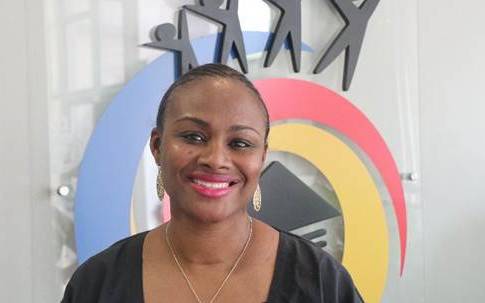
Afrika Tikkun and Microsoft unite South African businesses to revolutionise youth employability and close the skills gap
Some of the country’s largest corporations at a recent roundtable discussion co-hosted by youth development group, Afrika Tikkun (AT) and Microsoft have questioned whether South Africa’s unemployment challenges are truly about job availability, rather than a mismatch in skills demand and supply.
During the dialogue held under the theme “Skills Gap, Youth Employability and Employment,” industry leaders have uncovered a critical issue hindering progress in South Africa’s workforce development landscape: a lack of coordination and collaboration among employers and those who provide young people with skills. This lack of collaboration, they warn, is allowing the gap between skills demanded by industry and those provided to young people to widen.
While much of government policy and efforts by the skills and education sector focus on providing as many young people as possible with a wide range of skills and qualifications, employers are still struggling to fill vacancies in tech, finance and other growing sectors without hiring from outside South Africa, or struggling to retain the small pool of skilled individuals in these crucial industries.
Lack of cooperation and coordination among stakeholders
The dialogue revealed a significant obstacle impeding the country’s workforce development environment. It was the conspicuous lack of cooperation and coordination among the various stakeholders who are accountable for providing the youth with necessary skills and employment.
Distinguished delegates from leading companies, along with various SMMEs and recruitment firms, shed light on the urgent imperative for a radical shift in perspective toward collaboration and skills-focused approaches.
The consensus among industry players is that harnessing the power of supply chain interactions and industry-wide collaboration is paramount in addressing the pressing skills gap challenges faced by the nation. They also committed to tackling employment challenges as a collective.
“Those who want to end the cycle of youth unemployment may need a change in attitude and perspective to get to the bottom of its skills gap challenges that continue to feed into rising unemployment,” said Onyi Nwaneri, Deputy CEO of Afrika Tikkun.
Skills shortage
The discussions held during the roundtable highlighted the necessity for employers to reassess their requirements, placing greater emphasis on the value of skills rather than solely relying on formal qualifications.
“As we see slight improvements in some aspects of youth unemployment in SA, this is a crucial opportunity for employers to rethink their approach to workforce development,” said Nwaneri.
“By embracing a mindset change and acknowledging the value of skills, employers can actively contribute to bridging the gap between available resources and the needs of industries affected by the skills shortage.”
A move towards purpose-driven skills development
Despite thousands of young people completing skills development and learnership programs, the rate at which these graduates are being absorbed into the workforce is severely lacking.
According to a recent study by two skills development groups The Collective X and Harambee, more than 28 000 digital and ICT jobs are outsourced to other countries in South Africa, which amounts to R8.5 billion in lost export revenue.
Additionally there is currently a demand for around 66 000 digital and ICT jobs forecasted for the next year, of which around 44 000 are entry-level jobs suitable for the youth. But does South Africa have the skilled youth to fill these posts?
Youth must embrace new technology and globalisation
Young people need to change their attitudes towards education and skills development by embracing the opportunities presented by new technology and globalisation. Employers likewise need to look for skills rather than formal qualifications in order to give opportunities to more capable and eager young minds to participate in the evolving economy, delegates said.
In an effort to foster employer collaboration and sustainable growth across industries, AT plans to facilitate further initiatives in the coming months. “We hope this will be the start of a collaborative movement comprising employers, educators, and organisations dedicated to addressing poverty, inequality, and employment challenges in South Africa. By leveraging the power of unity and collaboration, AT aims to create a thriving ecosystem that empowers young individuals and uplifts communities,” concludes Nwaneri.
Onyi Nwaneri is Deputy CEO of Afrika Tikkun
About the Afrika Tikkun Group
Tikkun, as Afrika Tikkun was formerly known, was founded in 1994 by the late Chief Rabbi Cyril Harris and philanthropist/businessman Dr Bertie Lubner. Initially, the focus of the organisation was on meeting the day-to-day needs of children. Renamed MaAfrika Tikkun and later Afrika Tikkun, the organisation evolved to provide a holistic development model in disadvantaged communities, with a focus on Early Childhood Development, Child and Youth Development, and Career Development, better known as the Cradle to Career 360° model. The Afrika Tikkun Group works to develop young people from underprivileged communities in South Africa from Cradle to Career.
For more information visit www.afrikatikkun.org
The post Youth development group sparks debate: Is South Africa fighting a skills shortage or a jobs shortage? appeared first on The Mail & Guardian.
Submit and get free exposure here: Showcase Your Business | Advertise Your Special Offers.
