People living with HIV in fear as impact of donor funding cuts begin to show in eSwatini:
Nompilo Mdluli and Simphiwe Matsebula, of eSwatini, have something in common. They were both born with HIV. They have been taking lifesaving antiretroviral treatment (ARVs) for many years to stay healthy.
Despite never having to worry about access to treatment for the most part of their lives, Mdluli, 29, and Matsebula, 26, are anxious about the country’s HIV response, and are afraid for the future of people like them who rely on this treatment daily, after US government funding cuts for the country’s HIV response in late January.
“I still have medication, but I have heard that other facilities are running out of stock … We have a very high number of people living with HIV in eSwatini and being out of stock of this medicine will actually mean that a lot of people will be infected and face high viral loads and cause deaths.” said Mdluli.
The US government provided 60% support for the country’s HIV response through the President’s Emergency Plan for Aids Relief (Pepfar), including the procurement of second and third line medicine.
People living with HIV did not have to worry about receiving their monthly treatment refill, sometimes for up to six months in advance for those whose viral load is suppressed or otherwise healthy. But this has now changed. While the country still has antiretroviral treatment stock, facilities can only dispense the medication on a monthly basis.
Adhering to daily treatment is important for people living with HIV, to ensure that they can live long, healthy lives and reduce the risk of transmitting the virus to others.
Matsebula and Mdluli are afraid that the availability of this lifesaving medicine may not be guaranteed for long in eSwatini.
“There was one hospital that was helping Amaswati for free with HIV services. It got shut down because of the lack of funds. They didn’t have the money to continue with their services,” Mdluli said.
The now closed hospital that Mdluli is referring to is The Luke Commission under Sidvokodvo, in Manzini, which was partly funded by USAid, Pepfar and the government of eSwatini, among others. The hospital has faced operational problems, alongside US funding cuts, resulting in its closure.
Since the funding cuts, both Matsebula and Mdluli know that the reality of walking into their local clinics and not finding treatment in future is very real. HIV prevention services have been heavily impacted by the pause on Pepfar support in eSwatini, with remote mobile clinics that serviced hard to reach people now closed.
Between 2010 and 2023, the number of new HIV infections declined by 73%, thanks to the evidence-based and scientific response to the pandemic by the government of eSwatini, working in partnership with Pepfar, the Joint United Nations Programme on HIV and AIDS (UNAids), the Global Fund, community organisations and other partners to end Aids as a public health threat in the country.
Matsebula says Pepfar support went beyond providing ARVs for people living with HIV. “For us [people living with HIV], to make sure that we protect ourselves against re-infection, we would put condoms on and use PrEP. So now that the US has cut funding, we are not sure. We are uneasy because we don’t know what is going to happen next. What if we run out of those resources [HIV prevention tools and commodities]?”
Matsebula’s concerns are shared by the country’s health authorities. eSwatini’s principal secretary of the Ministry of Health, Khanyakwezwe Mabuza, says the US government provided the much-needed support in the country’s HIV response, including the procurement of second line and third line antiretroviral treatment.
It also supported pediatric treatment for children and commodities such as test kits and other laboratory commodities beyond daily pills which saved many people.
Mabuza says the government is preoccupied with ensuring that no one who needs treatment misses it. “[We] are very worried. You know you have put 95% of the people [living with HIV in the country] on antiretroviral treatment, something that you’re not supposed to skip. Firstly, for now, their hope is gone. That, if I go to the hospital, I’m told that I am not going to be able to get my medication.”
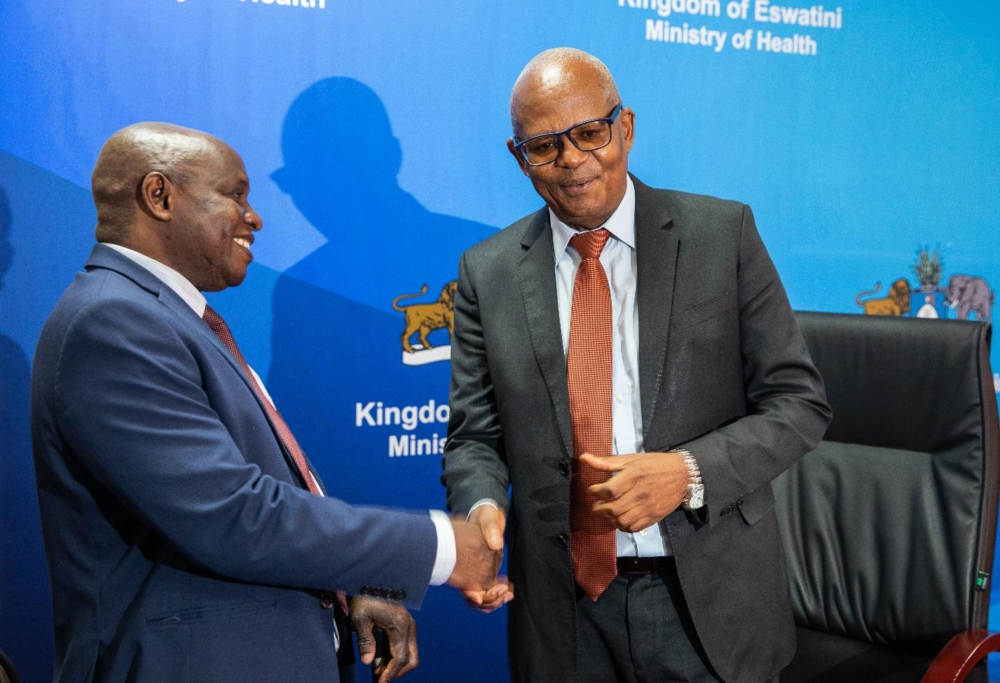
Mabuza says if treatment became inaccessible for many people living with HIV, this could set the country back on the progress made over the past two decades, including ensuring that 95% of the people living with HIV know their status and that they are on treatment and virally suppressed.
“And the worst part is, if the last 95 [95% of people living with HIV who are virally suppressed] drops, you are going to see a new strain coming in … coming in with high resistance because they have stopped ARV treatment. So, the new infections may be even difficult to manage … But we need to make sure that people do get treatment.”
Rural communities that relied on Pepfar and USAid supported community outreach services for HIV prevention and treatment have been particularly affected, leaving tens of thousands of people vulnerable.
UNAids is also affected by the US cuts, and the agency is having to transform with a much smaller footprint globally. UNAids country director for eSwatini, Nuha Ceesay, is worried that if there is no UNAids presence in the country it could significantly weaken eSwatini’s HIV response, including data gathering to inform the country’s targeted HIV response.
“New infections are likely to rebound; it means investments we have made putting people on treatment is going to be affected. It also means we will not be able to generate the strategic information that is needed to inform us in terms of where the new infections are taking place, who is being infected. Why are they being infected? and how many are getting infected? This is the value that UNAids brings to the HIV response.”
While the executive director of the National Emergency Response Council on HIV/Aids, eSwatini’s national multisectoral HIV response coordinating agency, Dr Nondumiso Ncube, says the US funding pause found the country working on the sustainability of the HIV response to reduce heavy reliance on donors, she says: “I don’t think we are at a point where we can say we can be self-sufficient.”
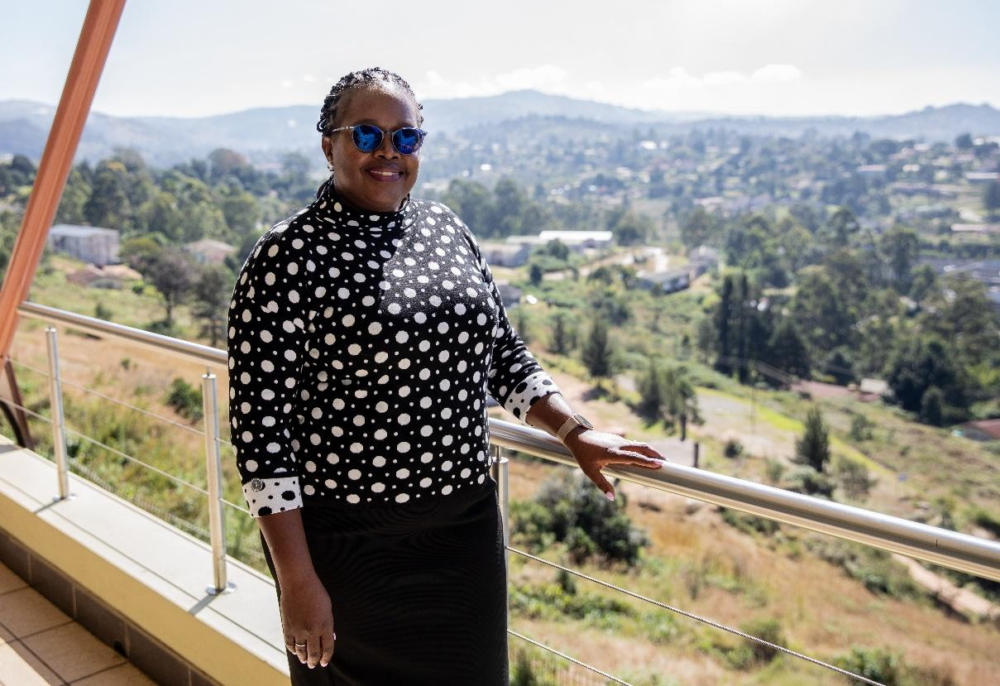
Like Matsebula and Mdluli, People living with HIV are generally anxious about continued access for their daily medication refills. There were also worries about the continued accessibility of commodities that are needed for uninterrupted HIV treatment. For example, at one facility, Luyengo Clinic in Malkerns in the Manzini region, there were no cartridge diagnostics for early infant HIV diagnosis, resulting in infant blood being sent to Mbabane, the capital city, delaying results where they were needed urgently.
The US government’s support for Eswatini’s HIV response, through Pepfar, stretched far and wide covering 60% of the national HIV response budget in a country where about 220 000 people of the just over 1.2 million people are living with HIV.
Today, 95% of people living with HIV are on life-saving antiretroviral treatment, thanks to Pepfar working in partnership with the country to navigate the pandemic, through financial and technical support. 96% of people receiving treatment in the country are also virally suppressed, which means that they cannot transmit the virus to their sexual partners, helping to avert new HIV infections in communities.
While the government of eSwatini says it did not expect Pepfar support to continue forever and, as such, has been working with UNAids and national HIV stakeholders to develop a sustainability roadmap to put in place measures that aim to reduce reliance from external funding to ensure the sustainability of the country’s HIV response, health authorities admit that financial cuts are threatening to undo the progress that has been achieved to end Aids as a public health threat in eSwatini by 2030.
This UNAids article has been lightly edited by the Mail & Guardian.
Lungu’s family loses bid to appeal ruling on former Zambian president’s burial:
The Pretoria high court has dismissed with costs a bid by former Zambian president Edgar Lungu’s family’s to appeal a ruling rejecting its request to have him buried in South Africa.
Lungu died on 5 June while receiving medical treatment in South Africa.
Zambian President Hakainde Hichilema’s government wanted to repatriate Lungu’s body for a state funeral, but his family insisted that his funeral and burial take place in South Africa, angry that he had been stripped of his retirement benefits and privileges after his decision to re-enter active politics.
The Pretoria high court suspended Lungu’s burial in South Africa in June amid a legal battle that resulted in an order on 8 August that his body be returned to Zambia for a state funeral.
In the latest legal blow against the family, on Tuesday the court upheld that ruling, saying that it was “satisfied that on the merits there are no reasonable prospects of success [in the Lungu family’s bid to appeal]”.
“As for the application of Zambian law, the court considered that the deceased was on a temporary visit to the Republic [of South Africa] for medical reasons. The main parties to the dispute are peregrini [non-citizens],” it said.
The court said the argument was that the matter raised unique constitutional issues and points of law as to whether the constitutional and common law rights of a spouse and children of the deceased may be trumped by a state pertaining to the remains of the deceased.
“Furthermore, for a foreign state to assert a right of burial under its own laws, not South African law, are compelling reasons for the Supreme Court of Appeal to pronounce on. We are satisfied that no compelling reasons exist to grant leave to appeal, simply because the matter is so fact specific that there is little to no prospects that the same set of facts will confront a court again,” it said.
The court also ordered the Lungu family to pay costs to the Zambian government.
Decision for PA’s Kunene to be Joburg mayoral candidate taken before his suspension – party sources:
The decision to have suspended Patriotic Alliance (PA) deputy president Kenny Kunene as the party’s candidate for Johannesburg mayor was taken long before his suspension, sources said on Tuesday.
PA leader Gayton McKenzie announced on Facebook on Monday that the party had resolved Kunene would be its candidate despite his suspension pending an internal investigation into his relationship with murder suspect Katiso “TK” Molefe.
Sources told the Mail & Guardian this was after the party’s national executive committee decided earlier in the day that, despite Kunene still not being cleared in the internal inquiry, he should still be the candidate for the city’s mayoral chains.
“He has done very good work in the City of Joburg, and the DP [deputy president] will be our mayoral candidate for Joburg. We insist on that as he was a councillor. We will discuss with him that position, but the DP, we want his case to finish,” McKenzie said.
Kunene resigned as Johannesburg’s transport MMC in July after the party suspended him for a month, pending an investigation into his relationship with Molefe, who was arrested for allegedly orchestrating the murder of Oupa Sefoka, aka DJ Sumbody, in 2022.
Kunene was at Molefe’s home during the arrest, raising questions about his ties with the murder accused. Molefe was on R100 000 bail for another murder when he was picked up. Kunene told the M&G at the time that he did not know Molefe and that “I was at the wrong place, at the wrong time for the right reasons”.
On Tuesday, a senior PA source said Kunene being a mayoral candidate had nothing to do with being cleared from the internal party investigation, saying the report was still awaited. They said the executive committee had decided to stick with Kunene being the mayoral candidacy.
“We can’t come and say we are changing our decision. What if the report clears him, so we continue with our decisions? If there are issues with the report, then we deal with those issues,” they said.
“The person has stepped back, but we are saying we have confidence. When the report comes, we can still change our decision. We can’t hold on to the Johannesburg mayor’s candidate, and you announce everywhere else.”
The M&G understands that Kunene was not in the executive committee meeting.
Another source said the party had to make the announcement because other parties were already naming their candidates.
Last month, the DA announced Cilliers Brink as its mayoral candidate in Tshwane, and sources in the party told the M&G that its federal chair Helen Zille was increasingly likely to be the mayoral candidate for Johannesburg. A DA source said internal polling had identified Zille as their best candidate and that an announcement on this was close.
Meanwhile, the ANC met all its councillors on Monday ahead of the 2026 local government elections.
“The DA is announcing its mayoral candidates, the ANC called its councillors and they’re readying themselves. We know who our councillor candidates are for the areas. We always announce mayor candidates earlier; otherwise, we then have people wanting to choose themselves,” the PA source said of Monday’s announcement about Kunene.
In his Facebook address, McKenzie said the party’s investigation of his deputy was nearing an end. He said Kunene had been interviewed, as had everyone else they needed to talk to.
The party had said the investigations would take a month, but almost two months have passed.
“People were saying: What’s happening now with the case of the DP. You said, in 30 days. I’m not the one investigating this matter. I told you who’s investigating it,” McKenzie said.
“We must wait, because we can’t interfere during the investigation. If we interfere, then you’re going to go like: ‘Ah, you’re interfering, he’s interfering again’.”
Submit and get free exposure here: Showcase Your Business | Advertise Your Special Offers.