
PepsiCo South Africa doubles local production:

In a show of confidence in the local economy, Pepsico South Africa has further expanded its local production in the country — one of the US food and beverage giant’s biggest operational growth regions globally.
PepsiCo South Africa bought Pioneer Foods for US$ 1.3 billion in 2020 and agreed to a raft of conditions imposed by the Competition Commission, including the provision of the equivalent of R8.8 billion in value for the benefit of its employees, agricultural development, education, the growth of the target company’s operations and local enterprise development programmes.
In keeping with its commitment to develop its local production and with an eye on growing its exports and revenue generated in the country, PepsiCo this month opened a new R75 billion Futurelife factory at Dube TradePort in KwaZulu-Natal, a special economic zone (SEZ ) adjacent to King Shaka International Airport.
Its subsidiary, Pioneer Foods, acquired the remaining half of the locally developed nutrient-dense breakfast cereals and snacks maker, Futurelife Health, in May, after buying an initial stake of the 14-year old-brand in 2020.
“We were previously manufacturing our products at our 4 000 sqm (square metre) facility situated at New Germany, KwaZulu-Natal, where most of our portfolio was produced and packed from January 2017,” PepsiCo CEO Riaan Heyl said.
“It has just been decommissioned and we have moved all the production lines to our new facility.”
At 8 500 square metres, the new facility is more than twice the size of the previous manufacturing site, and similarly, it has led to a doubling in production, he added.
“Futurelife originated in KwaZulu-Natal and holds a strong commitment to this province. We are dedicated to preserving our heritage and furthering our investments in the KZN economy and our local community.”
He said the product is a “growing and innovative” local cereal brand and “to continue this momentum and ignite further growth and innovation, investment was critical. Larger premises and increased capacity were a necessity to unlock our future growth.”
The SEZ has also provided the business with infrastructure and location benefits as it has easy access to the airport and other logistics nodes, like roads and the Durban Port.
South Africa is today among Pepsico’s largest seven operational areas in the world, including the United States, Mexico, Russia, Canada, China and the United Kingdom, from where it markets and sells a wide variety of beverages and convenient foods across more than 200 countries.
Operations outside the United States generated 43% of consolidated net revenue in 2022, with Mexico, Russia, Canada, China, the United Kingdom and South Africa, collectively, comprising approximately 23% of consolidated net revenue for the period.
Asked why PepsiCo had displayed huge confidence in South Africa, not least since its acquisition of Pioneer Foods is one of the largest deals the firm has ever made outside the US, Heyl said the company shared the same commitment as the target firm which also provided an opportunity for brand growth.
“When PepsiCo was considering its acquisition of Pioneer Foods, it found a company with a shared commitment to serving the people of South Africa by providing the highest quality food and beverage products while driving inclusive growth for its employees, its suppliers, and the community at large,” Heyl said.
“Its robust, locally relevant product portfolio expanded PepsiCo’s one, with strong positions in cereals, juices, and other nutritional food staples, including well-known, scaled brands like Weet-Bix, Liqui-Fruit, Ceres, Sasko, Safari, Spekko, and White Star. These, along with legacy PepsiCo brands such as Simba, Lays, Doritos, Nik-Naks and Fritos enables PepsiCo South Africa to offer a broad set of consumption choices for South African consumers.”
Pepsico South Africa, which is part of the Africa, Middle East and South Asia (AMESA) sector within PepsiCo is positioned for further growth.
“Along with our counterparts in the rest of Africa, Middle East, India and Pakistan we are considered a growth engine within the global company,” Heyl said.
According to PepsiCo’s 2022 annual report the business’s global “success depends in part on our ability to grow our business in developing and emerging markets, including Mexico, the Middle East, China, South Africa, Brazil and India.”
“There can be no assurance that our products will be accepted or be successful in any particular developing or emerging market, due to competition, price, cultural differences, consumer preferences, method of distribution or otherwise,” the company noted, while listing the raft of additional risks associated with these regions.
“Our business in these markets has been and could continue in the future to be impacted by economic, political and social conditions; acts of war, terrorist acts, and civil unrest, including demonstrations and protests; competition; tariffs, sanctions or other regulations restricting contact with certain countries in these markets; foreign ownership restrictions; nationalisation of our assets or the assets of our business partners; government-mandated closure, or threatened closure …”
Even with South Africa’s present risks: the energy crisis and battle against load shedding, the sometimes volatile political climate, upcoming 2024 elections, port, rail and road logistics challenges, risk of social unrest, inequality and poverty, PepsiCo remains somewhat confident of its local business prospects.
Said Heyl: “We are cautiously optimistic about the outlook, notwithstanding some of the enormous challenges we face as a country. We believe we have a winning product portfolio, and high calibre people working at PepsiCo South Africa to help us weather the storm.”
KZN MEC for economic development, tourism and environmental affairs, Siboniso Duma, speaking at the opening of the new facility, said it would play a major role in sustainable economic development in the province.
“We are cognisant of the fact that manufacturing is one of the sectors hardest hit recently. We experienced Covid-19 lockdown, followed by devastating floods. All of these resulted in thousands of job losses. Notwithstanding these challenges, as government we remain committed to work with the private sector to create more jobs and ensure the recovery of our economy.”
“The fact that Futurelife already sources 87% of its raw materials locally, gives local producers an advantage of future upstream integration,” Duma said.
Futurelife currently has a staff complement of 186 people and anticipates creating an additional 24 direct jobs over the next five years, as it seeks to grow 30% of its business into export markets in Asia, the Middle East, Europe, North America and the rest of Africa.
The post PepsiCo South Africa doubles local production appeared first on The Mail & Guardian.
Pentagon amps up posture in Mideast in response to Iran ‘escalations’:

The Pentagon moved on Saturday to step up US military readiness in the Middle East in response to what it said were “recent escalations by Iran and its proxy forces” across the region.
US Secretary of Defence Lloyd Austin ordered the activation of air defence systems and notified additional forces that they may be deployed soon.
Austin did not say how many US troops would be added to those already in the region.
The Pentagon’s moves came after what Austin described in a statement as “detailed discussions” with President Joe Biden.
“These steps will bolster regional deterrence efforts, increase force protection for US forces in the region, and assist in the defense of Israel,” Austin said.
The steps continued the Biden administration’s response since Hamas militants in the Gaza Strip stormed Israel on October 7, taking more than 200 hostages and killing at least 1,400 people, according to Israeli officials.
Israel has since vowed to destroy Hamas, and says around 1,500 of the group’s fighters were killed in clashes before its army regained control of the area initially under attack.
Austin said he had activated deployment of a Terminal High Altitude Area Defense (THAAD) battery and additional Patriot battalions “throughout the region.”
“Finally, I have placed an additional number of forces on prepare to deploy orders as part of prudent contingency planning, to increase their readiness and ability to quickly respond as required,” Austin said.
Tensions are rising along Israel’s northern border with Lebanon after the Israeli army traded fire with the Iran-backed militant group Hezbollah amid fears of a new front opening as Israel battles Hamas.
In south Lebanon on Saturday, Hezbollah said four of its fighters were killed. Palestinian militant group Islamic Jihad said one of its fighters was also killed.
Armed factions close to Iran have threatened to attack US interests in Iraq over Washington’s support for Israel.
US troops stationed at two bases in Iraq were targeted with rocket attacks Friday that caused no casualties.
Since Wednesday, three Iraqi bases used by US-led coalition troops have been targeted in five separate attacks — Ain al-Assad, the Al-Harir base in northern Iraq and a military camp near Baghdad airport.
Israel’s military said Saturday it would intensify strikes on Hamas-controlled Gaza ahead of a planned ground invasion.
The military has pounded Gaza with relentless strikes in response to Hamas’s October 7 attack.
The bombing campaign has killed more than 4,300 Palestinians, mainly civilians, according to the Hamas-run health ministry, and reduced swathes of the densely populated territory to ruins.
A first trickle of aid entered the Palestinian enclave from Egypt on Saturday, but the 20 trucks permitted to cross have been described as a “drop in the ocean” given the needs of 2.4 million residents.
© Agence France-Presse
The post Pentagon amps up posture in Mideast in response to Iran ‘escalations’ appeared first on The Mail & Guardian.
The vanished Eden of SA’s first people:
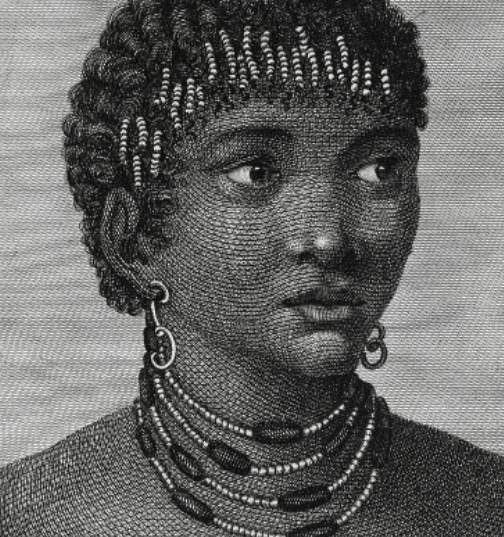
The French naturalist and explorer François le Vaillant related a strange and touching anecdote about his encounter with a now-vanished Khoikhoi tribe of the Northern Cape in 1784.
These nomadic pastoralists — Le Vaillant used the abandoned designation “Hottentots” — had a taste for brandy and tobacco, which he always carried with him on his South African collecting missions.
On this occasion he had enough of the spirit to serve only the chief and what he thought were the prominent men of the Kaminou tribe. He was “stupefied” to see them hold it in their mouths without swallowing, then “go towards those who had not received any and share it from mouth to mouth … in the same way as the gentle birds of heaven feed their young”.
Le Vaillant is moved “to the very depths of [his] soul” by this display of selfless egalitarianism. Throwing himself into the arms of the chief, who had also shared his brandy, he “flooded his venerable face with … [my] tears”.
The incident is described in the second volume of Le Vaillant’s Travels into the Interior of Africa via the Cape of Good Hope, recently republished in English by Historical Publications Southern Africa (Hispsa) after a 200-year hiatus.
It forms part of an invaluable portrait of Khokhoi society at its last gasp before it fell to settler-colonial genocide.
But the Travels also highlight Le Vaillant’s exceptional qualities in an age when the “blue-eyed devils” of Europe — American writer and political activist Eldridge Cleaver’s phrase — decimated Stone Age groups from Canada to New Zealand.
He was a man largely free of racial and cultural prejudice, who wrote that he would happily “gulp down whale oil with Laplanders”.
His “almost savage” childhood in Paramaribo, Dutch Guiana (now Suriname), partly accounts for his free spirit and love of the wild.
But as a member of the rising professional middle classes in France he was also heavily influenced by the French Enlightenment, the French Revolution and their great gift to the world — the idea of universal human solidarity.
Le Vaillant’s regard for the Gonaqua tribesmen he travelled with was deeply dyed by the Enlightenment philosopher Jean-Jacques Rousseau, who idealised the moral purity of pre-industrial peoples and condemned “civilisation” as the ruin and scourge of these “children of nature”.
Many will know Le Vaillant as the father of South African ornithology, who lent his name to Le Vaillant’s Cuckoo, Le Vaillant’s Cisticola and the Crested Barbet (Trachyphonus vaillanti).
Stubbornly individualistic, he brushed aside the binomial classifications of Linnaeus in favour of his own idiosyncratic system, which included the Bateleur Eagle (French for “acrobat”, from its rocking flight) and the Narina Trogon, named after a Khoikhoi woman he admired.
In a pre-photographic age he gave vivid pictorial expression to Africa’s startling realities. He was a gifted illustrator, and broke new ground by mounting his specimens, preserved with arsenic soap, in lifelike poses.
Ian Glenn, editor of the first volume of the Travels, notes that the samples Le Vaillant gathered on his three South African forays between 1781 and 1784 provided 10% of the collection of the Museum of Natural History in Paris, and almost all its African birds. At the height of the Terror he applied to the Committee of Public Safety for the post of the museum’s aide-naturaliste.
The Travels are also seen as the foundation of South Africa’s printed literature — coinciding with the emergence and growth of a global consciousness, they were a bestseller across Europe.
But as works of anthropology they have a matching significance. Le Vaillant broke decisively with the medieval notion of Africa as the unexplored home of freaks and monsters, remarking that none of the “big books” could match the “book of nature” — first-hand observation.
The continent and its inhabitants “as distinctive in character as well as colour”, had yet to be studied by his contemporaries, he complained. “Under the pompous name of the study of man, everyone does hardly anything except study the men of his [own] country.”
Le Vaillant loved the freedom and escape from Europe his wanderings gave him. From his second excursion, one gains a vivid sense of the still unspoiled, “charming and magnificent” land of the Eastern Cape.
But he also runs into the smoking ruins of settler homesteads destroyed by “Caffres” – Xhosa – during the First Frontier War.
His sympathies were unequivocal — under the pretext that a few head of cattle had been stolen, he writes that the Xhosa had taken just revenge on the Dutch settlers, who had exterminated “whole hordes of [them], regardless of sex or age, [stolen] all their oxen and laid their country to waste”.
Warfare was a means of acquiring cattle that is “quicker than breeding them” — in one year the settlers purloined “20 000 [head] and mercilessly dealt with anyone who attempted to defend the livestock”.
Prominent in this account is the monstrous figure of Commandant Adriaan van Jaarsveld, “the Tiger of Bruyntjieshoogte”. A dedicated ethnic cleanser and military leader of the short-lived Republic of Graaff-Reinet, Van Jaarsveld was notoriously associated with the “Tobacco Trick” — the massacre of Xhosa after tobacco was strewn on the ground as a trap.
The Cape administration is presented as powerless to check “the abuse and cruel tyranny of the colonists”, while Jan van Riebeeck is shown as a devious trickster who “covered the lip of the poison cup with the honey” of brandy and tobacco.
“These masters of this portion of Africa by imprescriptible right … were won over by [Van Riebeeck’s] cruel lures, and did not see … how this culpable debasement was taking away their rights, their authority, their peace and their happiness.”
In a satirical tilt at Parisian high society, Le Vaillant remarks that the Gonaquas’ solar reckoning of time was adequate for a people who had “no gallant rendezvous, nor a case before the courts … nor some perfidy to commit, nor calumnies to publish, nor some ignoramus of a protector to whom they must pay base and soul-destroying flattery, nor a new play at the theatre they must boo …”.
In keeping with Rousseau’s principle of government according to the general will, the “Hottentot is neither poor nor wretched”, has “neither … ranks nor priests” — and no words for them.
In the Gonaquas’ lost Eden, perfect equality and shared resources “ensure that everybody’s fate is exactly the same”. This includes the chief, who is installed by the tribe rather than by succession, and obeyed only if his counsel is considered valid.
Presciently, Le Vaillant warns of the divisive effect of wealth accumulation. If gold is found, he tells the Gonaqua, “you are lost … [it] is the scourge of the earth, the source of all crimes and cruelties”.
Also born of the Enlightenment, anti-clericalism permeates his account of the Gonaquas’ religion — or lack of it. He pours scorn on the Dutch naturalist Peter Kolbe’s claim that they worshipped the moon, observing that they merely danced under the beams of that “peaceful star”.
The tribesmen had a vague idea of an afterlife, but no conception of a god or gods, and no priestly hierarchy, formal worship or sacred spaces.
Matrimony among the Gonaqua followed the Rousseauian model of a “marriage of the heart”. Lacking all sacramental significance, it needed only mutual consent to transact or dissolve.
Two of his company bulk large in Le Vaillant’s narrative — his trusty manservant Klaas, eponym of Klaas’s Cuckoo, and the young beauty Narina, whose name he conferred on the Narina Trogon, a striking forest bird.
That he should immortalise them in this way was touching proof of his attachment. One of his grand-daughters would later be named “Josephine Narina le Vaillant”.
The two are depicted in his illustrations with conventionally neo-classical overtones: Klaas as a Roman sentry, clad in animal skins, leaning on a spear; Narina as one of The Graces, posing coquettishly, woven basket in hand.
The precise nature of his liaison with Narina is left teasingly unclear. In one erotically charged scene, the naked Gonaqua women, gambolling and “diving with marvellous skill” in the Groot Vis River, submerge themselves out of natural modesty when he approaches. Retrieving her cache-sexe, she confronts him and begs him to leave.
Later, this “beautiful prankster” teases him, a non-swimmer, by holding out on the opposite bank with a bird he has shot. “Nothing I could do scared her”; he aims his gun at her, but this “just made her more mischievous and obstinate in refusing me my heron”.
The dalliance moves towards an ambiguous climax: “At last both of us, in a more peaceful mood, made our way back to my tent.”
Le Vaillant is no paragon. In a disturbing incident that foreshadowed the Sarah Baartman case, he offers a reluctant Khoi woman gifts to inspect her “Hottentot apron” – elongated labia.
“All self-conscious, embarrassed and covering her face with both her hands … she permitted me to look in tranquillity at the object of my curiosity.”
And there are signs, particularly towards the end of his account, that Le Vaillant falsified certain events. Projecting himself as a great man of the hunt, he is dismissed by one of his contemporaries at the Cape as “a very timid and faint-hearted traveller”.
But he enormously expanded our knowledge of the early Cape colony, its wildlife and indigenous people.
In his account of the cruel dynamics of the frontier, he illuminated the forces that drove towards the great tragedy of institutional racism in South Africa.
Through his behaviour he showed that non-racialism was possible in his age, and that the right-wing complaint of “presentism” — that colonialism should not be condemned according to 21st century moral standards — is fallacious special pleading.
Drew Forrest is a former deputy editor of the Mail & Guardian.
The post The vanished Eden of SA’s first people appeared first on The Mail & Guardian.
Submit and get free exposure here: Showcase Your Business | Advertise Your Special Offers.
