
Petition seeks ban on Terbufos, highly hazardous pesticides within three months:
Government must stop conflating food poisoning from highly toxic pesticides with food contaminated by foodborne illnesses.
This is among the demands in a petition issued by the South African People’s Tribunal on AgroToxins, a coalition of civil society; vulnerable and affected people; trade unions; academics and individuals.
“This has led to the inappropriate solution of blaming spaza shops for the government’s failure,” said the petition, which accused the government and South Africa’s chemical industry of “reckless endangerment”.
The petition called on the government to immediately ban the toxic agrochemical Terbufos and institute mechanisms for outlawing all highly hazardous pesticides (HHPs) within three months.
Last month, six children died after eating snacks bought at a spaza shop in Naledi, Soweto. The health department confirmed that the deaths were caused by Terbufos, an HHP from the organophosphate family. It was listed as a “restricted agricultural remedy” last year, requiring specific labelling.
Terbufos has been banned in the EU since 2009.
“There is no reason for it not to have been banned here — European bodies and African bodies react to poisons just the same. Further, and given that it is banned elsewhere, there are alternatives available,” the coalition said.
President Cyril Ramaphosa has declared a national disaster and decreed that all spaza shops must re-register within 21 days but these solutions “do nothing” to deal with the source of the issue — “the unacceptable presence of HHPs on the local market” and the failure of the relevant departments to carry out their duty to effectively regulate agrotoxins, according to the petition.
“We are alarmed that the chemical industry, CropLife, immediately created a narrative in the media to place the blame on spaza shops, the lifeblood of most communities in South Africa, fanning xenophobic flames,” said the groups, noting that this was a bid to deflect attention from their responsibility for the historical and continuing tragedies.
“We are alarmed that our government has supported them in this endeavour.”
The groups are calling on the department of agriculture to overhaul the pesticide registration system within 12 months and to ban aerial spraying of pesticides, as recommended by the UN special rapporteur on toxics and human rights, Marcos Orellana, after his visit to South Africa in 2023.
Orellana’s report found that regulatory gaps and enforcement shortcomings had led to the emergence of street pesticides, widely available at markets, and used in informal settlements to combat rats and other pests, aggravated by the absence of good sanitation services.
“Street pesticides are either legally registered for agricultural use but decanted into unlabelled containers and used illegally for domestic pest control or they are unregistered products, probably imported illegally.”
In 2022, there were 34 poisoning cases, including five deaths in Gauteng from an organophosphate, “probably Terbufos”, Orellana’s report said.
Although the state responded to his report, they did not acknowledge his findings in this regard or “show any urgency to remedy the regulatory problems he identified”, the coalition said.
The petition urged the government to ensure adequate funding for government poison information centres and to establish an independent inquiry into the structural causes and the role of industry in the cases of pesticide poisoning.
Among the other demands is for the government to implement its 2010 pesticide policy and to integrate this with a food security plan that reduces reliance on chemicals for pest control.
A fund must be established within one year to compensate pesticide poisoning victims fairly and equitably.
“We urge the department of health to ensure access to quality healthcare for survivors of pesticide poisoning — particularly children — whose long-term development and health may be at risk from the poisoning.”
Terbufos is one of more than 9 000 toxic chemical compounds registered for use in the country, in varying categories of toxicity, used extensively on wine, maize and citrus farms.
“Farm workers and their children, farm dwellers and people living adjacent to farms are also exposed to these toxins regularly.
“Spraying season has just begun and those living on and adjacent to farms are experiencing the familiar symptoms of exposure to cocktails of toxic pesticides drifting in the air — asthma, sinus, streaming eyes, mood swings, headaches — and many will know the long-term impacts on their bodies in years to come.
This toxic mode of food production is not inevitable, the groups said. They rejected the “well-worn narrative that we cannot achieve food security if we do not spray our food” with poison from seed to production to storage.
“What will it take for our government to take a serious look into alternative, safe methods of food production, if the death of children from Terbufos poisoning has been an opportunity to deflect blame and responsibility?”
Leslie London, a pesticide expert at the University of Cape Town’s School of Public Health said the agriculture department had long served to strengthen and support the needs of commercial agriculture.
“The agrichemical industry was intrinsic to the growth of commercial agriculture and so they are now in the pound seats when it comes to inputs to agriculture. Our entire department believes that pesticides are essential for food security and should not be tampered with in any fundamental way.”
Other countries have recognised the need for pesticide reduction policies and making integrated pest management a core principle of pest control, he noted.
“Not so South Africa, which remains wedded to the antiquated idea that a pesticide treadmill is the only way to secure food security.
“This is aside from the obvious point that food security in South Africa has less to do with producing enough food — which we do —- but with distributing it fairly, since inability to buy nutritious food is the hallmark of our incredibly unequal society with the uncontested highest Gini coefficient in the world.”
Spraying herbicides and insecticides is “not the answer to putting mealie meal on a poor person’s table”, London added.
South Africans flock to nicotine pouches for a more affordable fix:
In many of the nations where vaping is legal, one of the reasons for its popularity is that it’s typically much more affordable than smoking. That’s not the case in South Africa, though, thanks to a new tax on vaping products that puts the price of vapes roughly on par with that of cigarettes on a puff-for-puff basis. Some have openly wondered if the tax could end up driving some vapers back to smoking, which would be a terrible blow to public health given South Africa’s high smoking rates – particularly among men.
Some South African nicotine users, however, are getting their smoke-free fix a different way – they’re switching to nicotine pouches instead. Thanks to a legal loophole for products that use lab-created nicotine rather than tobacco-derived nicotine, many nicotine pouches aren’t defined as tobacco products according to South African law. Therefore, they aren’t subject to the same punitive taxes as vapes – and they’re helping people save a lot of money.
If you haven’t begun to see nicotine pouches at your local retailers yet, rest assured that you will very soon – and in this guide, we’ll tell you everything that you need to know about them.
What are nicotine pouches?
Nicotine pouches are oral nicotine products that look similar to snus except that they’re white. While snus pouches are dark because they contain tobacco, nicotine pouches have no tobacco and instead contain isolated nicotine along with flavours and plant-based fillers and binders.
You use a nicotine pouch by placing it in your mouth and parking it between your gum and upper lip. The nicotine absorbs through the soft tissue in your mouth, and the pouch lasts about 30-60 minutes before the flavour runs out.
Along with the fact that they cost less than other nicotine products, an additional benefit of nicotine pouches is that they don’t require spitting like chewing tobacco. That makes it possible to use them anywhere.
Nicotine pouches are also available in a wide variety of flavours, with fruit and mint options being the most popular.
How popular are nicotine pouches in South Africa?
According to AHREFS – a company that tracks monthly search volumes for keywords on Google – South Africans have taken notice of nicotine pouches in a huge way over the past two years. The keyword phrase “nicotine pouches” received 683 searches in November 2022 and is on pace to receive 2,411 searches in November 2024. That’s an increase of 253 percent in just two years. AHREFS forecasts that the monthly volume will exceed 2,900 searches by the end of 2025 – and as more people become aware of the cost savings, the actual search volumes could end up exceeding the forecast by a large margin.
Are nicotine pouches more popular than vapes?
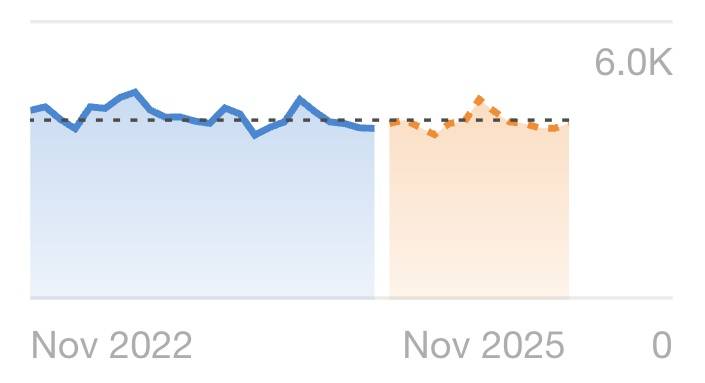
Nicotine pouches haven’t become more popular than vapes in South Africa yet, although the tax has reduced the popularity of vapes compared to two years ago. In November 2022, 5,481 people in South Africa searched Google for the term “vapes.” For November 2024, “vapes” is on track to receive 5,103 searches. That’s a decrease of about 6.9 percent.
It’s estimated that about 4 percent of South African adults are regular vapers; that’s approximately 1.58 million people. Although the decrease in monthly searches for the term “vapes” suggests that the vape tax has slowed the adoption of vapes among South African smokers, vaping probably isn’t in danger of losing its market position to nicotine pouches any time soon.
Are nicotine pouches popular in the rest of the world?
Globally, nicotine pouches represent the fastest-growing segment of the nicotine industry. According to Global Market Insights (GMI), the total size of the nicotine pouch market worldwide was 6.6 billion USD (119.4 billion ZAR) in 2023. GMI forecasts that the market will grow at a compound annual rate of 17.5 percent through 2032, eventually reaching a size of 27.4 billion USD (495.4 billion ZAR).
According to GMI’s market report, nicotine pouches could comprise as much as 39 percent of the market for nicotine products in the United States by 2032. Although government regulations impacting the availability of certain brands, strengths and flavours could potentially stifle the industry’s growth, it certainly seems clear that tobacco-free alternatives like nicotine pouches and vapes will increasingly make traditional tobacco products obsolete.
We caught up with Paras Parmar – owner of The Vape Life in Dublin, Ireland – and he reports that nicotine pouches have experienced the same explosive popularity growth in Europe as they have in South Africa and elsewhere. “I think the popularity comes down to the fact that you can use the pouches anywhere,” Parmar says. “Although vaping has many benefits compared to smoking, you can’t vape in places where smoking isn’t allowed. People are very interested in a nicotine product that has no restrictions.”
Big tobacco has entered the nicotine pouch industry
Many of the world’s biggest tobacco corporations have entered the nicotine pouch industry – and if you use nicotine pouches, there’s a good chance that your preferred brand actually comes from a well-known tobacco company.
Philip Morris International (PMI) – the maker of Marlboro cigarettes and the world’s largest tobacco company – has diversified its product portfolio over the past several years to include a number of alternative nicotine products. PMI is the maker of the IQOS heated tobacco system and acquired the NJOY brand of vaping products in 2023. PMI is also well aware of the increased popularity of nicotine pouches and acquired Swedish Match – the maker of ZYN, the world’s best-known nicotine pouch brand – in 2022 at a cost of 16 billion USD (289.4 billion ZAR).
PMI isn’t alone in its quest to claim a slice of the nicotine pouch industry.
- British American Tobacco has also entered the nicotine pouch industry through its subsidiary R. J. Reynolds, the maker of Camel cigarettes. The Reynolds nicotine pouch brand is called Velo.
- Japan Tobacco International is the maker of the Nordic Spirit nicotine pouch brand.
- Imperial Brands is the maker of the Zone X nicotine pouch brand.
If the streets seem a little less smoke-filled these days, the popularity of nicotine pouches might be a big reason why – and even if you don’t use nicotine yourself, it’s hard not to appreciate the fact that nicotine pouches seem poised to play a key role in South Africa’s smoke-free future.
How to play Easybet South Africa:
Launched in 2023, easybet has become a widely recognized platform with a focus on offering casino services to South African players. The platform is one that offers a variety of payment options such as Zapper, SnapScan, Ozow and bank transfers, ensuring seamless transactions for players. Register an account, make a deposit of R10 and get access to a large casino section with instant games, a variety of slots and jackpot games. Be ready to take advantage of the innovative betting app, which is featured for Android and iOS.
How to register in Easybet
When registering an account, the casino accepts it both through the form on the website and in the application. At the registration stage, you will only need 1 minute and a clear adherence to the instructions provided below:
- Visit the easybet casino website page and at the far right top corner click on Join;
- Enter your cell phone number with code, email address;
- Think of and write Login and Password;
- Complete the verification process;
- Use the promo code for the welcome bonus;
- Accept the Terms and Conditions;
- Click on Create an account.
How to make a deposit at Easybet
With a variety of hassle-free transaction options, the platform is legal and safe to fund and cash out winnings in South Africa. There is a minimum deposit of R10, with all funding methods free of charge and instant processing providing immediate access to place a bet. To make a deposit, follow the steps below:
- Authorize into your personal cabinet. Use the box easybet login;
- Go to personal data and deposits;
- Select the method and specify the amount;
- Confirm the deposit.
Easybet games type
The Easybets game collection is presented in a large variety, categorized and ranked by providers. The slots collection boasts a variety of themes and jackpots. Ranging from classic fruit machines to ultra-modern video slots, you can find anything on offer. Listed below are the types of games by category on the site:
- Top Instant games;
- New games;
- Hallowins;
- Continue Playing;
- Pragmatic slot games;
- AGT slot games;
- Red tiger games;
- NetEnt games;
- EGT;
- Drop and Wins;
- Game show;
- Scratchcards.
Conclusion
According to numerous easybet reviews there is a distinct advice to create an unlimited gambling account and use the convenient methods of popular transactions. The easybet register tab can be accessed from the website or mobile app. The casino offers a large selection of games organized by category, with bonus promotions and offers, and a convenient win withdrawal system.
Submit and get free exposure here: Showcase Your Business | Advertise Your Special Offers.
