Popo Molefe: From politics to fixing potholes:
Former North West premier Popo Molefe is hardly sniffed or seen in the ANC corridors, but has become a successful business person in Knysna and thrown his lot behind community projects.
The struggle hero par excellence — who in his younger days intimately knew the brutality of the apartheid system, but held on to his political convictions of justice as one of the leaders of the Black Consciousness Movement, United Democratic Front and the ANC — now worries about problems such as fixing potholes.
From his halcyon days of addressing cheering crowds, the 72-year-old now collaborates and expends his energy with his Afrikaner colleagues — or you could call them cadres of different kind — in a different human struggle to fix the country’s collapsing infrastructure.
“Comrade Jo,” he said. “Now the new struggle is to spruce up our towns, to remove grime and collaboratively work together with members of the Knysna community to fix potholes.
“This is what we do in Knysna, which must be seen as an offshoot of what the Presidential Operation Vulindlela seeks to achieve — to fix the infrastructure. We need to all, as South Africans, consistent with the offerings of the Freedom Charter, to debunk this rubbish spread by some organisations, peddling untruths about our country.”
This is an apparent reference to moves by the right-wing Afrikaner rights group AfriForum and other organisations that have lobbied the United States government to take punitive measures against the government over what they claim is the persecution of white South Africans.
“We need to work together, work hard, all the people of this country, to fix our country, to get it where it should be, and to encourage as many people to do the same, in little and big ways, and this by each doing little things in our localities,” added Molefe, who is also a former chair of the Passenger Rail Agency of South Africa and Transnet.
His Afrikaner comrades in Knysna include Eugene Vermaak and Jan van der Westhuizen, both business people in the town who are committed to fulfil the words of former US president John F Kennedy: “Ask not what your country can do for you, but what you can do for your country.”
“We are committed to fix broken roads, closing potholes and fixing bursting sewer pipes, which spill human waste in the streets, with the potential of spreading diseases among communities,” said Molefe.
He spoke against the backdrop of a country struggling with the many dysfunctional municipalities, which has resulted in poor local governance, and seen several placed under administration.
Molefe said Vermaak and Van der Westhuizen have deployed all forms of resources to ensure that where the local council shows weaknesses, community members are encouraged to plug the holes, and contribute money towards fixing broken infrastructure.
“Talk to these guys, and hear for yourself what kind of commitment they have to mobilise community work to ensure that Knysna becomes a functioning council, and attends to infrastructural defects for the good of the ratepayers,” Molefe said.
They are keen to remain apolitical in their efforts, Vermaak said. “We don’t want to apportion blame. What we want to say is that coalition governance Knysna is failing the community by not keeping the town’s infrastructure working.
“Whatever the difficulties, we want to state that we are committed to supporting the council — our function is to facilitate, and not to take over the running of the council but to collaborate by doing what we can do to fix the potholes, and play a facilitating role to ensure that there is no complete dysfunctionality in our town.
“There is a coalition of the ANC, EFF [Economic Freedom Fighters], Patriotic Alliance and Plaaslike Besorgde Inwoners. We do not criticise. We help the council where it falls short, but we have to make sure we do not incur legal liabilities in whatever form, and so we will offer support, and partner with them.”
Vermaak noted that the political environment is dysfunctional. “Hence our call to community members to shoulder other functions, such as closing potholes, sourcing water pipes, which had to be flown from Botswana, as well as getting technical expertise to fix broken infrastructure, such as waste water treatment plants, among others.
“We are not engineers, and we will not get involved, but we will speak to plumbers, speak to people with expertise in waste water treatment, since the plant has been out of commission for two years,” he said.
“The plant is back in service; 10 engineers were dispatched from Gqeberha to sort out the problem and other ancillary challenges. We are grateful to a local businessman who funded the project, forking out R500??000.”
The business people have formed the Knysna Infrastructure Group, working with the council.
The group has about 10??000 members from a local population of about 103??000. Each member contributes R100 a month to the group’s coffers, so that it can reach a sustainable target of R100??000 a month.
Other people contribute more than the stipulated R100 to ensure “we have enough money to cover expenses and run the project”.
The Knysna Business Forum “adds value by making the town a better place than it was yesterday” and serves as catalyst for attracting and retaining businesses in the area “to foster a thriving and sustainable community”, said Van der Westhuizen.
Intact infrastructure was necessary to attract investments to keep the town economically afloat. For that reason, it was important that the community take it upon itself to fix potholes and other problems.
“We cannot develop this town without good infrastructure, and so it is important that we commit ourselves to fixing the infrastructure, and this requires that all of us as community make a monetary contribution to attend to defective infrastructure,” Van der Westhuizen said.
“The ANC has good people, but let the council focus on improving service delivery, and work towards improving the infrastructure, using the cadres it has for this objective.”
Jo-Mangaliso Mdhlela is an Anglican priest and an independent journalist.
Huawei South Africa IT Day 2025 showcases future-proof data storage solutions in the AI era:
The Huawei South Africa IT Day 2025, took place at Indaba Hotel, Johannesburg on April 2, brought together industry leaders, technology experts, and business decision-makers for an insightful exploration of cutting-edge data centre and AI solutions. The event, hosted by Huawei South Africa, underscored the company’s commitment to driving digital transformation and equipping enterprises with innovative technologies to meet the challenges of a rapidly evolving IT landscape.
The proceedings commenced with a welcome speech by Lynn Lin, Director of Huawei South Africa Data Center Solution Sales Dept, who emphasized Huawei’s role in accelerating digital innovation across industries. He highlighted the growing need for businesses to embrace high-performance computing, AI-driven solutions, and data protection to remain competitive in an increasingly digital economy.
A key highlight of the event was a presentation by Yong Wang, Principal Architect of Huawei’s Storage and Compute Division, on “Future-proof All-Flash Data Centers Enable All-Scenario Services.” Wang explored how enterprises can leverage this powerful, cutting-edge technology that allows businesses to stay ahead of the curve by providing faster, more reliable data storage that can grow with their needs. With this solution, enterprises can securely manage their data, unlock new levels of performance, and confidently accelerate their digital transformation. He later returned to the stage to present “The Optimal Virtualization Full-Stack Data Center,” offering insights into how organizations can streamline their IT infrastructure for maximum agility and resilience, and introducing a cost-effective, high-performance alternative solution that empowers enterprises to optimize resources and reduce overhead.
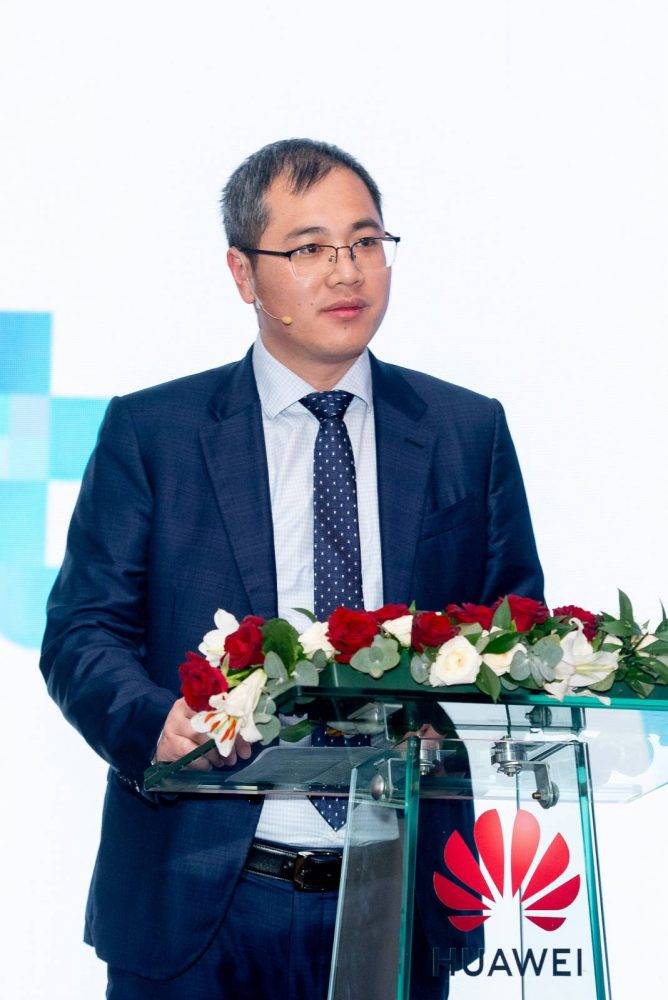
The conversation around data security was further deepened by Clinton George, Solution Architect of Huawei Southern Africa Region Enterprise Data Center Solution Department, who presented on “All-Scenario Data Protection.” He emphasized the importance of robust data security strategies and Huawei’s innovative solutions for ensuring business continuity in the face of evolving cybersecurity threats.
Customer success stories were a central feature of the event, with Laure Le Roux, Senior IT Specialist at Business Connexion, and John Bosco Arends, CoJ GICT & IM Group Head INTO, sharing real-world insights on how they’ve overcome challenges, embraced AI, and leveraged Huawei’s technologies to transformed their operations.
Further expanding on Huawei’s vision for intelligent collaboration, James Kamau Maina, Intelligent Collaboration Solution Architect at Huawei South Africa Enterprise Data Center Solution Department, presented “Smart Office, Limitless Collaboration,” demonstrating Huawei’s latest advancements in smart office solutions. In a world where flexibility and connectivity are key, Huawei’s Smart Office: Limitless Collaboration is redefining how businesses operate. The solution includes the new-generation Huawei Smart Screen, designed with powerful features such as BYOM (Bring Your Own Meeting) and Dual Mirroring and Control, allowing seamless collaboration in any setting.
Another major focus of the event was on small and medium enterprises (SMEs), with Lukhanyiso Sobhuza, IT Solution Architect at Huawei South Africa Enterprise Data Center Solution Department, presenting “Huawei Simplified All-Flash Data Center for SME.” His session outlined how Huawei’s Simplified All-Flash Data Center offers the perfect solution. Designed specifically with SMEs in mind, this all-in-one platform brings the power of high-performance, all-flash storage to businesses of any size, enabling faster data processing, seamless scalability, and enhanced reliability—all while keeping things simple. With an easy-to-manage setup, this solution takes the hassle out of data storage and allows SMEs to focus on what truly matters: growth and innovation. It’s the ideal choice for businesses that need to stay agile, secure, and ahead of the competition.
In addition to these key discussions, the event featured live demos, networking sessions and a lucky draw, offering attendees an engaging and interactive experience. As digital transformation continues to reshape industries, the Huawei South Africa IT DAY 2025 event reaffirmed Huawei’s position as a leader in enterprise IT solutions, equipping businesses with the tools and strategies needed to thrive in an increasingly complex digital world.
From the hospital to the lab: How we reported the snakebite scandal:

Imagine that every time you go to work, you’re put at risk of a disease that could kill you in 30 minutes. What if the only medicine that can save you isn’t available in the first or second hospital you visit? And when you do track it down, it doesn’t work.
That’s the stark reality faced by rural workers in sub-Saharan Africa, something my editor Fiona and I were growing to understand as we trawled along the coast of Kenya last year on a reporting trip. The disease we were looking into? Venomous snakebite.
First, we needed to learn the basics. And the person everyone said we needed to talk to was Eugene Erulu, a doctor with decades of experience treating snakebite. He was a hard man to pin down and it took the best part of two days — plus several hours staring at the ceiling in his waiting room — to get a word with him. But once he started speaking, his expertise was obvious.
“It was devastating because the patients never got the correct antivenom,” he told me in his office at Watamu Hospital, Kilifi County. He was describing repeated cases where the available antivenoms had been, in his opinion, useless. He named specific manufacturers whose drugs he refused to use.
We were especially struck by Erulu’s frankness. Most other people we’d spoken to on the subject had carefully evaded questions or agreed to speak only off the record. But Erulu didn’t flinch.
He was adamant that companies had made bad antivenom and was clear on the damage done. “Patients have died. Patients have lost limbs,” he said.
It’s people like Erulu that get an investigation off the ground.
You might think of snakebite as a niche issue rather than a devastating one. But it is thought to kill somewhere between 80,000 and 140,000 people a year. And travelling from clinic to clinic, we saw a trail of harm comparable to major diseases that result in far more media coverage — and much more money.
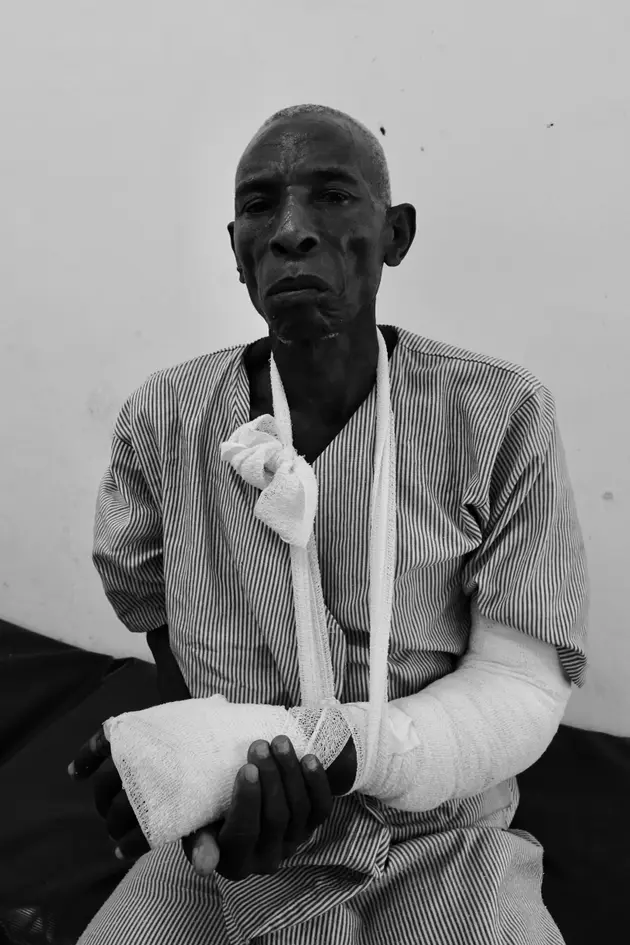
A short drive up the coast in Malindi, a sunny beach town adored by Italian tourists, we visited a bustling referral hospital. A solemn farmworker called Safari Charo Ndindow was nursing a heavily bandaged arm having been bitten by a cobra a few days before. He had travelled to three clinics before receiving treatment, then had to be transferred to a fourth, blacking out on the way. Antivenom was hard to find wherever we went. It felt like people were hardly being given a fighting chance.
Ndindow was unable to work and worried what that would mean for his family. Those bitten are often the breadwinners, people who spend their days out herding cattle or tilling the land. Like many diseases, those most severely affected by snakebite have the fewest resources to deal with its consequences. We heard of people selling everything they had for a single vial of antivenom – and with no guarantee that it would work.
An obvious question emerged. How had this situation been allowed to persist?
“I always say, if you had politicians or tourists getting bitten, the government would have to take a little bit more interest and the solution might come a lot quicker,” said Kyle Ray, when we visited him at the Watamu Snake Farm education centre. “But it’s the poor guys who don’t have a voice who are affected.”
As Fiona and I headed back to the UK, it seemed we had all the ingredients of a huge story. A threat to human life, bad actors, systemic failures and gross injustice. And we knew by this point that the issues we’d seen first-hand stretched across sub-Saharan Africa.
We now needed to find out all about the manufacturers, patients, regulations and existing research. So along with our colleagues, we poured over shipping data and leaked emails; we spoke to people from 25 countries, including frontline doctors, scientists, antivenom manufacturers and charity workers (one of whom told me she’d put a black mamba in my bed if I misused the information she gave me).
The message we kept hearing was clear: some antivenoms were not working. The hard part was getting irrefutable scientific evidence. So we contacted Professor Juan Calvete of the Instituto de Biomedicina de Valencia, the World Health Organisation’s go-to expert for testing antivenoms. We needed a way to measure a manufacturer’s claims about its medicine against the reality of its actual effects.
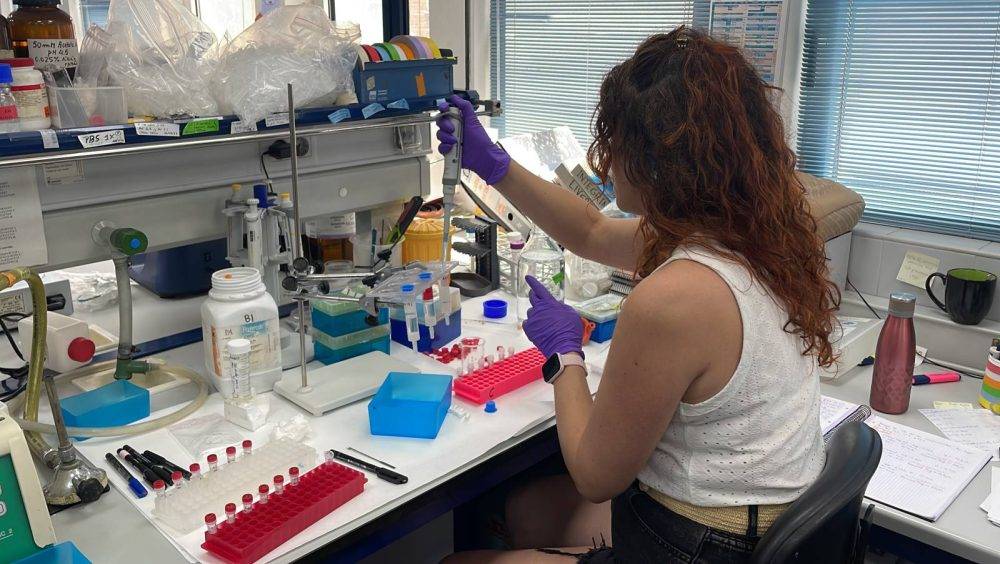
Calvete’s testing did just that. And once we unpacked the results — with the extensive input of yet more experts — the findings were astounding. Some antivenoms, for instance, could require more than 70 vials to effectively treat some bites. We had our story.
It was almost a year from that chat in Erulu’s office to the story getting published. But publication isn’t the end of the road. Since the story came out, we have taken our findings to national regulators, the World Health Organisation, drug manufacturers, their parent companies and even a Bollywood celebrity ambassador.
The hope now is that those in power are finally starting to pay attention to this most neglected of tropical diseases rather than looking the other way as thousands continue to die.
The science that revealed bad antivenoms
One of the key tests Calvete ran on the antivenoms was to examine their binding capacity against the venom of key snakes. Antibodies are proteins produced by our blood in response to toxins — and binding to the toxins in the venom is their first step to stopping them. Roughly speaking, antibodies that don’t “bind” can’t have any effect.
How does this testing work? If you think of the toxins in the venom as thousands of different tiny locks and the antibodies being thousands of different tiny keys, then this is essentially testing all of those keys in all of those locks to see how many work.
To do this, the antivenom antibodies and the venom are incubated together for an hour. In your immune system everything is in motion (think of how your beating heart moves cells around your bloodstream). To mimic this, and to hurry the speed at which the different keys “bump” into the different locks, the venom-antivenom solution is spun around on a wheel.
After that, a couple of steps are taken to clean away all of the keys and locks which didn’t match up — so that only the toxins and antibodies which bound together remained. Finally, a chromatography process — used to test the purity of nearly every single medicine made today — is used to quantify how much venom is bound per unit of antivenom.
This article was produced by The Bureau of Investigative Journalism.
TBIJ has a number of funders, a full list of which can be found here. None of our funders have any influence over editorial decisions or output.
Submit and get free exposure here: Showcase Your Business | Advertise Your Special Offers.