
The post Quiz 2023 appeared first on The Mail & Guardian.
The flight of young Eritreans is destroying the country’s human capital:
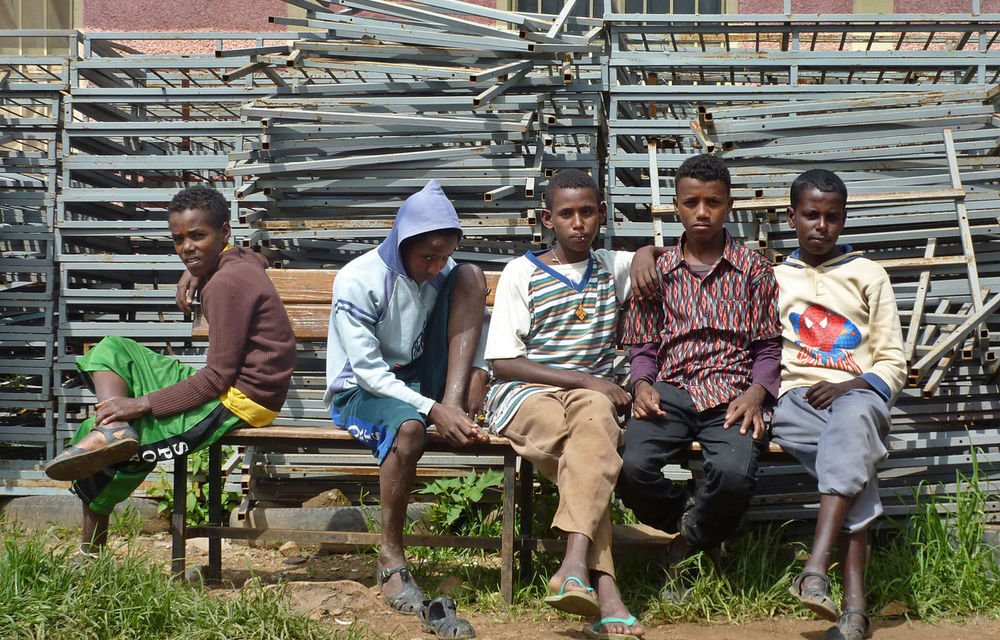
Eritrea, a small country in the Horn of Africa with a tiny population, is experiencing a demographic catastrophe caused by the flight of its young population. Many analysts are now worried that if this emigration trend continues at the current rate, the country’s society and state institutions will become dysfunctional.
Eritrea’s population is less than five million and in the past two decades hundreds of thousands of young Eritreans have fled and continue to flee the country.
Cities, towns and villages have a shortage of young people because they have crossed into neighbouring countries, leaving behind older people and children, according to a recent visitor to that country. Young Eritreans still in the country plan to leave because they see no future in the country.
What is also extremely worrying is that teenagers and children who should be in school and under the care of their parents are also crossing into neighbouring countries. Many commentators are suggesting the rate at which Eritreans are fleeing the country is unprecedented and it is resulting in the destruction of the productive sector of its demographic profile.
But why are Eritreans fleeing the country? The main reason is the leadership’s style of control and governance is based on military totalitarianism.
Compulsory national service for all young Eritreans, which doesn’t have a time limit, effectively makes them exist in limbo and without a future. Analysts describe Eritrea as an open prison where citizens’ everyday life is highly controlled, surveilled and regimented.
Members of Pentecostal and Evangelical churches are persecuted and imprisoned. There is no rule of law in the country because there is no constitution. There is no freedom of movement and young Eritreans are arbitrarily rounded up, imprisoned and in most cases forcibly conscripted. All Eritreans require an exit visa to leave the country and it is extremely difficult for young Eritreans to obtain an exit visa. Young Eritreans leave the country “illegally”, crossing borders into neighbouring countries.
Instead of seriously investigating the causes of this emigration trend, the leadership continues to deny this crisis is occurring. Instead of relaxing totalitarian rule and making reforms, the government appears to turn a blind eye to a situation that will soon result in a complete breakdown of the country’s productive human capital.
There are hundreds of thousands of young Eritreans in Uganda, Ethiopia and Sudan and thousands have arrived in Europe by travelling along dangerous trails across the Sahara Desert, Libya and the Mediterranean Sea.
The trend of young people fleeing the country is turning Eritrea into a demographic wasteland as a disproportionate number of young, productive Eritreans flee never to come back.
Dr Amanuel Isak Tewolde is a postdoctoral research fellow at the Centre for Social Development in Africa at the University of Johannesburg
The post The flight of young Eritreans is destroying the country’s human capital appeared first on The Mail & Guardian.
African Business Heroes Competition:

Fostering growth, job creation and development across the continent
The Africa’s Business Heroes (ABH) competition has emerged as a transformative platform that empowers entrepreneurs across the African continent. By providing a stage for innovative business ideas and solutions, the ABH competition plays a crucial role in fostering economic growth, job creation and overall development in Africa.
In this article, we will explore the importance of the ABH competition, highlighting this year’s top three finalists and winner, as well as the inclusion of a South African entrepreneur in the top 10. Additionally, we will discuss how aspiring entrepreneurs can apply for the competition in the upcoming year.
The ABH Competition:
A catalyst for change:
The ABH competition serves as a catalyst for change by recognising and supporting African entrepreneurs who are driving innovation and creating positive impact in their communities. By providing a platform for these entrepreneurs to showcase their ideas, the competition helps to attract investment opportunities and raise awareness about the potential of African businesses.

ABH is a philanthropic initiative sponsored by the Jack Ma Foundation and Alibaba Philanthropy. It aims to support and inspire the next generation of African entrepreneurs across all sectors and build a more sustainable and inclusive economy for the future of the continent. Over a 10-year period, ABH will recognise 100 African entrepreneurs and commit to allocating grant funding, training programmes and support for the development of an entrepreneurial ecosystem.
Every year since the first edition in 2019, entrepreneurs from across Africa apply for the competition and go through several rounds of rigorous evaluation conducted by ABH judges. The finalists are selected after demonstrating that they are visionary entrepreneurs who embody innovation, resilience, growth potential and impact on Africa. ABH aims to honour entrepreneurs who are not only building successful businesses but are also running mission-driven organisations that generate growth for their local communities.
The winners: Celebrating excellence:
The ABH competition crowned three deserving winners who exemplify the spirit of entrepreneurship and innovation: Dr Ikpeme Neto from Nigeria; Thomas Njeru from Kenya and Ayman Bazaraa from Egypt. They were the first, second and third prize winners, respectively, of this year’s competition.
Dr Ikpeme Neto is the founder of WellaHealth, a Nigerian-based digital health insurance company. He won the African Business Heroes Prize and received $ 300 000 for helping to create more than 100 000 direct and indirect jobs. WellaHealth is designed to address the expensive traditionally bundled medical insurance model. Their plans cover common illnesses such as malaria, delivered through partnerships with pharmacies that dispense convenient tests and healthcare.
WellaHealth has created a technology-enabled network of over 2 000 health providers to solve the expensive problem of healthcare fragmentation and out-of-pocket payments. This network is digitally connected to over 27 insurance companies, leading banks, telcos and a network of sales agents to enable the efficient distribution of affordable healthcare services. From just $ 1 a month, patients can get high-quality care easily.
Thomas Njeru is the CEO and Co-Founder of Pula Advisors Limited in Kenya. Pula is an agricultural insure-tech company that offers comprehensive coverage based on yield performance, protecting smallholder farmers against multiple perils, including drought, frost, floods, hurricanes, plant diseases and pests. It uses innovative technology to assess damages quickly and provides digital tools and agronomy advisory services to improve farming practices.
It also leverages partnerships with governments, insurers and reinsurers and other distribution channels, creating linkages and synergies for better cooperation. Pula forms insurance consortiums for risk transfer to global markets and aims to enable all farmers in Africa to access insurance and achieve yields similar to those of developed economies, sustaining their livelihoods.
Ayman Bazaraa from Egypt launched Sprints to guarantee that young graduates are able to get decent jobs. The ed-tech company assesses the youth who register for its courses, provides them with a personalised learning path and supports them in their careers. Before Sprints, Bazaraa also co-founded Avelabs, a provider of integrated solutions and services for the automotive industry.
Sprints believes itself to be the only social enterprise that offers guaranteed hiring programs where graduates only pay upon successful hiring in 0% interest payments over three years. In four years, it has delivered more than 50 000 learning experiences, graduated more than 15 000 learners and delivered over 1.3 million learning hours in the 13 most demanded technology fields.
South African representation
in the Top 10:
The ABH competition also celebrated the inclusion of a South African entrepreneur in the top 10 finalists, Theo Baloyi, an entrepreneur who started Bathu Shoes in 2015. Bathu is about fostering an environment that encourages breaking barriers in what is possible. It employs more than 400 people in 35 retail stores across the country. The Bathu Care initiative has distributed over 50 000 pairs of school shoes to local schools and ultimately aims to donate one million pairs of shoes to schools across the country over the next 10 years.
This recognition highlights the diversity and richness of entrepreneurial talent across the African continent, showcasing the potential for growth and success in various regions and sectors, including fashion.
Applying for the ABH competition:
For aspiring entrepreneurs who wish to participate in the ABH competition, the application process is straightforward.
Application Overview
Eligibility Check: you’ll have to answer questions to check whether you meet all our criteria and upload proof of your eligibility.
Reference: you’ll be asked to provide the details for an individual who can provide a reference for you. A suitable individual includes: a mentor, friend, colleague, business partner, supplier etc. He/She will be asked to tell us why they believe you’re a good fit for the prize.
Founder Profile: answer questions about why you became an entrepreneur and your achievements.
Business Profile: answer questions about your business.
Business Deep Dive: answer questions about the problem your business is trying to solve, the solution, its competitiveness, market traction, your business model, and future plans.
Video Introductions: your opportunity to introduce a customer and why they choose your product/service.
Applicants also need to have the following documentation: a government-issued ID, a business licence or registration certificate, and proof that you have been operating your business for three years or more, such as bank statements in your company’s name and rental agreements. You have until May 2024 to submit your application.

Conclusion:
The ABH competition serves as a powerful platform that empowers African entrepreneurs, enabling them to showcase their innovative ideas and solutions. By recognising and rewarding their achievements, the competition attracts investment opportunities, raises awareness about African businesses, and contributes to economic growth and development.
This year’s top three finalists, the winner and the inclusion of a South African entrepreneur in the top 10 exemplify the immense talent and potential that exists across the African continent. Aspiring entrepreneurs are encouraged to seize the opportunity and apply for the ABH competition in the upcoming year, as it offers a chance to gain mentorship, training and networking opportunities that can propel their businesses to new heights.
For more information, visit: https://africabusinessheroes.org/en/
The post African Business Heroes Competition appeared first on The Mail & Guardian.
Submit and get free exposure here: Showcase Your Business | Advertise Your Special Offers.