
Ramaphosa: SA will not be drawn into a contest between global powers:
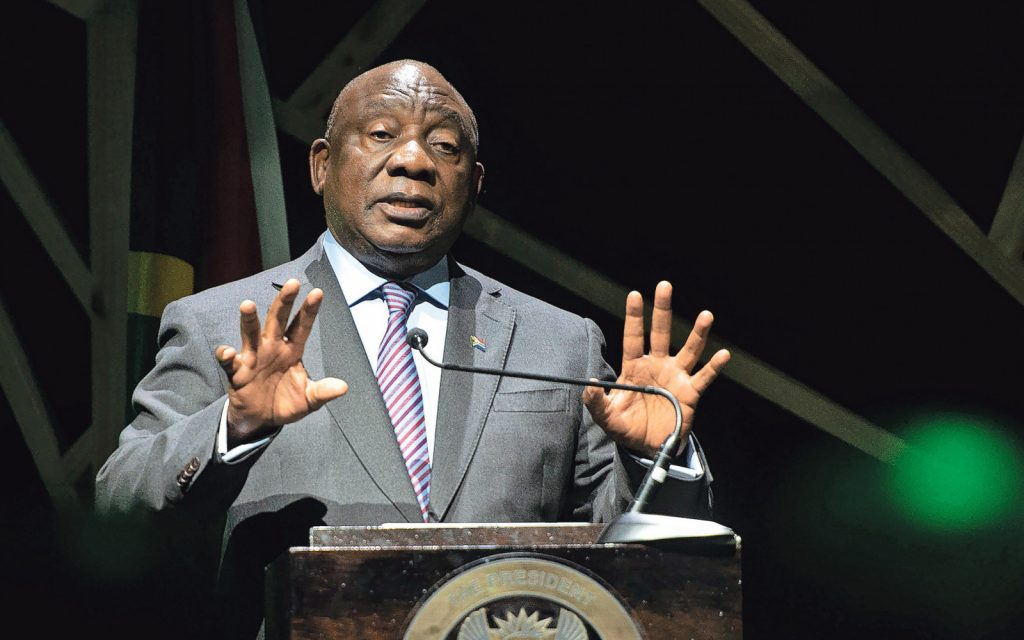
President Cyril Ramaphosa has sent a strong message to his Western allies that South Africa would not be “drawn into a contest between global powers”.
Speaking at an Africa Day celebration in Krugersdorp, west of Johannesburg, on Thursday, Ramaphosa said the continent was often dragged into conflicts far beyond its borders.
“That is why I will say it again today. South Africa has not been, and will not be, drawn into a contest between global powers. We will maintain our position on the peaceful resolution of conflict wherever those conflicts occur,” he said. We will continue to resist calls to abandon our independent and non-aligned foreign policy.”
South Africa’s relationship with the US, a key trade ally, has been strained since Pretoria took a non-aligned stance in the Russian war against Ukraine.
This was exacerbated by recent public statements made by US ambassador to South Africa Reuben Brigety that the country had sold arms to Russia.
Defence Minister Thandi Modise has denied this, while Ramaphosa has opted to investigate the allegations by way of an inquiry.
The governing ANC sees the move by Washington as a strategy to put pressure on Pretoria to declare a stance in the Russia-Ukraine war. South Africa is expected to host Russian leader Vladimir Putin in August at the annual summit of Brics countries, which include Brazil, India and China.
Putin’s foreign minister Sergei Lavrov is expected to form part of a delegation of Brics leaders who will be hosted by South Africa’s foreign minister Naledi Pandor in June.
On Thursday, Ramaphosa said some countries, including South Africa, were being “threatened with penalties” for pursuing an “independent foreign policy” and for adopting a position of non-alignment.
“As African countries, we have painful memories of a time when proxy wars were waged on the soils of Africa by foreign superpowers,” he said.
“We have not forgotten the terrible, brutal legacy of first having our continent carved up and colonised by European countries, only to find ourselves once more pawns on a chessboard during the Cold War. We are not going back to that period in history.”
He said Africa’s focus remained on pursuing the ideals of the founding charters of the Organisation of African Unity and the African Union and on giving effect to the aspirations of the AU Agenda 2063.
“Our eyes remain firmly fixed on the horizon as we work to achieve continental economic integration. The Africa Continental Free Trade Area (AfCFTA) is a landmark achievement. We are greatly encouraged by progress that is being made towards the operationalisation of the AfCFTA,” he said.
“This includes the commencement of trade on a small scale in parts of East and West Africa; the training of small businesses that is taking place on new trade portals and moves towards the operationalisation of the $ 10 billion AfCFTA Adjustment Fund.”
Ramaphosa said South Africa reaffirmed its commitment to peacebuilding on the continent and to being part of efforts to resolve conflict in regions such as the eastern Democratic Republic of the Congo, northern Mozambique and Sudan.
“We use Africa Day to reaffirm the importance of consolidating democracy and consolidating good governance across Africa. The African peer review mechanism will continue to enjoy our full support and co-operation,” he said, referring to a voluntary arrangement among African states to systematically assess and review governance at head of state level.
“This Africa Day, we commit ourselves to the achievement of the Sustainable Development Goals and to pursuing national policies that advance gender equality, reduce poverty, inculcate sustainability into all aspects of our lives and mitigate the impacts of climate change.”
Subscribe to the M&G
Africa’s youth are the world’s future skills base but there’s a critical need for skills development:
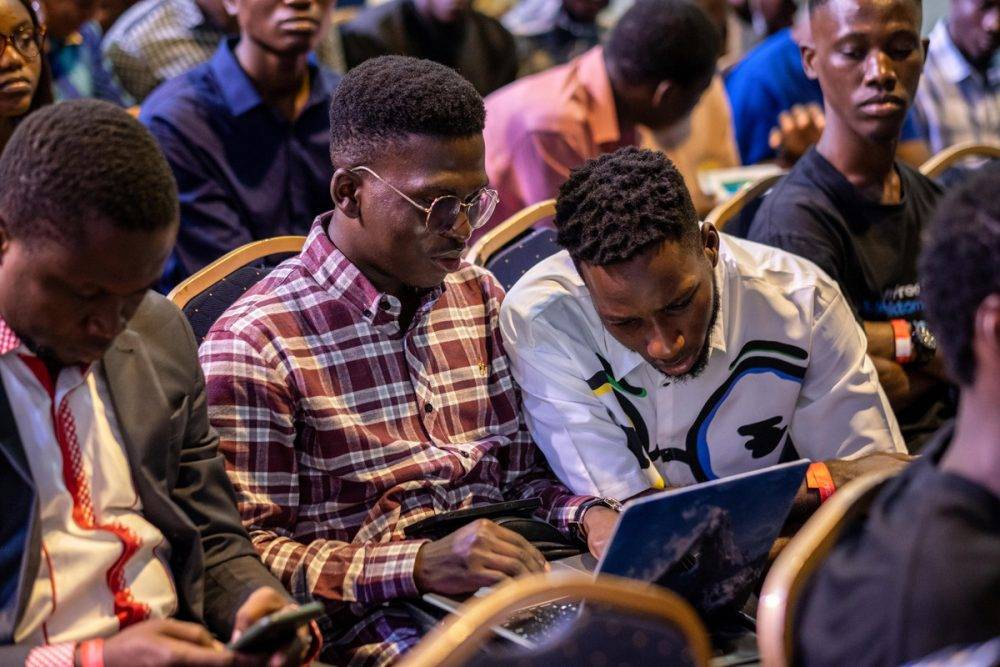
For Africa to be a respected international partner, to achieve peace and security on the continent, and for the African Continental Free Trade Area (ACFTA), alongside other strategic initiatives, to be successful, a highly skilled and educated population is key.
Within the next two to three decades, based on ongoing population growth rates in Africa that are projected to continue for the next 50 years, it is expected that current and next generations of African children and youth might represent more than 40% of the world’s working age population, generally from the ages of 24 to 65.
In contrast, by 2050, populations in South Asia are expected to decline by 41% and in Southeast Asia by 32%. The European Union and North America will probably experience a 6% decline in population growth. The median age of the populations across these regions currently ranges between 31 and 42.
African countries are dominating the top 10 countries with the lowest median age globally, with currently an average population age of 19. Just under 20% of the continent’s total population are aged 15 to 24, and children under 15 make up just over 40% of total populations.
In sub-Saharan Africa, 70% of the population is under the age of 30.
The significance of Africa’s youthful demographic trend is often discussed in terms of the youth dividend — the ways in which youth talent, innovation and productivity, if correctly harnessed, could contribute to economic development and prosperity for African countries.
According to recent data, Africa’s working age population is expected to increase by about 70%, an estimated 450 million people in the next decade, by 2035. This trend could signal substantial growth potential for African economies and societies.
But projecting from current economic and policy configurations, within this same period in Africa, only a maximum of 100 million new jobs might be created, absorbing fewer than a quarter of the available labour force in formal employment.
Currently, 11 million African youth join the labour market each year, but only 3.7 million jobs are generated. By as early as 2030, 30 million youth are expected to enter the workforce annually, without commensurate rates of job creation across African countries.
Data shows that structural changes in labour markets due to ageing populations is leaving the workforce drastically depleted of necessary capacity in regions of the world such as Europe and with a similar trend possible in Asia, without requisite interventions.
While the fourth industrial revolution is promising a world of automation, machines and robots that may possibly fill the labour and skills gap in developed regions of the world, it is unlikely that the need for a human workforce will be completely overridden within the coming decades.
We can anticipate that human contributions will continue to be required even in a world of machines and automation, in the form of new types of skills and futures of work.
Well skilled African youth could be a potential beneficial talent pool. Yet, African education systems struggle to keep pace with changing requirements and learner demands.
The Mo Ibrahim Foundation notes a mismatch between knowledge and skills development conducive to productive employment and the quality of education policies, institutions and content across African countries.
There is a strong need to ensure Africa’s educational systems are responsive to the skills and competencies required to engage effectively in an international world.
Educational data for African countries positively shows on average an increase in primary school enrolments and completion rates over the past 10 years, although this data may have altered somewhat since the Covid-19 pandemic.
But these enrolment and completion rates have not equated to systemically improved educational outcomes. Gross numbers of enrolled learners and graduates decline in secondary and in tertiary education in the majority of African countries.
Data indicates that less than half of Africa’s youth populations are enrolled in secondary schools, and a low average of 10% are in tertiary education. This is the result of the convergence of various issues from a lack of suitable facilities and infrastructure, to poverty and financial constraints, to cultural attitudes.
At higher education levels, national governments in many African countries underspend on education budgets, given the need and demands.
Numerous additional problems and significant issues compound African youth populations’ advancement.
Youth populations are the worst affected by rates of unemployment or exposed to unreliable types of employment in the informal and formal sectors.
The United Nations estimates that youth are currently 60% of unemployed populations in Africa.
Alongside this, issues of child and youth indentured labour abuse persist. Relatedly, young people are negatively exposed to crime, criminal gangs and terrorism, with 2017 survey data showing 53% of extremist group members in Africa were recruited between the ages of 17 and 26.
Girls specifically endure childhood marriage and teenage pregnancies and high levels of gender-based violence as barriers to improved livelihoods and wellbeing. Young people also suffer from high levels of food insecurity, with recent data indicating moderate to severe food insecurity is experienced by more than half of African youths — an issue that is further exacerbated by climate change shifts and impacts such as drought.
These indicators among others are dismal signals that African youth are not currently on track to be a substantial proportion of the world’s talent and skills base, workforce or market.
At a basic needs level, it is imperative that African governments improve good governance and public services delivery from water and sanitation to health, safety and security, specifically, with a focus on youth inclusion policies and support mechanisms for youth focused socio-economic development.
Suitable contexts to attract and absorb African youth talent further calls for infrastructure development and business friendly environments for jobs creation and entrepreneurship.
From an international lens, there is a critical need to ensure requisite skills and capacity building and it is imperative that African youth are afforded avenues for learning that prepares them as global citizens, with skills and talents relevant for a globalised and internationalised world.
Alongside basic language and numerical literacy, important global skills increasingly include media, digital and futures literacy as cornerstone capabilities required by today’s and future youth and professionals.
The ability to develop multiple skill sets, with learners able to adapt to change, pro-actively reskill and upskill is also important in a world of disruptions and rapid shifts in the world of work.
Other emerging critical capabilities include creativity, innovative and critical thinking.
Insights on futures of education also highlight the importance of centering interculturalism and interconnectedness as key learning outcomes relevant to today’s and tomorrow’s globally diverse societies and economies, and as necessary components for successful performance in internationalised environments.
On the one hand, more opportunities and support are needed to facilitate access to international education institutions, resources and learning opportunities for African youth. Data shows that just under 80% of African students choosing to study abroad prefer international destinations outside of the continent.
On the other hand, it is important to ensure a fair distribution of African youths’ talents so the continent does not lose high levels of skills through brain drain.
Many African countries face severe development difficulties that require competent leaders, scientists, scholars and entrepreneurs. Therefore, in addition to enhancing access and quality of education and training for Africa’s youth, issues of migration and brain drain also need to be addressed.
Studies on futures of learning and education highlight that in response to increasing demand, as well as leveraging digital innovations, capacity and skills training providers are diversifying beyond the traditional university environments, with growing focus on developing vocational and technical institutions of learning, and with private sector corporations also stepping more into the role of learning and development offering work-based, experiential learning.
These emerging patterns are in line with growing trends of lifelong and life-wide learning as key features of futures of learning and education.
Africa Day 2023 marks 60 years since the establishment of the Organisation of African Unity and provides a valuable moment to reflect on the continent’s futures and to reinvigorate commitment to fulfil Africa’s visions and aspirations as articulated in the AU Agenda 2063.
African youth populations carry the mantle for current and future generations at home and internationally and must therefore be accorded the necessary support and avenues required to reach their highest levels of potential.
Mwagiru is a senior futurist from the Institute for Futures Research at Stellenbosch Business School.
The views expressed are those of the author and do not necessarily reflect the official policy or position of the Mail & Guardian.
One of last four Rwanda genocide fugitives arrested in South Africa:

Fulgence Kayishema, one of four remaining fugitives sought for their role in the 1994 Rwanda genocide, has been arrested in South Africa, United Nations investigators said on Thursday.
“Yesterday afternoon, Fulgence Kayishema -– one of the world’s most wanted genocide fugitives -– was arrested in Paarl, South Africa in a joint operation,” the International Residual Mechanism for Criminal Tribunals (MICT) said in a statement.
Around 800 000 Rwandans, most of them ethnic Tutsis, were slaughtered over 100 days at the hands of Hutu extremists.
Kayishema, a former judicial police inspector, faces charges of genocide, complicity in and conspiracy to commit genocide, and crimes against humanity.
He has been on the run since July 2001, according to the MICT website, which gives his year of birth as 1961.
He and others allegedly murdered more than 2000 Tutsi men, women and children who had taken refuge in a Catholic church in Nyange in Kivumu district.
“Kayishema directly participated in the planning and execution of this massacre, including by procuring and distributing petrol to burn down the church with the refugees inside,” the statement said.
“When this failed, Kayishema and others used a bulldozer to collapse the church, burying and killing the refugees inside.
“Kayishema and others then supervised the transfer of corpses from the church grounds into mass graves.”
Support network
The MICT in 2015 took over the work of the International Criminal Tribunal for Rwanda (ICTR), which the United Nations had set up following the genocide.
Kayishema’s arrest was carried out in a joint operation by MICT’s Fugitive Tracking Team and the South African authorities, the statement said.
The investigation “spanned multiple countries across Africa and elsewhere, in strong cooperation with many national law enforcement and immigration agencies,” it said.
During his flight from justice, Kayishema used many aliases and false documents and relied on a “network of trusted supporters”, the statement disclosed.
These included family members, members of the former Rwandan armed forces, the Democratic Forces for the Liberation of Rwanda (FDLR) rebel group “and those aligned with the genocidal Hutu Power ideology”.
MICT Chief Prosecutor Serge Brammertz paid tribute to “the exceptional skills, rigour and cooperation” of South African investigators and singled out Eswatini and Mozambique for their help.
Kayishema “will finally face justice for his alleged crimes,” he said.
“Genocide is the most serious crime known to humankind,” he said.
“(…) This arrest is a tangible demonstration that this commitment does not fade and that justice will be done, no matter how long it takes.”
Three fugitives left
Naphtali Ahishakiye, executive secretary of Ibuka, an umbrella association of genocide survivors, said the arrest “sends a strong message to other fugitives and masterminds of the 1994 genocide… that they can never evade justice forever.”
The three other fugitives on the wanted list also face multiple charges of genocide and crimes against humanity: Aloys Ndimbati; Charles Ryandikayo; and Charles Sikubwabo.
The ICTR court sentenced 62 people, including a 30-year term handed to former minister Augustin Ngirabatware, and acquitted 14.
It closed in late 2015, handing over to the MICT to pursue cases against suspects.
In September 2022, one of Rwanda’s richest men before the genocide, Felicien Kabuga, who moved to France under a false identity, went on trial in The Hague.
His trial was put on hold in March amid concerns over his health.
Delay worry
Ahishakiye pointed to the problems in getting Kabuga on trial to stress the need for timely justice.
“Our wish is that he (Kayeshima) is extradited to Rwanda for his trial so that he can answer directly to the people whose crimes affected,” he told AFP.
“We hope that his trial is expedited, and that the wheels of justice do not entertain the sorts of delays that the Kabuga trial has experienced.”
Rwanda started trying genocide suspects in 1996, and on a single day in April 1998 had 22 of them executed by firing squad.
It abolished the death penalty in 2007, lifting the main obstacle for the ICTR to extradite genocide suspects to Rwanda for trial.
Between 2005 and 2012, more than 12,000 “gacaca” community-based courts put nearly two million people on trial and convicted 65 percent, sending most to prison.
Other convictions have been handed down in the former colonial power Belgium as well as in France, Sweden, Finland, Norway, Germany, the Netherlands, the United States and Canada.
But three other prominent fugitives — Augustin Bizimana, Protais Mpiranya and Pheneas Munyarugarama — all died without facing justice.
© Agence France-Presse
Submit and get free exposure here: Showcase Your Business | Advertise Your Special Offers.
