
RCL withdraws interdict, so Tongaat creditors’ vote goes ahead — for now:

RCL Foods has withdrawn its application for an interdict to stop creditors from voting on an “unlawful” business rescue plan for Tongaat Hulett Limited filed by ANC funder Robert Gumede’s Vision consortium after the business rescue practitioners agreed to amend the plan.
The withdrawal of the court action means that the vote on the rescue plans presented by Vision and rival bidder RGS Sugar, which has been postponed a number of times due to legal battles, should go ahead on Wednesday, as planned.
However, the details of the latest amendments to the Vision plan have not yet been made public by business rescue practitioner Metis and there is still a possibility that the matter could end up back in court.
RCL, which owns Selati Sugar, had gone to court to stop voting on Vision’s plan, which did not comply with an earlier court order by Judge Rashid Vahed that the rescue plans needed to include the more than R526 million in unpaid industry levies which Tongaat owes.
Tongaat entered voluntary business rescue in November 2022 due to the crisis it faces over a massive loss in value, triggered by alleged fraud of R3.5 billion by managers in its property division and former chief executive Peter Straude.
Vision — consisting of Gumede’s Guma group, Remogoggo and Pakistani agribusiness company Almoiz — and RGS Sugar from Mozambique, have both submitted rescue plans.
RCL went to court to stop the voting on the Vision plan, which did not accommodate the unpaid industry levies, upon which the growers who fall under the South African Sugar Association (Sasa) depend for their survival.
It did not oppose the vote on the plan submitted by RGS, which has undertaken to pay the levies, prevent retrenchments and to make payments to smaller, unsecured creditors who are owed by Tongaat.
In papers before court, RCL managing director Michela Cutts said that the Vision plan was “patently unlawful” and that the company was opposing it as it “seeks to unlawfully compromise” the existing claim by Sasa.
Cutts said the Vision plan was also unlawful as it persisted with its position that it would only settle its industry obligations should funding be available for it to do so.
Metis had, she said, failed to advise on which plan should be put to the vote and had instead continued to present an unlawful business plan on behalf of Vision.
Cutts said that the court had correctly characterised the levies to Sasa as being part of the cost of doing business in the sugar industry and that neither Vision nor the business rescue practitioners (BRPs) had the legal right to make payment conditional.
On Sunday, an RCl spokesperson confirmed that they had agreed to withdraw the interdict application after Metis undertook to amend the Vision plan to ensure that it complied with the order of the court.
“In our view, the Vision plan, published by the BRPs on 2 January, was unlawful because it did not provide for settlement of Tongaat’s statutory obligations, as directed by the recent judgment by Judge Vahed,” the spokesperson said.
“Following our application, RCL Foods engaged with the BRPs who agreed to changes to the Vision plan, as a result of which our application will be withdrawn.”
However, RCL remained “concerned” about the impact that the Vision plan would have on growers and millers if it is the option voted on by the creditors as it “assumed that Sasa will not be paid for at least three years”.
By contrast, the RGS plan “provides for immediate settlement of the Sasa claim amount while not leaving any other affected party worse off”.
“We hold the firm view that it is not justifiable to force growers and millers to bear the cost of Tongaat’s business rescue through delayed payment.”
The Vision group had approached the Public Investment Corporation to fund its purchase of the R8 billion in secured debt that Tongaat owes to a group of banks — giving it control of the creditors’ vote — but had failed to meet the deadline set by the BRPs twice.
It is not clear at this point whether or not it was able to secure the funding.
The RCL spokesperson said they had gone to court “in the best interests of the broader sugar industry, including our small-scale growers who are not in a position to protect their interests through litigation”.
“RCL believes that Tongaat’s future viability is critical, but at the same time, that it is vital to ensure that the business rescue process does not undermine the entire industry,” the spokesperson said.
Metis declined to comment on the RCL interdict, saying that they would communicate through the normal SENS process.
MBDA statement: Old St Peter’s site opens in time for bumper cruise liner season:

The now revamped and developed St Peter’s Heritage and Tourism site is open as a new addition to our city’s tourism offerings.
The St Peter’s site was purchased by the MBDA more than five years ago with the vision of transforming this space and restoring the pride that was associated with South End.

The project was disrupted by successive COVID-19 lockdowns, and this delayed works on site. Now with the old church building stabilised, a boardwalk built to embrace this marvel, and new works of art tell the maritime and fishing livelihood stories that are embedded in the ways of living in South End, before, during and after the forced removals of the 1960s.

The site is now open to receive visitors and locals, and we have teamed up with the tourism office of NMBM to reach out to all inbound tours. The deck and glorious views are perfect for family gatherings, picnics, live performances and just about any activity to enjoy overlooking our magnificent harbour and ocean. A special invitation is to those who have heritage or family roots from this part of the world (Old South End); we look forward to hearing their stories so these can be documented and shared with the rest of the world to keep the memory of this special place alive for generations.

This development is open this summer season, and look out for a fitting grand opening in the new year.
We hope to see all at St Peters during these holidays and our tour guide (Mike Phantsi) is ready to offer visitors a memorable experience. Phantsi can be contacted directly for group tours at 072 230 6849.
- Operating hours: 8am – 5pm
- Public holidays – Also open
- Entrance – Via Piere Street (from Walmer Boulevard)
How trauma porn journalism incites violence:
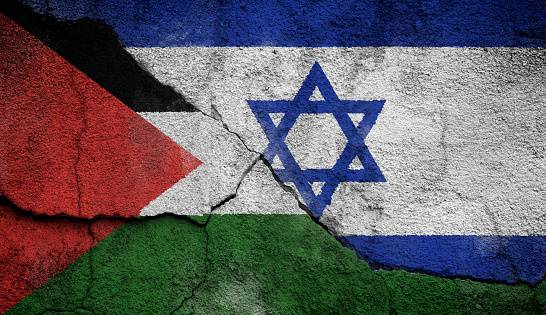
The New York Times article ‘Screams Without Words: How Hamas Weaponised Sexual Violence on October 7’ is a shockingly graphic, repulsive and distressing piece of journalism. It revels in the most sadistic descriptions of psychopathic sexual torture.
Several good critiques of its bizarre claims and use of dubious sources have been published. This is important work but we also need to try and understand what effects the article has, and what work it does.
We should ask a set of questions about any account of violence: what form does it take, and what work does it do? Does it help us understand this violence, or does it confuse the issues? Is it likely to reduce violence, or to increase violence?
The consequences of an account of violence do not necessarily depend on the conscious intentions of the author. However, descriptions of violence can be deliberate or manipulative attempts to produce specific effects.
The problem with lurid narrations of violence is that they tend to trigger strong emotional responses which short-circuit our ability to reflect thoughtfully and understand the issues in ways that lead us to effective interventions. Instead, they can trigger fear and rage that leads to further dysfunctional and destructive responses.
“Screams without words” and claims without contexts: trauma porn journalism inciting violence.
We have already seen how exaggerated and outright false claims about the 7 October attacks rapidly circulated and triggered these kinds of fear, rage, and hatred creating the social conditions for the relentless bombing of Gaza.
Widely circulated fiction, such as the beheading of 40 babies, legitimated the revenge killing of thousands of people. Because this story was so shocking it rapidly circulated on social media, uncritically repeated by people right up to the president of the US, without stopping to ask whether it was true or not.
This is why we need to understand the risks and effects of accounts of violence.
The New York Times article is a description of nightmarish forms of cruelty that triggers such overwhelming physical and emotional revulsion in the reader that it short-circuits our ability to think, and instead invokes raw instinctual responses. The risk is that these responses may be of the most destructive kind. This may even be the deliberate and manipulative intention of the authors and editors.
So, what kind of story is this? What is its form? Its genre?
The term ‘trauma porn’ has been coined to describe this kind of graphic account of unendurable horror. It is designed to trigger an intense emotional response, often specifically to produce a rapid and superficial engagement. In these cases, it can function as clickbait, grabbing attention and producing shock, but offering no effective understanding.
A long tradition of this kind account exists in the colonial rape narrative. Here bogus claims of the rape of the colonising woman by the colonised man triggers catastrophic feelings of vulnerability in the colonial community. They react with overwhelming cruelty and violence, such as lynching or the vengeful annihilation of entire communities.
These mythical sexual assaults invoke the intolerable feeling that despite (or maybe because of) their relentless and brutal control of the colonised people, the coloniser may suddenly find their system of dominance intimately vulnerable to breaches.
This is itself a particular form of a foundational colonial myth: the imagined savagery of the native. The ‘primitive’ indigenous people are depicted as engaged in acts of extreme barbaric cruelty and destructiveness. This myth does two things. It creates an imagined world in which the coloniser is reasonable, bringing civilization, morality and order to the chaos of the colony.
This fantasy justifies the brutal imposition of social control on indigenous communities, while hiding the violence of that control and instead attributing violence to oppressed peoples. It allows any acts of resistance to colonisation to be framed in a way that erases any understanding of these acts as meaningful political tactics to achieve liberation.
Instead it reads them as further evidence of the innate chaotic savagery of the native. This savagery must then be controlled by even greater brutality.
This is exactly the work done by The New York Times article.
It constructs a fantasy of unimaginable horror in lurid and feverish detail, while completely erasing any possible context that might make the events of 7 October comprehensible. Explanation is not justification, but it is a precondition of understanding and solving the actual underlying problems.
The article pretends to be about sexual violence as a weapon of war, yet offers absolutely nothing to explain its putative subject.
Sexual violence in social conflicts and military attacks is a longstanding and widespread problem that has been examined in depth by researchers and activists for many years. Yet the article provides no discussion of all that we know about the horrors of rape of the enemy as tacit reward for combatants, of sexual violence as a tactic for terrorising and demoralising enemy populations, or of the pervasive links between military masculinities and sexual violence.
While detailing fantastical accounts of bizarre sexual sadism in the 7 October attacks, the article remains silent about the ongoing sexual violence of the occupation.
There is no mention of the rapes of Palestinians in the Nakba, or to the ongoing use of sexual violence and sexual humiliation against Palestinian women by Israeli soldier and settlers in the following decades.
There is no mention of sexual assaults of prisoners and hostages of the Israeli state, including the rape of young boys.
There is no mention of the notorious statements of the leading IDF military rabbi Colonel Eyal Karin, justifying the rape of women by Israeli soldiers, who are “permitted to breach the walls of modesty” and “satisfy the evil inclination by lying with attractive gentile women against their will, out of the consideration of difficulties faced by the soldiers, and for overall success”.
The article does nothing at all to help us understand or prevent sexual violence, and still less to reflect on broader crisis of endemic violence against women.
There is no mention of the 7 000 women and 4 500 girls already killed in the attacks on Gaza since 7 October.
There is no mention of the many more girls and women who have been catastrophically injured, their thousands of amputations — many undertaken without anaesthetics.
Instead, the article strategically explodes an annihilating trauma bomb, devastating our emotions and shattering our ability to think. It offers nothing coherent to fill that space, no understanding of sexual violence, no grasp of sexual violence in combat, no grasp of the social conditions prior to the 7 October attacks, and no acknowledgement of the violence of its aftermath.
The devastation of the trauma bomb creates a vacuum in which other chaotic and destructive impulses are sucked in. Horror, terror and rage take over, and in the absence of real explanation, we are drawn to imagine that the only way to account for this unspeakable cruelty is to fall back on fantasies of innate and extreme cruelty and sadism.
The perpetrators are psychopathic savages, inhuman barbarians. At this point the instinctual response is annihilation.
The desire for annihilation rushes beyond the individual perpetrators to encompass all that they are assumed to represent. Not just the alleged criminals, but all of Hamas. Not just all of Hamas, but all Palestinians. Not just all Palestinians, but all Arabs, all Muslims. We arrive back at the colonial logic that declares: “Exterminate the brutes”.
We can now see the nature and work of this article. The clickbait trauma porn, the narrative of the colonial rape, that inevitable story of native savagery that requires colonial violence to impose order.
The article is not about understanding sexual violence. It is incitement to violence, incitement that follows a well-established colonial logic: the savagery of the native, a sadistic rapist, requires brutal colonial violence to impose order. This hallucination of the savagery of the colonised makes the violence of the coloniser seem ethical, rational and necessary.
The violence of the Israeli state does not solely rely on its massive military power backed by the West in general and the United States in particular. It also relies on ideological justification, particularly for certain communities in the West, communities such as the readers of The New York Times: educated, liberal people who might otherwise shy away from certain extreme human rights abuses.
It is for them that the trauma bomb does its work, obliterating all understanding, all empathy. Palestinians are reduced to inhuman savages that must be destroyed. The incitement to violence does its work. The genocide continues.
Anthony Collins is an honorary research fellow at the Centre for the Study of Violence and the Reparative Quest at Stellenbosch University, and honorary visiting professor at Rhodes University.
Submit and get free exposure here: Showcase Your Business | Advertise Your Special Offers.
