Remember what really matters when addressing climate change:
I was going about my business in Johannesburg’s bustling city centre when, amid the cacophony and rush, I noticed two deaf people signing to each other. The sight struck me with a profound sense of beauty — their silent, yet expressive, communication seemed to transcend the surrounding noise. It made me wonder how liberating it might be to not be overwhelmed by the incessant noise of the world?
This thought led me to reflect on the blind — how, in an era dominated by influences that prioritise appearances and superficial displays, I might be untouched by the vanity of such showmanship. In a world where so many invest in how they are perceived, rather than who they truly are, there is a certain elegance in being free from these distractions.
These reflections sent me on a mental journey about life’s complexities. I realised that while those who are differently-abled might, at times, seem shielded from certain burdens — be it noise, deception or the pressures of superficiality — they might also highlight something fundamental about being human.
What we deeply desire is the power to choose: to choose what we see, what we hear and who we wish to become. This ability to choose defines our sense of freedom and authenticity. The extent to which we exercise these choices is the extent to which we feel fully alive and truly ourselves. Ultimately, as humans, we are not merely shaped by our circumstances but by the summation of the choices we make.
As an environmental philosopher, I could not help but reflect, while observing the state of the Johannesburg city centre, on a critical point that environmentalists emphasise in discussions about climate change and sustainability — the importance of preserving choices for future generations.
Beyond the immediate need for action, sustainability is fundamentally about ensuring that those who come after us inherit an environment that allows them the same opportunities we enjoy today. These include the choice to live in a safe and stable environment, free from the growing threats of natural disasters intensified by climate change; the choice to experience the richness of biodiversity, with access to a variety of wildlife and the choice to thrive in an environment that nurtures and sustains life.
The results of climate change have become increasingly impossible to ignore. The alarming shifts in weather patterns and the frequency of extreme climatic events are stark reminders of the urgency of this crisis. These realities make it ever more imperative to address the underlying drivers of climate change. The task before us is not only to mitigate the damage already done but also to reimagine and implement practices that prioritise environmental stewardship, ensuring that the choices we enjoy today remain available for generations to come.
In his book A Perfect Moral Storm: Climate Change, Intergenerational Ethics, and the Problem of Moral Corruption, Stephen Gardiner identifies three critical challenges — what he terms “storms” — that hinder effective action against climate change. These are the global storm, the intergenerational storm and the theoretical storm, collectively referred to as the “perfect moral storm”.
The global storm highlights the geopolitical complexities of addressing climate change, particularly the disputes among nations regarding accountability for carbon emissions and their contributions to environmental degradation.
Different states have varying historical responsibilities, economic capabilities and levels of vulnerability, which often lead to disagreements over who should bear the greatest burden in combating climate change. These disputes exacerbate delays in implementing cohesive, global solutions and reflect the broader challenge of achieving international cooperation on environmental issues.
It is undeniable that the majority of greenhouse gas emissions originate from large corporations, predominantly based in the Global North. Yet, the burden of these emissions disproportionately affects the Global South, where vulnerable communities bear the brunt of environmental degradation and its devastating consequences. This disparity is glaringly evident in the increasing frequency and severity of natural disasters, many of which are underreported or fail to receive the attention they warrant.
In South Africa, take for instance, recurring floods in KwaZulu-Natal and the contamination of clean water caused by mining activities in Limpopo.
The conventional response to this crisis often advocates for a top-down approach, where major polluters are held accountable and required to significantly reduce emissions while also addressing the damage already caused. While this is undoubtedly essential, I believe a complementary bottom-up approach is equally crucial.
During a recent visit to Johannesburg’s city centre, I was heartened to see cleaning crews working — a commendable effort that represents a step in the right direction. But more can still be done on an individual level. By fostering a culture of environmental responsibility and active participation, we can collectively contribute to ensuring a clean environment and mitigating the effects of climate change from the grassroots, ensuring that everyone plays a role in creating a more sustainable future.
I believe people should be more conscientious about properly disposing of their waste. Although bins are strategically placed throughout the city (with room for more to be added), many fail to use them effectively. It is disheartening to see people carelessly throw rubbish on the ground, even when a bin is just a few steps away.
Even worse are commuters who roll down their car windows to discard waste, when they could easily have kept it in their car until they reached a proper disposal point.
Another way people can help mitigate environmental degradation is by reducing their use of non-renewable plastics, particularly single-use bags obtained during shopping. While the tax on these bags aims to discourage their use, it has not been sufficient to change habits on a large scale. Instead, people can adopt the practice of bringing reusable shopping bags, a small but effective step toward reducing plastic waste and its detrimental effects on the environment.
Regarding the theoretical storm, Gardiner argues that existing theories aimed at addressing environmental degradation are fundamentally inadequate in effectively tackling the problem. He observes that “even our best theories face basic and often severe difficulties addressing basic issues such as scientific uncertainty, intergenerational equity, contingent persons, nonhuman animals and nature”. This critique highlights the limitations of current frameworks in providing comprehensive solutions to the complex, multifaceted nature of climate change.
Gardiner’s reflections on the intergenerational storm resonate deeply with how I began this article — by emphasising the importance of preserving the choices we currently enjoy for future generations. The question remains: “How can we ensure that the choices and benefits we currently derive from the environment are preserved, or even enhanced, for the generations that follow?” This challenge lies at the heart of both the ethical and practical dimensions of addressing climate change.
A salient argument in environmental discourse is the responsibility we hold to ensure that future generations have access to the same, if not better, life choices than we enjoy today.
Too often, we become consumed by the pursuit of economic growth and technological advancements, overlooking the fact that the most invaluable gift we can offer future generations is a sustainable, life-supporting environment. A thriving planet, rich in biodiversity and ecological balance, is the foundation upon which all progress — technological, economic and social — rests.
The greatest legacy we can leave is one that prioritises life and supports the well-being of all living beings. At future UN Climate Change Conference discussions, we must remember what truly matters — preserving and restoring a nurturing, sustaining environment that will endure for generations to come.
In our pursuit of innovation and advancement, we cannot afford to lose sight of this fundamental goal. By aligning progress with environmental stewardship, we can ensure a future where technological and ecological achievements coexist in harmony.
Emmanuel Anoghena Oboh is a student of philosophy at the University of Johannesburg.
Botswana’s decision to lift ban on South African vegetable imports will ease food inflation:
I am encouraged that Botswana has decided to lift the ban on vegetable imports from South Africa. The new administration under President Duma Boko wants to ensure that people have access to high-quality, better-priced food products.
In November, South Africa’s vegetable prices were deflated — -2,6%. Meanwhile, in Botswana, vegetable price inflation was in double digits. This speaks to the difficulty households had to endure and the potential benefits of affordable prices in the coming months.
Lifting the ban will be done in two phases. Import restrictions were lifted immediately on vegetables such as turmeric, patty pans, pumpkins, sweet potatoes, green peas, mushrooms and eggplants. Phase two will be in April 2025, when the ban on products such as beetroots, butternuts, onions, tomatoes, sweet potatoes, potatoes and watermelons will be lifted.
Botswana’s plan to boost agricultural production where land capabilities permit must be supported but there are better ways of doing so than banning imports from South Africa. That country could benefit from some of South Africa’s agricultural technologies.
Some countries in the region are already doing so. A case in point is the citrus industry, where research is primarily done in South Africa and shared with Citrus Growers Association of Southern Africa members. Similarly, South Africa has imported vaccines for the livestock industry from Botswana in the past few months.
These examples show that cooperation could lead to effective regional agricultural development. Countries should communicate their ambitions and not resort to trade-distorting mechanisms that undermine consumer welfare.
Equally, South Africa, as a significant agricultural producer in the region, should continuously seek to broaden export markets to new regions with potentially more robust demand, such as Asia and the Middle East.
But this will not be an overnight effort, especially in the current climate of trade fragmentation.
Namibia still has various restrictions on vegetable imports from South Africa. It should follow Botswana’s approach and lift them. This would also be good for consumers in Namibia.
If any of the Southern African Customs Union countries believe their agricultural industries are under pressure from exports from South Africa, there should be clear communication about such a matter so the exporters can provide space for domestic supplies. Southern African collaboration on agricultural matters could be achieved without trade confrontation.
Overall, the decision by the new leadership of Botswana to lift the ban on importing vegetables from South Africa, and the speed at which this action will be taken, is commendable. We need to work on strengthening regional agricultural collaboration and resist any urge to complicate trade.
Namibia must now follow the same approach, which will be vital to boosting domestic food security. In the near term.
Wandile Sihlobo is an agricultural economist.
Sewage stench lingers at Milnerton Lagoon:
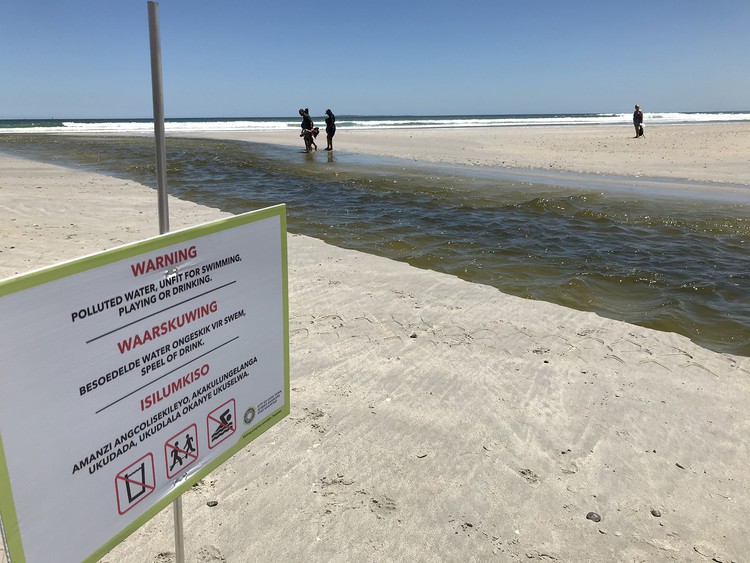
A stench of sewage from the Milnerton Lagoon in Cape Town is nothing new, but it has been nauseating over the past weeks, say residents. This is despite the provincial government having issued the City a directive to rehabilitate the highly polluted lagoon more than four years ago.
Residents living near the lagoon say the stench, which has emanated from the lagoon in the past is “eye-watering” and nauseating since late last month.
Asked about the source of the sewage pollution in the lagoon, mayco member for water and sanitation Zahid Badroodien referred GroundUp to a letter sent to Milnerton residents and councillors setting out sewerage infrastructure failures since July, and the City’s interventions to address the resultant pollution.
The letter, dated 29 November, states that the City had been receiving complaints about the “foul odour” at Milnerton for the “past few weeks”. This was due to “a series of events” having “compromised the integrity of the sewer system”, which were being addressed.
The letter describes sewer line collapses in July, August, and September, all of which contributed to sewage flowing into the lagoon via stormwater channels.
Rehabilitation work in October also resulted in sewage overflows into stormwater channels flowing to the lagoon.
The City described the repairs being undertaken and efforts to contain the sewage flows, while apologising for the “extended inconvenience”, and stating that it was “working tirelessly to address the root causes of the pollution and prevent future occurrences”.
Sewage treatment failures
The Potsdam wastewater treatment works (WWTW) releases more than 40-million litres of sewage effluent per day into the Diep River, just 5km upstream of the lagoon. This is the main flow of freshwater into the lagoon in summer. It would not result in pollution if the Potsdam WWTW was properly treating the sewage it receives before releasing it into the river.
Among other pollutants, sewage contains E. coli and enterococcus, which are bacteria known as faecal coliforms, found in the human gut. National guidelines state treated effluent should have fewer than 1,000 colony forming units (cfu) of faecal coliforms per 100ml. This is the same at the City’s “target” range for intermediate contact in its rivers, vleis, and estuaries. In other words, one should be able to canoe and kite surf in properly treated effluent released from a sewage treatment plant, without any ill effects.
Badroodien said the pollution was not caused by the the Potsdam WWTW.
But the Department of Water and Sanitation’s (DWS) regulatory information system shows that Potsdam WWTW has met the minimum effluent quality guideline for just 3% of its monthly effluent quality tests over the past year.
Additionally, Potsdam achieved chemical compliance in only 48% of effluent quality tests so far this year. This is a measurement of elements such as nitrogen, phosphates, and ammonia. It also achieved just 31% for physical compliance, which measures aspects such as suspended solids, pH, and electrical conductivity. Currently, the DWS system lists Potsdam’s effluent quality as ‘bad’.
The City has been conducting a R5.2-billion upgrade of the Potsdam WWTW for the past 20 months, with completion set for the end of 2027.
Asked about the poor effluent quality, Badroodien said the final results of upgrade would only be evident “once all components have been constructed”.
“To address current challenges, some infrastructure components have been fast-tracked and are expected to be completed by approximately mid-2025, leading to a marked improvement in treated effluent quality,” he said.
He said the effluent compliance had “already improved to 75%”.
Yet the DWS information system reveals nine “high level failures” this year, the most recent being on 29 October.
Water quality results
To the City’s credit, it makes its inland water quality test results publicly available through the Public Inland Quality Dashboard. The results also point to the main source of sewage pollution in the lagoon coming from the Potsdam WWTW.
According to the City’s water quality data, the results at the testing point immediately downstream of the Potsdam WWTW have on average been worse than the water quality results upstream of the sewage works. The latest water quality test results (19 November) show an E. coli count of 29,100cfu/100ml above the Potsdam WWTW, which is more than 11 times the acceptable limit for intermediate contact. But the count downstream of Potsdam WWTW was 7.3-million cfu/100ml. This indicates a serious pollution source most likely emanating from the sewage treatment works.
Environmental activist and Milnerton resident Caroline Marx, who is included on the mayoral advisory committee for inland water quality, said the results show that significant sewage pollution either comes from Potsdam WWTW or a sewerage pipe that runs to Potsdam.
Marx said on 27 November the stench from the lagoon was so bad it made her eyes burn. When GroundUp spoke to her on 3 December, she said the lagoon still stank.
She said at this time of year, when there was little to no rain, most of the flow into the lagoon came from the sewage works.
Compared to the 40-million litres a day of effluent released from Potsdam, there would need to be “an enormous volume” of sewage coming from other sources for it to pollute the lagoon to this extent.
But whatever the source, she said whatever measures the City was taking to prevent pollution of the lagoon seemed to be insufficient.
Green Scorpions directive
Following warnings to stop pollution of the Milnerton Lagoon – which a study found was an important nursery area for fish on the west coast, including Cape stumpnose and white steenbras – provincial environmental compliance officials, known as the Green Scorpions, issued a directive to the City in September 2020 ordering it to clean up the lagoon.
A directive is an enforceable notice issued in terms of the National Environmental Management Act.
The City’s Inland Water Quality Dashboard shows significant pollution in the lagoon in 2019, with improvement in late 2020 and 2021, but worsening from 2022 to the present. The 2024 results are worse on average than those of 2019, which led to the directive being issued.
Western Cape Department of Environmental Affairs and Development Planning spokesperson Rudolf van Jaarsveldt said the directive was being enforced, and the City was engaging with the provincial government on several conditions in the directive.
“Some of the conditions [of the directive] are subject to future-dated timeframes as well as lengthy procurement processes, and the City has communicated this to the Western Cape government,” stated van Jaarsveldt.
He said the upgrades of the Potsdam WWTW and the Koeberg pump station would “prevent further pollution from these facilities”.
He said compliance with the directive, and the City’s reports on the matter continued to be monitored.
But chairperson of the Milnerton Canoe Club, Richard Allen, said the state of the lagoon seems to have deteriorated. While more experienced canoe club members used to paddle on the lagoon four years ago when the provincial department issued its directive, Allen said they have since halted all paddling on the lagoon. He said the club members now paddle along the canals at Century City about 5km away. He said they are battling to keep the canoe club alive.
He said the water quality in the lagoon had gotten “progressively worse”.
“It’s toxic and stinks to hell,” he said.
He said the smell from the water had been “ghastly” at the end of November.
Some functions had been organised at the clubhouse on the bank of the lagoon but the water was “really foul”. “I was almost hurling.”
Speaking to GroundUp on 10 December, Marx said the stench had reduced due to higher tides flushing the lagoon and “everyone suddenly jumping to fix the problems”.
This article was first published on GroundUp
Submit and get free exposure here: Showcase Your Business | Advertise Your Special Offers.