Renault Duster: Slow but sure does win the race:
The Tortoise and the Hare. It’s a classic story that you’re likely familiar with, which carries a valuable life lesson. Still, I’m sure the author never intended it to be used in a motoring story likening the Renault Duster to the tortoise.
The Renault Duster 1.5dCi Intense, which I drove from Johannesburg to Gqeberha recently, looks cute and approachable, but that’s not it.
See, there’s this common misconception that speeding towards your destination will get you there faster. But you might just need something from the corner cafe.
Over a 50km distance, you’ll be lucky to win five minutes — if you don’t get stuck in a load-shedding-induced traffic jam next to the poor soul you cut off 15 minutes ago.
Over 1?200km, driving at 145km an hour, you’ll be the slowest poke on the road. Quota-chasing coppers notwithstanding, you’ll probably have to refuel every two hours. This is not based on any newly-published AA data but rather on observation.
I left Johannesburg with the Duster’s tank brimming and, before long, found myself amid the chaos of holidaymakers risking life and limb in their premium SUVs, towing boats, caravans and dirt bikes to be the first to arrive at the infamously congested first toll gate. The catch? Because of poor planning, consumption, or a combination, they were forced to make an extended pit stop at the filling station before the toll gate. Counterintuitive, if you ask me.
On the other hand, the Duster soldiered on at a steady and comfortable pace, soaking in the scenery amid the chaos of the annual pilgrimage. Filling stations were a mere comfort break, with the diesel-powered engine cracking 700km between refills, with a quarter tank to spare.
This inherent economy, with some thoughtful driving, easily makes the Renault Duster one of the most fuel-efficient vehicles on the road — registering an impressive 4.7 litres per 100km, a smidgeon under Renault’s claim of 4.8.
This was when it dawned on me —the Renault Duster is like the tortoise in the story. It may not be the fastest or flashiest vehicle on the road but it gets you to your destination safely and efficiently, without burning a hole in your pocket. Slow and steady really does win the race.
But there’s so much more to the Renault Duster 1.5dCi Intense than fuel economy. This small SUV is adept at climbing mountains with its torque-tastic 1.5-litre turbo diesel engine with 80kW and 250Nm, giving it enough grunt to comfortably climb steep roads.
Furthermore, the updated interior isn’t just a modern space to occupy. Renault listened to its customers by providing the range-topping Duster with an up-to-date, intuitive media interface and crisp graphics, as well as all the expected bells and whistles. The infotainment is easy to operate, with its uncluttered approach.
If I’ve got one issue, it’s the lack of storage space inside the cabin for holiday paraphernalia. This extends to the cupholders, especially the door-side holders, which aren’t well thought-out. Cooldrink cans, it seems, weren’t considered.
Cooldrink spillage aside, the Renault Duster truly is the modern-day equivalent of the tortoise. It makes steady progress, it’s savvy with its tech upgrade and, despite being front-wheel drive only, it’ll climb over most soft-roading obstacles you put in front of it.
With a price tag then of R409 900, it’s also a worthy contender if you’re shopping in this segment.
Did I mention it’s pretty cute?
Standoff as Steenhuisen accuses Phalatse campaign of dirty tactics:
Incumbent DA leader takes legal steps after former Johannesburg mayor’s campaign manager allegedly reported that he used donor funding for his benefit
Secret DRC mine helped end World War II – and inspire ‘Wakanda’:
In the high desert plains of eastern Washington in the United States, there is a big blue bend in the vast and winding Columbia River that surrounds a site known as the Hanford Reservation.
Spaced along the banks of the river at regular intervals are huge windowless concrete structures: decommissioned nuclear reactors built in the early 1940s to produce enriched uranium and plutonium for America’s nuclear weapons programme.
The reactors surround one of the most highly contaminated landscapes on the planet, with vast fields of underground tanks and hectares of polluted soil that contain the radioactive legacy of the rush to build the first nuclear bombs.
But that contamination isn’t unique.
It shares a certain quality with several other sites found around the US, where America’s atomic weapons programme, the Manhattan Project, processed the uranium ore that its scientists and military authorities needed to design those bombs, construct them, use them over two cities in Japan — and then to build thousands more.
These sites, from Hanford to the poisoned suburbs of St Louis and Cincinnati, to crumbling industrial structures in Buffalo and Middlesex, New York, show the residue of K-65 contamination.
This is the name given to waste left behind from the processing of a specific body of highly concentrated uranium ore; the most highly concentrated uranium found on the planet.
The source of that uranium was the Shinkolobwe mine in the Katanga region of the Democratic Republic of the Congo.
First developed under Belgian colonial administration in the 1920s, the mine’s potent uranium ore (some of it at 65% concentration, when most mines struggle to produce ore at 0.03%) was ignored at first in favour of mining radium to supply the craze for radiation cures sweeping Europe.
European scientists had just started to imagine the explosive power found in the nucleus of the uranium atom when World War II broke out, and Shinkolobwe’s special rocks became subjects of an international struggle for control of a power that seemed likely to reshape the world.
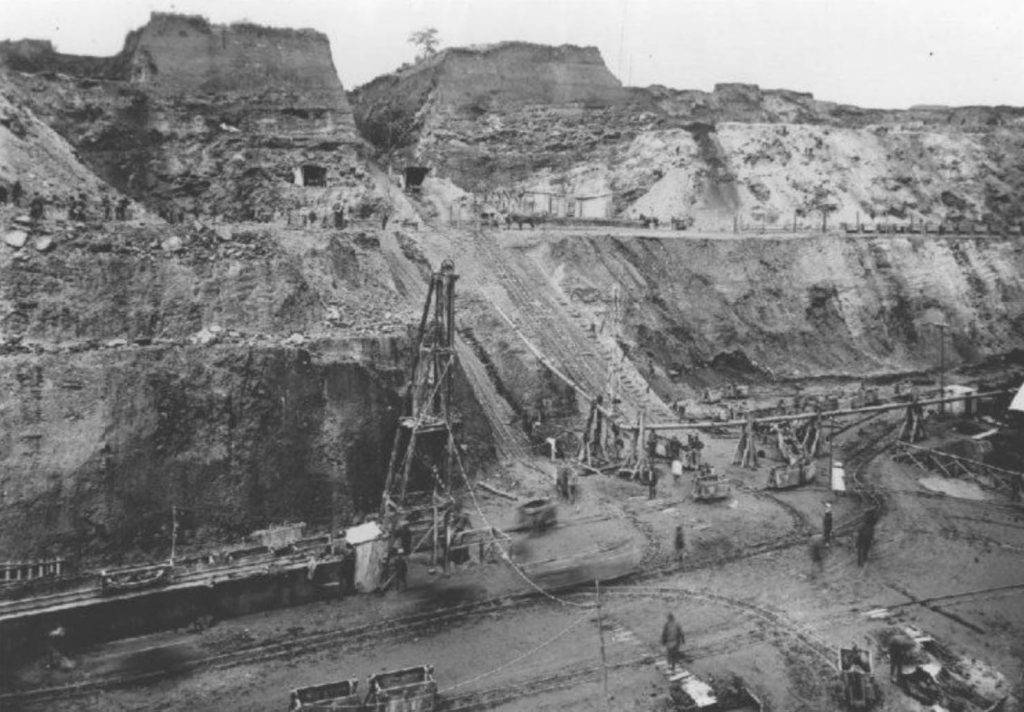
The US’s wartime military authorities worked hard to ensure that the potency of Shinkolobwe ore was kept from their enemies. Ultimately, this ore helped to win the war — nuclear bombs were dropped on Nagasaki and Hiroshima in 1945, forcing Japan to surrender — and was subsequently used to develop the US’s vast arsenal of nuclear weapons.
Wartime spy networks that had denied the use of Shinkolobwe ore to the Nazis turned their attention towards concealment of the mine’s location, and even its name, with the word “Shinkolobwe” stricken from maps for decades.
When Congolese independence leader Patrice Lumumba rose to prominence in the late 1950s, with a promise to liberate the nation of Congo from long years of colonial and postcolonial exploitation, the intelligence machines of the US and Belgium moved frantically to prevent his victorious nationalist movement from seizing control of territories of the nation’s southeast.
This is where most of the country’s mines, and Shinkolobwe, were located.
Just months after taking power in June 1960, Lumumba was ousted with the collusion of American intelligence. He was transferred to the province of Katanga, where he was later assassinated just 80km from Shinkolobwe under the supervision of agents of the Belgian mining consortium Union Minière.
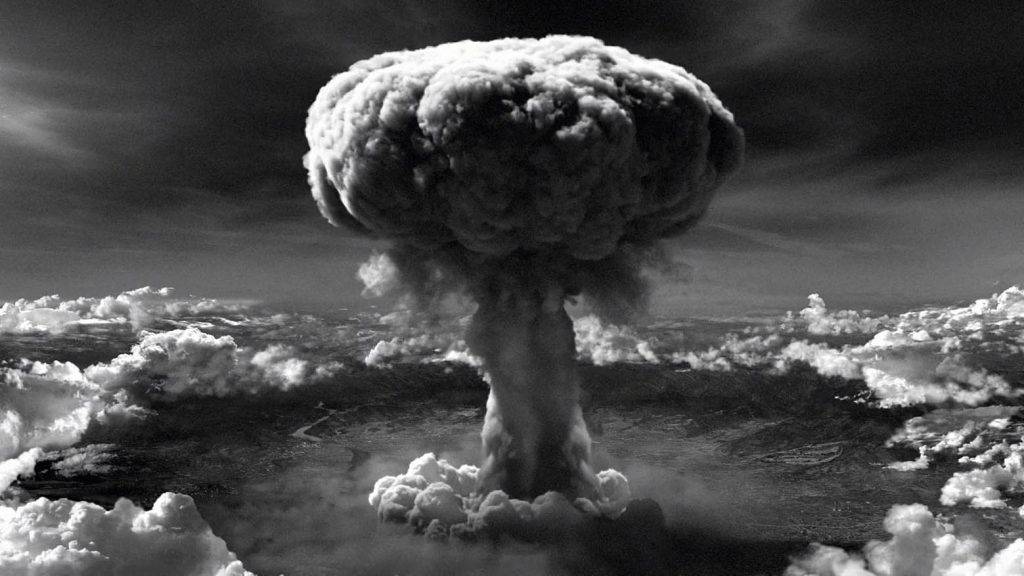
In 1960, the mine was closed and the entrance filled with concrete.
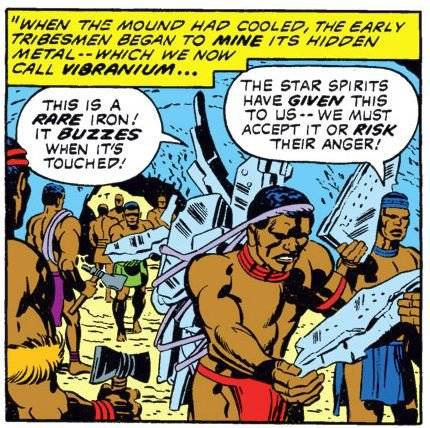
The story of a secret mine possessing ores of immense power inspired US comic artists Stan Lee and Jack Kirby in 1977 to invent the character of Black Panther, an African king who rules a technologically advanced secret kingdom powered by a magical metal, zealously guarding it against a rapacious outside world that would exploit it.
Today the mine is abandoned, after the extraction of all of the usable uranium and the ensuing six decades of artisanal and informal mining for cobalt and other minerals.
There has been speculation that Russian enterprises have expressed interest in reopening the mine, even though the uranium is long gone.
The DRC’s mineral wealth continues to power much of the world’s rapid technological development, although little of that wealth returns to improve the lives of the people, including children, who work the ore.
The rare metals that power our smartphones (themselves employing technologies developed in the service of the US defence industry) are dug by miners working in conditions that are worse than those of Shinkolobwe’s uranium miners in the 1940s.
The mine’s legacy is still felt by descendants of expatriate Congolese mineworkers in South Africa, where the Congolese Civil Society of South Africa has, for the past six years, organised an annual conference called the Missing Link.
This event has the goal of bringing awareness of the history of Shinkolobwe to a world audience, and linking the histories of people around the world affected by what was done with Shinkolobwe’s ore.
Isaiah Mombilo and Yves Salankang Sa Ngol, directors of the group, speak about the effects that decades of labour in the Shinkolobwe mine had on people who are now elders, as well as their descendants.
Cancers, in-utero deformations and other health consequences are reminders of a history of manual labour performed to bring to light some of the rarest and most potent ores on the planet.
The stories of the people who did this work, and who survived the history of the Shinkolobwe mine, are only beginning to be told.
This articke was first published in The Continent, the pan-African weekly newspaper produced in partnership with the Mail & Guardian. It’s designed to be read and shared on WhatsApp. Download your free copy here.
Submit and get free exposure here: Showcase Your Business | Advertise Your Special Offers.