
Renault Duster Zen 4WD: Mildly in a league of its own:
There’s a funny history I have with the Renault Duster. When I was in my first year at Wits University, my parents were considering buying me a car.
It was around the time that the first-generation Renault Duster entered the country. I kept nagging my parents about getting a car but I was not sure what I wanted.
One day, my mom pointed out the Duster while we were driving on the highway and said in jest that it should be my first car. I took one look and was infuriated that she would even joke about it — it was boxy and it had chunky headlights and tailights that made the vehicle look as if it was crying. It was certainly not the car I would want girls to see me in when I arrived on campus.
But the second generation was an improvement and the new third-generation Duster has gone through an extreme glow-up.
If you offered me the new Duster purely based on looks, I would take it with my eyes closed.
This one looks robust, aggressive, stylish and bold.
The signature Y-shaped LED headlights, coupled with the larger grille and the Renault lettering across it, make me wonder why this design was absent in the first generation.
I mean, it could have saved me from being the victim of a bad joke.
But, in terms of how far the brand has come with the product, credit has to be given to Renault for turning the Duster into a very attractive vehicle from the outside.
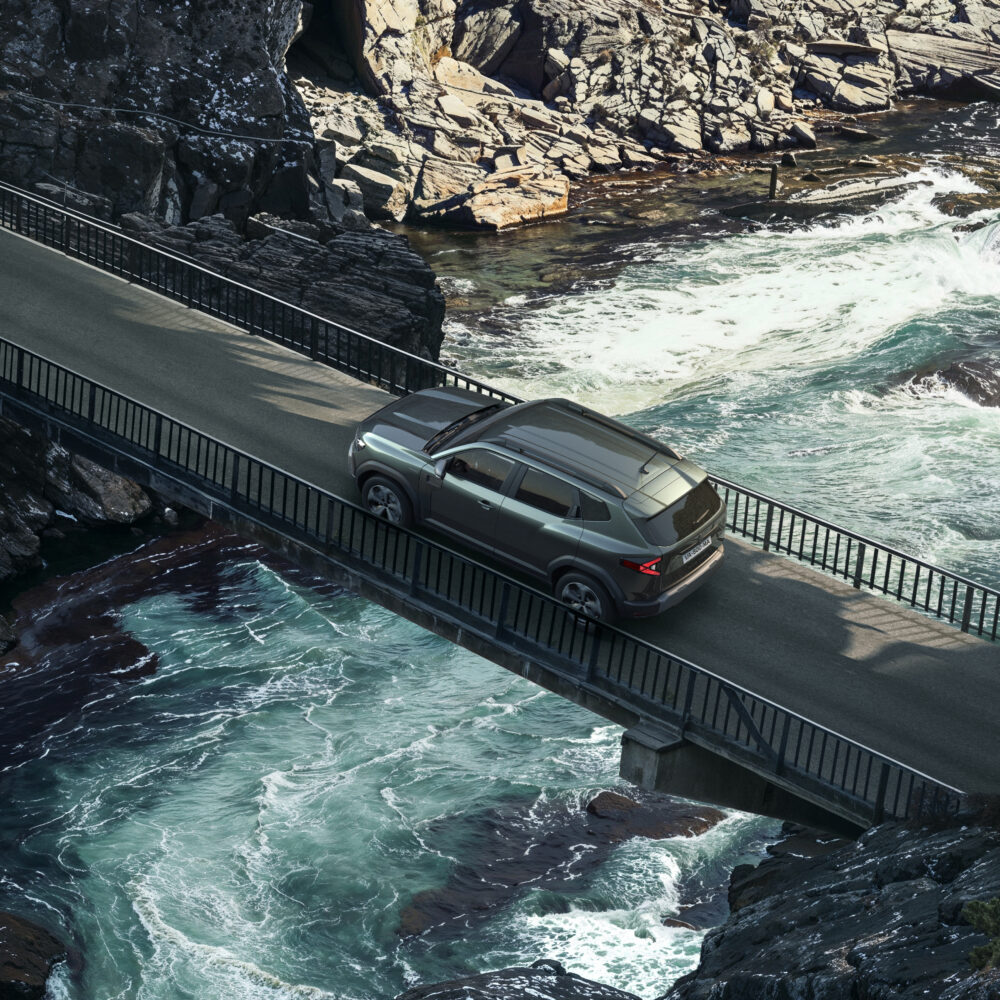
The chunky cladding and skid plate, along with the modular roof bar, add to the muscular build of the vehicle. It flows effortlessly from front to back.
The interior
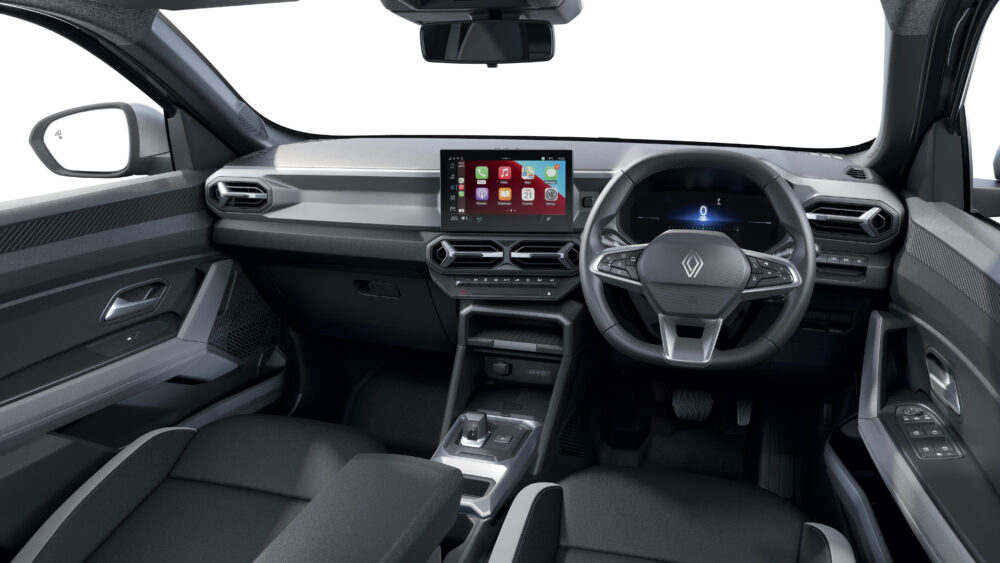
The new Duster also does a good job of keeping with the rugged, but comfortable, appeal on the inside.
The cloth seats didn’t feel uncomfortable at any point and the 10.1-inch infotainment system along the dash contributed to the stylish nature of the car. The system is extremely responsive and supports Apple CarPlay and Android Auto.
I do understand the use of heavy-duty plastics around the cabin, but the hard plastics used on the door panels was slightly uncomfortable, especially for someone who has particularly bony elbows.
Other than that, the interior was pleasant.
Drivetrain and drive
The Duster is available in three derivatives: the Zen EDC 4×2, the Intens 4×2 and the Zen 6MT 4WD Mild Hybrid, which we tested.
The first two use a 1.3-litre turbocharged petrol engine, while the 4WD mild hybrid has a 1.2-litre, 3-cylinder turbocharged petrol engine paired with a 48V hybrid setup that delivers 96kW of power and 230Nm of torque, with electric assist via the starter-generator.
It’s a bit odd that the hybrid is only available with a manual gearbox but, in a way, it’s different and cool.
The ride quality of the hybrid is extremely comfortable both on the road and off. Usually, with these slightly more compact vehicles, they give you a lot of one and not much of the other.
Take the Suzuki Jimny, for example, which I had on test earlier this year. It’s built to be an adventure vehicle but struggles on the open road. However, the Duster just cruises, without any struggles.
I found gear changes to be extremely smooth as well.
The version I was in, the 4×4, also offers 4WD terrain control with five driving modes: Auto, Snow, Mud/Sand, Off-road and Eco.
The generous ground clearance of 217mm (between axles) in the 4WD version, along with class-leading optimised approach and departure angles, ensures exceptional off-road performance.
The only problem with the hybrid version of the Duster is that it is not diesel — Renault has scrapped this version in this line-up. It provided fuel figures of 7.1 litres/100km but it will not be as economical as the diesel model.
Safety
The new Duster gets improved chassis rigidity for better safety.
It also comes with six airbags (driver, passenger, side and curtain), blind spot detection, tyre pressure detector, electric parking brake (epb) and paddle shift levers on the steering wheel.
The 4WD monitor in the Duster 4WD model is a real-time off-road assistance system that helps drivers navigate challenging terrain more effectively, providing key off-road data on the infotainment system, making it easier to handle rough and unpredictable surfaces.
Pricing and verdict
The Duster was once an insulting joke to me but this one is serious business.
It’s hard to argue against the New Renault Duster Zen 6MT 4WD Mild Hybrid variant because it provides such a comfortable experience both on and off the road.
It is the most expensive variant at R549 999 but it is an affordable adventure vehicle that holds its ground anywhere it goes. Therefore, it is in a league where there are no real competitors.
However, the 4×2 variants, which are priced at R489 999 and R519 999, don’t have those added off-road capabilities, and are in a very crowded segment, which makes it hard to argue why you should buy one of them
That cough syrup may get you fired:
It’s flu season; fevers are making the rounds and medicine sales are on the rise. That said, do you read the labels of the medication you consume? If not, beware — what you swallow to feel better today could cost you your job tomorrow.
A recent case heard by the labour court yields a cautious reminder when taking over-the-counter medication (or, in this case, medication from a neighbour) containing alcohol.
The third respondent in this case was employed by the applicant, Chill Beverages International, first as a forklift driver and then as a warehouse controller from June 2017 to May 2023. On 20 May 2023, the employee was dismissed for alleged gross misconduct after failing a breathalyser test despite his clean disciplinary record and the absence of any alcohol misuse.
Chill Beverages manufactures and distributes various beverages, some of which contain alcohol. The company has implemented an alcohol, drug and substance abuse policy of which all employees are aware — particularly given that all employees are subjected to a breathalyser test when entering or exiting the factory. The policy prohibits employees from having any intoxicating substances in their bloodstream during work hours and forbids employees from using any alcohol during work or within six hours before the start of their shift. It is therefore self-evident that high levels of alcohol in one’s bloodstream would automatically lead to a disciplinary hearing and possible dismissal.
On the day of his dismissal, the employee was an hour late to work. The employee tested positive for alcohol and had to undergo the breathalyser test several times with multiple devices to ensure that the initial device was not faulty. The employee was then required to wait in the canteen where he would eat and drink before being retested. The employee was tested again and failed once more.
The employee then wrote a statement and submitted that he took medication that he was unaware contained alcohol. Indeed, the employee was said to not have smelt of alcohol or shown any visible signs of intoxication. He had never faced any disciplinary action in the six years he had worked at Chill Beverages. Despite this, the employee was then dismissed for alleged gross misconduct for failing several breathalyser tests.
Was the dismissal fair?
Aggrieved by his dismissal, the employee referred a dispute in terms of section 188 read with section 191 of the Labour Relations Act (LRA). Section 188 of the LRA outlines what constitutes an unfair dismissal, while section 191 sets out the procedure for referring such disputes to the appropriate forum, either the Commission for the Conciliation, Meditation and Arbitration (CCMA) or a bargaining council with jurisdiction.
At the arbitration, the employee contended that he did not consume alcohol the day before his shift or on the morning of his shift. Instead, he was unwell the day before and consequently obtained a cough mixture from a neighbour and consumed it in the evening prior to his shift, and took two teaspoonfuls before walking to work on the morning of his dismissal. The employee further explained that he was unaware that the cough mixture he took contained any alcohol because he did not read the label.
Although the employee did not contest the validity of the various breathalyser tests that were conducted, he said he had unknowingly contravened the alcohol policy and therefore his dismissal was not an appropriate sanction.
The employee called a witness regarding consistency issues, questioning why Chill Beverages had not dismissed two other employees for seemingly similar offences. But the commissioner found that Chill Beverages had acted consistently and nothing turned on this issue. Another witness in this dispute, called by Chill Beverages, explained that an employee working on machinery while intoxicated posed a serious occupational and health risk, thus providing context as to why it was necessary for the company to adopt a zero-tolerance alcohol policy.
Numerous factors can lead to a positive breathalyser test result
In his inquiry, the commissioner found no evidence to suggest that the employee had consumed alcohol the evening before or on the morning of his shift, citing the fact that the employee showed no signs of drunkenness and considered his clean disciplinary record to support his stance.
The commissioner further accepted that the employee was a credible witness and that there was no evidence provided to demonstrate that the employee was aware that the cough mixture he consumed contained alcohol.
The commissioner referred to the case of Samancor Chrome Ltd (Western Chrome Mines) v Willemse and Others to show that numerous factors can lead to a positive breathalyser test result, such as yeast in food or not eating for several hours. It is on these grounds that the commissioner found the employee’s dismissal to have been substantively unfair, where substantive unfairness concerns the justification for the dismissal, rather than the procedure followed.
The commissioner ordered the reinstatement of the employee, along with payment of R 24 600 in lieu of arrear salary. Chill Beverages, dissatisfied with the outcome, took the matter on review.
The review application
The appropriate test for review was settled by the constitutional court in the landmark case of Sidumo and Another v Rustenburg Platinum Mines Ltd and Others. The threshold test for reasonableness is to consider whether “the decision reached by the commissioner is one that a reasonable decision-maker could not reach”. Put differently, a result will only be unreasonable if it is one that a reasonable arbitrator could not reach on all the material before them.
In tandem with the reasonableness standard as set out in Sidumo, the court on review used an abundance of case law to clarify that it cannot be held that the commissioner’s decision was unreasonable. For instance, the court cited the case of Air Products SA (Pty) Ltd v Matee and Others to, first, illustrate that the working environment of Chill Beverages cannot be said to have been hazardous enough to employees, contractors and the community to justify the validity of the alcohol policy, and second, to set out that employers have a duty to show that a dismissal is suitable and proportionate to the offence.
The court also cited the case of Shoprite Checkers (Pty) Ltd v Tokiso Dispute Settlement and Others to bolster that the law does not allow an employer to adopt a zero-tolerance policy, regardless of how appropriate it may be, and then expect a commissioner to simply fall in line with such an approach.
Thus, on review, the court held that the award issued by the commissioner, in that the employee’s dismissal was substantively unfair, was fair and clearly fell within reasonable bounds. The court was satisfied that the commissioner was not misdirected in accepting the reason provided by the employee in respect of having failed the breathalyser test, given that the employee presented a “holistic, reasonable explanation”.
Chill Beverages’ application for review was dismissed, and the court upheld the commissioner’s award.
Protect against dismissal for honest mistakes
Notably, the court was cautious in its consideration of a cost order, as hefty cost orders may discourage parties who, in good faith, seek to have their disputes decided by the court. Although Chill Beverages did not succeed in the present review application, the court is satisfied that Chill Beverages proceeded in good faith, in that it was genuinely aggrieved by the outcome of the arbitration proceedings, and that the company sought to review that outcome in good faith. It is on these grounds that the court made no order as to costs.
This judgment serves as a reminder to employees to remain mindful of workplace policies, but also as a reassurance that South African labour laws, permeated by strong case law, are designed to uphold fairness and protect against dismissal for honest mistakes.
And perhaps, above all, this judgment serves as a gentle nudge to always read labels on cough mixtures.
Anelisa Zungu is a candidate attorney and Richard Brown a director at Herold Gie Attorneys.
How bonuses are changing online gambling in South Africa: A complete guide for players:
Discover the most popular online casino bonuses in South Africa, how to use them wisely, and what to look out for to avoid scams
Online Casino Bonuses in South Africa: A Complete Guide for Players
Online gambling in South Africa has grown rapidly since the early 2010s. While legislation still restricts certain forms of internet-based gambling, local demand continues to rise. According to Statista, the South African online gambling market was valued at over ZAR 2.3 billion in 2024 and is expected to grow steadily in the coming years.
The most popular types of online gambling among South African players are:
- Slot games,
- Live casino games (with real dealers),
- Sports betting.
Several factors drive this popularity: mobile accessibility, a wide variety of games, and the lure of attractive bonuses. Most international online casinos now welcome South African players and accept deposits in South African rand (ZAR), making transactions more convenient.
Officially, only sports betting and horse racing through licensed operators are legal in South Africa. However, in practice, thousands of players use international casino platforms based offshore. This creates a large, semi-regulated segment of the market that continues to thrive.
What Are Online Casino Bonuses and How Do They Work?
Online casino bonuses are marketing tools designed to attract new players and keep existing ones engaged. For players, bonuses are an opportunity to play more — often with less financial risk. But not all bonuses are created equal, and understanding the differences is key.
Welcome Bonuses
These are the most common type of bonus, offered to new players after their first deposit. A typical example:
“100% up to ZAR 3,000 + 50 free spins” — meaning if you deposit ZAR 3,000, the casino matches it with another ZAR 3,000.
Welcome packages are often spread across the first few deposits (e.g., 1st to 3rd deposit).
Important: Most welcome bonuses come with wagering requirements (e.g., x35), meaning you must bet the bonus amount 35 times before withdrawing any winnings.
No Deposit Bonuses
These bonuses don’t require you to deposit any money. They’re usually small (e.g., ZAR 50–100) and are offered after registration. Some casinos also offer a few free spins as a no-deposit bonus.
No-deposit offers are rare but very popular because they let you test the platform without spending anything. Usually available only to new players.
Free Spins
Free spins are exactly what they sound like — free rounds on selected slot games. They can be offered as:
- part of a welcome package,
- a loyalty reward,
- part of a promotion or tournament.
Winnings from free spins often come with wagering requirements. For example, if you win ZAR 200 from free spins and the requirement is x30, you’ll need to bet ZAR 6,000 before cashing out.
Bonuses can be highly valuable, but only if you understand the terms and conditions. In the next section, we’ll look at how bonuses are shaping gambling behaviour in South Africa.
How Bonuses Influence Player Behaviour in South Africa
Casino bonuses are no longer just rewards — they’re shaping how people in South Africa approach online gambling. Today, many players won’t even consider signing up at a casino unless there’s a solid bonus offer.
Here’s how bonuses are influencing the market and local gambling culture:
1. Bonuses First, Games Second
More and more South African players are focused on getting the best value rather than just enjoying the games. This shift has created a growing group of bonus hunters — players who actively search for the most generous offers, register at multiple casinos, and often cash out as soon as the bonus is cleared.
2. Fierce Competition Among Casinos
With players comparing bonuses before choosing a site, online casinos are forced to improve their offers. This leads to:
- lower wagering requirements,
- more free spins,
- improved loyalty programs.
For players, that’s a win — better deals and more transparency.
3. Players Are Becoming More Informed
Today’s South African players are more cautious. Many have learned to read bonus terms, check wagering conditions, and even verify licenses before claiming offers. This is a clear sign of a more mature, responsible gambling environment.
4. Comparison Sites Are Gaining Traction
Due to the complexity of bonus terms, players are increasingly relying on bonus comparison websites that offer verified rankings, breakdowns of conditions, and honest reviews. These tools help users avoid time-wasting offers and shady platforms.
In short, bonuses have become a major part of the online gambling experience in South Africa — and players are getting smarter about how they use them.
Up next: a look at the most popular bonus trends among South African players right now.
Popular Bonus Trends Among South African Players
As the ZAR casinos industry in South Africa grows, so does the competition for players’ attention. That’s why bonuses have become smarter, more localised, and more creative. Here are the top bonus trends currently dominating the South African market:
1. Bonuses in South African Rand (ZAR)
Gone are the days of dealing with dollars or euros. Most quality casinos now offer bonuses directly in ZAR, making it easier for players to understand exactly what they’re getting — no currency conversions, no surprises.
Example: “Deposit ZAR 500 and get ZAR 500 extra” is much clearer than “100% up to $ 30”.
2. No Deposit Bonuses for New Players
South African players love no deposit offers, even if the amounts are small. Casinos are responding by offering:
- ZAR 50–100 no deposit credits;
- 10–20 free spins on trending slots (e.g., Big Bass Bonanza, Book of Dead).
These promos are great for testing a casino before making a real-money commitment.
3. Wager-Free Free Spins
One of the most player-friendly trends is wager-free free spins. Whatever you win is yours to withdraw — no strings attached. Although still rare, these offers generate a lot of interest and trust among players.
4. Weekly Reloads and Cashback Offers
South African players are not just looking for one-time bonuses — they expect ongoing rewards. Casinos now offer:
- Friday reload bonuses (e.g., 50% up to ZAR 1,000),
- weekly cashback (10–20% on net losses),
- tiered VIP programs with personalised gifts.
Loyalty is being rewarded more than ever before.
5. Live Casino Promotions
With live dealer games becoming more popular in SA, casinos are starting to offer bonuses specifically for live games — such as free bets on blackjack or roulette tables.
Next up, let’s talk about the risks players should watch out for — and how to avoid bonus traps.
How to Avoid Bonus Scams and Unfair Offers
Not all bonuses are worth claiming. Some offers are designed to look attractive but come with hidden terms that make it nearly impossible to withdraw your winnings. Here are the key things South African players should watch out for:
1. Always Read the Terms & Conditions (T&Cs)
Before accepting any bonus, check the wagering requirements, maximum bet limits, eligible games, and expiry dates.
Red flag: Any bonus with wagering above x40 is often not worth the effort.
2. Verify the Casino’s License
Stick to casinos that are fully licensed by recognised authorities. This helps ensure fair play and reliable withdrawals.
Recommended regulators include:
- Malta Gaming Authority (MGA)
- UK Gambling Commission (UKGC)
- Curacao eGaming (widely used by casinos that accept SA players)
Look for license info in the website footer — and double-check if needed.
3. Check Maximum Bet and Withdrawal Limits
Some bonuses restrict how much you can bet or win. For example:
- Max bet: ZAR 50 per spin while using bonus funds
- Max win: ZAR 1,000 from a no deposit bonus — even if you win more, you can’t cash it out
Always read the fine print.
4. Avoid “Too Good to Be True” Promos
Be cautious of offers like:
“ZAR 5,000 no deposit, no wagering, instant cashout!”
These are almost always scams — or come with hidden conditions buried deep in the T&Cs.
5. Use Trusted Comparison Sites
Bonus comparison platforms that review and test offers can save you time and protect your bankroll. Look for sites that:
- break down bonus terms clearly,
- highlight real pros & cons,
- include user feedback and expert ratings.
A good bonus can boost your experience. A bad one can waste your time. In the next (and final) section, let’s explore where the South African bonus landscape is headed next.
Bonus Trends to Watch in South Africa
Online gambling in South Africa is evolving — and so are the bonuses. As the market becomes more competitive and players become more informed, casinos are adjusting their strategies. Here are the key trends likely to shape the bonus landscape in the next few years:
1. More Wager-Free Bonuses
Players are tired of complicated wagering requirements. Expect to see more:
- no-wager free spins,
- cash bonuses with instant withdrawal,
- simplified terms that favour the player.
Casinos that offer “what you win is what you keep” will gain trust and loyalty.
2. Personalised Bonus Offers
With more casinos using AI and data tracking, players will start receiving customised promotions based on their activity. For example:
- bonuses for favourite games,
- offers based on play time or deposit patterns,
- birthday gifts or milestone rewards.
This “bonus personalization” makes offers more relevant — and harder to compare across casinos.
3. Mobile-Exclusive Bonuses
Since over 80% of South African players use mobile devices, expect more mobile-only promotions like:
- free spins for installing the casino app,
- push notifications with time-limited reload bonuses,
- exclusive in-app rewards.
4. Regulation May Drive Safer Bonus Models
If South Africa moves toward clearer online gambling regulation, it could open the door for local, licensed online casinos. These platforms will likely offer simpler, more transparent bonuses under local consumer protection laws — a big win for players.
5. Responsible Gambling Incentives
As awareness of gambling addiction grows, some forward-thinking casinos are already testing “responsible bonus models,” such as:
- cashback without wagering,
- rewards for taking breaks,
- bonuses for setting deposit or time limits.
This trend is expected to continue as players demand safer, more balanced experiences.
Final Thought
Bonuses are no longer just marketing tricks — they’ve become a central part of the online casino experience in South Africa. But only informed players can truly take advantage of them. Remember: a bonus is a tool — not free money. Use it wisely.
Submit and get free exposure here: Showcase Your Business | Advertise Your Special Offers.
