Resilience and innovation shine:

Crawford International celebrates exceptional achievements of the Matric Class of 2023
In the wake of the challenges posed by the Covid-19 pandemic, the matric class of 2023 at Crawford International has emerged triumphant, showcasing exceptional achievements and resilience in their academic journey. This, says Dr Thersia Rossouw, Academic Development Coordinator for Crawford International, is highlighted by the top distinctions obtained by learners across multiple campuses.

Some of the standout achievements from this class include five students from the La Lucia and Sandton campuses who obtained 100% for mathematics, while two students from Pretoria and Sandton received 10 distinctions each. A further 11 students earned nine distinctions, 21 received eight distinctions, and 34 obtained seven distinctions.
Demonstrating the academic rigour and excellence fostered at Crawford College, 15 students from the La Lucia campus placed in the top 1% nationally, with a further 29 learners receiving six distinctions. This, says Rossouw, is remarkable in the face of the learning disruptions that marked their high school careers. “Our students excelled during the 2023 exams, especially when considering that they had to learn remotely during Covid.”

Rossouw attributes these successes to the hard work and spirit of resilience of the learners, supported by Crawford’s innovative and personalised teaching methods and commitment to holistic learner development: “The institution is renowned for its forward-thinking approach to learning, providing a globally aligned education where students and teachers flourish in a flexible learning environment, immersing themselves in the subjects, cultivating lifelong learning. Our academic philosophy is ‘Think, Understand, and Apply,’ promoting in-depth inquiry, self-realisation, and, above all, giving our students a voice to discover their own learning journey.”
Four pillars for future-proofed learning
These principles have equipped and empowered the matric class of 2023 to not only excel in their final exams, but to thrive with future-proofed skills as they transition out of the schooling system.
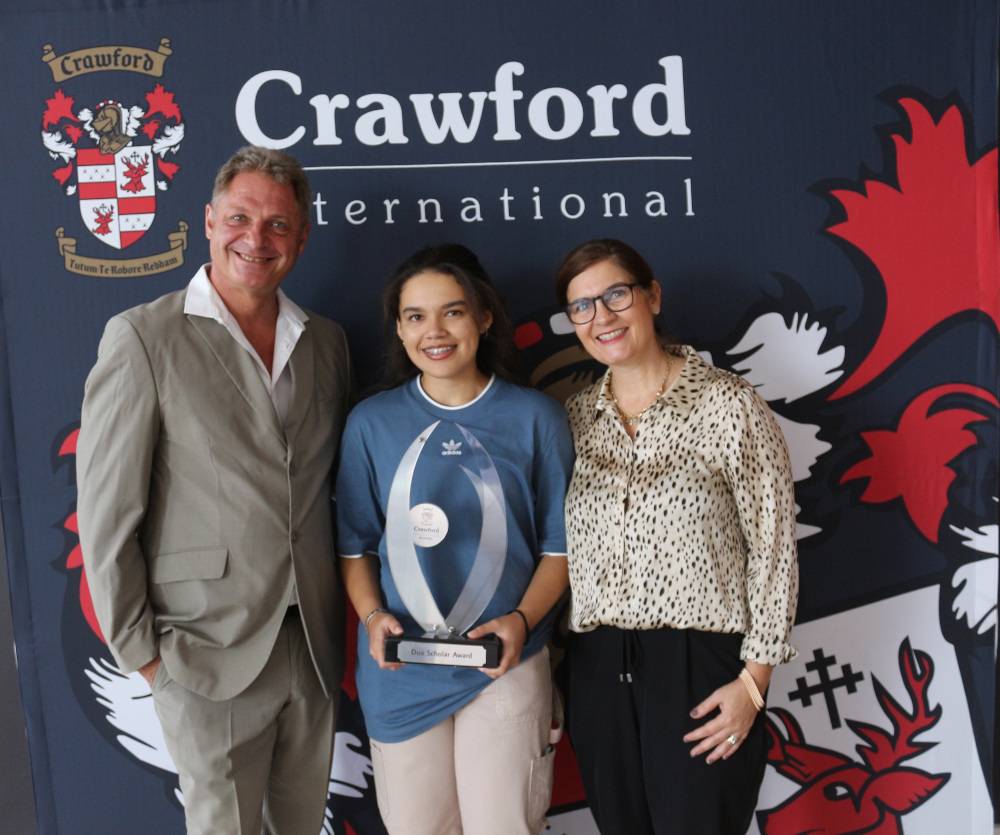
At the core of the Crawford International offering lies its four academic pillars, namely local and global relevance, future-focused skills, student agency and a personalised learning journey. “This promotes a holistic and well-balanced approach, especially when coupled with our extensive extracurricular options,” she says.
According to Rossouw, the innovative teaching methods employed by Crawford International contribute significantly to the success of its students. “Teachers actively engage with the students utilising a variety of teaching strategies, including the Harvard visible thinking routines, experiential learning, demonstrations and guided learning,” she says. “Our focus on local and global relevance instils in our teachers traits like performance-driven collaboration, resilience and innovation, fostering a creative and adaptable solutions-driven approach to underpin future-focused ideas.”
Agency, choice and voice
She says by fully utilising these strategies, learners grow to be inquisitive by nature, confident and well-versed when it comes to applying research skills such as fieldwork, data-gathering and analysis.
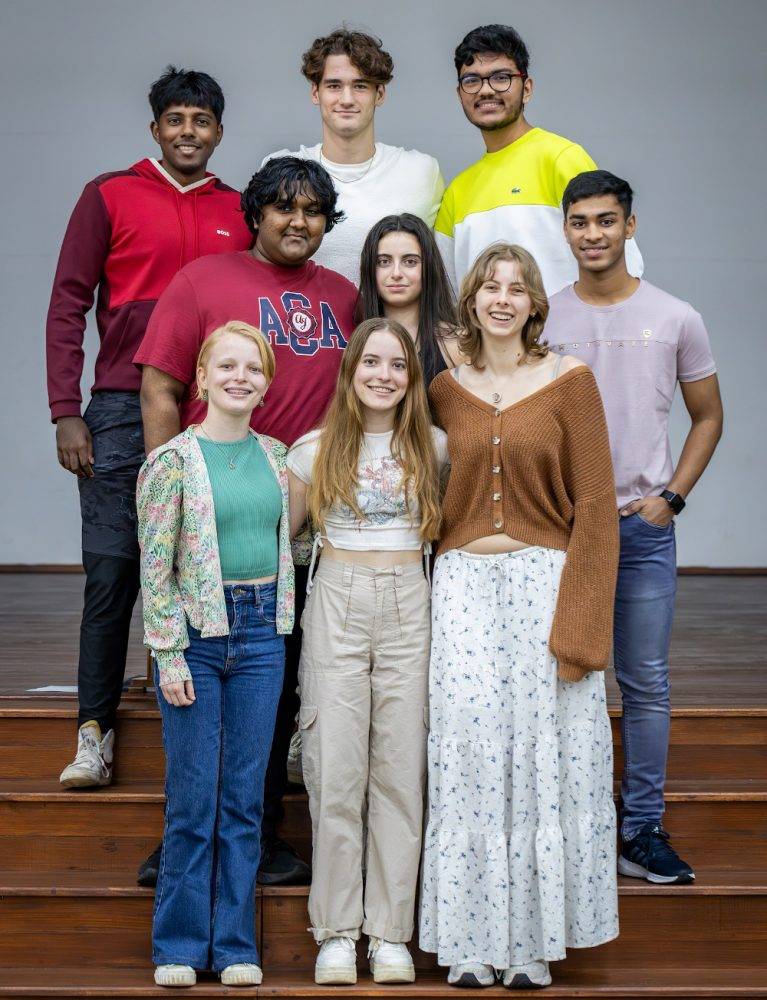
Students are encouraged to get involved in solutions to the issues that affect them, and in owning the learning spaces that they are the primary stakeholders in. “All in all, this is the foundation of our third academic pillar, namely student agency, which empowers our learners’ own voice and choice and allows them to step up and take ownership of their education and their learning journey while encouraging the growth of their personal interests.”
This approach fosters inquisitiveness, confidence, and strong research skills among students. “It is in keeping with our core belief of ‘every child is a masterpiece’,” she says. “Our students are challenged to reflect upon their own learning, set personal best goals in collaboration with their teachers as well as air their views.”
Effective voice and choice also mean that students can show up authentically, and are supported when they do so. Inclusiveness is a critical component of how learners and educators are encouraged to interact, and this also means fostering a healthy understanding of diversity — Crawford Schools are LGBTQIA+ safe spaces, and shared cross-campus resources and expertise means that students have a network of support, regardless of their context or circumstance.
Global citizens in the making
In addressing the rapidly changing world, Crawford International ensures its students are prepared for higher education and future careers: “Our academic offering is future-focused and constantly adapting to the changing local and global environments. The flexibility and adaptability of our learning environments encourage students to become self-directed learners.”
With a student body made up of learners from over 70 different nationalities, Crawford International is dedicated to fostering a diverse and inclusive environment, as well as an understanding of different cultures and perspectives. “When I started working at Crawford it was like working at the United Nations, with local and global representatives all sitting together in one classroom. Within Crawford’s nurturing environment, our students are not only made aware of understanding local perspectives but also real-time global perspectives,” Rossouw explains.
This international community and the interconnectedness it represents prepares students to step into the world as global citizens, underpinned by acceptance, encouragement, mutual support and international-mindedness. As part of ADvTECH, Crawford is also part of the Respect Diversity Inclusion (RDI) programme that consists of implementing social and environmental programmes to empower students with globally-relevant competencies like sustainability.
Equipped for the world of tomorrow
Technology is integrated throughout the learning process, preparing learners to thrive in an increasingly digital world. Various EdTech solutions form a seamless extension to a blended learning approach that includes flipped classroom models, collaboration and the promotion of discussions that extend beyond the four walls of the classroom. “Furthermore, our academic offering goes beyond the scope of traditional confined technologies, and we focus on our EdTech offering such as STEAM, Robotics and esports,” she explains. “Our learning management system (LMS) is used to promote feedback, feed-forward and reflection, visible not only to the teacher, student and peers but also to the parents. This emphasises the transparency of our academic offering.”

Rossouw says this parental involvement is integral to Crawford’s educational approach: “Parents are part of the Crawford learning community, and they are not only encouraged to be involved in plotting the learning journey alongside the teacher and their child, but they can also be invited to present their expertise as part of a subject-specific objective, which co-incidentally forms part of one of the learning modes, which is ‘learn by expert’.”
All this, says Rossouw, is balanced upon Crawford’s academic pillars, and prepares students to step into the world as “future changemakers”. The outstanding accomplishments of the matric class of 2023 exemplify these goals and stand as a testament to the school’s commitment to excellence, innovation, and holistic development.
Crawford at a glance
As an international school, Crawford College provides a world-class education and a global perspective that is progressive, future-focused and tailor-made to each child’s unique context, underpinned by four pillars of teaching and learning:
Local and Global Relevance
Educators and learners alike are encouraged and nurtured to be open-minded and curious about the world around them, fostering a shared awareness and understanding of local and global events, perspectives and cultures. This encourages interconnectedness and international-mindedness as global citizens and future changemakers.
Student Agency
Students play an active role in shaping their learning environment, from collaborating on rules and peer expectations to personal goal setting and learning aims. Educators are trained to empower students in voice, choice and ownership of their learning journeys; this is done by encouraging personal interests and initiatives and facilitating perseverance and adaptability while driving important conversations, ongoing reflection and individual progress.
Future-Focused Skills
It’s no longer enough to just acquire knowledge; at Crawford, students are also supported in furthering this knowledge to develop conceptual understanding and hone essential skill sets that are applied throughout the curriculum to ensure they not only survive but thrive in a dynamic, innovative and fast-changing world.
Personalised Learning Journey
The Crawford team knows that each learning journey is as unique as the child embarking on it and that no one-size-fits-all approach exists. This is why there is a focus on targeted instruction, content, skills, tools, pace and mentorship to support and enrich every student, without sacrificing the elements that set them apart from the crowd.
Turkish language course in the heart of Johannesburg:
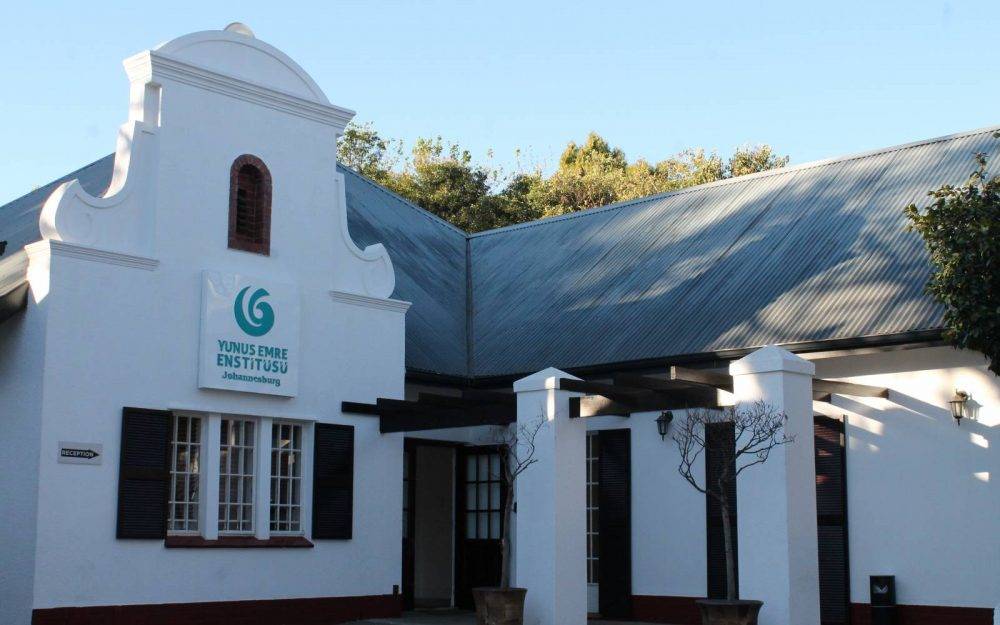
All Yunus Emre Institute activities are based on universal human values
When visiting the Yunus Emre Institute and Turkish Cultural Centre, one may participate in a variety of cultural activities, national day celebrations and art classes, as well as Turkish language instruction from an expert from Türkiye.
Learning about Yunus Emre and how the institute was named after him is fascinating. He was an Anatolian Turkish poet from the 13th and 14th centuries who is most renowned for his representation of human values, love and social peace. This great man not only contributed to the development of Turkish language with his poems, but also used his philosophy, which is based on universal human values, to encourage people to live together in peace and harmony, with common values that entail no discrimination against religion, language or race. One objective set by the Yunus Emre Enstitüsü is to maintain this basic philosophy in all activities and spheres of interest.
The institute has Turkish language courses which have been offered since 2017 in Johannesburg in a peaceful environment, for people who would like to learn Turkish or improve their Turkish language. The programme is scheduled twice a year for two terms by the institute and is taught by a Turkish language teacher.
Each term is 72 hours, or about four months. Classes are held on a weekly basis from Monday to Friday, and students attend twice a week. Anyone aged 16 years and older can register for the Turkish language course.
The children who attend the kids club are enthusiastic as they are taught with age-appropriate material and have fun while learning.
There are many advantages in studying Turkish, such as being able to socialise with friends and communicate with businesses in Türkiye. There is also the added benefit of being able to apply to study in Türkiye with a fully funded scholarships programme. When the Turkish summer school is offered, scholars also have the opportunity to apply for this fun and educational six-week programme.
Online courses, for those who don’t reside in Johannesburg, begin on 4 February 2024. All you need to do is to visit http://turkce.yee.org.tr, click the “online’’ button , complete the application form, review your details and begin your course.
Apart from the language courses, the Yunus Emre Institute hosts a variety of activities and events, with the aim of improving the friendship between Türkiye and South Africa. Following social media will keep you updated on these activities.
For more information visit yeejoburg social media accounts, click on https://johannesburg.yee.org.tr/en/corporate/yunus-emre-institute or email johannesburg@yee.org.tr
TSIBA Business School celebrates its 20th anniversary:

Business administration and management are among the most in-demand jobs in South Africa currently
In February of this year TSIBA Business School will celebrate 20 years of changing lives through a transformative business education approach that is truly unique.
In numbers, 20 years is also just over 7 300 days since the institution first opened its doors as TSIBA Education. Interestingly, the number of days that TSIBA has been in existence is less than the amount of scholarships provided to talented and ambitious young people who aspire to careers in business. On its 20th birthday, TSIBA will have provided over 9 000 subsidised annual-tuition scholarships, including current and new students registered for its accredited programmes in the 2024 academic year.
But TSIBA is not unique for its subsidised scholarship model. The uniqueness of this institution lies in its innovative approach to education, one which provides significant competitive advantage to its students and graduates. All of the core subjects that underpin excellent business education are necessary and provided in full — but at this institution they are not sufficient. TSIBA goes beyond by placing attitude, leadership and entrepreneurship as credit-bearing subjects at the heart of all of its curricula. All graduates of TSIBA have deeply explored the questions of “what is my work?” “what is success?” and “how do I add value?” These are the questions all students must ultimately answer. When they do, they become remarkable graduates on a trajectory to remarkable careers and changed lives.
Looking at the numbers again: in just over 7 000 days TSIBA has produced 1 572 business graduates, including 560 Bachelor of Business of Administration in Entrepreneurial Leadership (BBA) Alumni and 1 012 Higher Certificate in Business Administration (HCBA) Alumni. TSIBA has produced eight Mandela Rhodes Scholars, two United Nations PRME Global Student Regional Leaders in Africa, three Kofi Annan Scholars and eight Alan Gray Orbis Foundation Fellows, while maintaining a postgraduate employment rate of above 90%.
TSIBA is a business school, so we measure the numbers. When we last measured in 2023 we found:
- That 31% of TSIBA BBA Alumni earn above R30 000 per month (or R360 000 per annum). At this level of remuneration, these TSIBA graduates are in the top 50% of South African income earners, according to Salary Explorer.
- 88% of TSIBA BBA graduates have achieved employment within a year of completing their studies at TSIBA, the majority of whom have gained employment with the host organisation with whom the TSIBA third-year internship was completed.
- 68% of TSIBA graduates have remained in employment 75% of the time since graduation.
Further, recent published data supporting the relevance of the TSIBA Higher Certificate and Bachelor of Business Administration qualifications indicates that business administration and management are among the most in-demand jobs in South Africa currently, in light of an increase in overall hiring activity.
The numbers and the data indicate an education model and curriculum designed to provide its students with an exceptional business education, at great value and at an investment return difficult to match. Also difficult to match is TSIBA Ndabeni, the new campus situated in the suburb of Ndabeni in Cape Town. Designed to inspire and to enable learning in a comfortable and fully digitised manner, TSIBA Ndabeni provides fully enabled technology infrastructure and equipment to ensure seamless integration into the digital revolution transforming all business today. Including local and international students on semester-long exchange programmes, the TSIBA campus can accommodate up to 1 000 students in studies.
TSIBA Business School is registered with the Department for Higher Education & Training and the Council for Higher Education as an accredited Private Higher Education Institution (DHET Registration No:2007/HE08/001). All TSIBA tertiary qualifications also have full Financial Sector Conduct Authority (FSCA) recognition.
For more information, visit: https://www.tsiba.ac.za/
Submit and get free exposure here: Showcase Your Business | Advertise Your Special Offers.