Revised Integrated Resource Plan needed ‘ASAP’:
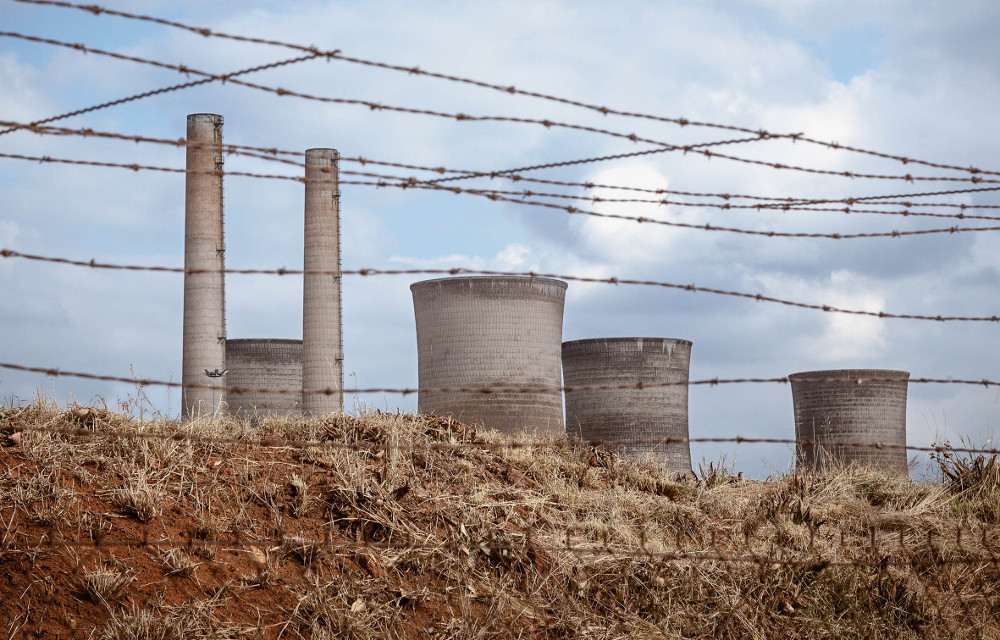
If everything goes as anticipated, the final iteration of the new Integrated Resource Plan (IRP) — which sets out the path of the country’s energy future — should be finalised by the end of May 2024.
This is according to the director general of the department of mineral resources and energy, Jacob Mbele, who briefed the media on Tuesday about the draft plan — which, following its release for public comment last week, has been the subject of strong criticism.
Written comments on the IRP 2023 are due on 23 February. Thereafter, the draft plan will be scrutinised at the National Economic Development and Labour Council (Nedlac) before it is finalised.
The process of finalising the IRP has taken far longer in the past. According to Mbele, the IRP 2019 was held at Nedlac for a year.
“We need a revised IRP ASAP … The scary part, by the way, is that every day that goes by without us finalising the IRP, the assumptions get outdated,” Mbele added.
The department has not yet committed to holding public hearings on the crucial document but Mbele said the department is considering this.
Following numerous delays, the plan was widely anticipated. The draft has disappointed some, with a number of commentators pointing to a lack of detail in the document.
Among the contentious elements of the draft IRP is that the plan appears to roll back the amount of wind and solar energy that will be procured compared to the 2019 iteration. The 2023 plan suggests that only 8083 megawatts of new wind and solar capacity will come online from 2024 to 2030, while the IRP 2019 suggested 15 200MW of wind and solar would be installed during this period.
The draft IRP 2023 also sets out the installation of far more gas generation capacity that was envisioned in the 2019 plan.
In addition, the new plan proposes delaying shutting down certain coal-fired power plants to avoid the economic hit of their premature decommissioning. The IRP 2019 sets out the decommissioning of Eskom’s Camden, Hendrina, Grootvlei, Arnot, Kriel and Komati power stations by 2030.
Controversially, the draft IRP 2023 sees load-shedding continuing until 2027, an outcome that would be a bad sign for South Africa’s limping economy. The 2027 deadline also contradicts the ambition of the National Energy Crisis Committee to address load-shedding by the end of 2024.
RGS abandons Tongaat bid, claims business rescue is rigged:
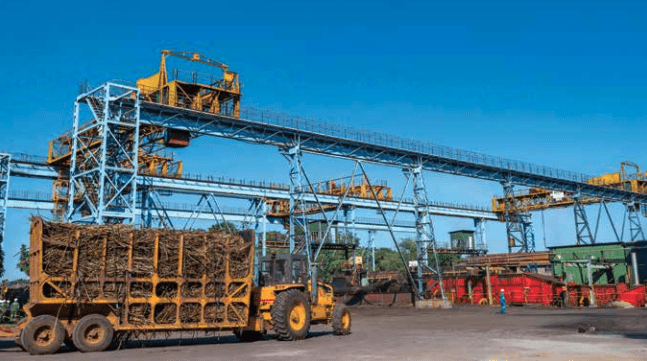
In another dramatic turn of events, RGS Holdings has withdrawn its business rescue plan for Tongaat Hulett Limited (THL) ahead of Wednesday’s crucial creditors vote, claiming the process has been rigged in favour of Robert Gumede’s Vision consortium.
RGS and Vision had both submitted rescue plans to business rescue practitioners Metis, which were set to be voted on by creditors of the troubled sugar giant on Wednesday, but it is understood that the vote will now go ahead with only one bidder.
Tongaat entered voluntary business rescue in November 2022 after losing 95% of its value in a R3.5 billion accounting scandal over which former chief executive Peter Staude and a group of managers and accountants have been charged with fraud.
The process has seen both RGS and Tongaat’s creditors — including the South African Sugar Association and RCL Foods — turn to the courts ahead of Wednesday’s vote, which has been postponed several times.
On Tuesday, RGS executive chairperson Aquil Rajahussen wrote to Metis, informing them of the decision by the RGS board to withdraw its plan, which had, like Vision’s, been amended several times during the process.
Rajahussen said they had previously written to Metis expressing “serious concerns” about the way in which they had conducted the business rescue process at Tongaat Hulett.
The process had been repeatedly postponed, both over legal issues and to allow time for Vision to secure funding for a proposed buyout of Tongaat’s bank debt from a group of lender banks.
“In the RGS view the BRPs [business rescue practitioners] have not conducted themselves appropriately in accordance with their duties and obligations as business rescue practitioners, nor in the interests of THL and its stakeholders,” he wrote.
Rajahussen said that the BRPs had “consistently taken steps to place impediments in the way of RGS’s proposals and have been patently biassed in favour of the proposals put forward by the Vision Parties”.
“The [RGS] board simply does not trust that the BRPs are honest independent professionals in this process as they should be and believes that the BRPs will continue to work against RGS even if the RGS plan were to be adopted,” he added.
Rajahussen said the BRPs had used confidential information in an amended RGS bid to assist Vision in addressing deficiencies in its rescue plan, and had also leaked information to the media to try to discredit RGS and its proposals.
In the face of this “hostile” action by the BRPs, the RGS board could not “risk” paying R2 billion to the group of banks holding R8 billion in Tongaat debt, prior to the conclusion of the transaction.
Because of the risk of Vision going to court if RGS was successful — and the likelihood of the BRPs “actively working” to assist Vision or to delay the implementation of the RGS plan — the company would not make any payment to the banks before the transaction was concluded.
Given that the banks would not accept this, it was “more appropriate” that RGS withdraw at this point, he said.
Rajahussen said RGS believed that it had presented a rescue plan that was “more advantageous” to all stakeholders and that it would have been a better partner for the local sugar industry.
“Had the process been run fairly and independently and in the interests of the THL and its stakeholders, RGS is firmly of the view that the RGS BR plan would have been the only one of the two plans up for consideration at the meeting,” he said.
A spokesperson for Metis denied the allegations that they had rigged the process in favour of Vision.
“The BRPs strongly refute the baseless allegations made in the letter that was directed at them. These allegations will be dealt with at the appropriate time,’ the spokesperson said.
‘Unreliable’ units means load-shedding won’t end soon, says Ramokgopa:

Electricity Minister Kgosientsho Ramokgopa said it would be impossible to end load-shedding in the near future because the power fleet remains unreliable.
“I can’t stand here and tell the country that there will be no load-shedding going into the future. That’s why, when the alert goes out, it says ‘until further notice’. We have no control over some of these units; they are extremely unreliable,” he said at an energy action update on Tuesday.
Speaking at his first media briefing of the year, Ramokgopa said that although Eskom had made headway in ensuring that there was no load-shedding during the festive season, the power plants have continued to break down, necessitating blackouts.
“The units went out and we were forced to implement load-shedding again. We’re getting through that recovery and we’re experiencing a period of no load-shedding again. We will have this period of days of no load-shedding and then there will be days of load-shedding.”
Ramokgopa said a recent memorandum of understanding had clarified his powers and those of Public Enterprises Minister Pravin Gordhan. He had been given the responsibility of ensuring that transmission-related constraints were addressed.
Under Eskom’s Transmission Development Plan, 1 675km of transmission lines have been planned for construction by 2027. Ramokgopa said his new powers would enable him to make recommendations, such as increasing transmission lines to 6 000km.
“Of course, the Eskom balance sheet does not allow for that and that’s why I am expected to work out a solution on how best to finance that expansion, without relinquishing state ownership of the grid, but tapping into private sector liquidity,” he said.
Ramokgopa said the plan for rolling out grid infrastructure over the next three years was insufficient to end load-shedding and required private investment and funding from the Just Energy Transition Investment Plan.
His new powers give him the authority to issue requests for information and proposals for the financing of new transmission lines and to develop and agree on financing models with the treasury and the presidency.
Extending transmission lines is part of the utility’s turnaround plan stipulated in the department of public enterprises’s Roadmap for Eskom. This includes separating Eskom into three divisions — transmission, distribution and generation.
Eskom, which has registered its National Transmission Company of South Africa, announced on Tuesday that it had appointed 12 members and experts to the board of directors to guide the company in its plan to extend transmission lines and help Eskom generate income.
Over the past 10 years, the utility has built only 4 300km of transmission lines. For the country to move away from power shortages, it needs to build 14 000km by 2032 to enable new power players to contribute to the grid.
Submit and get free exposure here: Showcase Your Business | Advertise Your Special Offers.