‘Rogue’ cadre Mervyn Dirks sworn into KZN Legislature:

Former Msunduzi Municipality deputy mayor and controversial ANC politician Mervyn Dirks has been thrust back into parliament.
Dirks, who resigned from the National Assembly amid a fallout with ANC national parliament leaders in January, was this week sworn in as an ANC KwaZulu-Natal member of the provincial legislature (MPL).
A Pietermaritzburg-based politician, Dirks told The Witness that he was looking forward to making “a meaningful contribution” to the KZN Legislature.
“As a person who comes from this province, I have a clear understanding of the challenges faced by our people. In the National Assembly, I think I gave it my all — to the point where I felt that I had nothing to contribute, hence my decision to resign as an MP.”
During his tenure as an MP, where he sat on the Standing Committee on Public Accounts (Scopa), Dirks irked party leaders when he called on Scopa to investigate President Cyril Ramaphosa.
In his complaint to Scopa, Dirks accused Ramaphosa of being in possession of information showing that government money was being used to finance ANC internal elections.
According to Dirks’ complaint, Ramaphosa failed to pass on the information to law enforcement agencies as required by law.
He was suspended by the ANC in parliament and recalled as a Scopa representative.
Scopa resolved not to pursue the matter after Ramaphosa clarified that the information which Dirks had claimed he was in possession of, was in the public domain.
At the time of Dirks’ resignation, the ANC parliamentary leadership had instituted disciplinary processes against him, leading to speculation that the he was put under pressure to vacate his National Assembly MP position.
However, Dirks denied that he was pushed.
“It was a voluntary decision; I felt that I was no longer adding any value to the national Parliament. Before I resigned, I held discussions with my ANC leadership here in KZN. So, it’s not true that I had problems with the ANC leadership. Also, it’s important to highlight the fact that when I resigned, the charges against me had already been withdrawn.”
Dirks, who was previously linked to the ANC’s radical economic transformation (RET) faction and is an open supporter of former president Jacob Zuma, denied that he was party to factionalism.
“It’s completely untrue. People who were saying those kinds of things about me just wanted to taint my image. To prove that those people who said bad things about me were wrong, I’m currently working tirelessly to ensure victory for the ANC in next year’s general elections.
“As an ANC member, my message is clear: we must unite and defend the ANC. Let’s pull together to ensure victory for the ANC in KZN and nationally,” he said.
Dirks will be serving in the KZN Legislature’s portfolio committees of Economic Development, Tourism, Agriculture and Environmental Affairs.
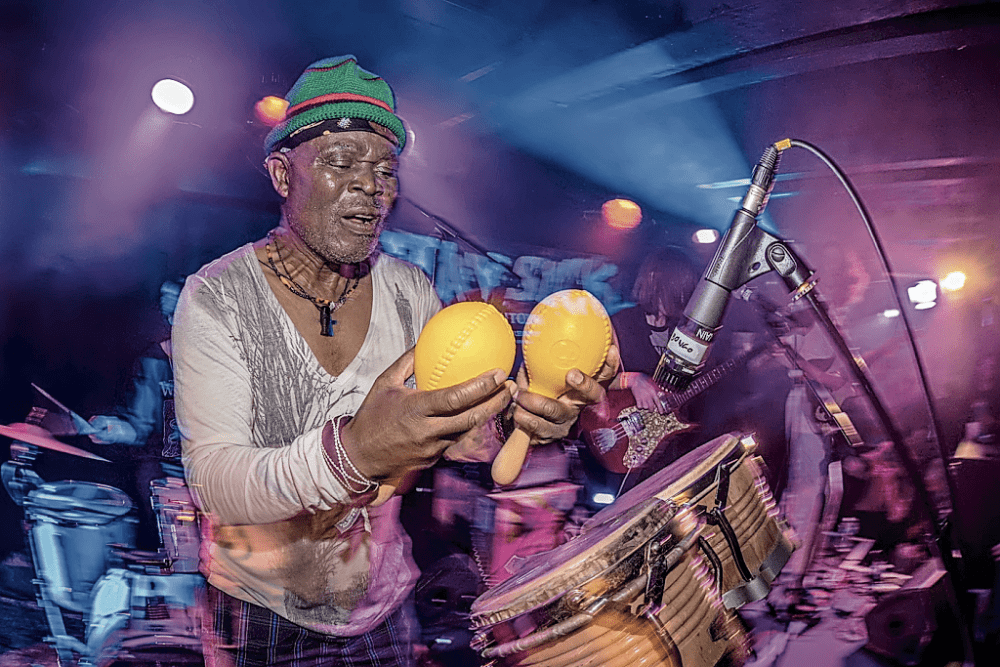
Nicknamed after the Rolling Stones’s snake-hipped veteran singer, Mick Jagger, it is no surprise 71-year-old Emmanuel “Jagari” Chanda is behind — and in front of — one of rock ’n roll’s most vital releases this year.
The Zambian singer’s band WITCH — an acronym for “we intend to cause havoc” — has released its first new album in 39 years. Titled, Zango, it is a reminder of how the style that WITCH pioneered, Zamrock, remains one of the most thrilling to come out of Africa. Zamrock is a fusion of psychedelic rock and heavy metal, blended with folk and traditional Zambian kalindula.
The first commercial Zamrock album released was WITCH’s Introduction in 1973. Zambia’s economy was booming, with prices for copper, the country’s biggest export, sky high. Young people were able to go to shows and buy records.
In June 1975, President Kenneth Kaunda ordered that radio stations play 90% Zambian music — a great time to be in a band that’s just put out a fantastic record.
WITCH’s third record Lazy Bones!!, still rated as their masterpiece, was central as the Zambian rock scene blew up. As Chanda told The New York Times in a recent interview: “WITCH was the band everyone wanted to join.”
Thousands of people came to watch Zamrock shows. But the world economic order was changing. Copper prices crashed; wages fell and people had less disposable income. “Music became a luxury people couldn’t afford,” Chanda said.
Zambia was also under the threat of attacks from the apartheid regime — curfews and blackouts followed.
By the end of the 1970s, the once thriving Zamrock scene had floundered. In 1984, the first cases of Aids were reported. By 1990, 13% of the adult population was infected.
Sadly, almost all of the original Zamrockers would pass away from Aids-related complications. Only a lucky few survived. Chanda was one of them — he had quit WITCH in 1979 and became a music teacher.
Fortunately, some recordings endured. Like many people in the rest of the world, I was introduced to Zamrock in the early 2010s when Now-Again Sounds released a six-record box set of WITCH’s first five albums plus a compilation of singles.
By that time, I was bored with rock music — too self-indulgent and predictable. But this unusual mix felt as if it was made for me — a potent blend of Black Sabbath, Stones, Stooges, Led Zep, Deep Purple and Velvet Underground, with added African rhythms. Delicious!
The reissue sparked global interest in Zamrock, resulting in a decade-long world tour for a reformed WITCH, with the irrepressible Chanda centre stage. He added keyboard player Patrick Mwondela (65), who was in the band for their two final albums in the early 1980s, plus four Europeans in their 30s — drummer Nico Mauskoviç, guitarists Stefan Lilov and JJ Whitefield, and bassist Jacco Gardner.
Zango was born on the road as they crisscrossed the globe. Last year, the band decamped to Lusaka’s legendary DB Studios to record the album. In the recent mini-documentary Making of Zango, we’re taken into this home of Zamrock back in the 1970s. After 1994, the studio was largely used for voice-overs and radio documentaries.
Fortunately, this time capsule still had all the analogue equipment used to record Zambia’s most powerful musical movement, including the mixing desk, tape recorder and the effects which were used during the recording of Lazy Bones!! in 1975.
Engineers Jasper Geluk and Michael Linyama managed to revive the equipment, which had accumulated 30 years of dust and rust, through soldering, modulating and sheer luck.
Chanda, wearing a Janis Joplin-style massive floppy sun hat, like he did in the heyday of Zamrock, says: “Rock music is a white man’s concept … we just bought into it and we added some Zambian touch to that. So, it’s not surprising to see Europeans trying to see how we created rock in the concept of Zambian eyes.”
Meaning “meeting place”, WITCH couldn’t have given Zango a more apt title, as the band explains: “Every village [in Zambia] will have this central place, where villagers meet to prepare for work …”
For WITCH the DB Studio was their zango. A zango is also “where youngsters go to learn, where the young ones learn from the elder folks, and where the visitors come and converge”.
As bassist Gardner told The New York Times: “Jagari wasn’t saying, ‘You have to make the exact Zamrock sound.’ He said, ‘Make it your own.’”
The Zambian uncles run the show, but the young Europeans bring their own solid contributions to the zango.
When you put Zango — the vinyl version comes in a bright yellow pressing — on a turntable you hear there was clearly a meeting of minds when it was recorded.
But, I had a tiny hesitation. On several recent “African” records, there has been this neo-colonial thing where an overbearing European producer has imposed what he thinks African style should sound like. It’s normally sanitised — what will presumably sound easy on Western ears.
Luckily none of that happened on the 10-track Zando. They avoid sounding like a cover band of their 1970s self, bringing the classic Zamrock sound creatively into the 21st century.
Also, it was done with originality, without sounding disjointed or cynical in a ticking-the-boxes sort of way.
Under the broad Zamrock umbrella, some of elements reminded me of sludge rock; 1980s Madchester dance-rock (a la Stone Roses); post-punk/electro-funk/hip-hop 3 (associated with ESG and Tom-Tom Club); Adrian Sherwood-style dub; Afro rock (like veteran West-African rockers Osibisa); soukous guitar licks; future hip-hop (with fellow Zambian, the rapper Sampa the Great); psychedelic garage rock and even country, courtesy of a lap steel guitar combining gorgeously with an acoustic guitar. All done, I must add, without being derivative.
The band has decent politics too. On the final track, Message from WITCH, they proclaim: “Sometimes we carry the message ourselves The energy our message carries from/ DB Studios in Lusaka, Zambia/ Is sharper than the mightiest sword/ Hits deeper than any bullet can/ It unites beliefs, conquers xenophobia/ It laughs at hate speech, ends sexism/ It erases homophobia, shatters antisemitism, embraces every race/ It’s blind to colour, it is sweeter than honey/ The word, or message, is LOVE.”
IF THERE’S ONE THING YOU DO THIS WEEK …:
Countrywide
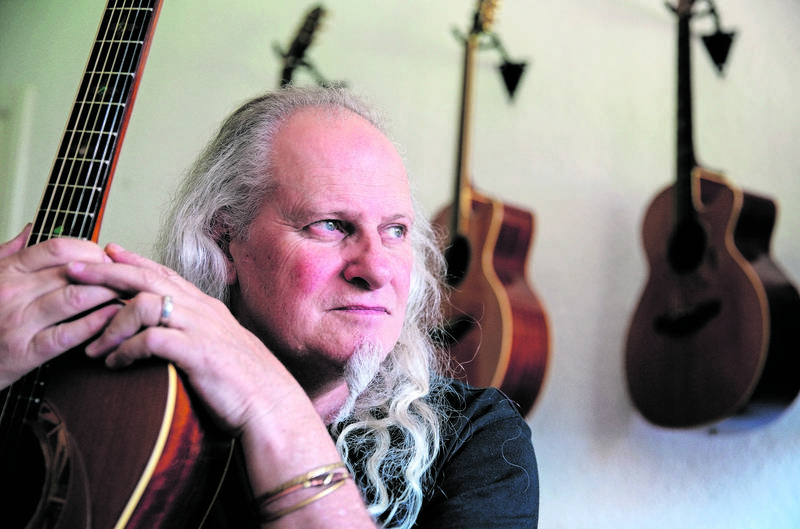
Award-winning international guitar maestro Tony Cox is heading home for a long-awaited tour of South Africa. His return is a rare opportunity for local audiences to see this acoustic guitar phenomenon play his unique brand of dazzling, finger-style guitar.
He combines African and European influences to make his own inimitable style, taking audiences on a foot-tapping, heart-beating, soul-feeding journey. Cox’s laid-back grooves, effortless guitar wizardry and layered musical creations are interspersed with his wry observations and playful banter.
Born in Zimbabwe, Cox grew up in Cape Town and is now living in England. His fan base has grown from a loyal crowd of South Africans to include the UK, Germany, Canada and elsewhere in the world.
His ascent to master musician began as a 9-year-old playing Hawaiian guitar in what was then Rhodesia. In his teens, he evolved a more conventional playing style and later he studied classical guitar.
After his family relocated to Cape Town in 1969, Cox enhanced his already considerable skills and Western training by absorbing and adapting the multi-textured rhythms and varied styles of the indigenous music of his upbringing and surroundings. He began to compose his own music early in his career and his creations are shot through with rich African imagery and influences.
Alongside his solo career, Cox has collaborated and recorded with many other musicians to produce three award-winning albums and many nominations. In 2002, 2003 and 2008 he won the Best Instrumental category at the South African Music Awards.
His SA tour, while focusing on his solo performances, will include a series of reunion concerts with Steve Newman, one of his most well-known collaborators. Cox will be performing in Gauteng, the Western Cape and KwaZulu-Natal.
For venues, dates and bookings go to www.tonycox.co.za/shows.
Submit and get free exposure here: Showcase Your Business | Advertise Your Special Offers.